









Amid the rapid expansion of Israeli settlements in the West Bank and Jerusalem, and the daily land seizures carried out by Israeli occupation authorities, questions are once again being raised about the fate of Palestinian land and the prospects for national sovereignty.
In this exclusive interview with Noon Post, Salah Khawaja, Director of the Central Region Office at the Palestinian Authority’s Anti-Wall and Settlement Commission, offers a deep analysis of the challenges Palestinians face on the ground.
He unveils Israel’s settler-colonial goals, the international implications of these policies, and possible strategies for resisting expansion and confronting the occupation in defense of Palestinian land and rights.
To what extent do recent settlement tenders and daily Israeli land seizures undermine U.S. claims that no formal annexation is taking place?
Annexation didn’t begin with Trump’s declarations or recent U.S. statements it has been effectively underway since 1967, when Israel first expelled residents from Jerusalem’s Moroccan Quarter.
With the launch of the Alon Plan in 1967, aimed at isolating Gaza from the West Bank, annexing Jerusalem, and controlling the Jordan Valley which makes up about 29% of the West Bank the annexation process was already in motion.
The continuation of Israeli policies and successive governments’ strategies are aimed at imposing new facts on the ground in the West Bank, Judaizing it, and preventing the establishment of a Palestinian state. American claims denying annexation are politically meaningless and serve only to placate public and international outrage.
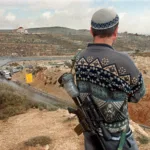
Meanwhile, the U.S. continues to support and arm Israel. After October 7, over 97,000 weapons were distributed to settlers something Ben-Gvir publicly boasted about.
Thus, U.S. rhetoric denying annexation is misleading and contradicts its full support for Israeli occupation and settlement expansion.
How does continued settlement expansion lay the groundwork for annexation in the West Bank?
Settlement expansion aims to alter the geographic and demographic reality of the West Bank. Israel isn’t simply building scattered outposts it’s targeting the entire territory, especially Area C, which makes up 63% of the West Bank under the Oslo Accords.
This is the real-world implementation of the Zionist movement’s vision: to crush the Palestinian dream of statehood and build a settler state in its place. The settlement enterprise forms the actual foundation of the annexation project.
What is the aim of accelerating settlement tenders at this stage?
The primary objective is to entrench the “Greater Jerusalem” project, which has been a top priority for Israeli governments since Rabin’s era. Recently, Netanyahu, Smotrich, and Ben-Gvir appeared in Ma’ale Adumim to announce the start of the “E1 project,” a key component of the Greater Jerusalem plan.
The proposed law by Lieberman to annex Ma’ale Adumim into Israeli “sovereignty” reveals the intent to impose unilateral realities. This acceleration also reflects political rivalry within Israel, with parties vying for public support by championing settlement expansion.
What is the government’s strategic goal in establishing and expanding settlements in key areas?
The Israeli government aims to strengthen settler presence and assert control over Palestinian land and natural resources agricultural land, water springs, grazing areas, and nature reserves. This turns Palestinian villages into isolated enclaves resembling open-air prisons.
Recent administrative annexation efforts in areas like Nabi Samuel, Beit Iksa, and Al-Khalaila in northwest Jerusalem demonstrate a clear vision to depopulate Palestinian land and redraw the map to suit the settlement project.
What legal pretexts does Israel use to justify land confiscation?
The occupation relies on a wide legal apparatus about 81 laws passed by the Knesset to legitimize land grabs, including:
-
Absentee Property Law
-
Classification of land as “abandoned” or “unused”
-
Nature reserves designation
-
Military training zones
-
Roads linking settlements
-
Public utility regulations
These tools are constantly expanded to give legal cover to the ongoing seizure of Palestinian land.
How much land is estimated to be taken for settlements?
Israeli authorities currently control around 42% of the West Bank, treating much of it as “uninhabited” and ready for development. The breakdown includes:
-
8% allocated to settlement master plans
-
14% for grazing outposts
-
11% seized behind the separation wall
-
The rest is used for military training, checkpoints, and road infrastructure
This highlights the deep entrenchment of settlements across the West Bank.
Are the new tenders and land grabs part of the Greater Jerusalem project? Will they create new demographic realities?
Absolutely. These efforts are central to a long-term plan to establish Greater Jerusalem. The plan includes building 356 new settlement units and approving 209 more in settlements like Gush Etzion and Giv’at Ze’ev.
The goal is to expand the settlement footprint to cover 12% of the West Bank, linking West and East Jerusalem through Ma’ale Adumim and extending to the Dead Sea, south to Gush Etzion, and north to Qalandia airport once a Palestinian airport before 1948. Israel has declared plans to turn it into a settlement for religious extremists.
This will erase Palestinian presence in buffer zones and create a vast, closed-off settler bloc in Jerusalem.
Is Area C the only target, or are Areas A and B also affected?
Though Area C is the primary focus, Areas A and B under Palestinian Authority control per the Oslo Accords are not spared. These regions face constant settler incursions, land grabs, and Israeli military raids.
This is part of a broader strategy by Netanyahu, Smotrich, and Ben-Gvir to assert “sovereignty” over all West Bank territory. The plan includes targeting water sources, nature reserves, and heritage sites. Smotrich even claimed that 2,562 archaeological sites are “biblical areas” that must be “liberated” from Palestinians.
How does shifting the burden of proof of land ownership to Palestinians facilitate Israeli land grabs?
Requiring Palestinians to prove land ownership is one of the most dangerous legal tactics. Settlers exploit the legal system particularly during emergencies like the Gaza war to expand control. The Land Settlement Law facilitates this process under the guise of “administrative sovereignty” in Area C.
It allows settlers to establish grazing and residential outposts -even in Area B- as seen in places like Atara and Birzeit. Legal structures are used as tools to dispossess Palestinians, turning every land claim into an uphill battle.
What can Palestinians do to protect land ownership under these new policies?
We’re in a stage of resistance, not political solutions. This demands mobilization of all forms of popular struggle legal and grassroots. The defense of Palestinian identity, sanctity, and sovereignty requires determined activism.
Like in the recent olive harvest season, when Palestinians reclaimed threatened lands, the message is clear: We will resist. Protecting the land is a fight for existence.
How does Israel use military orders to seize land under security pretexts?
Thousands of dunams are being seized under the guise of military necessity. In the last year alone, 56,000 dunams were taken, and over 42,000 more by late 2025, often under coordinated efforts to enforce military orders.
In places like the village of Al-Taybeh, land initially seized for “security” ends up as permanent settlements proving these claims are a cover for expansion.
What are “buffer zones” and how many exist in the West Bank?
Israel uses buffer and isolated zones to surround settlements and sever Palestinian land from adjacent areas. These zones, often extending over 100 meters, now include over 23 buffer areas. Entire villages, like those west of Jerusalem, are enclosed by fences, checkpoints, and walls.
Families like Abu Ghraib’s in Beit Ijza live behind walls with limited access controlled by biometric gates. Villages like Duma in Nablus are cut off from neighbors, becoming isolated islands under occupation control.
Are buffer zones meant to establish new borders?
Yes. The separation wall alone isolated 11% of the West Bank. Despite Israel’s claims of agricultural access, these lands are now under full settler control especially in the fertile north (Jenin, Qalqilya, Tulkarm, Salfit).
How do these buffer zones affect movement and access?
They’re used to forcibly displace Palestinians, turning empty lands into settler projects. Military orders restrict access, isolating villages and blocking access to farmland, turning daily life into a struggle.
What’s the impact of relocating Hamra checkpoint to Ein Shibli village?
Moving it 2km east effectively puts thousands of dunams under Israeli control. Palestinians can no longer access lands in Mak-houl and Hadidiya. It’s a strategy to imprison Palestinians within narrow spaces, cut off from farmland and other communities.
Is Israel building a settler state to rival Tel Aviv in the West Bank?
Clearly. In East Ramallah villages like Ramon and Kafr Malik, seized lands are three times larger than Tel Aviv. Israel controls over 2.2 million dunams in the West Bank about 42% of the territory.
Ma’ale Adumim alone spans 61 square km nearly equal to Tel Aviv’s 63. When combined with areas east of Ramallah, settlement space dwarfs Tel Aviv.
The West Bank is being transformed into a web of settlement blocs, all linked to Israel’s 1948 territory. This is a unified colonial project, driven by the settler-led Israeli government.
What is Israel signaling through continued construction despite denying annexation?
The message is clear: Israel is building “Greater Israel.” This is not just about Palestine, but a broader project to dominate the region under long-term settler colonialism.
Are these tenders a challenge to international law and the UN?
Absolutely. They represent a blatant disregard for international norms. Some Arab states’ proposals further delegitimize Palestinian rights. The international system is failing, often acting as an enabler of Israeli policies. Trump, for example, has become an informal spokesperson for Netanyahu.
Palestinians must shift strategies, rally global allies, and push parliaments and governments to adopt accountability measures.
What should the international community do?
The International Criminal Court must open a file on settlements as war crimes under the Rome Statute. The UN must enforce the 2004 ICJ ruling declaring the wall illegal and demanding reparations.
But so far, global standards are applied inconsistently due to U.S. influence. The solution lies in unity through national strategy, grassroots resistance, and a global solidarity network capable of challenging the occupation narrative and regaining international momentum.


