








هذا التقرير متاح أيضًا بـ العربية
The leak of three video recordings from inside Sednaya Prison has reopened one of Syria’s most painful and sensitive files, bringing the issue of detainees and the missing back to the forefront, with all the burden of memories laden with abuses and deferred questions. These scenes revived unhealed wounds for survivors and victims’ families, yet they have still not found their way to fair redress or organized institutional documentation.
The haphazard circulation of the leaked clips—containing fragmentary scenes that do not reflect the scale of the atrocities inside the “human slaughterhouse,” the “death factory,” or the “black hole”—along with the absence of any official clarification more than 24 hours after their publication, and amid successive incidents affecting detention sites, reveals ongoing gaps and problems in the management of this file since the launch of the “Deterrence of Aggression” battle that toppled Bashar al-Assad’s regime until now.
Clips Tampering With Wounds and Evidence
At midnight on April 28, an account on Facebook under the name “Haidar al-Turab” posted three clips from Sednaya Prison before later deleting them. They showed the control room, a waiting room for court appearances and visits where detainees appeared squatting with their heads bowed, as well as footage of two soldiers inside the room organizing visits.
The videos spread widely, and rights advocates and legal experts said they tamper with survivors’ wounds and cause harm to them and to the families of the missing. Syrian journalists Hamza Abbas and Omar Nozhat said they had identified the person who published them, the brother of one of the detainees, noting that full copies of the files had been handed over to the relevant authorities.
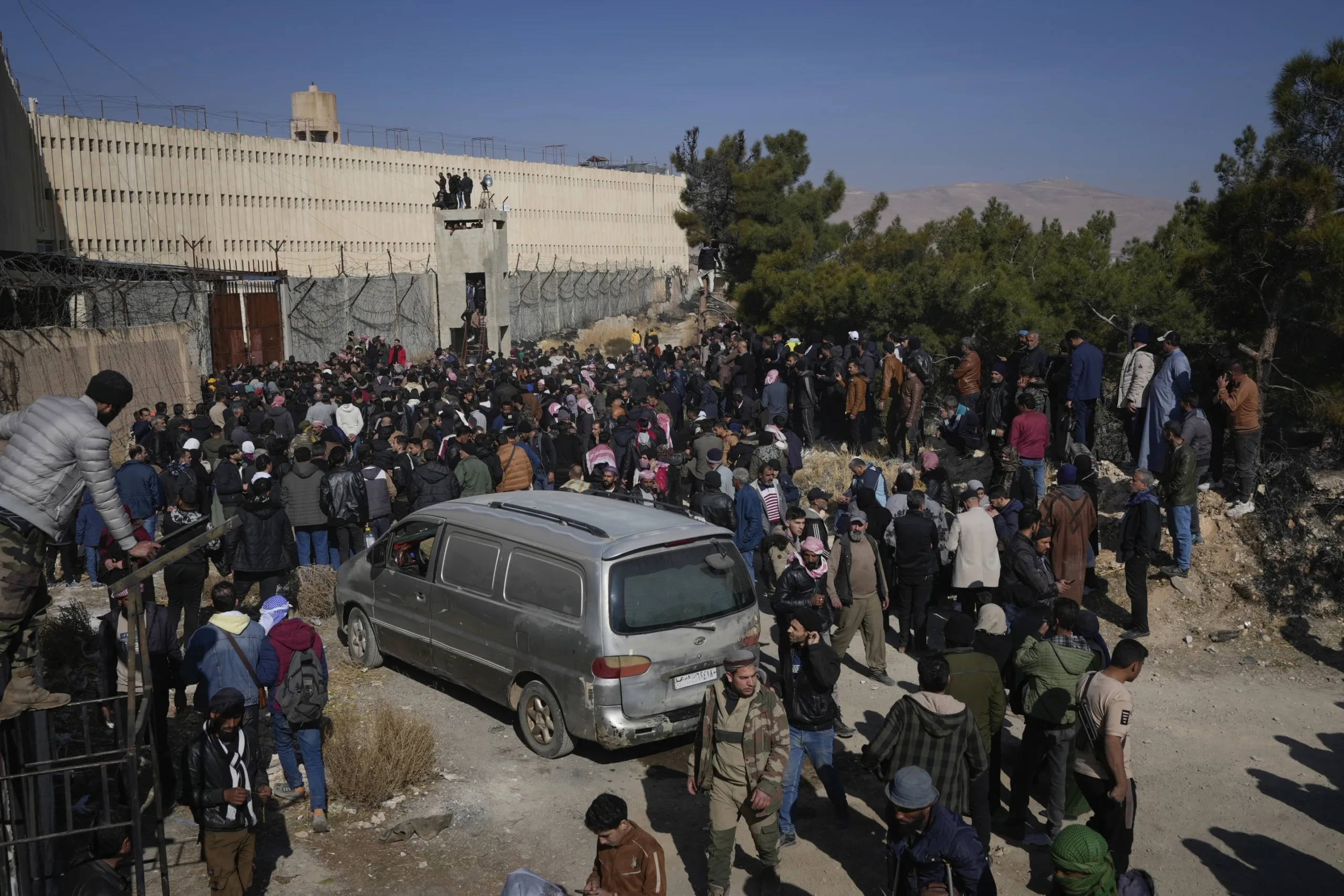
Coinciding with the final hours of the Assad regime’s fall, clips filmed in the first minutes of entering the prison, opening the cells, and freeing detainees showed the presence of screens and surveillance cameras inside the prison. Later, the Association of Detainees and the Missing in Sednaya Prison announced that “shabiha and thieves” had stolen computers from the control room and some files from the prison’s security office, and shared information about them with military authorities.
Fadel Abdul Ghany, director of the Syrian Network for Human Rights, said the government should treat the recordings as potential criminal evidence rather than media material for public circulation, secure the original copies and restrict access to specialized investigative bodies, document the chain of custody, and subject them to independent technical examination to verify their integrity and ensure they were not altered, while protecting the identities of witnesses and victims.
Abdul Ghany believes these recordings could contribute to justice if they are used to identify victims and perpetrators and link violations to specific places and times, while being supported by survivors’ testimonies and victims’ families’ accounts, and proving patterns of detention, torture, and enforced disappearance within the prison system, thereby strengthening prosecution files and preventing impunity.
For his part, Hadi Haroun, a member of the documentation team at the Association of Detainees and the Missing in Sednaya Prison, says the published clips do not reflect the reality of the catastrophe and the atrocities that were taking place inside the prison. He pointed to attempts by Assad regime loyalists to exploit the absence of scenes of beatings and insults to claim that the prison was monitored by cameras, and therefore deny the existence of torture and present an image of soldiers adhering to discipline and official dress.
Haroun believes publishing this limited portion of the videos is intended to exonerate people currently facing trial by portraying them as incapable of killing or torture.
Fragility in Securing “Crime Scenes”
After the launch of the “Deterrence of Aggression” battle and the successive opening of prisons and detention centers in cities liberated by the Military Operations Administration forces from Assad’s soldiers and allies, the absence of clear management of this file became evident: from failing to document the names of survivors, to opening the doors to everyone without distinguishing criminal perpetrators, to leaving “crime scenes” open to Syrians searching for information, traces, or remains, as well as to those seeking to destroy or obscure the truth, and to irresponsible handling by media outlets and “influencers.”
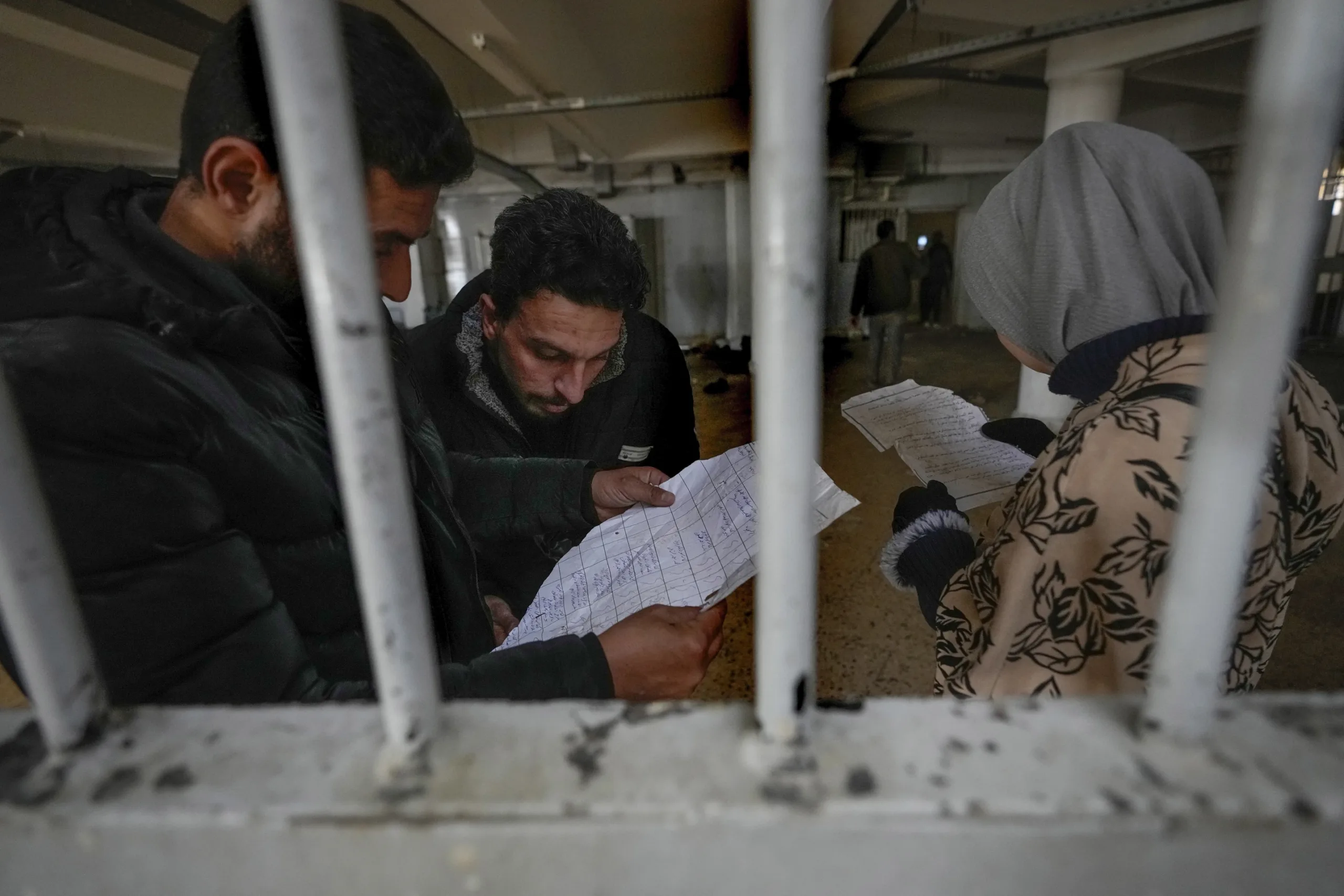
Despite awareness of the complexity and weight of the detention file, official bodies faced criticism for shortcomings and negligence in dealing with it. The prison and detention-center system of the Assad regime extended above and below ground, and the number of those released after they were opened reached about 24,200 people, while the number of the missing and forcibly disappeared is estimated at between 150,000 and 300,000 people.
Among the difficulties that emerged in this file were those faced by Syrian Civil Defense teams during searches for detainees and in responding to families’ appeals regarding sites suspected of holding detainees, alongside the participation of Turkish teams in searching for possible secret basements in Sednaya.
Two days after Assad fled, Civil Defense director Raed al-Saleh (now the minister of emergencies) announced that a request had been sent to the United Nations through an international intermediary asking Russia to pressure the ousted regime’s president to hand over maps of secret prison locations and lists of detainees’ names to facilitate reaching them as quickly as possible, but no response emerged.
NoonPost tracks the most prominent incidents, gaps, and shortcomings in the Syrian new administration’s handling of the prison file, while noting the difficulty of the legacy left by the two Assads’ regime and the fact that some documents were burned and looted by security and intelligence personnel before they fled. These documents contained vital information about the structure of the security and intelligence services, the identities of those responsible for serious crimes, and details related to detainees held at these sites.
- An incident involving the theft of computers from the control room and some files from the security office in Sednaya Prison by a group of 14 people described as “shabiha and remnants of the ousted regime.” One member of the group turned himself in, and no information followed.
- Looting operations involving the “stripping” of equipment, extraction of iron and copper, and removal of water pipes from several locations inside Sednaya Prison, without oversight, alongside a state of chaos involving documents and files scattered on the ground.
- Prisons, documents, and mass-grave sites were left without adequate security or preservation of evidence, prompting Syrian and international human rights organizations to call on the Damascus government to take urgent steps to secure this evidence calls that were repeated on more than one occasion.
- Extensive search and excavation operations in Sednaya Prison’s yards, floors, and surroundings in search of survivors or bodies, amid circulating information and rumors about the existence of secret cells and underground levels, along with acknowledgment of the difficulty of containing the scene before grieving families clinging to hope of finding their missing loved ones.
- Opening prisons and detention centers to content creators and “influencers” through permits and approvals from the Ministry of Information, without clear professional guidelines for those individuals that take into account the sensitivity and sanctity of these sites, resulting in the publication and circulation of misleading information and news about prisons, negatively affecting the truth and survivors’ testimonies.
- A team called “Sawaed al-Khair” painted one of the cells in the Political Security branch in Latakia, sparking a wave of anger on the grounds that the step contributed to obscuring evidence, while those involved saw it as a sign of hope. Later, the team whose accounts were deleted after the incident said it had obtained prior approval, while the government promised to follow up with the body that granted the permit, without announcing any later results.
- Holding an event to launch the “Association of Detainees of the Syrian Revolution” in the courtyard of Sednaya Prison, attended by companies marketing their products, including “Bin al-Hamwi” and “Latar Biscuits,” in addition to a celebratory “arada,” sparked widespread resentment as it was seen as belittling the pain of victims and their families. Later, clarifying statements were issued by the association and by “Bin al-Hamwi.”
- The lack of serious media handling of the detention file and leaving circulating information to fuel public tension, including the controversy over filming drama productions inside prisons, between demands to halt any works filmed inside prisons and security centers and a belated denial by the National Committee for Drama of filming any scenes inside prisons or security branches that witnessed violations during the former regime’s rule, confirming that filming was limited to an external courtyard of one of the administrative sites affiliated to the branch “Palestine.”
The matter is not limited to violations affecting “crime scenes” or shortcomings in securing their protection. The incident of young man Mohammad Ali Shalla ending his life in April, a former detainee in Sednaya Prison, sheds light on shortcomings in dealing with the file of survivors, who have not yet received adequate rehabilitation programs or psychological, social, and economic support, as efforts remain limited to individual initiatives.
Researcher Abdulrahman al-Haj, director of the Syrian Memory Foundation, says the prison issue was not part of the Military Operations Administration’s plan in the “Deterrence of Aggression” battle, as the main concern was toppling the regime, addressing grievances, and protecting state institutions from looting and destruction upon entry.
Al-Haj adds in remarks to NoonPost that the prison-liberation operations were not part of the plan but came as a result of it, and many parties intervened in them, most notably the Civil Defense, which played a major role in preserving them starting from the day after the regime’s fall. He noted that attention to prisons and fugitive criminals increased markedly in the following days because they pose a threat to security stability.
Al-Haj points out that military operations and the conversion of some prisons into barracks for regime forces led to the destruction of a number of them and rendered them unusable to this day. He noted that the collapse of the army and security apparatus required time for the new government to build security forces and establish specialized institutions for transitional justice and the missing, tasked with preserving prisons and their archives.
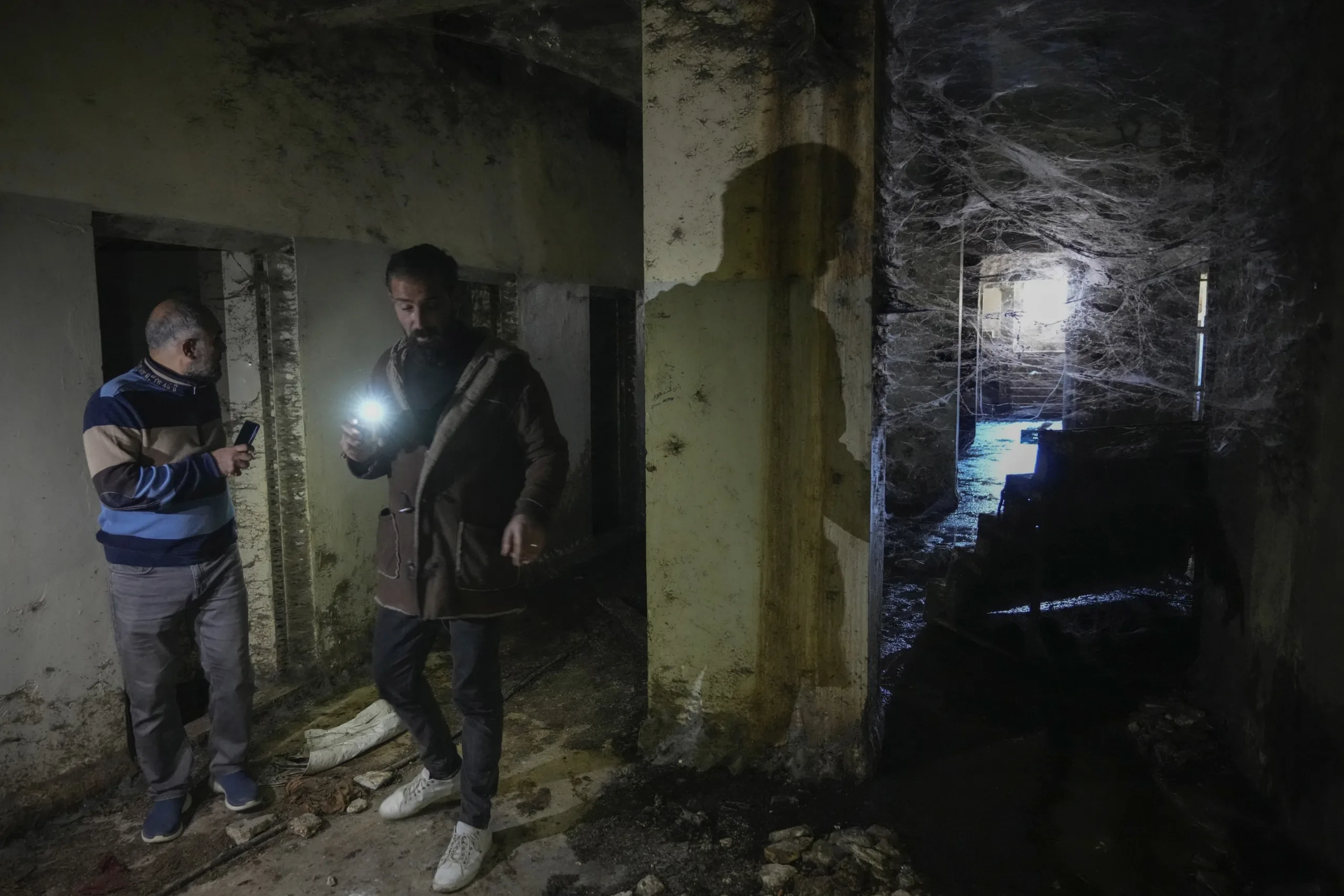
He explains that protecting the archive from chaos and looting was not possible at that stage, and while it may have been possible to reduce the scale of the chaos and preserve the archive better, the lack of capacity and the presence of challenges did not allow the government to do so easily.
He notes that government efforts are increasing as the security apparatus is built up to preserve crime scenes and prevent tampering with them, including mass graves, pointing to the prominent role played by the White Helmets (Civil Defense), which has become part of the Ministry of Emergencies, alongside the growing capabilities of the state and the increasing presence of human rights organizations on Syrian soil.
The researcher believes that the handling of prisons and crime scenes has seen gradual development in parallel with the development of the state’s capacities and its security institutions.
Steps to Manage Prisons… A “Central Archive” Is Essential
Regarding the prison file in post-Assad Syria, official discourse focuses on organizational and administrative changes within the framework of redefining the function of prisons and turning them into centers for reform and rehabilitation, more than it addresses crime scenes and evidence preservation. In April 2025, Interior Minister Anas Khattab said the ministry had agreed with the Construction Administration to temporarily rehabilitate current prisons until new detention centers are prepared that contribute to achieving justice and guarantee respect for detainees’ rights. This was followed by the announcement of the establishment of a special administration for prisons and reformatories.
In November 2025, Hama’s public prosecutor, Judge Ayman al-Othman, announced the establishment of a legal office inside Hama Central Prison to oversee and organize legal procedures and provide legal advice and guidance to prison staff, in addition to legal awareness for inmates. Meanwhile, Daraa Governorate opened the police station in the town of Saida with a design modeled on the Western style of prisons in terms of construction and architecture, in December 2025.
The building of the “Military Security” branch in Aleppo was rehabilitated and repurposed as a center for receiving complaints, raising human rights concerns about the possible erasure of evidence. The Public Relations Office of the Internal Security Command in Aleppo told NoonPost that prisons do not fall under its authority, which is limited to holding cells, and that prisons are subject to a central administration in the Ministry of Interior. NoonPost was unable to contact the relevant body for comment.
The full story behind the publication of recordings from Sednaya Prison and the General Security investigations into the case.
Exclusive | Noon Syria
📌On the night of Tuesday, April 28, videos from Sednaya Prison’s recordings before the fall of the Assad regime began circulating on social media, specifically on Facebook from a personal account under… pic.twitter.com/6bbiJhzslk
— نون سوريا (@NoonPostSY) April 29, 2026
In December 2025, Reuters reported that at least 28 prisons and detention centers from the Assad era had resumed operations during 2025. It also compiled the names of at least 829 people arrested for security reasons since Assad’s fall. The Syrian Ministry of Information responded to the agency that the reopening of some detention centers and the arrests are linked to the need to bring those involved in abuses during the Assad era to justice.
In February 2026, Syrian President Ahmed al-Sharaa issued a decree granting a general amnesty for crimes committed before the date of its issuance, including reducing life imprisonment and perpetual detention sentences to 20 years in prison, while excluding rulings of a personal-claim nature unless the injured party waives the right.
Syrian Justice Minister Mazhar al-Wais said that around half a million Syrians would benefit from the amnesty decree, stressing that it excludes all those who committed abuses or atrocities against the Syrian people. He also denied the existence of any “political detainees,” despite the continued detention of Emirati opposition figure Jassim al-Shamsi since November 2025.
There is no single body in charge of the prison file and its ramifications. Several bodies share responsibilities according to their jurisdictions and to varying degrees, foremost among them the Ministry of Interior, which regularly announces, as part of its duties, the arrest of those involved in grave abuses, including prison guards, among them Major General Akram Salloum al-Abdullah, who is considered one of those directly responsible for carrying out liquidation operations inside Sednaya Prison.
The Transitional Justice Commission is tasked with prosecuting those involved in grave abuses, while the National Commission for the Missing continues its work despite criticism over slowness amid the complexities of examining hundreds of thousands of documents and verifying mass graves discovered one after another. Meanwhile, the Ministry of Justice says it has preserved the judicial archive, documented evidence related to the crimes of the former regime, and prevented its erasure.
Researcher Abdulrahman al-Haj told NoonPost that Syria lacks a government archives institution, noting that work on a central archive has been suspended since the 1960s, meaning the state now has no central archive, in addition to the absence of an archive for military documents or laws governing that. This constitutes a huge governance gap in Syria that the Assad regime—and before it the Baathist coup-makers—deliberately created.
He adds that the available archive is an institutional archive, with each institution having its own archive, including the archives of the security services primarily responsible for abuses alongside the army. He points to a clear need to establish a central archive related to documents of abuses, collected from all former security services and the army, to serve as the basis for the work of bodies dealing with abuses during the Assad era.
The researcher explains three important dimensions to having a central archive: First, specialization, which allows for experts in documentation and archiving who are different from experts tracking the fate of the missing or accountability within the transitional justice process. Second, because it resolves disputes between bodies over documents and helps meet their needs. Third, it allows dedicated efforts to recover documents looted from military and security branches and prisons.
If it proves impossible to establish this institution or specialized documentation unit—which should be under the supervision of the Ministry of Interior—the burden will be distributed among three institutions: the Ministry of Interior, the Transitional Justice Commission, and the Commission for the Missing, which would further fragment efforts and documents, according to the researcher.