










هذا التقرير متاح أيضًا بـ العربية
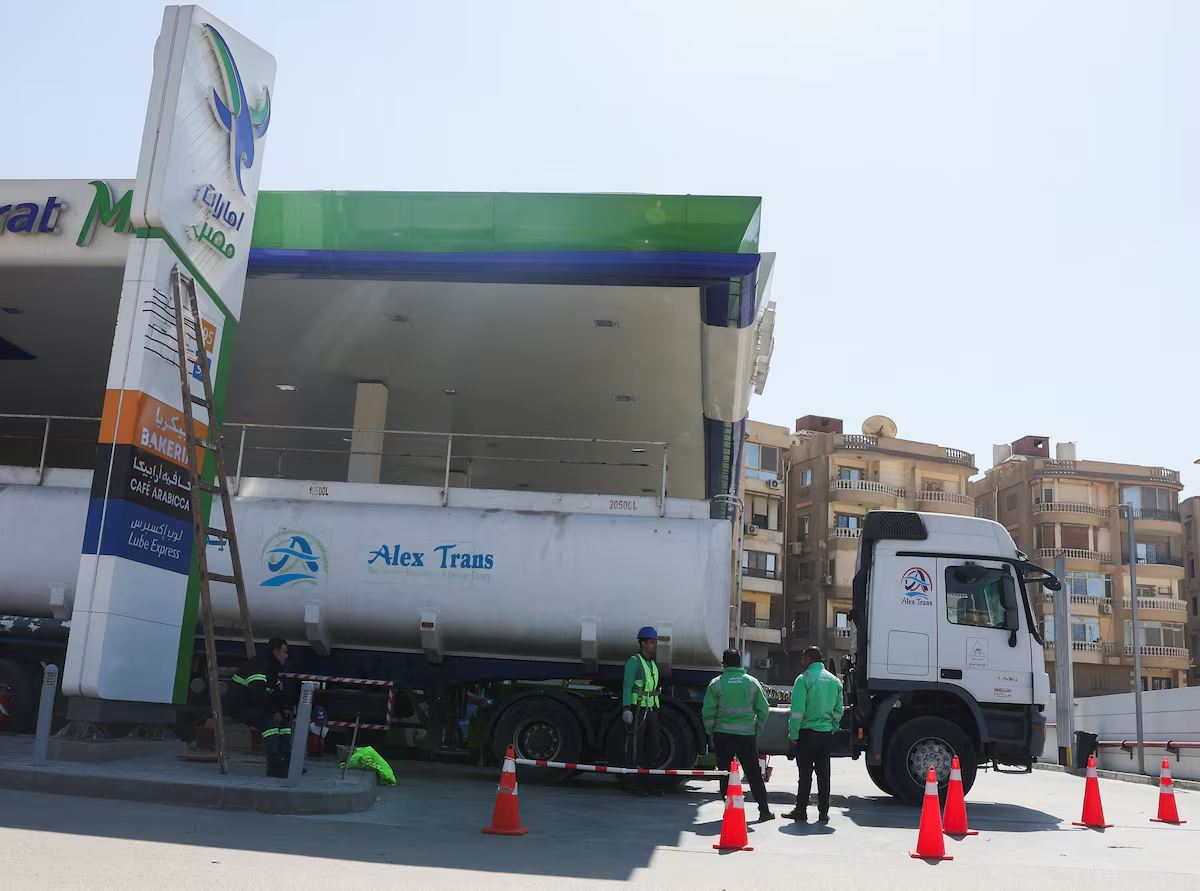
In a notable move that reshuffles the cards within the global energy market, announced the UAE unexpectedly announced its withdrawal from the Organization of the Petroleum Exporting Countries (OPEC) and the OPEC+ alliance, in a decision that Energy Minister Suhail Al Mazrouei described as the result of a comprehensive strategic review of the country’s energy policies, stressing that the decision was sovereign in nature and was not discussed with any other party.
The decision triggered a broad wave of anticipation and debate within energy markets and among producing countries, given the UAE’s production and investment weight within the oil system, opening the door to the possibility of reshaping production and pricing balances and putting the cohesion of the organization’s traditional coordination mechanisms to a real test.
The main issue here lies not in the step itself three other countries have preceded it (Angola, Ecuador, and Qatar)—but in its sensitive timing, as it comes amid a turbulent geopolitical environment in which the repercussions of escalation linked to the Strait of Hormuz intersect with the fallout from the confrontation between Washington and Tehran, making it difficult to separate the decision from an extremely complex regional and international context.
By contrast, the justifications put forward by Abu Dhabi centered on aligning the decision with its long-term energy strategies have not convinced many observers, as numerous assessments have turned to deeper motives tied to a strategic repositioning in the energy market and the nature of its relationship with Saudi Arabia, which is expected to be among the parties most affected, whether in terms of leadership balances within OPEC or regional and international influence in oil markets.
What does withdrawing from OPEC mean?
The UAE is one of the major producers in the global energy market, ranking seventh worldwide in liquid fuels production in 2022, and third within the Organization of the Petroleum Exporting Countries after Saudi Arabia and Iraq. In recent years, its output has ranged between 3 and 3.5 million barrels per day, representing about 3% of total global crude supplies.
The UAE’s weight is not limited to production volume alone; it also extends to its possession of spare production capacity, a decisive element in the equation of market stability, as it is usually used to confront supply disruptions during geopolitical crises. In this context, the UAE stands alongside Saudi Arabia as one of the few countries within OPEC capable of pumping additional quantities when needed, giving it a pivotal role in balancing the market.
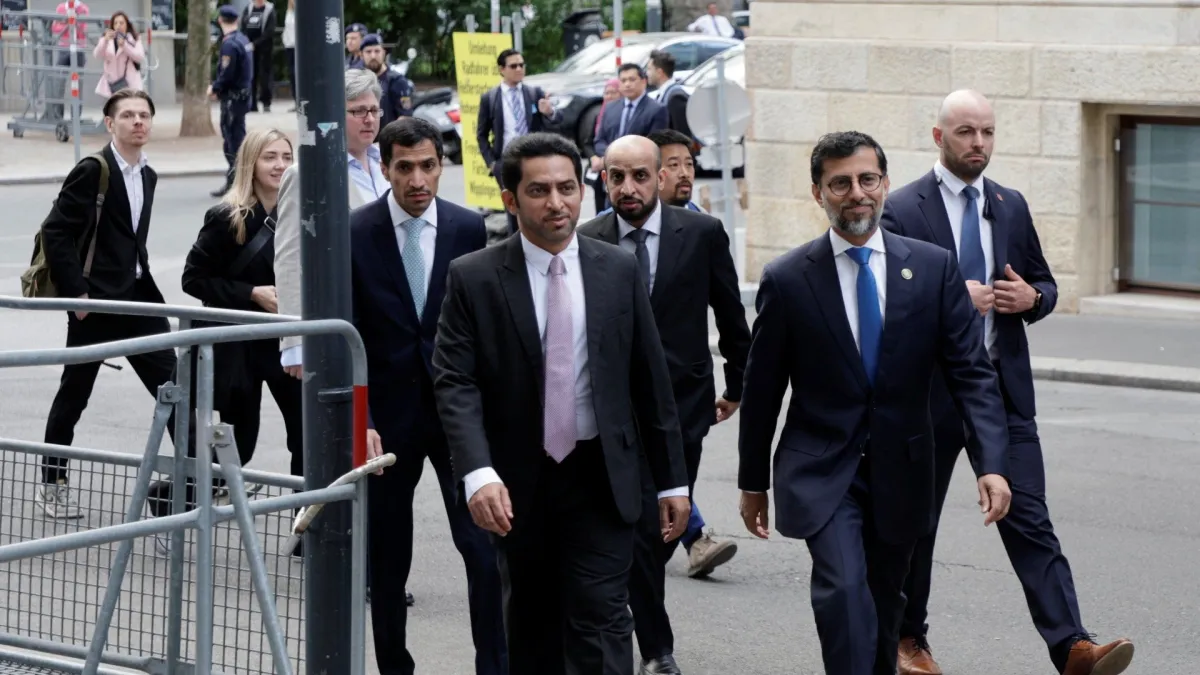
This influential presence within OPEC makes the withdrawal decision a step with deep repercussions, one that could disrupt the organization’s traditional coordination mechanisms. Under this shift, Abu Dhabi is no longer bound by OPEC decisions or by coordination with the OPEC+ alliance, whether regarding production ceilings or pricing policies.
Accordingly, the decision opens the way for the Emiratis to adopt more independent production and pricing policies, reshaping market balances and limiting OPEC’s ability to control supplies and prices. This is expected to affect not only the stability of the global energy market, but also the organization’s weight and the influence of its members in managing that market.
Accumulated Backgrounds… Suppressed Tension
Although the timing of the decision carried a great deal of surprise, its substance was not entirely shocking. Rather, it came as the culmination of a buildup of tensions within the OPEC+ alliance, where disagreements among members escalated, especially over mechanisms for distributing production quotas. Despite attempts to contain these differences or downplay their severity, they remained latent until they clearly imposed themselves with this development.
In this context, the UAE emerged as one of the most prominent parties objecting to production restrictions, having invested more than $150 billion to develop its oil infrastructure, raising its production capacity to around 5 million barrels per day. Yet the production ceiling set for it within OPEC remained at roughly 3.4 million barrels per day, which Abu Dhabi viewed as an obstacle to maximizing returns on its investments. It repeatedly sought to revise that ceiling, but those demands were rejected within the organization in order to preserve market balances and pricing mechanisms linked to controlling production levels.
اتخذت الإمارات اليوم قرارا استراتيجيا هو الانسحاب من منظمة اوبك. هنا الإمارات الجديدة حازمة مرنة مستقلة في اتخاذ قرارت سيادية والتي ضحت بما فيه الكفاية لصالح منظمة تستخدم من دول تحتكر قراراتها. الإمارات الجديدة افضل حالا بدون اوبك ولا استبعد ان دول اعضاء في اوبك ستنسحب قريبا pic.twitter.com/nu70BQPxyQ
— Abdulkhaleq Abdulla (@Abdulkhaleq_UAE) April 28, 2026
The Emirati approach to this issue is rooted in broader shifts in its economic structure, as oil is no longer the sole source of income amid notable diversification that includes tourism, trade, and industry. This diversification has given Abu Dhabi greater flexibility in dealing with oil prices, leading it to prefer increasing production volumes at moderate price levels rather than adhering to strict production constraints aimed at supporting prices.
However, this vision did not gain consensus within OPEC and remained a point of reservation for some members, reflecting that the disagreement was not fleeting but rather an extension of a longstanding strategic divergence, even if it had receded from public discourse in recent times.
Although these factors combined were enough to create a tense environment within OPEC, they were not alone sufficient to explain Abu Dhabi’s decision to take a step of this magnitude unless coupled with another, deeper and more influential factor. Here, the growing Saudi-Emirati dispute comes into focus, with its features gradually emerging over the past three years and taking on a character that goes beyond technical disagreements to broader strategic considerations.
The Dispute with Saudi Arabia… The Key Factor
The past few years have witnessed suppressed tension between Riyadh and Abu Dhabi, specifically since the signing of the Abraham Accords in September 2020. Yet this tension did not surface publicly until the end of last year, when Yemen brought the Saudi-Emirati dispute into the open, prompting the Kingdom for the first time to bare its teeth toward Emirati policy, which it viewed as a threat to its national security and its wider dimensions.
The tension was not confined to Yemen alone; it extended to Sudan, Libya, and the Horn of Africa. It even went further to include strengthening the partnership with Tel Aviv and granting it space and an opening for a foothold in the heart of the Gulf something that, regardless of any other considerations, constitutes an explicit and direct threat to Arab and Saudi national security.
Then came the war against Iran and the shock it caused, alongside the Strait of Hormuz, in energy markets and the direct and indirect threats Abu Dhabi faced, adding another dimension to this tension. Emiratis believe Riyadh did not play the required role in protecting them from Iranian attacks, and that Saudi Arabia has adopted an approach inclined toward de-escalation and peaceful solutions, unlike the Emirati approach, which leans toward escalation all the way to toppling the Iranian regime, whatever the consequences.

Taken together, this sequence forms the backdrop to the decision to withdraw from OPEC and OPEC+. A move of such gravity strikes at the heart of Saudi weight, as Saudi leadership of OPEC represents the main lever of Saudi influence regionally and internationally. The Kingdom derives this influence from its leadership of this alliance, which controls the energy market in terms of both production and pricing.
From this perspective, disrupting this alliance is in reality about pulling the center of gravity out from under Saudi Arabia’s feet and stripping it of its biggest and most important global weapon something Abu Dhabi sees as an opening to strategically reposition itself and be viewed as a pivotal player capable of assuming Riyadh’s role, but with greater flexibility and without blackmail or instrumentalizing this card.
Some readings tend to view the withdrawal from OPEC as a form of Emirati retaliation against Saudi Arabia over its recent positions and its diminishing of the UAE’s regional role on the one hand, and as an Emirati attempt to exploit the state of geopolitical confusion to present itself to the Western camp as the ready alternative, more loyal and more beholden to the Western agenda, on the other.
What about the United States?
In the literature of political analysis, the question “Who benefits?” is often invoked as an entry point for understanding the motives behind major decisions. In the current case, the United States appears to be among the foremost parties that could reap indirect gains from the Emirati move. Washington has long called on OPEC to review its production policies in ways that would help ease pressure on prices, calls that did not receive sufficient response as the alliance remained committed to production ceilings aimed at preserving certain price levels.
In this context, the UAE’s exit from OPEC is seen as a factor that could weaken the organization’s cohesion and limit its ability to manage the market in a coordinated manner, especially with Abu Dhabi freed from the production restrictions imposed under the OPEC+ framework. This development gives it broader room to increase output, which could be reflected—at least partially—in price trends in the global market, in a way that intersects with the interests of major consuming countries.
From this perspective, a convergence of interests between Washington and Abu Dhabi becomes apparent: the former seeks an energy market less subject to cartel-like coordination and aims to break OPEC’s dominance over the global energy map, while the latter seeks to maximize its production and revenues within a wider margin of independence. Even so, the impact of this step remains tied to broader market dynamics and cannot be isolated from the calculations and reactions of other producers.
Regardless of whether the United States played a direct or indirect role in this decision, its outcomes align in some respects with the priorities of American energy policy. The move can also be read—in one of its dimensions—within the context of Emirati courtship of the Trump administration, aimed at strategic repositioning, as the UAE seeks to strengthen its presence as an active partner in international energy equations amid a geopolitical environment undergoing rapid transformations.
Where is OPEC headed?
There is no doubt that the Emirati step will leave its mark on OPEC, but it does not necessarily mean the end or collapse of the organization. It still retains influential tools in the market, especially under Saudi leadership, which possesses the largest spare production capacity, in addition to the weight of its partners in the OPEC+ alliance, foremost among them Russia.
These factors may help contain the immediate impact of the UAE’s withdrawal, but at the same time they place the organization before a delicate test at a sensitive stage, where its future will be determined by its ability to balance preserving its traditional role with adapting to a more complex and competitive energy environment.
In this context, a number of potential challenges stand out, chief among them the possibility of a decline in internal commitment. The exit of a country the size of the UAE may encourage some members to reassess their commitment to production ceilings and open the door to broader divergences in vision that could, in some cases, lead to consideration of similar paths.
In light of this, OPEC may find itself facing divergent paths: either moving toward internal restructuring that revisits quota mechanisms, pricing, and the nature of the relationship between the leadership and the rest of the members; or continuing in its current form, with the possible consequence of a gradual decline in its ability to regulate the market, eventually turning into a more flexible and less binding coordination framework. As for the scenario of complete disintegration, it remains theoretically possible, but appears unlikely in the foreseeable future.
By contrast, this step can also be read as part of the tools of political pressure and repositioning, whether with the aim of enhancing Emirati influence within the energy equation or pushing other parties—Saudi Arabia in particular—to review some of their policies. The possibility of recalibrating positions through undeclared understandings also remains on the table, given the intertwining of regional and international interests—meaning here the occupying state, whose regional presence has become, in one way or another, tied to the Emirati presence.