








هذا التقرير متاح أيضًا بـ العربية
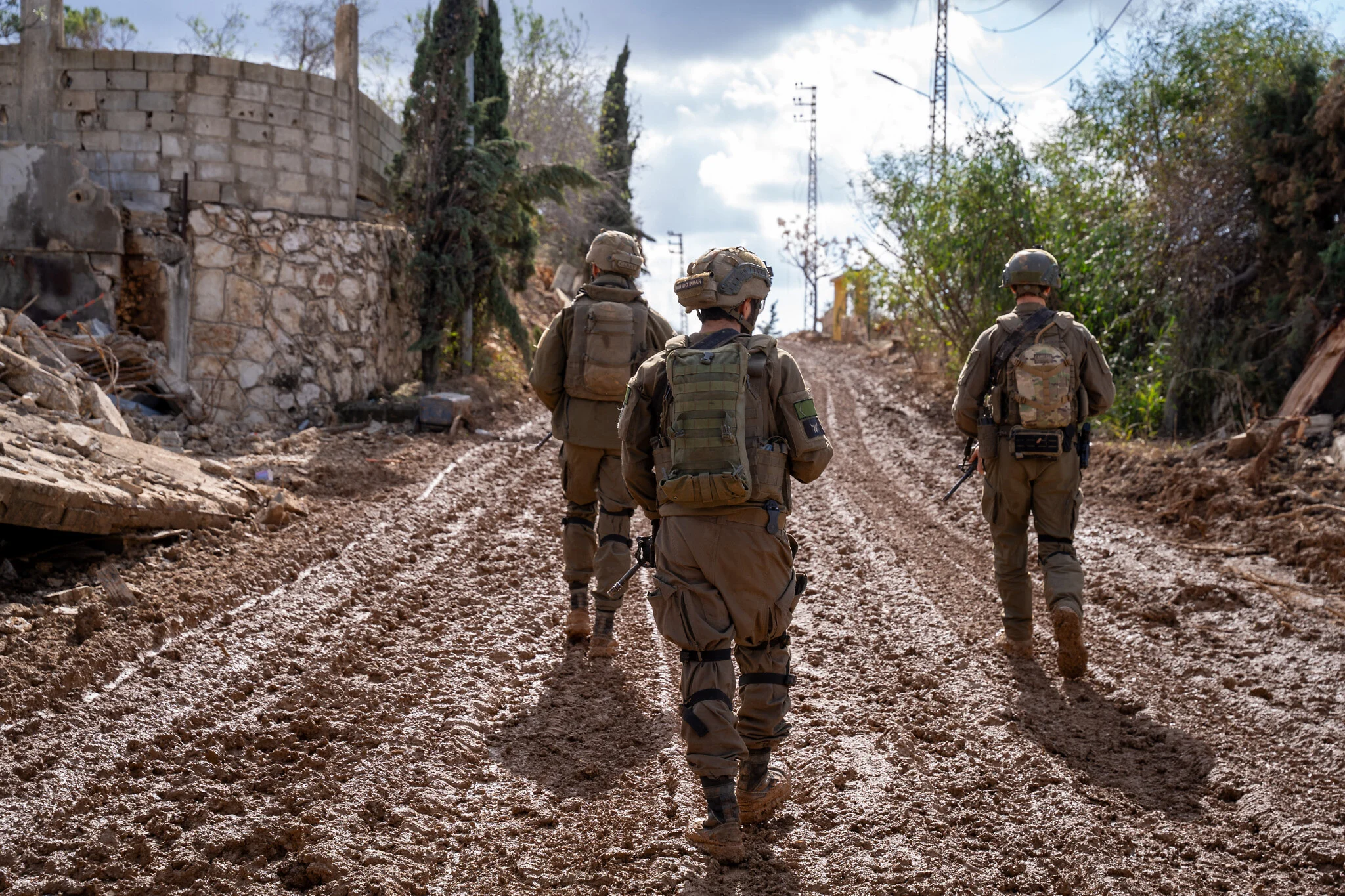
Shortly after the ceasefire took effect, the Israeli occupation army announced on April 18 the launch of what it called the “Yellow Line” inside southern Lebanon.
This line was not included in the text of the agreement, but neither was it born in that moment. For weeks, occupation forces had already begun drawing a field-control strip inside the south, before the truce gave it a clear Israeli name and turned it into a tool to prevent return and impose new facts on the ground.
Since Hezbollah entered the confrontation after the American-Israeli war on Iran, began occupation forces advancing, deploying, and imposing a new field reality along parts of the south, without publicly revealing it under this name.
As for describing it as the “Yellow Line,” that carries a more dangerous dimension: it is the same name used by the occupation army in Gaza to designate its zone of control inside the Strip, indicating an intention to transfer this model to Lebanon.
What is the story of the Yellow Line?
The term “Yellow Line” appeared when the occupation army announced during the truce the operation of an anti-armor line inside Lebanon, beginning in the east around Khiam, passing through Taybeh and Bint Jbeil, then extending westward across the overlooking hills to the Ras al-Bayada/Ras Naqoura area.
The Yellow Line in the south does not have a fixed depth, as Hebrew statements speak of a strip of varying depth extending between 6 and 10 kilometers from the international Blue Line.
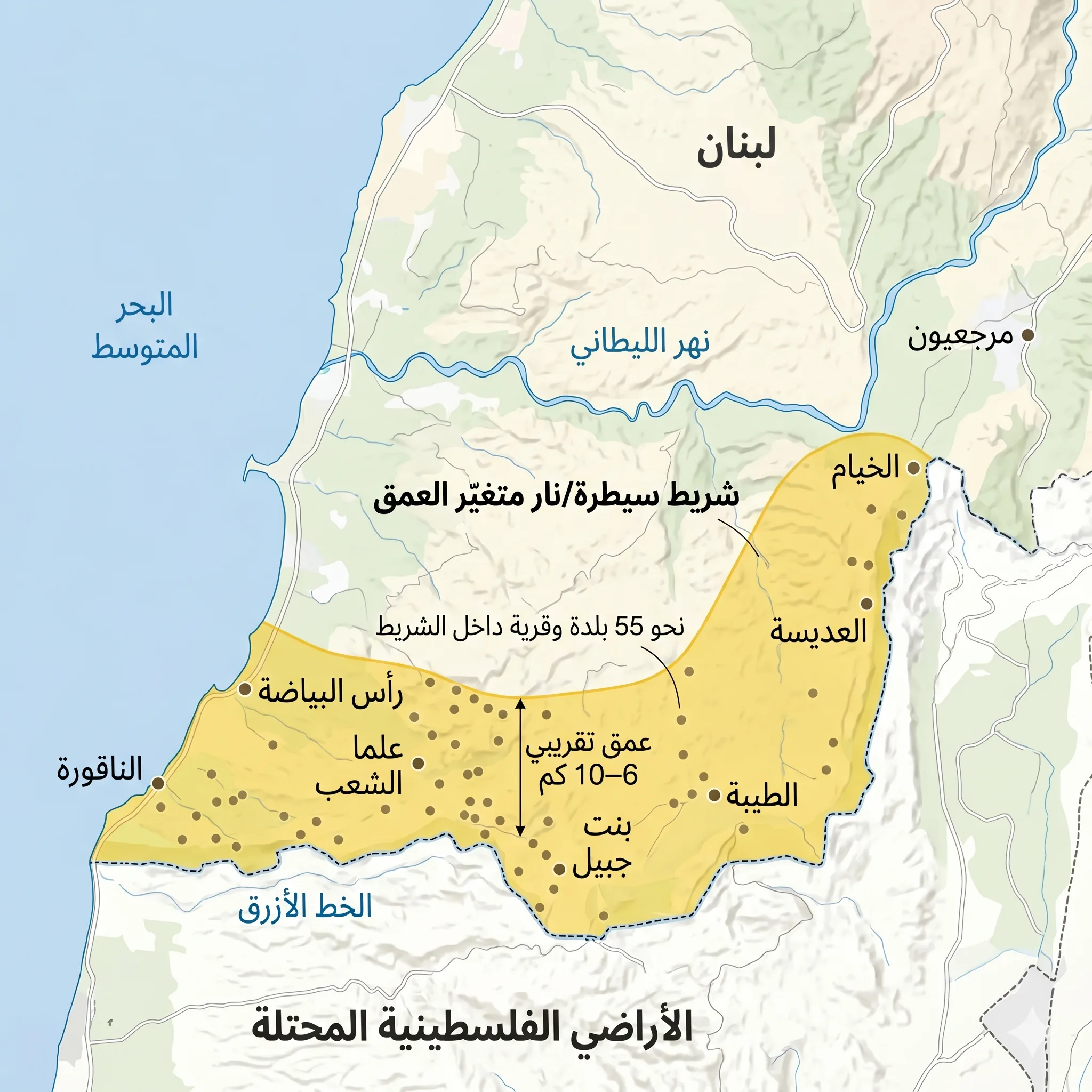
And the distance decreases in areas near the coast (where villages are less far from the border) and increases in the central sectors that include elevated hills.
This is the first time the occupation army has used this term outside Gaza, as it had previously been limited to military maps in the Strip.
In Gaza, the formed Yellow Line served as a withdrawal line that kept occupation forces in a buffer zone whose depth in some places reached about 7 kilometers and whose area amounted to about 60% of the Strip’s total area.
The danger lies in the fact that the new zone of control in Lebanon includes no fewer than 55 villages and towns, meaning that the residents of those areas will not be able to return to them.
To understand the yellow line, it is necessary to distinguish between the different lines drawn by the occupation and by international and UN agreements:
- The blue line: drawn by the United Nations in 2000 to confirm “Israel’s” withdrawal from Lebanon. Beirut does not recognize it as a border, but rather as a ceasefire line, and it extends along the border from Ras al-Naqoura in the west to the Shebaa Farms in the east.
- The red line: a first line close to the border that includes most of the adjacent villages, the majority of which the occupation destroyed or bulldozed and designated as a buffer zone.
- The yellow line: represents the line preventing direct fire and anti-tank fire, where occupation forces are stationed at elevated points to control the routes into the villages, and are allowed to move and destroy homes and infrastructure within this strip.
- The Litani line: a broader hypothetical line that extends to the Litani River, about thirty kilometers inside Lebanese territory, and in the Israeli conception is considered a wider line for control by fire and surveillance, with the intention of occupying this area.
What are the objectives of the yellow line?
The occupation leadership presents the yellow line as a “necessary military step” to ensure fire control, command, and surveillance. The newspaper “Yedioth Ahronoth” says this line is intended to prevent Hezbollah from launching anti-tank missiles at communities in the Galilee.
It explains that armored and infantry units are stationed along elevated points on the border and are working to destroy homes and infrastructure within the strip.
During the truce, announced the occupation army that it had killed Hezbollah members who approached the line, and affirmed that its “freedom of action” within the strip is not restricted by the terms of the ceasefire, as it put it.
For its part, CNN quoted military officials as saying that the army “will prevent the residents of 55 villages from returning” and that anyone who approaches will be considered a target, in an aggression that effectively turns the strip into a closed military zone occupied by “Israel,” where it moves freely.
But the deeper objectives go beyond preventing fire, as occupation forces continue systematically destroying homes and infrastructure, preventing residents from returning, and imposing a demographic vacuum in the border strip.
Reports Israeli sources indicate that any fighter found inside the strip “is ordered to surrender or be killed,” an act of aggression that evokes the Gaza model.
In the Strip, the yellow line led to the division besieged enclave into two areas: the occupation controls the “eastern zone” and opens fire on anyone approaching the yellow markers (and indeed anywhere in the Strip), while residents are crammed into the western zone.
And described Israeli Chief of Staff Eyal Zamir described the yellow line in Gaza as a “new border line.” Accordingly, estimates prevail that Israeli officials’ talk about its counterpart in Lebanon in the same language is paving the way for the same objective: emptying the strip of its residents and imposing facts on the ground that would later allow bargaining over the fate of the south.
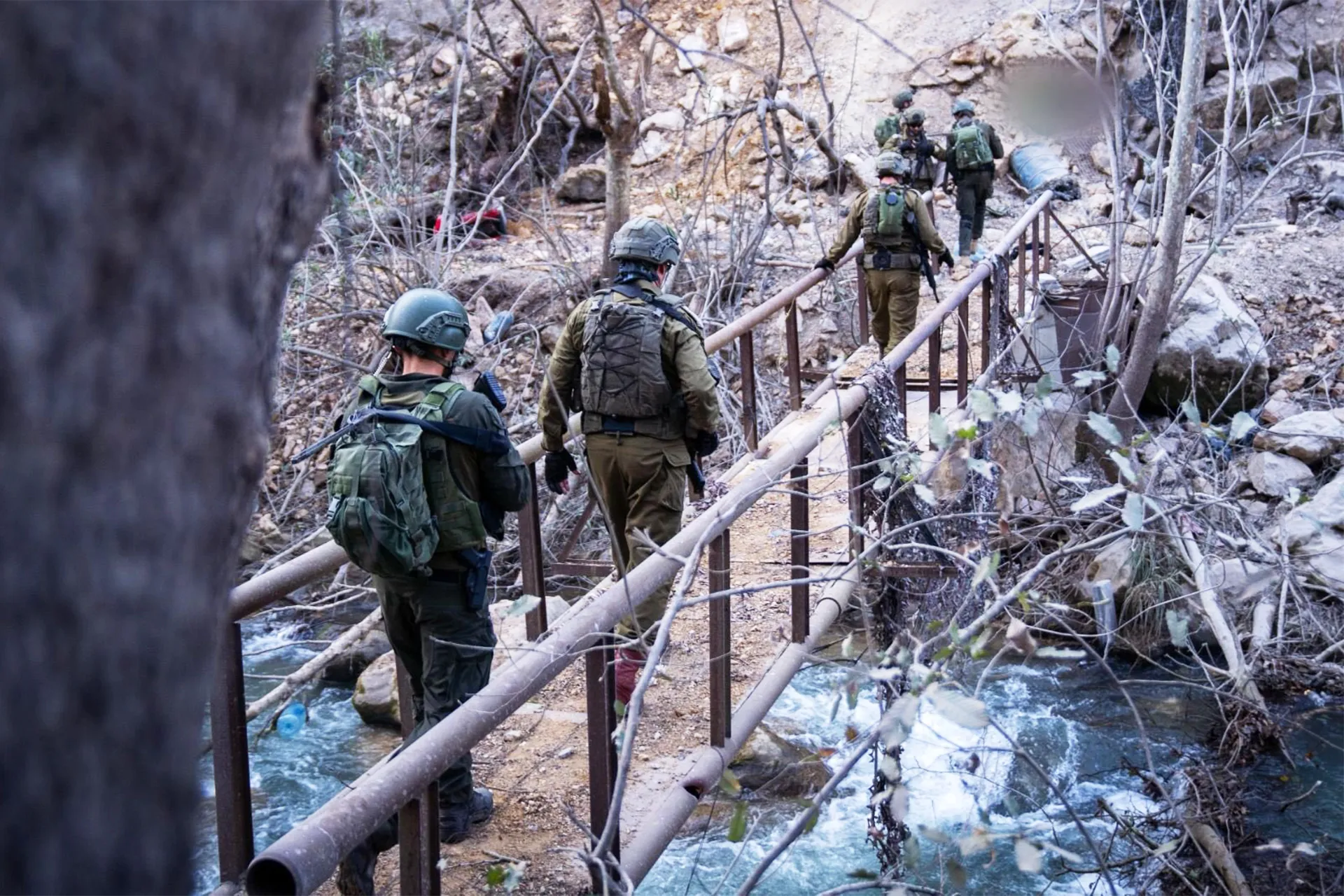
This dimension extends to an attempt to reshape the border itself. Looking back at the occupation experience in the 1980s and 1990s, the “old security strip” included an area 15–25 kilometers deep inside Lebanon through proxies from the “South Lebanon Army,” militias formed with Israeli support.
The current yellow line differs in its tools, as it relies on direct Israeli force rather than a local militia, and uses modern surveillance means and drones instead of fixed checkpoints. But it resembles the old strip in function, in that it creates a buffer zone preventing Hezbollah from reaching the border and makes the future of the border villages contingent on the will of the occupation.
Israeli military statements suggest that this area may turn into a pressure card in any subsequent negotiations, whether regarding the implementation of Resolution 1701 or broader regional settlements. Talk of withdrawal to the Litani line signals a wider ambition that includes the area north of the river and aims to neutralize Hezbollah along the border strip.
The new Israeli moves are tied to an obsession with controlling the Litani River as an indispensable pivot in Tel Aviv’s strategic calculations.
During the latest aggression, intensified the occupation army’s issuance of urgent evacuation warnings, open-ended in time, for more than 100 towns and villages south of the river, forcibly pushing hundreds of thousands of residents northward in an unprecedented wave of mass displacement that revealed a premeditated course aimed at severing this geographic area from its Lebanese surroundings.
But with the failure to intercept rockets and drones launched from the south, the occupation is trying to apply a scorched-earth strategy in the Litani to prepare an advanced ground-operations theater and turn the river’s southern bank into a free-fire zone devoid of population density, thereby compensating for intelligence and field failures.