










In a stunning political upset, Hungarian Prime Minister Viktor Orbán conceded defeat on Sunday, April 12, after preliminary official results showed the opposition TISZA party, led by Péter Magyar, taking the lead in the country’s general election.
The outcome ends 16 uninterrupted years of Orbán’s rule and closes the chapter on one of Europe’s most prominent experiments in “illiberal democracy.”
This was not merely a routine electoral loss for a seasoned leader. It marked the abrupt collapse of a governing system that had long presented itself as one of the most cohesive and durable variants of Europe’s right capable of reshaping political institutions to secure and perpetuate its hold on power.
The result raises pressing questions about Hungary’s future trajectory, particularly its relationship with the European Union and its positioning between the United States, Russia, and Israel. Orbán had widely been regarded as the closest ally within the EU to Donald Trump, Benjamin Netanyahu, and Vladimir Putin.
A Turning Point in Hungarian Politics
A first reading of the election and its broader context suggests that Hungary has experienced more than a routine democratic exercise. This was a defining political moment, underscored by record voter turnout exceeding 77 percent the highest in decades reflecting an extraordinary level of public mobilization and a widespread sense that the country stood at a crossroads.
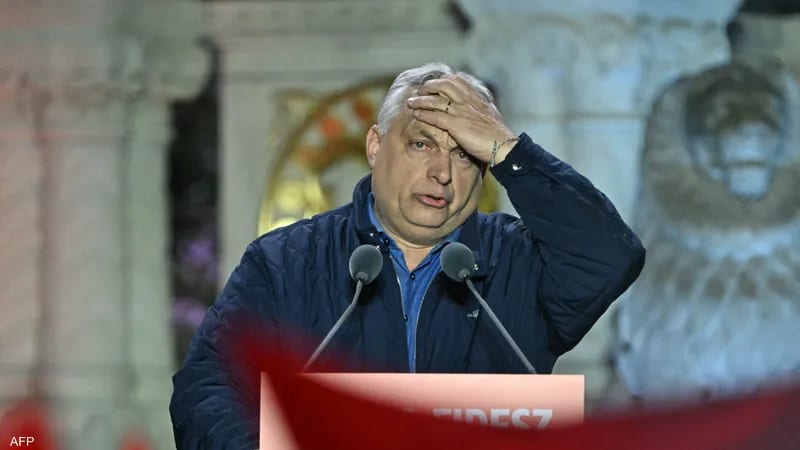
That surge in participation, combined with the opposition’s decisive performance, signals a profound shift in public sentiment. It points to a clear erosion of confidence in Orbán’s governing model, which had dominated Hungarian political life for more than a decade and a half.
The weight of this outcome is amplified by the conditions under which the vote took place. The election unfolded in a deeply uneven political environment, marked by the ruling party’s dominance over media, institutions, and networks of influence. For many observers, the contest was structurally imbalanced from the outset.
Against that backdrop, the result reads as a sweeping protest vote an unmistakable rejection of Orbán’s rule and of his foreign policy alignment with populist regimes. It reflects the rapid erosion of the system’s legitimacy after years of centralizing power to an extent critics increasingly described as insular and monopolistic.
That trajectory was compounded by rising poverty, economic underperformance, entrenched corruption, and Hungary’s growing isolation within Europe due to its confrontational stance toward the EU.
Beyond Hungary’s borders, Orbán had evolved into more than a national leader. He became a central political and ideological figure within Europe’s populist right and a key pillar in the transnational extension of Trumpism and Netanyahu’s political model.
His fall, therefore, carries significance well beyond domestic politics. The message delivered by Hungarian voters resonates across capitals that once viewed Orbán as emblematic of the rise and durability of this political current.
Notably, Péter Magyar, the architect of this political shift, did not emerge from the ranks of traditional opposition movements. He rose from within the very system Orbán built. That insider status appears to have bolstered his credibility among voters, who saw him as a witness to the system’s inner workings someone capable of exposing its flaws and pushing for meaningful reform.
A Possible Return to Europe
Under Orbán, relations between Budapest and Brussels deteriorated into sustained tension, often centering on the most sensitive issues facing the continent most notably the war in Ukraine and sanctions on Russia.
Hungary frequently acted as the principal obstacle within the EU, serving as a de facto veto player against efforts to forge a unified European position. This posture complicated collective decision-making and weakened Europe’s ability to act decisively.
Orbán consistently opposed the EU’s approach to Ukraine, criticized support for Kyiv, and rejected sanctions on Moscow, drawing on his close relationship with Putin. This stance repeatedly constrained Brussels’ ability to take coordinated action on matters central to Europe’s strategic security.
His defeat now opens the possibility—albeit gradual—of Hungary realigning more closely with the European mainstream. Magyar’s campaign rhetoric pointed in that direction, emphasizing a renewed commitment to Europe and declaring that Hungary’s place “has always been and will remain in Europe.”
A Setback for Trumpism
Orbán’s loss represents a significant blow to the Trump-aligned current in Europe. He was not only Trump’s closest ally on the continent but also its most visible ideological extension.
The symbolic weight of this defeat is heightened by the overt support Orbán received from Washington. Trump publicly endorsed him ahead of the vote, while Vice President J.D. Vance signaled support during a recent visit to Budapest underscoring the American right’s investment in his continued rule.
From this perspective, Orbán’s defeat is seen in Washington as a symbolic setback for Trump’s global network. It marks not just the loss of an ally, but the collapse of what had long been held up as a successful European model of nationalist conservative governance one that fused populist rhetoric with long-term institutional control.
Yet this shift does not necessarily herald a rupture in U.S.-Hungarian relations. More likely, ties will evolve from a framework shaped by personal and ideological affinities into a more institutional relationship grounded in state interests.
The partnership is expected to endure, though in a recalibrated form less tied to Trumpism and more aligned with traditional transatlantic norms.
Moscow’s Shrinking Influence
Orbán was frequently described in Western media as “Putin’s man in Europe,” a reflection of both his close relationship with the Russian president and his role within the EU as a moderating force against strong action toward Moscow.
Hungary’s repeated resistance to sanctions and its reservations about European support for Ukraine often gave the impression that Budapest functioned as an informal veto against anti-Kremlin initiatives.
Over time, Hungary became a key channel through which Russia maintained influence within the EU, particularly during moments of heightened tension.
Orbán’s defeat therefore represents more than the loss of a sympathetic leader. It deprives Moscow of a crucial partner within the EU and narrows an important avenue of influence inside Europe—weakening one of the mechanisms it long used to disrupt European unity.
A Blow to Netanyahu
In recent years, Orbán had emerged as Benjamin Netanyahu’s most reliable ally in Europe. His support went beyond conventional diplomacy, positioning Hungary as one of the most consistent defenders of Israeli policy within the EU.
This alignment was evident in Orbán’s decision to join Trump’s “Peace Council” initiative on Gaza at a time when other European leaders expressed clear reservations. His stance placed Hungary at odds with broader European public opinion, which has increasingly criticized Israeli policies and voiced support for Palestinian rights.
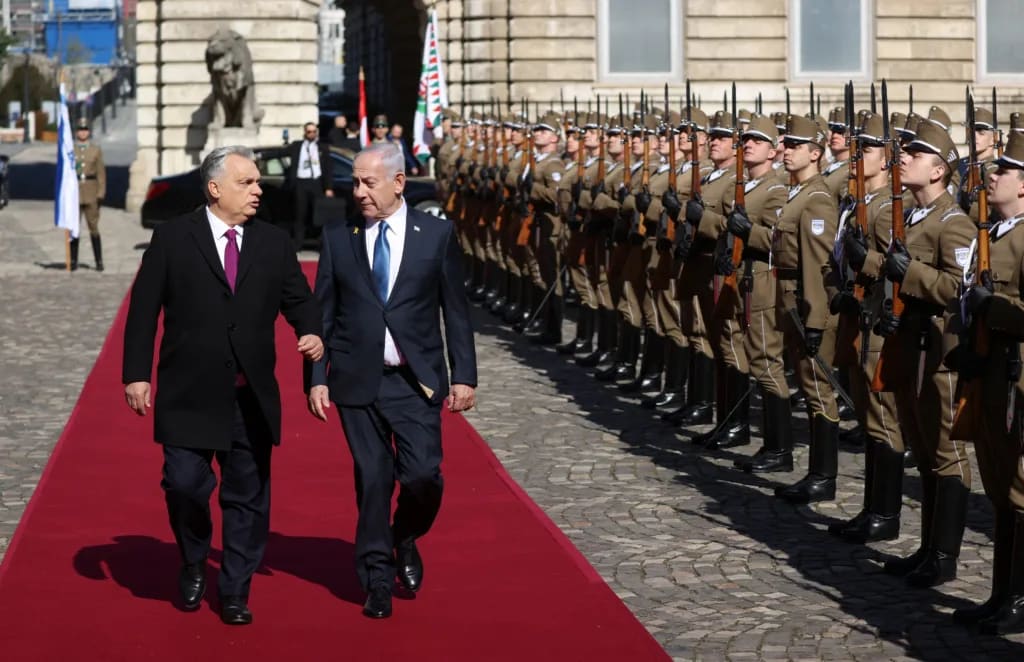
Orbán’s backing extended into concrete actions. He hosted Netanyahu despite an International Criminal Court decision against him and supported Israel in international legal and diplomatic arenas, including at the United Nations. Under his leadership, Budapest became one of Israel’s most dependable voices in Europe.
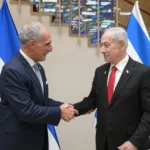
For Netanyahu, Orbán’s defeat represents more than the loss of a political ally. It removes a key source of support within Europe at a time of growing international criticism and deprives Israel of a partner that had often helped obstruct or dilute European consensus.
What Comes Next
Magyar’s victory does not necessarily signal a wholesale transformation of Hungary’s political system. The country is unlikely to pivot abruptly toward a liberal progressive model in the traditional European sense.
Magyar himself emerges from a conservative populist background, albeit a less confrontational one than Orbán’s. Expectations of rapid change may therefore prove overstated.
Rather than a clean break, Hungary is more likely to undergo a gradual recalibration. Orbán’s legacy remains deeply embedded within state institutions and political networks, limiting the scope for immediate transformation.
Budapest may seek to rebalance its relationships with Israel, the United States, and Russia not through sharp ruptures, but through a more pragmatic and institutional approach guided by national interests rather than personal alliances.
In this evolving landscape and amid the broader setback for Trump-aligned currents in Europe there may be an opening for Arab states to reengage diplomatically and help restore balance after years in which Hungarian policy tilted in ways that undermined several Arab causes.