






هذا التقرير متاح أيضًا بـ العربية
Trump’s statements regarding Washington’s war with Tehran were marked by a great deal of randomness and confusion, making it difficult for the media, international institutions, and members of the international community—whether allies or adversaries—to draw up a clear strategy for how Washington was managing this war, which threatens international peace and security and warns of the possibility of the world being dragged into a devastating global war that extends beyond its original parties.
Yet the feature of confusion in both American statements and decisions did not merely reflect Trump’s erratic personality and narcissism, nor only the shallowness of his political and military experience. In many cases, it also concealed a deceptive course and deliberate manipulation of the man’s perceptions and information about the reality of what was happening.
So how did Trump’s ministers and his inner circle of White House officials manipulate his decisions? Was there a prior, agreed-upon plan among administration members to sideline Trump’s personality and exploit its weaknesses in order to advance their own agendas regarding Iran? Or is it a dangerous childish game being played by figures with shallow political and military experience? What impact does this conspiratorial camp have on the course of the war with Tehran? And does this approach absolve Trump of responsibility for what is happening? This article attempts to answer these questions and others.
The Imagined Danger: How Trump Entered the War on Iran
In an investigation by The New York Times into the motive attributed to the Trump administration for entering a war with Tehran after secret U.S.-Iran talks had been proceeding very well and pointed to a near diplomatic resolution of the nuclear crisis between the two sides the newspaper indicates that Tel Aviv, through its proxies and supporters within the Trump administration, led a camp of misleading information about the readiness of Tehran’s nuclear program. Yet this camp was not the only factor behind Trump’s decision to go to war.
The president himself appears to have been swept up in the euphoria of the lightning operation in Venezuela, which toppled Maduro with virtually no American losses, and his excessive confidence in the possibility of carrying out a precise, rapid “military surgery” to bring down the Supreme Leader’s regime—thereby boosting his presidential standing—pushed him toward favoring war over a diplomatic solution.
In his resignation letter submitted in March 2026, acknowledged Joseph Kent, director of the National Counterterrorism Center and the highest-ranking political official to resign in protest over a foreign war in decades, that Trump had been deceived by senior officials in his administration—whom he called “war advocates”—backed by Israeli officials. Kent indicated that Iran in no way posed an imminent threat to the United States or its interests, and that entering a war with it was unjustified, the result of Israeli and pro-Israel American pressure and manipulation.
Kent described the hands manipulating Trump’s war decision and creating in him the perception that a quick knockout victory was possible as an “echo chamber,” which included foreign officials holding Israeli citizenship, other American officials loyal to “Israel”, and influential figures in the American media who helped steer Trump away from the principle of “America First,” in his words. something that posed a threat to American national interests and security in the long term.
Kent proceeds from a bitter personal experience with deceptive U.S. military interventions; his wife, Shannon Kent, who was killed in a bombing at a restaurant in Syria in 2019 by ISIS, where she had been working as a cryptologic expert for the U.S. Navy. Her killing enraged Kent, who leveled an accusation against Israel of manipulating America and urging it to intervene in Syria, which led to the loss of American lives in a war that had nothing to do with them.
Kent is not alone in pushing back against misinformation about Iran’s ability to threaten the United States; Director of National Intelligence Tulsi Gabbard also stood by her office’s assessment of Tehran’s nuclear capabilities. Before Washington launched its first military strike on Tehran in the summer of 2025, she confirmed Gabbard, in her testimony before Congress, that Tehran was still far from developing a nuclear weapon that could pose a threat to Washington’s security.
Gabbard’s testimony brought her into a bitter confrontation with Trump, who accused her of going too far and attacked her testimony before throngs of reporters, claiming she had no idea what she was talking about. Despite the sharp confrontation with Trump, Gabbard returned and indicated in a testimony in her second appearance before the Senate Intelligence Committee in March of this year, that Tehran was still far from developing a nuclear weapon, had not rebuilt the military capabilities it lost during the first U.S.-Israeli military assault, and that, in this sense, it did not pose a military threat to the United States.
This was before the Trump administration exerted increasing pressure on her, pushing her to change her statements in a crude manner, and claim that she was now convinced of Tehran’s military danger and that it was close to developing a nuclear weapon, in a childish contradiction that led observers to accuse her of bending to Trump’s fierce winds instead of confronting them courageously.
Reports multiplied, distributing blame among external parties, primarily Israel, especially after Benjamin Netanyahu visited the White House on February 11, just two weeks before the military operation began, a visit that the New York Times described as promotional. These reports also included Arab parties, such as the Kingdom of Saudi Arabia, which was said to have helped push Trump toward the decision for war.
Trump himself, however, pointed to figures from his inner circle who encouraged him to make the decision, foremost among them his son-in-law Jared Kushner, his Middle East envoy Steve Witkoff, Defense Secretary Pete Hegseth, and Secretary of State Marco Rubio. Trump said that this group urged him to attack Iran, insisting that it would strike first if he did not act quickly.
While some pro-Trump circles, which believe in the gravity of his decision to attack Iran, are trying to portray the move as the result of a carefully orchestrated deception by foreign actors and ill-intentioned officials, Trump’s political opponents tend to stress his direct involvement in the decision and hold him responsible for dragging the United States into a war that could expand and bring destruction to Washington’s interests, just as the Iraq War did before.
They argue that the president’s showy personality, along with his shallow political experience, contributed—alongside the manipulative clique—to pushing him toward the war decision.
Hegseth and Misleading Optimism
In a report by The Washington Post, U.S. officials, speaking on condition of anonymity, revealed that Pete Hegseth, Trump’s war minister, had misled both the public and the president in the briefings he shared with the White House and referenced in his press conferences. According to the officials’ accusations, the minister leaned toward excessive optimism that did not reflect the realities of the battle. This, White House officials said, led Trump to relay false information and use it as a basis for continuing the fighting and hardening the terms of any agreement that could end military operations between the warring parties.
Hegseth also helped shape Trump’s mistaken perception of the weakness of Tehran’s air defense capabilities in particular, in an effort to encourage the president to embark on an adventure he believed had predictable outcomes. But doubts about the misleading information Hegseth passed on to Trump regarding Tehran’s military capabilities arose soon after the downing of the American F-15 fighter jet and the rescue operations that followed for its crew. This incident proved that Tehran, contrary to what Hegseth had claimed, possesses air defenses capable of targeting American aircraft in its airspace.
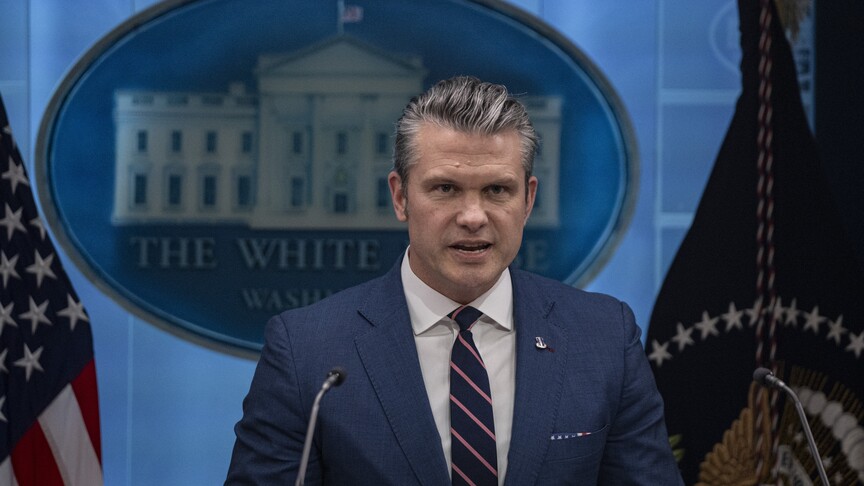
When the White House was confronted with the possibility that Pete Hegseth had misled Trump about Tehran’s capabilities, and whether the president would have gone to war in the first place had he known the truth, White House spokeswoman Anna Kelly quickly denied it, saying that Trump had always anticipated fierce military resistance from Tehran in response to U.S. military operations on its territory and in its airspace.
Hegseth’s claim regarding Iran’s air defenses was not the only one whose accuracy was clouded by doubt; there was also the information related to the fate of Tehran’s missile system and drone fleet, which the secretary claimed had been completely destroyed as a result of the American attacks, contrary to the intelligence assessments reported by CNN, which clearly indicated that more than half of Tehran’s missile system was unharmed, in addition to thousands of attack drones that were left untouched.
Hegseth also made misleading statements to the public and journalists in his regular briefings and press conferences regarding the impact on Tehran’s military apparatus as combat operations continued. On March 31, he announced that Tehran had suffered a depletion in its missile capabilities, noting that the 24 hours preceding the statement had seen the lowest level of missile launches. Administration officials denied this, pointing to its contradiction with internal memos circulating within the administration, which show that days such as March 14, 15, and 22 saw the lowest launch levels, not the 31st.
U.S. officials also criticized Hegseth’s haphazard and selective focus on the number of missiles launched rather than their explosive capabilities and the accuracy with which they hit their targets an issue that carries military implications related to the extent of Tehran’s military recovery, the evolution of its offensive strategy, and its staying power. This, in turn, affects the broader assessment of the war’s usefulness and its ability to achieve its objectives, and therefore the possibility of its continuation or not.
Marginalization in Decision-Making
Trump’s reckless and ill-considered style has led to decisions related to the course of military operations in Tehran, the possibility of resuming them, and the strategic objectives they seek, being made publicly in a contradictory and confusing manner, putting Trump administration officials in a bind at a time when they appear to be operating in the eye of the storm. On the one hand, there are national security considerations and military secrecy that the American military wing, and the political camp attached to it, have long observed during operations abroad.
On the other hand, administration officials are wary of Trump’s reactions and outbursts, which have pushed aside a large number of close officials and triggered a sweeping wave of attacks that stripped them of their privileges and effectively sentenced their professional future to death.
J.D. Vance, the current vice president, occupies a prominent place in this chaos. It noted “Reports Vance, who is trying to distance himself from Trump’s follies in hopes of improving his chances in the 2028 presidential election, had been hesitant about the military operation in Tehran and voiced concerns about its prospects for success. But at the same time, once Trump settled on the decision to take part, he quickly reversed course and stressed the need for the United States to enter in a major and rapid way, in a clear attempt to balance his personal views with his fears of angering Trump, which sparked a wave of cfor criticism for failing to stick to his position or show a sufficient degree of political courage.
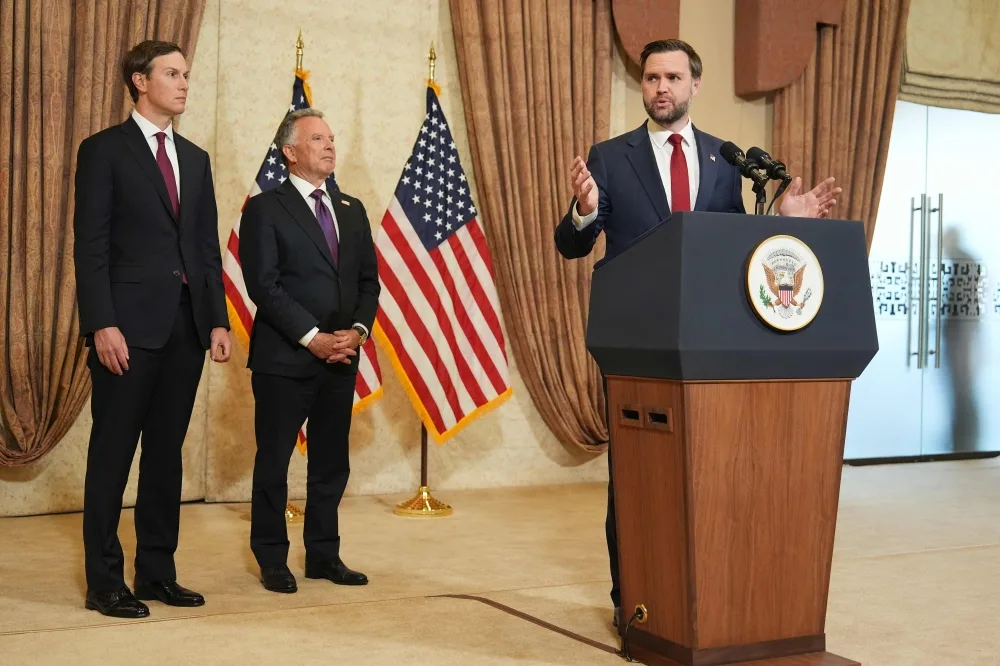
Joining Vance’s hesitant stance were officials from the U.S. Treasury Department and the National Economic Council, in addition to Susie Wiles, the White House chief of staff, and James Blair, one of Trump’s advisers, who warned the president of the danger of rising fuel prices at home in the United States and the impact this could have on the political process and the party’s chances in the midterm elections.
It pointed out The Atlantic that Trump’s aides are keeping him in the dark in an attempt to limit his interference in decision-making on Iran and to control his costly media gaffes. Meanwhile, it reported Jerusalem Post Administration officials say that Trump spends hours continuously yelling at his aides, in a tense atmosphere that prevents sound decisions from being reached, prompting them to exclude him during peak moments. This raises serious concerns about the efficiency and legality of the administration’s work as a whole, which appears to function more like a middle school than as the core of governance and decision-making in the United States.
In the incident involving the disappearance of the American pilots on the eve of Tehran’s downing of the American F-15 fighter jet, The Wall Street Journal reported, citing officials from Trump’s inner circle, that they kept him out of the operations room while they were receiving real-time updates on the pilots’ fate, believing that his impatience would not help in managing the situation. They preferred instead to brief him on developments at spaced and appropriate intervals, as they described it.
Leaks from inside the White House indicated that Trump administration officials brief him on the course of military operations in Tehran in a “childish” manner, consisting of no more than two minutes of simplified edited footage showing Washington’s victories and the extent of its progress in achieving its goals, in the style of video games popular among teenagers. The White House’s official website shared some of these videos, which include childish songs and music and clips from famous video games, while one administration official praised them for garnering three billion views in four days, prompting considerable criticism over the seriousness and adequacy of these briefings under the current circumstances.

This immature policy has resulted in a state of chaos behind the scenes of decision-making related to the American military operation in Tehran. On the one hand, there is a confused president trying to appear as though he is deeply engaged in the scene, believing he is managing one of his deals; on the other, there are prominent figures in the administration trying to keep him away from the operations rooms and insulated from the reality of what is happening on the ground.
This comes amid official assessments by U.S. intelligence branches, which often conflict with Trump’s inclinations and fiery statements, as they believe that his handling of the military operation harms in a tangible way the course of operations and Washington’s strategic plans. This reality has placed both the governing team and the intelligence agencies in a whirlpool of attempts to contain the broader repercussions of Trump’s orientations and the security and military strategy resulting from them.
Disinformation Around the Negotiating Table
Steve Witkoff and Jared Kushner, Trump’s envoys for negotiations with Tehran, played a decisive role in pushing toward military confrontation with Iran. Reports have repeatedly surfaced about the disinformation the two men fed Trump regarding the outcomes of the negotiation rounds, before and during the American military operation against Tehran.
The rounds of negotiations that immediately preceded the military strike, and that extended through intermittent sessions between December of last year and February of this year, included outright lies from Witkoff about what he described as Tehran’s “endless” stockpile of enriched uranium, in addition to his claim that Tehran was being intransigent and refusing to concede aspects of its nuclear program, despite what the Omani mediator, who oversaw the negotiation rounds, confirmed: that Tehran had, for the first time, proposed a pragmatic schedule to reduce its uranium stockpile to the lowest possible level that would make it unusable for military enrichment purposes. In essence, this amounted to a guarantee that Tehran was not seeking to develop a nuclear weapon.
Then, after the attack on Tehran began, Witkoff returned and claimed in an interview with CNBC, justifying Trump’s decision to strike Iran, that the latter would have been able within just one year to produce between 30 and 40 nuclear bombs, were it not for Trump’s “courage” in making the decision for war.
Witkoff’s lies about the outcomes of the negotiations with Tehran prompted Oman’s Foreign Minister Badr bin Hamad Al Busaidi to head personally and urgently to Washington to convey Tehran’s real message: that it wanted to sign an agreement surpassing the one it concluded with Barack Obama, which led to the signing of the 2015 nuclear agreement between Washington and Tehran.
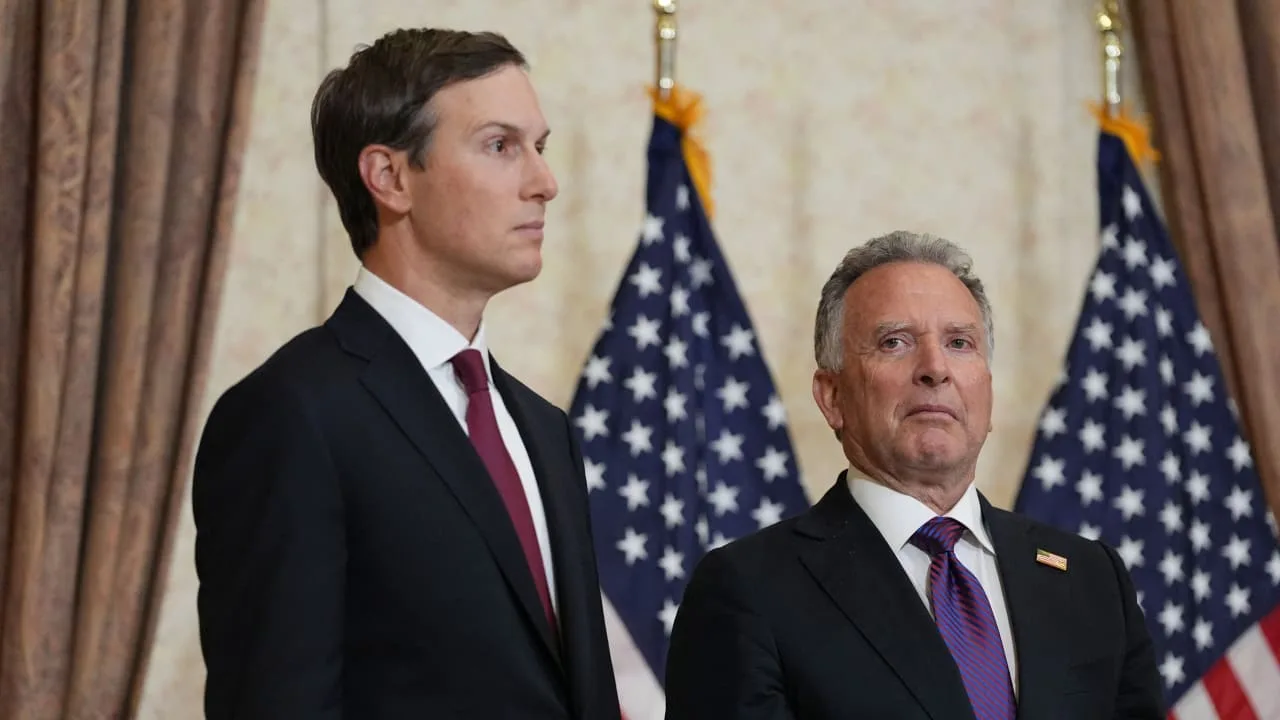
Jared Kushner, President Trump’s son-in-law, joined Witkoff in this game of disinformation. According to multiple reports, the two men stoked Trump’s fears that Tehran was not serious in the negotiations and was merely buying time in order to strike first, thereby depriving the president of the chance to seize the initiative and dragging him into the realm of uncalculated reaction. These two figures had the greatest impact in pushing Trump to make the decision for war.
In addition to their negotiating position with Tehran, the two figures share common traits that have cast doubt on their role in the war and stirred the ire of observers; both are close to Benjamin Netanyahu’s government, and serve as mouthpieces for Tel Aviv’s wishes inside the White House. Both sides also have financial interests that benefit directly from U.S. military operations in Tehran, tied primarily to the Gulf states and the Middle East, which has highlighted the extent of the integrity of the role they play and the sincerity of their intentions at the negotiating table.
The negative role of Witkoff and Kushner was repeated in the short truce talks between the two sides after hostilities broke out, as well-known figures opposed to war with Tehran, such as Vice President J.D. Vance, were excluded from the negotiation rounds, while the two men were repeatedly retained, despite Tehran’s rejection and that of other mediators of their presence, and its demand for Vance as a more impartial alternative.
The repeated choice of this duo to represent Washington angered Tehran, especially as the White House did not send nuclear experts to negotiate in language those counterparts could understand, reinforcing the sense of Washington’s bad faith and its use of negotiations as a means of obfuscation and buying time rather than seeking an agreement acceptable to both sides.
Indeed, specialized bodies, including the Arms Control Association, pointed to both Witkoff’s and Kushner’s ignorance of important technical and historical fundamentals, making their negotiating mission largely superficial and flawed, and prompting experts and observers to assume that Washington’s war with Tehran broke out, in part, because of this shortcoming in understanding the nature of nuclear armament and what Tehran had been putting on the negotiating table.
By contrast, others argued that Witkoff and Kushner were engaging in deliberate deception and outright lying to the Trump administration, not merely unintentional ignorance, making Trump’s “men of peace” a major obstacle to reaching a real agreement between Washington and Tehran, according to what the New York Times concluded.