



هذا التقرير متاح أيضًا بـ العربية
Mali has entered an extremely complex phase of security turmoil, with an unprecedented surge in violence coinciding with the return of coordinated armed attacks bringing together jihadist organizations and separatist movements against the Russian-backed Malian army. This has led to the fall of the city of Kidal, the historic stronghold of the country’s north, into the hands of the Azawad Liberation Front (FLA), along with the killing of Defense Minister Sadio Camara and several members of his family in violent attacks targeting the capital, Bamako.
This scene reflects a qualitative shift in the nature of the crisis, which is no longer merely a conflict between the state and rebel or jihadist groups, but has become closer to a complex, multi-party war in which local interests intertwine with regional and international stakes, broadening its scope and complicating the chances of containing it.
In this context, the coordinated strikes that hit the heart of Bamako and other strategic areas place the ruling military council before an existential test—the most dangerous since it seized power in 2021—while opening the door to open-ended scenarios for the future of Mali and the entire Sahel region, amid rising signs of security breakdown and the erosion of the state’s ability to impose control.
This Was Not Surprising.. An Expected Escalation
The current wave of violence in Mali has not come as a surprise to observers. Since the outbreak of the armed conflict between the north and south in 2012, the country has lived in a chronic state of turmoil and instability, marked by repeated cycles of escalation and security breakdown. Successive military coups—three in a single decade—have further deepened state fragility, weakened its institutions, and drained its resources, paving the way for an environment conducive to the persistence and renewal of violence.
With the withdrawal of the UN peacekeeping mission (MINUSMA) at the end of 2023, a wide security vacuum emerged. The Malian army tried to fill it with Russian support, but this effort failed to contain the growing threats.
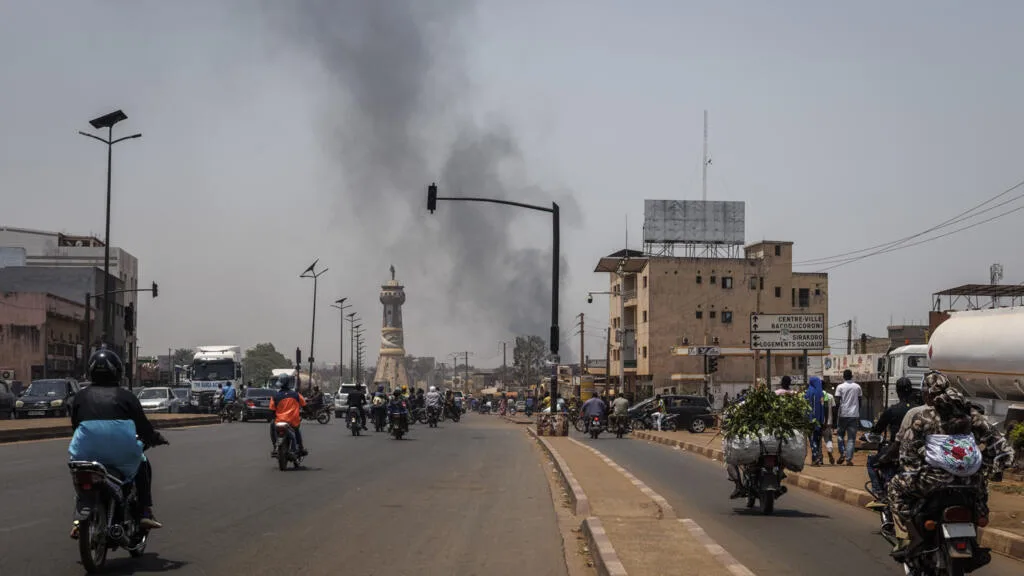
Meanwhile, armed groups—with their various ethnic and jihadist orientations—exploited this vacuum to reorganize their ranks, strengthen their operational capabilities, and put their internal house in order, which was reflected in large-scale attacks that led to the fall of strategic cities, most notably Kidal, and the assassination of the defense minister.
Jama’at Nasr al-Islam wal-Muslimin, affiliated with al-Qaeda, claimed responsibility for the attacks targeting Bamako International Airport and a number of cities in the center and north, saying they were carried out in coordination with the Azawad Liberation Front. The Malian army confirmed the operations, stressing that its forces had intervened to contain the situation and restore control, in a sign of the intensifying confrontation and its widening scope.
Fertile Ground for Conflict
Since 2012, Mali has turned into an open hotspot of conflict and instability, with the situation oscillating between limited clashes and large-scale confrontations amid the accumulation of deep structural crises. Successive military coups (2012, 2020, 2021) have entrenched political fragility by weakening state institutions and draining their capacities, which has been directly reflected in declining security control, especially in the northern and central regions.
The economic dimension has not been far removed from this trajectory. The spread of chronic poverty and the absence of development, particularly in rural areas, have aggravated levels of social tension. Conflicts over resources between tribes and families have also fueled unrest, creating a favorable environment that armed groups have exploited to strengthen their presence and expand their recruitment base.
On another level, the ethnic and tribal factor has played a decisive role in complicating the crisis, with tensions escalating between the Tuareg and Arabs in the north on the one hand, and other groups such as the Fulani and Dogon on the other, gradually developing into open armed conflicts.
In this fragile environment, and on ground already prepared in advance, organizations linked to al-Qaeda and the Islamic State found a prime opportunity to expand, taking advantage of their cross-border ties to bolster their influence and entrench their presence within the Malian landscape.
Jihadist and Separatist.. An Alliance of Necessity
The current violence in Mali is being led by a number of armed groups with jihadist and ethnic characteristics that have succeeded in reorganizing their ranks and leading a new wave of rebellion, through which they managed to retake control of Kidal and inflict tangible losses on the Malian army, benefiting from the development of their operational capabilities in recent years amid a relative decline in the effectiveness of the state and its security apparatus.
Foremost among these forces is Jama’at Nasr al-Islam wal-Muslimin, one of the most dangerous jihadist organizations in West Africa. It was established in 2017 as a result of the merger of several factions linked to al-Qaeda. In a short period, the group succeeded in consolidating its influence in central and northern Mali, taking advantage of state fragility and the accumulation of crises, before expanding its operations into neighboring countries, especially Niger and Burkina Faso, making it a cross-border actor that goes beyond the local framework.
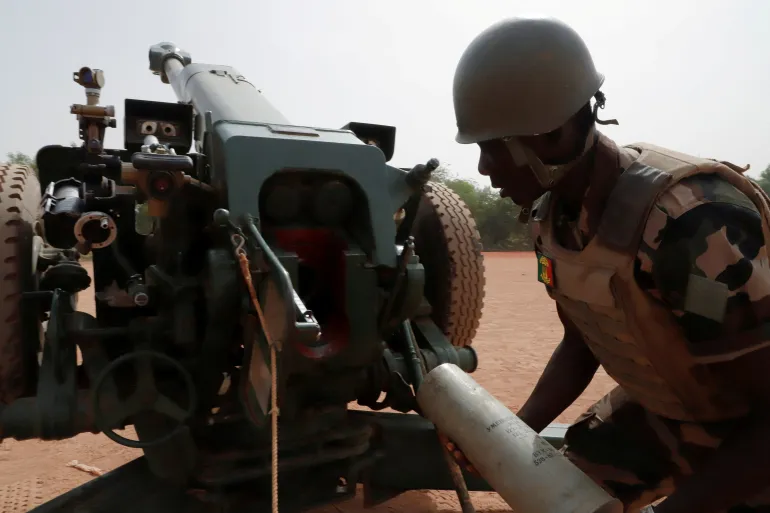
Despite the ideological divergence between the two sides—Jama’at Nasr al-Islam wal-Muslimin belongs to the jihadist current, while the Azawad Liberation Front represents a nationalist separatist project—the convergence of interests has produced what can be described as an “alliance of necessity” against the central authority in Bamako. This coordination has been reflected in the adoption of joint attacks, giving the armed operations greater momentum and impact compared with each side’s individual operations on its own.
What About the Russian Role?
When the transitional authority led by Assimi Goita took power in Mali after the 2020 and 2021 coups, it raised the شعار of restoring security and extending state control over the entire national territory in the face of a heavy legacy of continuous unrest since 2012. However, these pledges collided with a complex field reality that worsened with the withdrawal of French and UN forces, increasing pressure on the new authority and limiting its ability to contain the growing threats.
In this context, Bamako moved to strengthen its cooperation with Russia, relying on the services of the Wagner Group—later renamed the “Africa Corps”—to provide military support through training, equipment, and participation in field operations against armed groups, whether separatists in the north or jihadists in the center. This cooperation was temporarily crowned by the recapture of Kidal in November 2023, a step that was then considered an important field achievement.
However, the approach adopted by the Russian-backed forces, based on military decisiveness and heavy-handed security tools, produced counterproductive consequences in the medium term. Accusations of widespread human rights violations fueled public anger, provided jihadist groups with material for mobilization and recruitment, and also contributed to expanding coordination between them and some ethnic actors in the north.
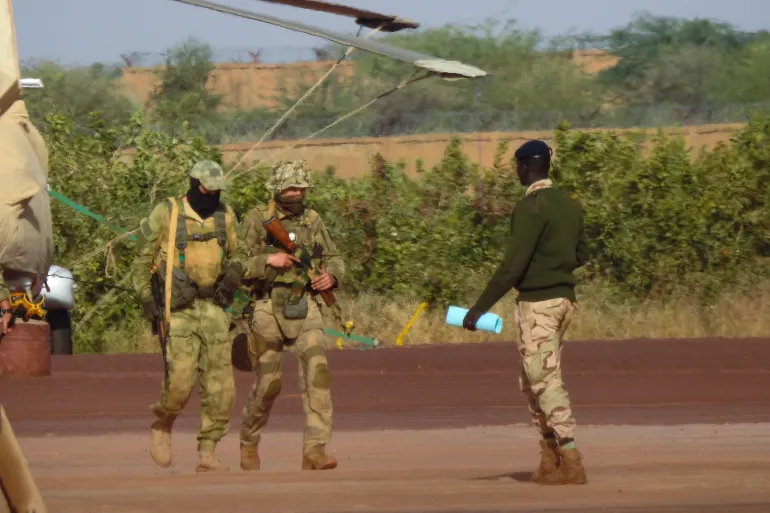
Analysts believe that Russia today faces a decisive test in Mali, as it represents a revealing model of the limits and effectiveness of Russian influence in the Sahel region, and of Moscow’s ability to provide a sustainable security umbrella for its allies after the decline of France’s traditional role.
In this context, the fate of the Russian experience in Mali—whether success or failure—will determine the direction of the region’s countries in repositioning themselves strategically, potentially opening the door to bringing in new Western partners, not necessarily French this time, but perhaps extending to the United States or other international powers.
Where Is Mali Headed?
What is troubling about the situation in Mali is that all the parties involved in the conflict are seeking to exploit recent developments to serve their own agendas. The ruling military council is working to consolidate its hold on power, relying on external support, foremost among it Russia, while the paramilitary formations linked to it, led by the Wagner Group—currently known as the “Africa Corps”—see an opportunity to strengthen their security and economic presence inside the country.
Meanwhile, armed groups, whether separatist in the north or jihadist in the center, are seeking to maximize their field gains, taking advantage of state fragility and the continued support they receive from internal and external networks, further complicating the scene and prolonging the confrontation.
Such dynamics suggest the transformation of the crisis from an internal conflict into an extended regional war that could widen to include the Sahel and West Africa, with the possibility of spreading to countries such as Benin and Togo as likely arenas for the expansion of armed group activity.
At the international level, Russia is seeking to consolidate its position as a key player on the African continent through this complex test, at a time when the field remains open to the return of Western powers, European or American, in an attempt to restore the influence they have lost in recent years, before Bamako officially falls into the hands of the jihadists.
In light of this, Mali stands at a critical crossroads, where the conflict is turning into an open arena for reshaping geopolitical balances in the region, while the peoples of the region bear the heaviest cost, whether in terms of economic and living deterioration or the worsening of humanitarian crises.