








هذا التقرير متاح أيضًا بـ العربية
Britain and France are trying to capitalize on international concern over the disruption of navigation in the Strait of Hormuz to create a coalition multinational naval force, shifting the issue from diplomatic statements of support to practical military planning.
The move began with broad meetings bringing together dozens of countries, then gradually shifted toward discussing the required contributions and capabilities, from ships and minesweepers to reconnaissance and command and control.
So will a meeting involving more than 40 countries turn into a force capable of securing navigation, or will it remain a political framework constrained by ambiguity over military participation, Iranian rejection, and U.S. calculations?
Who leads the coalition and who is taking part?
The effort began on April 2, when Britain invited more than 40 countries to a virtual meeting to discuss the navigation crisis in the Strait of Hormuz.
At that stage, the discussion was more political and diplomatic than military, as London focused on coordinating positions, diplomatic and economic pressure, and cooperation with the International Maritime Organization and the shipping sector, without announcing a ready naval force or naming countries that would contribute ships and troops.
The issue then moved to a higher level on April 17, during the Paris summit led by French President Emmanuel Macron and British Prime Minister Keir Starmer.
There, the political mobilization widened, with statements referring to 51 countries, while Macron indicated that the meeting included 49 countries. But that figure still reflected political backing and a joint statement more than actual military participation.
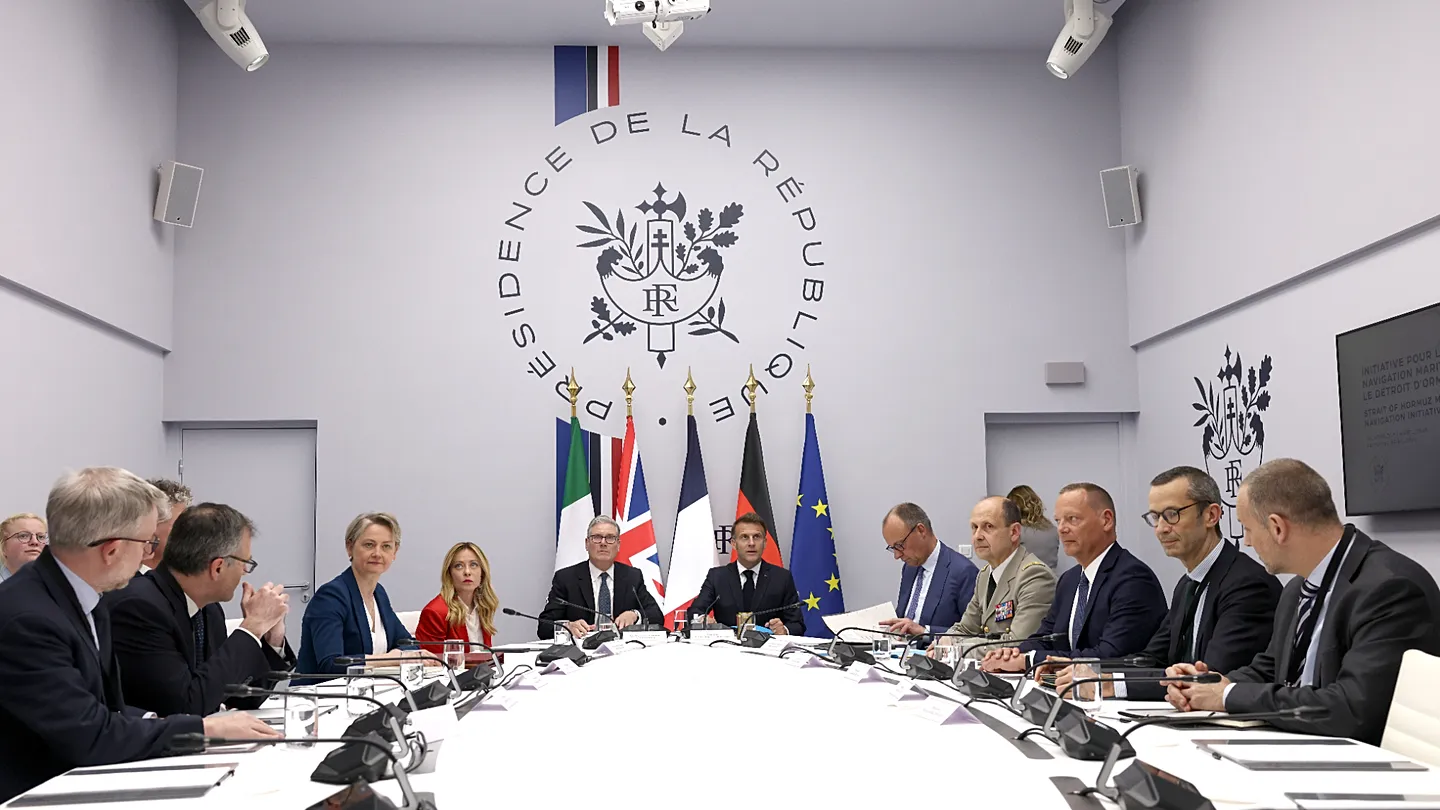
At that summit, the outlines of leadership began to emerge, as Britain and France presented themselves as the spearhead of the effort:
- London is handling the diplomatic push and hosting military planning.
- Paris is giving the initiative political and military weight.
But the mission put forward by the two capitals was not an actual operation at sea, but rather a concept for a multinational defensive mission that could later move to protect commercial shipping and clear mines when conditions allow.
The clearest military step then came on April 22 and 23, when Britain hosted a military planning conference in London attended by military planners from more than 30 countries.
Here, the discussion shifted from the question of “who supports?” to “who can participate?” It was no longer just a political statement, but an examination of the required capabilities, such as ships, minesweepers, reconnaissance, and command and control.
Later, the British Ministry of Defence said that planners from 44 countries had worked in recent weeks to turn political consensus into a multinational plan.
On May 11, London announced a new step: British Defence Secretary John Healey and his French counterpart Catherine Vautrin would co-chair the coalition’s first meeting of defense ministers, with more than 40 countries taking part, to discuss military contributions.
At this stage, there is still no final official list of countries that will participate militarily, though the names being circulated include European states such as Germany, Belgium, the Netherlands, France, and Britain, and Asian countries such as Japan and South Korea, in addition to the presence or invitation of Gulf states such as the UAE, Saudi Arabia, and Qatar.
The clearest contributions so far are British and French:
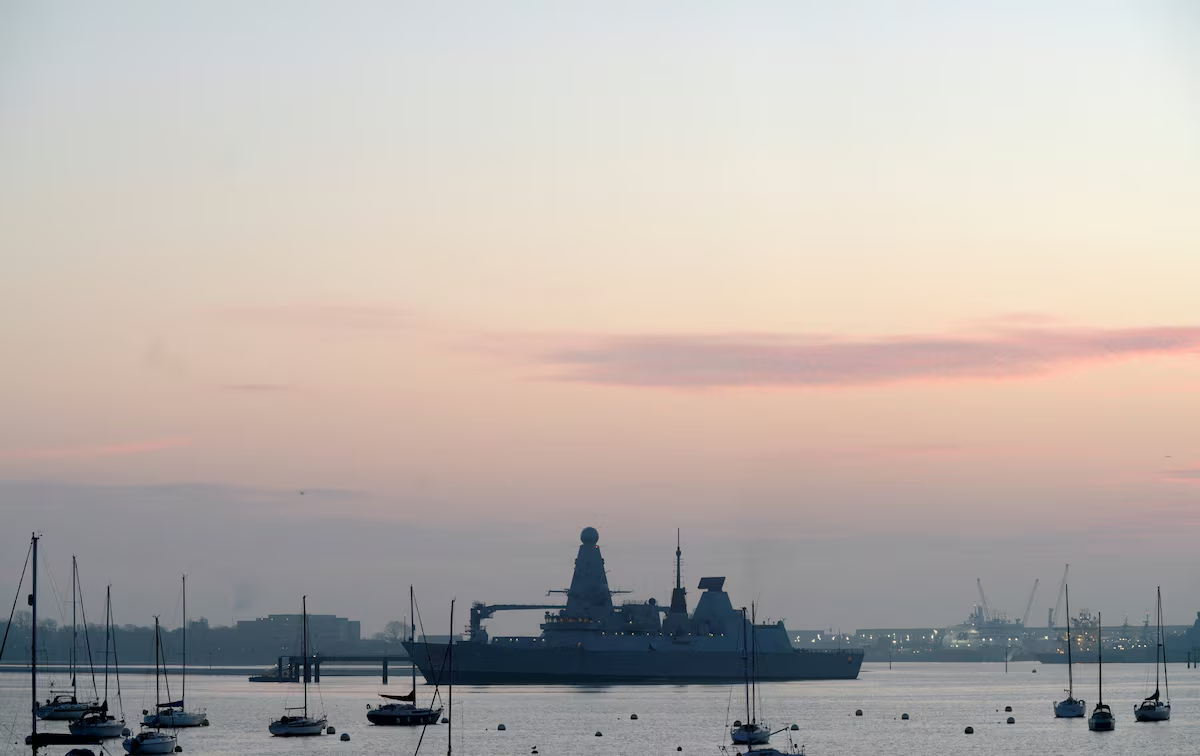
- Britain announced the deployment of the destroyer HMS Dragon to the region.
- France moved the aircraft carrier group Charles de Gaulle toward the Red Sea.
Even so, the two capitals presented these moves as preparation for a possible mission, not the start of an ongoing naval operation in the strait.
As for the rest of the participation, it remains conditional. Reuters reported that more than 12 countries had expressed readiness to provide military assets, such as mine-clearing ships or escort units, but key European states are tying any actual participation to legal and political cover.
Germany, for example, signaled readiness to provide mine-clearing and maritime reconnaissance capabilities, but linked that to a ceasefire, parliamentary approval, and a UN Security Council mandate. Italy also prepared to contribute once legal cover is available.
What are the naval coalition’s tasks?
London and Paris say the mission is defensive, not an offensive operation to force passage through by military means. The objectives can be summarized as follows:
- Protecting commercial shipping
- Reassuring the shipping sector
- Securing sea lanes
- Sharing information and conducting reconnaissance
- Clearing mines after a ceasefire
- Building a joint command structure
This wording gives the coalition political legitimacy, but at the same time reveals that the mission has not yet begun in practice and that its implementation depends on a security environment that has not yet materialized.
In London, the broad headline evolved into a more detailed military discussion, as the planning conference examined the required capabilities, command-and-control mechanisms, and how forces would be deployed in the region.
That means the coalition needs not only ships, but also an operations room, intelligence, coordination rules, and clear procedures for responding if a commercial vessel or naval unit comes under threat.
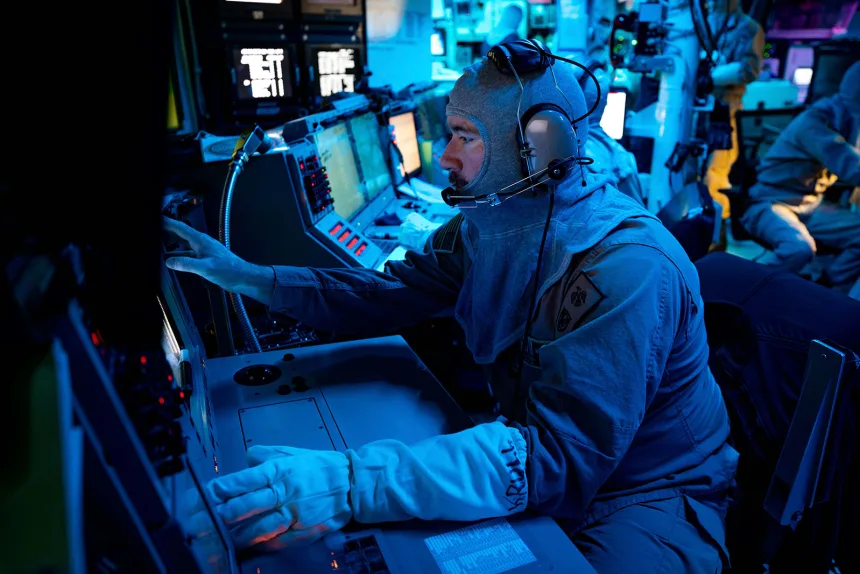
The deployment of HMS Dragon gives Britain a practical card in this context. The Type 45 destroyer has air-defense capabilities through the Sea Viper system, in addition to Wildcat helicopters that can be used against threats such as drones.
But London itself presented this move as a pre-positioning step to support a possible mission, not an announcement of the start of a naval operation in the strait.
France is moving with the same logic. The presence of the Charles de Gaulle group in the Red Sea does not mean the mission has begun, but it reduces response time and gives Paris the ability to assess the operational environment and integrate any assets contributed by participating countries.
Therefore, talk of opening the strait by force or imposing new rules on Iran is not part of the publicly declared mandate, but rather an escalatory scenario that London and Paris are trying to avoid in their official rhetoric.
The rules of engagement remain the hardest question: who decides to respond if an Iranian boat approaches a commercial vessel? When is force used? Will the mission deal with drones and missiles, or limit itself to escorting ships and clearing mines?
Iran, the United States, and the chances of success
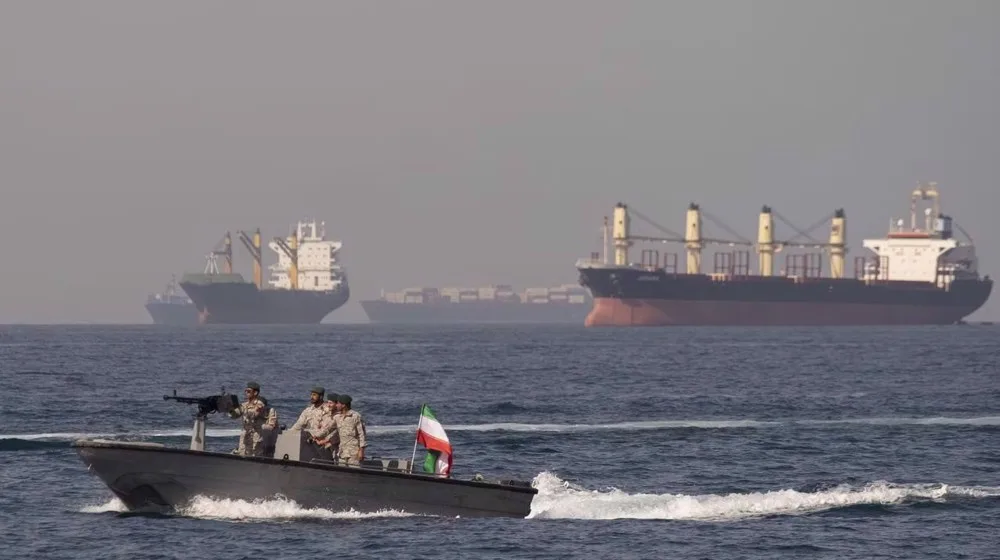
Iran rejects the initiative from the standpoint of sovereignty and regional security. Kazem Gharibabadi, Iran’s deputy foreign minister, described any deployment of European warships as escalation, warning of a “decisive and immediate” response.
So the difficulty lies not only in assembling ships, but in operating them without pushing Iran to test them. This is the coalition’s dilemma: it needs to appear capable of deterrence, but it does not want to look like part of an open confrontation.
If it is overly cautious, it may fail to reassure shipping companies. If it overdoes its military presence, it may give Iran a pretext for escalation, harassment, or maritime pressure. Between those two limits, London and Paris are trying to present the mission as a tool of protection, not war.
Washington, meanwhile, occupies an ambiguous position: it is not a direct part of the European planning, but it is not entirely outside the equation either.
The United States has its own track for securing navigation, and in the Gulf it possesses what Europe alone does not: a network of bases, surveillance, intelligence, and advanced deterrence capability. So the coalition’s public face may be left to London and Paris, but its practical success will remain tied to some degree of U.S. coordination.
Reports indicate that the Pentagon is working on a separate initiative called the “Maritime Freedom Construct” to secure navigation after the war, involving U.S. diplomatic and military elements, while President Donald Trump criticized his European allies and demanded that they take responsibility for opening the strait themselves.
So the chances of success do exist, but they are conditional. The broad political mobilization gives the initiative weight, and the presence of British and French assets shows that it goes beyond mere statements.
But the coalition will remain incomplete unless participation turns into specific military contributions: who will send minesweepers? Who will provide reconnaissance? Who will bear the cost of deployment? And who will accept the risk if a confrontation occurs?
On the ground, the coalition faces many obstacles, most notably:
1- Legal complications: Germany and Italy require parliamentary approval and a UN mandate to participate, and other countries may require the same, weakening implementation.
2- Iranian rejection backed by the possibility of military escalation through ship seizures or the laying of new mines, threatening the safety of participating vessels.
3- Hesitation among Gulf states, which prefer political solutions and fear antagonizing Iran, potentially depriving the coalition of regional logistical support.
4- Differences in objectives between Europe and the United States: the existence of two separate projects could create competition or conflict in leadership.
5- The absence of clear rules of engagement leaves every naval unit vulnerable to hesitation or error when facing a sudden threat.
For this reason, the coalition stands before three paths: it could, after sufficient de-escalation and understandings, turn into an actual force to escort ships and clear mines; or remain a limited deployment for reassurance and pressure; or become a new flashpoint in one of the world’s most sensitive waterways.