





هذا التقرير متاح أيضًا بـ العربية
More than forty years after being uprooted from her roots, Ghada Karmi carried her memory, heavy with loss and longing, and set out for the cradle of her childhood and the playground of her youth in August 1991, thanks to her British passport, which granted her the right to cross into her homeland, Palestine. On the way to Jerusalem, Ghada watched from the car window the hills and valleys of the land, only to be alarmed by the disfigurement of the landscape by concrete settlements built over the ruins of old Palestinian villages.
She then began the journey to search for her family home in the Qatamon neighborhood of West Jerusalem, guided by a map her sister Suham had given her. Accompanying her was an elderly refugee displaced from the same neighborhood, feeling the walls with silent tears. But Ghada could not find her house and imagined it had been demolished.
After many attempts, in 1998, Ghada discovered that her house was still standing, with its red roof and garden, but it was a house stripped of its soul. When she went there, she found herself in an intensely bitter situation, standing on the threshold of her past, pleading with a Canadian Jewish family that had settled in the place to allow her just a glimpse of the cradle of her youth.
The looks of the settler strangers made her feel as though she was at their mercy in her stolen property. As despair was about to close in on her breath and convince her that the past had folded away forever, the call to prayer from Al-Aqsa Mosque awakened in her the hope that Palestine was still alive and that history had not yet spoken its final word.
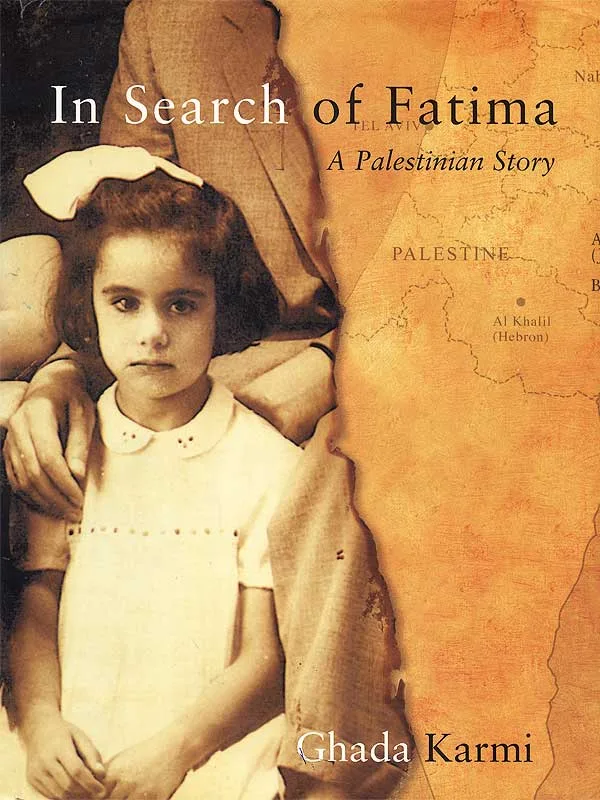
Out of this struggle between loss and clinging to memory, Ghada wrote her memoir, “In Search of Fatima,” which is considered one of the most prominent Palestinian autobiographical works on the Nakba. It goes beyond the bounds of a personal narrative to become a living human and historical testimony to the uprooting, exile, and questions of identity and belonging left behind by the Nakba of 1948.
Birth in the Eye of the Storm
Ghada Karmi was born on November 19, 1939, at a pivotal historical moment, as the world was welcoming World War II, while Palestinian society was reeling under the weight of British Mandate policies, especially after the 1936–1939 revolt. In this climate, her mother Amina’s fear of childbirth did not stem from financial hardship, but from the psychological terror left by British brutality and the growing terrorism of Zionist gangs.
Ghada’s family belonged to the middle class; her mother was from Damascus, while her father was from the Palestinian city of Tulkarm. His family belonged to a distinguished lineage that had lived in Palestine, and many of its members had excelled in the fields of knowledge and culture.
In the 1930s, Ghada’s family settled in the upscale Qatamon neighborhood of West Jerusalem, and their home reflected authentic Jerusalem character, with its walls and floors adorned with mosaics, and its garden, a miniature paradise with apricot, almond, plum, and lemon trees, as well as a grape arbor.
Ghada recalls how thought and culture blended into daily life within the walls of their home. Her father, Hasan Karmi, was a teacher and intellectual who owned a rich library and welcomed many important figures into his house, while her mother, Amina, hosted a weekly social salon with Jerusalem’s female elite.
In Qatamon — which today bears a Hebrew name — Ghada grew up within a social fabric that included Muslim and Christian Arab families, as well as minorities of Jews and foreigners, in an atmosphere marked by coexistence, harmony, and mutual visits. During the 1940s, Jerusalem pulsed with cultural life, attracting men of thought and literature and many poets from across the Arab world, while poetry evenings were held at the Arab Orthodox Club.
Ghada also recalls how the streets of Qatamon were wide, lined on both sides with villas embraced by lush gardens, and how people’s lives bustled with vitality, from the Rex Cinema, markets, cafés, and Jerusalem clubs, to family trips to the beaches of Jaffa and the hotels of Ramallah. All this gave little Ghada a happy childhood despite the clouds beginning to gather on the horizon. Ghada wrote in her memoir:
“The 1940s saw the emergence of several cinemas… One day our mother took us with her to the Rex Cinema, and our neighbors and their children came along… We watched Frankenstein, starring Boris Karloff, which is now considered one of the classics of world cinema, though my mother knew nothing then of its value except that it was a foreign film (my mother used to watch only Egyptian films).” p. 52.
But the most important story Ghada tells about her childhood is that of “Fatima al-Basha,” whom she chose as the title of her memoirs, as a sign of her bond to the place where she grew up and from which she was later forced to leave. This woman, who came from the village of al-Malha, was not merely a servant helping Ghada’s mother manage the household; she was a second mother who lavished Ghada with affection, warmth, and care.
The Final Farewell: Fatima and the House Key
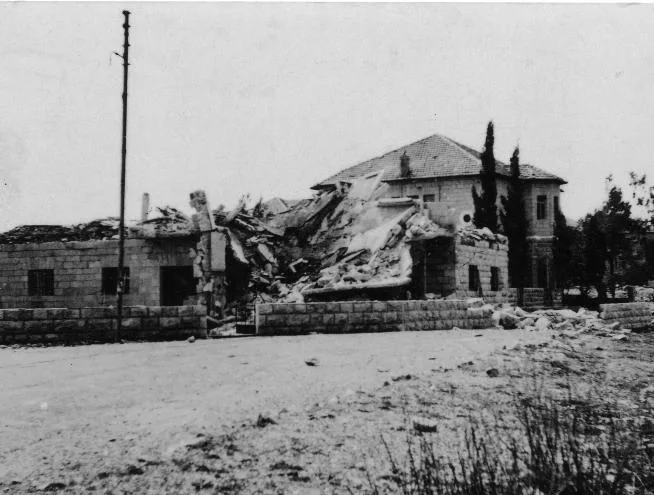
Ghada Karmi recalls the beginnings of the turbulent transformation in her family’s life when the security unrest in Palestine began to seep into the details of their daily lives after the bombing of the King David Hotel by Zionist groups in 1946. She remembers that incident as the first time real fear entered her, especially since her father survived the explosion.
From then on, conditions in Jerusalem deteriorated at a rapid pace, until the features of daily life changed completely. Schools closed at the beginning of 1948, and Ghada, still a child, began to realize that something dangerous was happening around her.
But despite the escalating danger, Ghada recounts that Jerusalem society downplayed Zionist ambitions, as awareness of the scale of the threat remained confined to a small elite, while the majority regarded it as merely a passing cloud. Ghada recalls a pivotal scene from her childhood when a massive explosion occurred near their home, and for the first time she saw fear on her parents’ faces.
With news of the fall of neighboring districts and the terror caused by Jewish snipers, waves of displacement began. Jerusalem was floundering in chaos after security had collapsed, but two pivotal events — the death of commander “Abd al-Qadir al-Husseini” and the “Deir Yassin” massacre — were the spark that forced Ghada’s family, like many other Palestinian families, into compulsory departure. Ghada wrote: “The Arab Higher Committee advised all the men of the neighborhood to send away their women, children, and elderly relatives.” p. 134.
In the midst of panic, the mother was concerned only with packing enough clothes, so they left everything behind: official documents, photographs, and even the father’s precious books. Fatima, meanwhile, refused to leave with them, choosing instead to face her fate in her village, al-Malha, which later fell as well, turning her too into a refugee and severing contact between her and Ghada forever.
For Ghada’s parents, leaving Jerusalem was nothing more than a temporary displacement to escape the fires of war. At the moment of departure, the father handed the house key and his coat to Fatima, asking her to look after the home until they returned from Damascus. Ghada recalls with sorrow the moment of her forced uprooting, as the car drove off amid explosions while she kept looking back at her dog “Rex” and her nanny Fatima, unaware that this farewell would turn into an eternal dispersal.
From Damascus to London: A Childhood Under Shock
The Karmi family began their journey of exile by staying at the home of Ghada’s maternal grandfather in Damascus amid an atmosphere of confusion and anticipation. Despite the news of the declaration of the State of Israel on May 14, 1948, the family clung to the hope of a near return, especially with the entry of Arab armies the following day.
Ghada recounts that her father tried to return to Jerusalem after taking his family to Damascus, but on the way he received the shocking news that Qatamon had fallen. By June 1948, his hopes had vanished with the military defeat of the Arab armies before the organized Zionist forces.
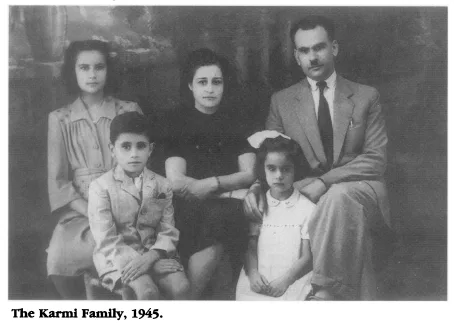
This coincided with Israel’s beginning to destroy Palestinian villages and settle Jewish families in the homes of displaced Palestinians. When Ghada’s father heard that settlers had been placed in the looted homes of Qatamon, he realized that return had become impossible.
Ghada describes the state of panic and chaos that accompanied the displacement, as Palestinian families left in haste without even being able to withdraw their money from the bank or arrange their affairs. With large numbers of refugees pouring into Arab countries that were poor at the time, job opportunities became scarce and life extremely harsh.
Under these circumstances, Ghada’s father busied himself searching for a source of income to support his family, until he found a job opportunity in the Arabic section of the BBC. He was fluent in English and well-versed in English culture. The father left alone for London first, then the family joined him in September 1949, and Ghada’s mother reluctantly agreed to go to London for the sake of reuniting the family.
The family settled in a modest house in the “Golders Green” neighborhood, an area inhabited by a Jewish majority and immigrants. In London, Ghada’s family lived in a state of emotional division, and the contrast between the two cultures manifested itself in nearly every aspect of life: neighborhoods and homes, cuisine, language, clothing, the education system, religion, entertainment, relations between the sexes, and marriage.
While the father chose to adapt to the new environment through his work at the BBC, the mother rejected the idea of exile outright, and the hands of her clock stopped at the moment of displacement in 1948. She refused to learn English, go out and mix with the local population, buy new furniture for her London home, or even repair the crumbling walls of the house, considering any improvement in living conditions a betrayal, because she believed that she and her family would return to Palestine.
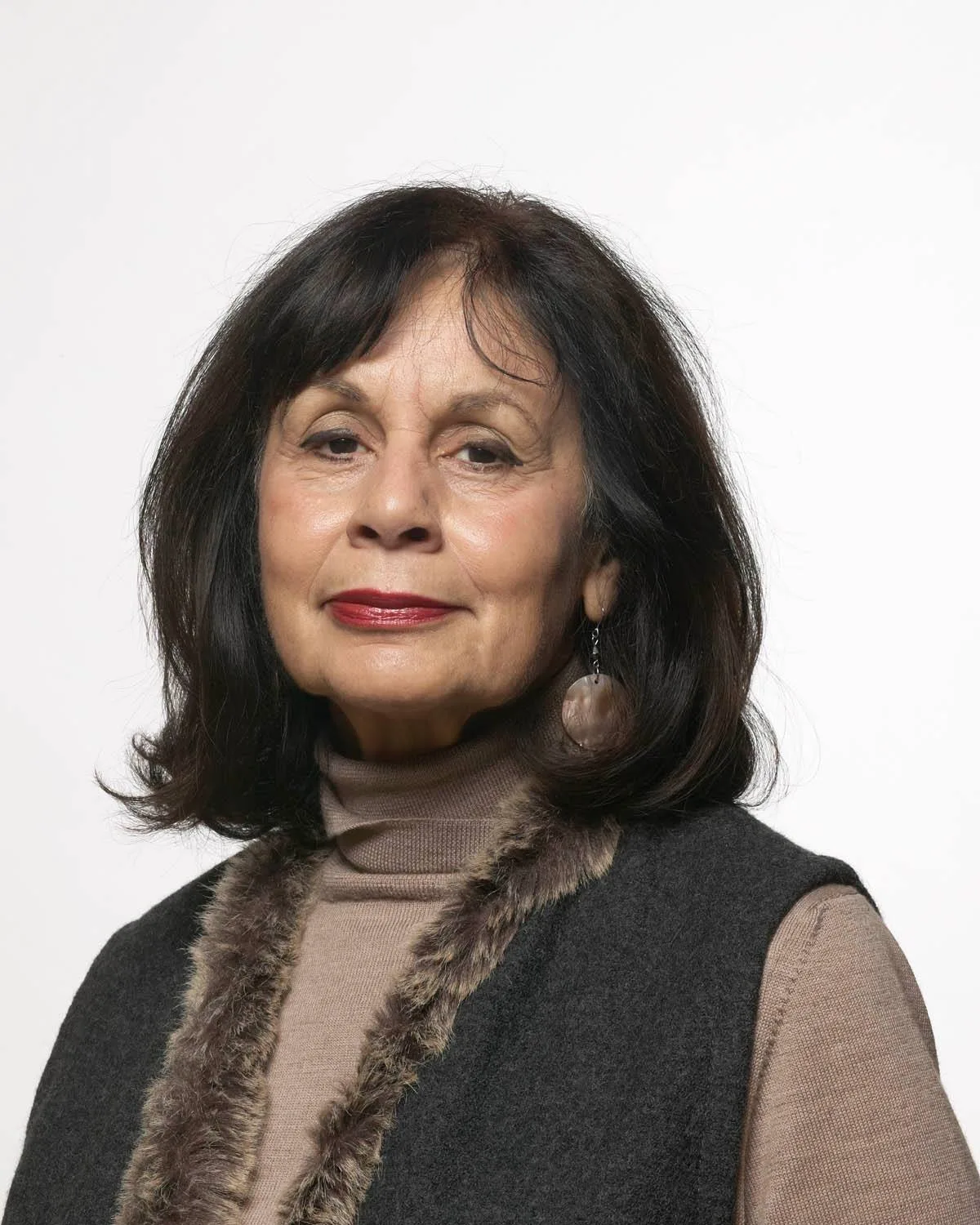
Ghada’s mother was neither able nor willing to change, to the point that she created a Palestinian environment inside her apartment. She was deeply angry over the loss of her homeland and did not want to come to this faraway place. She remained attached to her habits and Arab identity, never felt happy in Britain, and never found happiness again.
As the years passed, and deprived of the support of traditional social structures and the outlets they provided for releasing frustration, the parents chose to bury the past and wrap their memories in “shrouds of oblivion.” But this silence generated a state of identity rupture in Ghada and her siblings. While the children tended toward integration into English society and learning its language, the parents expected them to preserve values and an identity that had not been clearly transmitted to them.
Uprooting and the Schism of Beginnings
The life of Ghada’s family in London embodies the hardships experienced by Palestinian refugees in exile: the search for a normal life, the lack of others who could understand them and appreciate their tragedy, the crisis of identity, and the feeling of geographical and psychological alienation. Ghada’s siblings lived fragmented lives, oscillating between Europe and the Arab world, unable to settle anywhere.
While Ghada’s parents represented the first generation that kept its distance from British culture, Ghada, as a child, suffered on every level. Her memoir offers a profound view of the dilemma of the “second generation” of migrants’ and refugees’ children who found themselves trapped between two contradictory worlds: the world of the parents, laden with memory and longing, and the world of the new society, which imposes its values, culture, and identity of belonging. Ghada’s life embodies this conflict in all its complexity, and she expressed this feeling by saying:
“I was torn by my conflicting emotions; contradictory feelings battled within me, and I lived a life swinging between two cultures as different as heaven and earth, each tugging violently at my heart, until I became like a swing pushed by one and pulled by the other, never ceasing to sway for a single moment.” p. 568.
Throughout her adolescence and early youth, Ghada lived in a continuous war of identities, and she places part of the responsibility on her family for failing to realize the impossibility of the equation they had set before her. It was impossible for a child in the process of formation to immerse herself in a completely different society while at the same time preserving the heritage of her parents and their Arab-Islamic traditions.
Ghada recounts that her family overlooked the fact that the new society, with its attractions and temptations, was far stronger than attempts to cling to the heritage of the home, which seemed to her less dazzling. She also says that her parents, who suffered the trauma of the Nakba, rarely spoke about Palestine, and Ghada expressed this by saying: “My father never revealed to anyone his pain and sense of humiliation and indignity during that dark period.” p. 20.
From another angle, the issue of obtaining British citizenship reflects the height of emotional contradiction in Ghada’s family life. Ghada recounts that Palestinians at the time unanimously stigmatized anyone who took British citizenship as a traitor.
While her mother and sister rejected British naturalization as betrayal because of Britain’s role in handing Palestine over to the Jews, her father longed for the security and many advantages that document would grant them. Because of this social pressure, the father was forced to conceal the fact of his naturalization for years and urged Ghada and her brother Ziyad to keep it secret.
Ghada recounts that she tried to adapt in her early years within British society to her new life. She enrolled at La Sagesse Convent Catholic school, where she found herself fully immersed in an English environment different from the world of her conservative Palestinian home.
From that time on, an early sense of identity division began to take shape within her. At home, she lived according to the values of her Palestinian Arab family, while school pushed her toward full immersion in British culture. Ghada wrote: “I reconciled myself to accepting the new reality and adapted to the demands imposed by the new circumstances.” p. 304.
Unlike her parents, who maintained a clear distance from English society and held fast to their original identity, Ghada tried to escape isolation by imitating English life and engaging in it. But despite her inner feeling that she was “English,” she was never fully accepted within British society, which deepened her sense of psychological and social alienation.
Throughout her adolescence, Ghada lived a bitter struggle between two languages and two belongings. At home, she was forced to speak Arabic because her mother did not master English, while she spent most of her day at school speaking English.
Because her last contact with formal Arabic had been in Damascus schools when she was nine, she suffered feelings of shame and embarrassment in London before Palestinian and Arab visitors who looked down on her inability to read and write in her mother tongue.
When Ghada turned eighteen, she decided to stop performing religious rituals (prayer and fasting), although her “stomach remained Muslim” in her refusal to consume pork and alcohol. But this false “identity stability” began to shake in 1956 with the Tripartite Aggression against Egypt, when politics once again broke into her consciousness.
Resisting Oblivion: The Search for the Self
Under pressure from her father, Ghada enrolled in medical school at the University of Bristol despite her inclination toward the arts. At that stage, she imagined that her salvation from her sense of alienation lay in fully integrating into British society, so she sought to become, in her words, “an English girl with dark skin,” and decided to marry a fellow university student named “John Thornley.”
But this marriage caused a sharp rift with her family. While Ghada saw John as a bridge to integration into the new society, her mother regarded him as a betrayal of Arab and Islamic identity. Although John formally declared his conversion to Islam to satisfy Ghada’s family, this did not lessen the mother’s anger, and she boycotted her daughter for months, while the father attended the wedding ceremony reluctantly.
Ghada lived the early years of her marriage in what seemed a stable and normal way, until the June 1967 war became a decisive turning point in her life and identity. Ghada remembers that she was working as a young doctor in a hospital in the city of Bristol when the war broke out, and while she was in the doctors’ lounge, she watched her colleagues on television following the advance of the Israeli army in Arab lands, applauding enthusiastically and cheering in support of Israel.
It was a harsh shock for her, and she suddenly realized that the people she had considered friends did not feel her suffering as a Palestinian, but rather stood with the side that had caused her people’s tragedy. Her bitterness deepened with the bias of the British media, which presented Israelis as a “civilized people” while portraying Arabs as “barbaric and cowardly,” which, she says, drove her to bury her face in her hands in shame and heartbreak.
But the harshest blow came from her husband John when she discovered that he supported Israel. At the moment of Gamal Abdel Nasser’s resignation, while she was, as she recounts, immersed in sobbing, her grief was met with mockery and coldness from her husband. At that point, she realized the deep gulf between them, and the marriage ended in divorce, beginning a new phase in her life in which she radically reconsidered the meaning of identity and belonging.
The divorce, and the sense of oppression that accompanied it, became an existential motive that drove her to reclaim her Palestinian identity. After being subjected to racist incidents in the medical field in 1971, she decided to engage fully in defending the Palestinian cause.
Ghada entered the field of political and media work, and with a number of colleagues she founded a medical association to support Palestinian refugees in Lebanon. She then became more deeply involved in media work in the face of the broad dominance of Israeli propaganda at the time. She organized demonstrations, media campaigns, and political activities aimed at bringing the Palestinian voice to British public opinion.
Ghada sharply criticized British media outlets, foremost among them the BBC, arguing that they gave the Israeli narrative a more influential presence through spokespeople fluent in English, while Palestinian or Arab spokespeople were not always able to address the West with the same efficiency. She believed this imbalance contributed for decades to distorting the Western public’s understanding of the Palestinian cause.
By the end of the 1990s, Ghada turned to literary and narrative writing after realizing that novels and stories were more capable of embedding human tragedies in global consciousness, and she wrote her famous memoir, In Search of Fatima.
In conclusion, Ghada Karmi’s memoir remains a cry that raises fundamental questions about the fate of the displaced, whose souls remain suspended between a stolen homeland and exile. Decades after the Nakba, this memoir confirms that the wounds of displacement have lasting psychological effects. In a painful summation of the fate of exile, Ghada describes her family’s brokenness, saying:
“Our family has now become scattered and fragmented… We were destined to suffer dispersal and homelessness forever… Here are my parents, consumed by longing to return to the homeland, yet isolated by old age and unable to fulfill that wish, so they settle for living in Jordan, the nearest country to Palestine.” p. 599.