










هذا التقرير متاح أيضًا بـ العربية
Revealed report the 2026 joint annual report by the Internal Displacement Monitoring Centre (IDMC) and the Norwegian Refugee Council (NRC) that 82.2 million people worldwide were living in internal displacement by the end of 2025, a near-record figure reflecting how displacement has shifted from a temporary emergency into a long-term crisis.
During the same year, 62.2 million displacement movements were recorded (some involving the same people more than once), including 32.3 million caused by conflict and violence and 29.9 million driven by disasters.
At the heart of this map are Arab crises that rank among the world’s largest: Sudan with about 9.1 million internally displaced by conflict, Syria with about 6 million, and Yemen with about 4.8 million, alongside Gaza, Somalia, Iraq, Lebanon, and Libya.
1. Sudan: The Largest Arab Displacement Map
Sudan retained the title of the world’s largest internal displacement crisis in 2025, with 9.1 million people living in internal displacement because of the war, in addition to 1.7 million displaced by disasters, according to the report mentioned above.
Millions left their homes in Darfur, Nyala, El Geneina, El Fasher, Khartoum, Al Jazirah, Blue Nile, and Kordofan, where fighting erupted between the army and the Rapid Support Forces militia. Many headed toward less tense states such as Wad Madani, Port Sudan, and Al Qadarif, or sought refuge in camps in Darfur or in relatives’ homes.
The reasons that drove people to flee were multiple: the outbreak of war in 2023, escalating ethnic and tribal violence, the destruction of homes and looting of property, and the collapse of basic services, while the crisis was worsened by torrential rains and floods that hit several states.
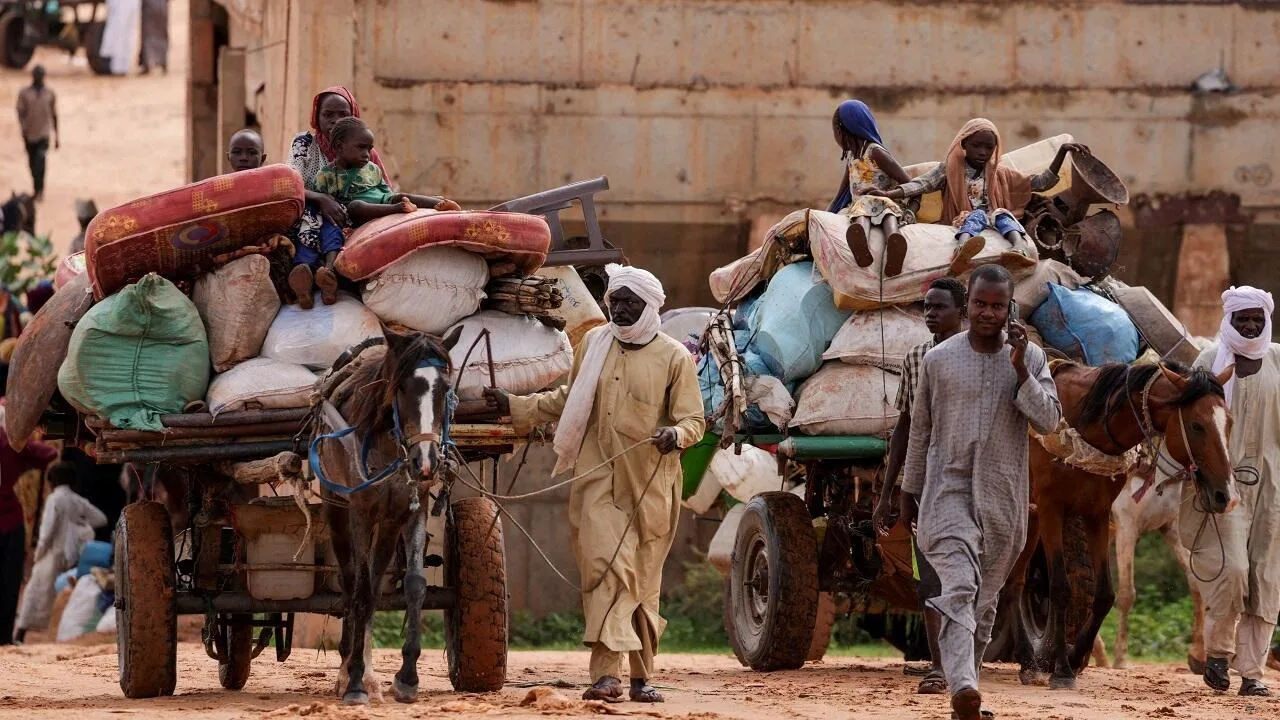
Despite some families returning to Al Jazirah and Khartoum after periods of calm, return remains fraught with danger: fighting continues, homes are destroyed, landmines and theft are widespread, and health and education services are nearly nonexistent. For this reason, displacement in Sudan is turning into a prolonged stay with no end in sight.
2. Syria: An Old Displacement Crisis That Never Ends
In Syria, the picture is no longer one of continuous displacement as it was during the years of the revolution, but rather a transitional phase in which Syrians are trying to reorganize their lives by returning to their areas or settling elsewhere.
According to updates from the United Nations High Commissioner for Refugees (UNHCR) in spring 2026, more than 1.5 million refugees and more than 1.8 million internally displaced people have returned since the fall of the former regime at the end of 2024, but more than 5.5 million people remain displaced inside the country, including over one million living in displacement sites.
Many families left camps and displacement sites in Idlib, Rural Damascus, and Aleppo, while Aleppo, Idlib, and Hama emerged as the main destinations for internal return.
But this does not mean return has become a stable solution, as many returnees go back to areas that are destroyed or lacking services, and some return gradually to assess security, housing, and work before reunifying the family.
The heavy obstacles to return remain homes in need of repair, unaffordable rents, weak services, lost documents, difficulty proving ownership, and the dangers of landmines and unexploded ordnance.
A report by UNHCR for the first quarter of 2026 notes that 239 incidents related to explosive ordnance and landmines were recorded in just three months, resulting in 153 deaths and 299 injuries, with the danger concentrated in agricultural and pastoral areas that people depend on to restore their livelihoods.
3. Lebanon: New Displacement in an Exhausted Country
In Lebanon, this is not only about old displacement, but also a new wave in an exhausted country. After more than 64,000 people remained displaced from previous rounds of escalation, Israeli strikes and evacuation orders in March 2026 triggered a broader wave of displacement that exceeded one million people, according to Lebanese and UN estimates.
By mid-April, more than 140,000 displaced people were staying in hundreds of collective shelters, while nearly another million were outside official shelters, in relatives’ homes, rented apartments, or temporary arrangements.
The displacement map is concentrated in the south, the Bekaa, and Beirut’s southern suburbs, with families moving from border villages and bombardment zones to Beirut, Mount Lebanon, and areas relatively farther from the front, or to schools and public buildings converted into shelters.
According to the Norwegian Refugee Council, Israeli evacuation orders covered large areas amounting to nearly 14% of Lebanese territory, turning displacement from a local flight movement into a broad evacuation map that forced entire families to leave their villages within hours.
4. Yemen: Camps Turned Into Long-Term Residence
By the end of 2025, 4.8 million people were living in internal displacement in Yemen, while the same year recorded 57,000 displacements due to fighting and 264,000 due to floods and storms.
Displacement is spread across the Red Sea coast (Al Hudaydah and Taiz), Marib, Abyan, and Al Dhale, in addition to poor neighborhoods in Aden. People flee to informal camps on the outskirts of Marib, Taiz, and Aden, or move toward major cities and government-held areas.
The causes overlap between ongoing war, shelling and siege, landmines, poverty and hunger, in addition to climate disasters that destroy camps and homes.
More than 1.6 million people live in temporary displacement sites, and according to a statement by humanitarian organizations in April 2026, they “have no realistic prospect of return” because of ongoing violence and declining services.
UNHCR indicates that displaced people fear returning because of insecurity, lack of livelihoods, and the danger of landmines. Over time, the camps have turned into quasi-small cities whose residents lack water, electricity, and medical care, and return has become for them a deferred dream.
5. Palestine: Repeated Displacement in a Closed Space
By the end of 2025, about two million people in Palestine were living in internal displacement, while about 2.7 million internal displacement movements were recorded during the same year.
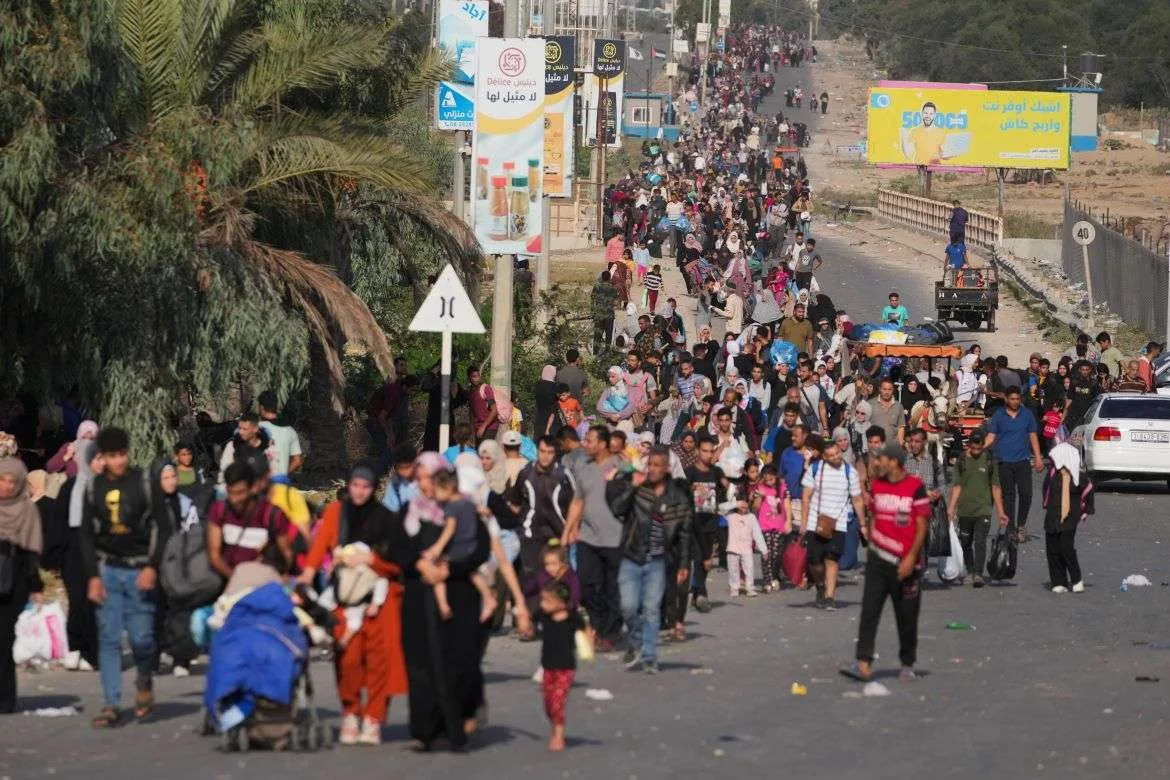
In Gaza, the crisis does not lie in a single figure alone, but in repeated movement within a closed space: during waves of escalation and evacuation orders, residents were forced to move between the north, center, and south, then some returned during periods of calm or ceasefire to destroyed areas lacking the basic conditions for habitation.
An IDMC report indicates that the January 2025 ceasefire allowed hundreds of thousands to return to the north, but many found destroyed homes and absent services, leaving return fragile and unfinished.
The displacement map in Gaza is concentrated between shelters, tents, schools, damaged buildings, and areas of rubble. People’s movement today is no longer read only as direct flight from bombardment, but also as a search for shelter, water, healthcare, and a less dangerous space.
In the West Bank, displacement takes another form: home demolitions, movement restrictions, military operations, and settler violence that push Palestinian communities, especially Bedouin and pastoral ones, into gradual departure.
And says the United Nations Office for the Coordination of Humanitarian Affairs (OCHA) that more than 5,900 Palestinians were displaced from January 2023 through May 4, 2026 due to settler crimes and related restrictions, including about 2,000 people in 2026 alone.
6. Somalia: Drought and War Drive People Out
In Somalia, estimates in an IDMC report indicate that about 3.3 million people are internally displaced, driven by a mix of conflict, drought, and loss of livelihoods.
Displacement comes mainly from rural areas in southern and central Somalia (Bay, Bakool, Shabelle, Hiraan), where drought and failed rainy seasons force herders and farmers to leave their land, while Al-Shabaab attacks and clan conflict compel many to flee.
And migrate the displaced to the outskirts of cities such as Mogadishu, Baidoa, Galkayo, and Doolow, where they settle in overcrowded camps or informal areas. The lack of rainfall and the loss of livestock and crops are the main drivers of displacement, alongside escalating armed conflict and extreme poverty.
As for return, it is hindered by water scarcity and insecurity, as families find it difficult to go back to their land if water sources are no longer available, or if Al-Shabaab still controls the villages.
Services in areas of origin are also nearly nonexistent, making movement to less secure cities the only option. Thus, displacement in Somalia becomes a journey in search of water and safety.
7. Iraq: The End of War Does Not Mean the End of Displacement
Despite the declaration of victory over ISIS, about 997,000 people remained displaced in Iraq until March 2026, in addition to 186,000 displaced by disasters.
Most of the displaced come from Nineveh, Anbar, Salah al-Din, and parts of the Baghdad belt, where battles destroyed entire neighborhoods.
And many of them live in the Kurdistan Region (Duhok, Erbil, Sulaymaniyah) or in camps spread across the country. According to the March 2026 update, about 101,000 people still live in camps inside the region.
The reasons for the continued displacement overlap: security fears due to remnants of armed cells, destroyed homes and infrastructure, tribal disputes, lack of health and education services, and unemployment.
In addition, many families suffer from the loss of documents and legal ownership, and some returnees face social stigma or threats in their areas of origin.
And reports indicate that these obstacles keep nearly one million people in a state of ongoing displacement, meaning that the end of war does not automatically mean the end of displacement.
8. Libya: Fewer in Number, but Displacement Is Not Over
According to the Libyan humanitarian profile (a UN-issued document) for 2025, and based on data from the International Organization for Migration, as of August 2024 about 139,000 people were still internally displaced in Libya, including around 35,000 living in protracted displacement.
This figure does not place Libya on the level of Sudan or Syria, but it reveals that its displacement file has not been closed, even with the decline in fighting in some areas.
The displacement map is concentrated in cities and areas such as Murzuq, Tawergha, and Derna, and extends to Tripoli, Benghazi, Sirte, Ghat, and Ubari.
The causes of displacement go back to years of armed conflict, political division, and local and tribal clashes, in addition to the Derna floods linked to Storm Daniel in 2023, which pushed new families to leave their homes.
And the displaced often head to other cities such as Sabha, Misrata, and Tripoli, or stay with relatives, but return remains difficult.
The obstacle is not only security-related; there are also destroyed homes, damaged infrastructure, property disputes, weak reconstruction programs, and the absence of unified institutions because of political division, in addition to the danger of landmines and war remnants.