








هذا التقرير متاح أيضًا بـ العربية
Israel has not announced a new annexation of the Golan since 1981, but today it is moving to turn its occupation of the Syrian plateau into an everyday reality by accelerating settlement activity, bringing in settlers, and expanding the services provided to them in the area.
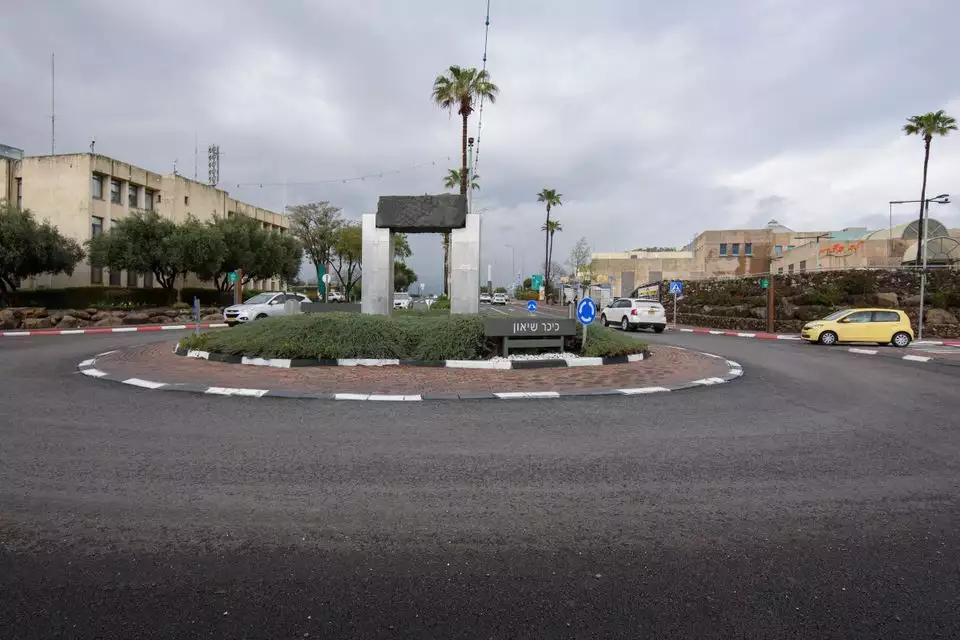
On April 16, 2026, approved Benjamin Netanyahu’s government approved a five-year plan through 2030 worth 1 billion shekels (about $334 million), aimed at attracting 3,000 Israeli settler families to the Golan and turning the settlement of Katzrin into what it calls the “first city” in the occupied area.
The plan is presented as a “development” program, but at its core it funds tools for deepening the occupation: new settlement units, roads, water, transportation, education, healthcare, economic and tourism projects, and public services that make the settler presence more entrenched on occupied Syrian land.
Tools for Entrenching the Occupation in the Golan
Accelerating settlement expansion
The first tool in the plan is accelerating settlement itself: increasing the number of Israeli settler families, expanding the settlement of Katzrin deep in the Golan, opening new land for settlement construction, and removing field obstacles to this expansion such as mines and unexploded ordnance.
According to Hebrew media, allocated the occupation government allocated 150 million shekels to remove minefields, allowing new land to be used for agriculture, commerce, industry, and settlement construction.
On April 27, 2026, announced the Mine Action Authority of the Israeli Ministry of Defense announced the detonation of more than 700 mines near the Syrian border, as part of a broader program to prepare occupied land for settlement and economic use.
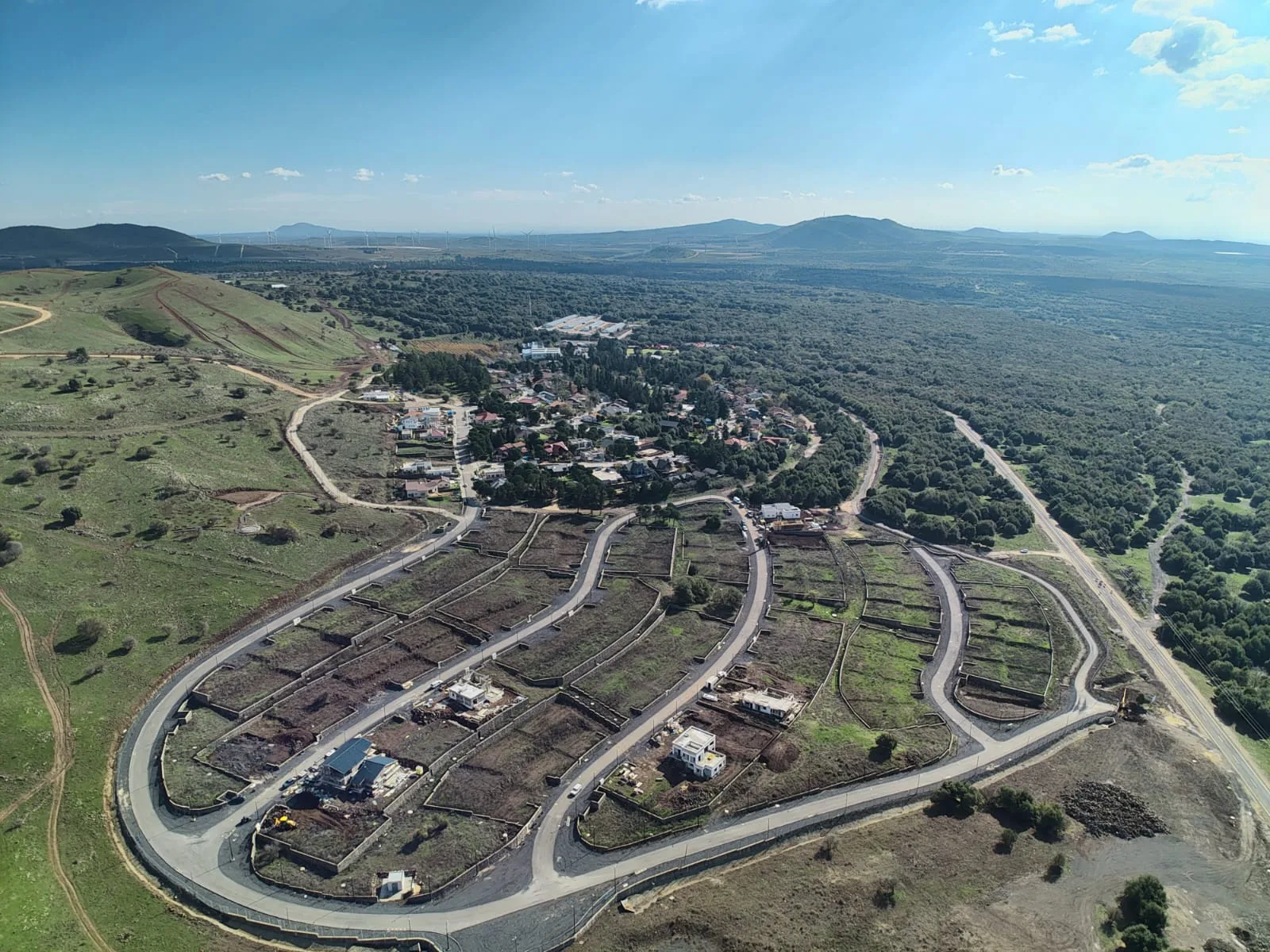
The plan does not stop at Katzrin alone. Recent examples have shown the scale of settler demand Israel is seeking to manufacture around the Golan. When 24 plots of land were offered in the so-called “Trump Heights” in the area in 2025, about 400 Israeli families applied to buy them.
A similar number also expressed interest in 33 plots in the settlement of Kela Alon, while the settlement of Odem (both in the northern Golan) is talking about a plan to increase the number of settler families from 20 to 60 in the coming years.
In this sense, the discussion is about pushing a new Israeli settlement bloc into the Golan, while turning land that was closed off, mined, or of limited use into a settlement and economic reserve.
Roads and infrastructure
The second tool is infrastructure. Settlements are not entrenched simply by establishing settlement units; they also need roads, water, sewage, public transport, electricity, and public buildings.
That is why the plan allocates funds to improve transportation, water networks, and a central bus station in Katzrin, making it more capable of functioning as a “city” rather than a peripheral settlement.
The matter did not stop with the April plan alone. In June 2025, major solar energy projects were approved in the southern Golan with a capacity exceeding 250 megawatts, adding an energy-production layer to settlement construction that ties the occupied land to the Israeli network of interests.
In December 2025, announced the Israeli Ministry of Defense announced an eastern border barrier project costing nearly $1.7 billion and stretching from the Golan area northward toward the Red Sea, in another example of turning security into a broader border and settlement infrastructure.
Public services
Public services are a pillar for keeping settlers in place and attracting new families. That is why the government plan allocates about 150 million shekels to strengthen education and healthcare, alongside other funds for development grants to local authorities.
It also includes around 110 million shekels to expand academic activity in Katzrin, paving the way for the establishment of a branch of “Kiryat Shmona University” in the Golan, along with a veterinary medical center and an “agritech” center for advanced agricultural applications.
This complements the decision by the Council for Higher Education in January 2026 to turn Tel-Hai College into Kiryat Shmona University in the Galilee, with an investment of 570 million shekels over five years, including the establishment of an engineering college and a veterinary school, in addition to a veterinary school and hospital in Katzrin.
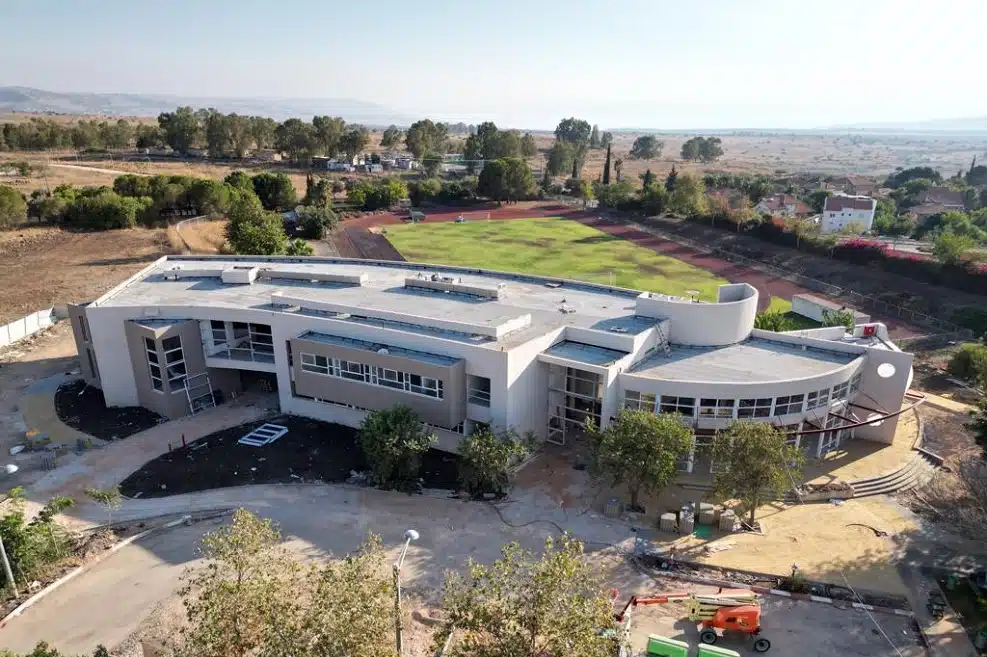
Thus, what is being built is not neutral educational services, but the use of academia to expand the settlement environment and attract students, researchers, and families to the north and the Golan.
The environment also falls within this track. On the same day the plan was approved, announced Israel’s Ministry of Environmental Protection announced an investment of up to 29.3 million shekels in the Golan and Katzrin between 2026 and 2030, as part of programs for waste management, removal of hazardous waste, and improving the settlement environment.
Economy and tourism
The fourth tool is the economy and tourism. The plan allocates more than 200 million shekels for economic development, including industry, agriculture, and tourism, with projects such as developing the Kursi tourist site, establishing “Park 890” in Katzrin, and supporting innovation and agricultural research.
Here, Israel seeks to make settlers’ continued presence in the Golan tied to everyday interests: work, investment, agricultural land, a tourism project, a factory, a farm, or a tech initiative.
And told local officials told The Times of Israel about initiatives in agriculture, agritourism, artificial intelligence, and research and development, in an attempt to present the Golan as an area of opportunity for settlers.
The economy is a tool of linkage: every tourism, agricultural, or industrial project adds a new layer of Israeli interests on the land and makes dismantling the occupation more politically and economically costly.
Marketing security
The fifth tool is security. Israel does not present the Golan only as a settlement space, but as a “defense line” in the north. In statements accompanying the plan, linked Israeli officials linked pushing settlers into the Golan with strengthening the military position.
The head of the Golan Regional Council said that strengthening settlement construction and expanding the settlement of Katzrin serves the area’s position as a “northern defense line.”
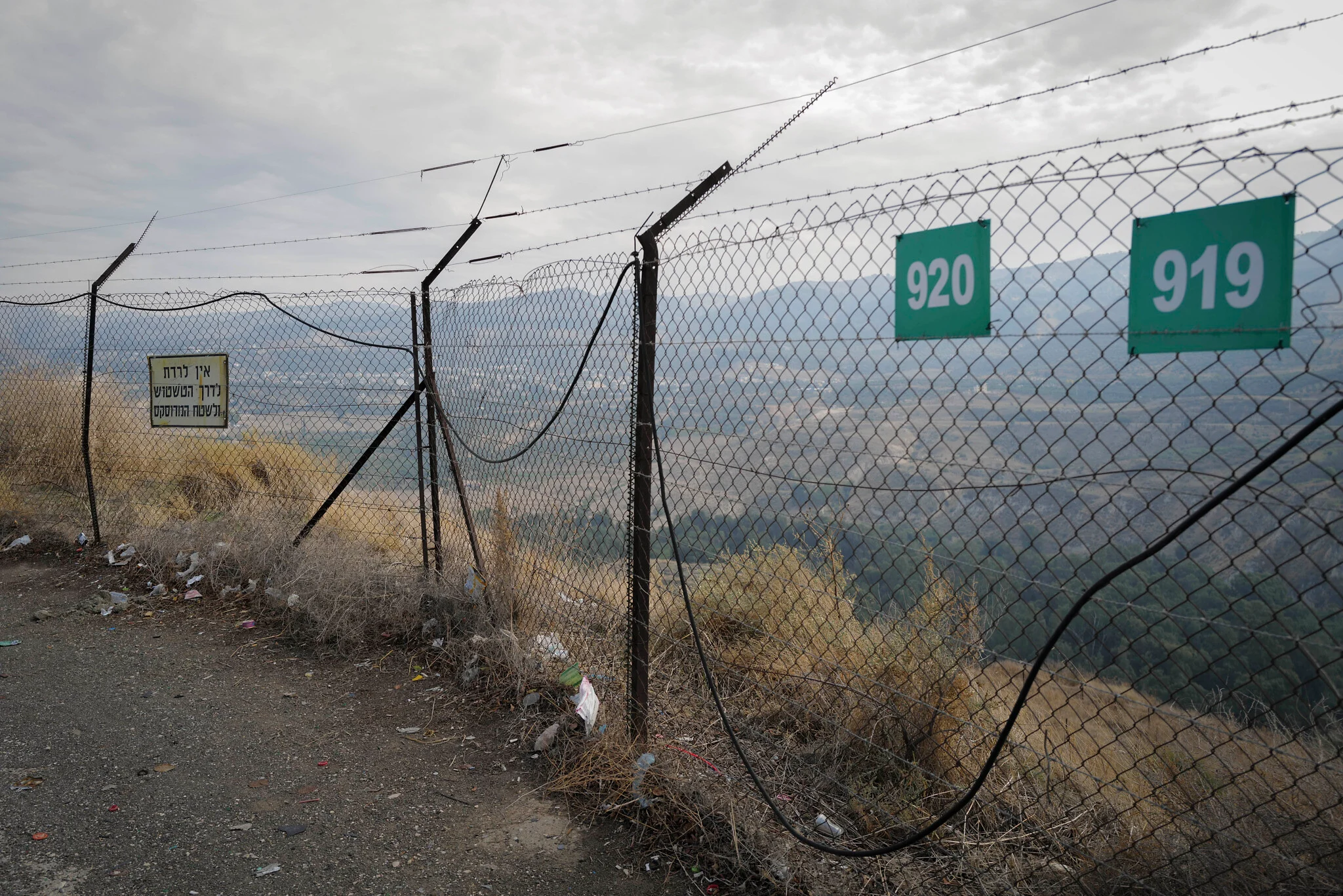
But this discourse does not remain merely military; it becomes a justification for permanent settlement expansion. Instead of the front line being a reason to restrict settlement construction, it becomes a reason to expand it by bringing in more settlers and improving roads, services, and the economy.
In The Times of Israel report, a local official expressed this clearly when he said said that bringing in more settlers constitutes “an anchor of protection perhaps more than tanks and aircraft.”
Why now?
The 2026 plan comes at a moment shaped by three factors: the northern front, the Syrian situation, and previous US cover.
On the northern front, speaks of the Israeli press speaks of years of tension, attacks, and damage in the Golan and the north, especially amid the ongoing confrontation with Lebanon’s Hezbollah, which Netanyahu’s government is exploiting to present the area as a front that needs settlement infrastructure, not just a military presence.
As for Syria, the fall of Bashar al-Assad’s regime in December 2024 marked a moment that “Israel” exploited to strengthen its military presence near the buffer zone and inside the Syrian space connected to the Golan, while escalating its rhetoric on security and borders.
This situation gave the settlement expansion project a ready-made security backdrop: as long as Syria is weak and unstable, Israel presents entrenching its occupation of the Golan as a necessity, not merely a settlement option.
Politically, Tel Aviv also relies on the recognition by US President Donald Trump during his first term in 2019 of Israel’s annexation of the Golan, even though this remained outside the international consensus and did not alter its status as occupied Syrian land.
The core international position has not changed. UN Security Council Resolution 497 of 1981 considered Israel’s imposition of its laws and administration on the occupied Syrian Golan “null and void and without international legal effect,” and demanded that it rescind the measure.
After the April 2026 plan, said the United Nations said that settlement expansion in the occupied Syrian Golan “must stop,” while described Human Rights Watch described the plan as funneling public money into transferring Israeli settlers to occupied Syrian land, calling it a declaration of intent to commit war crimes.