



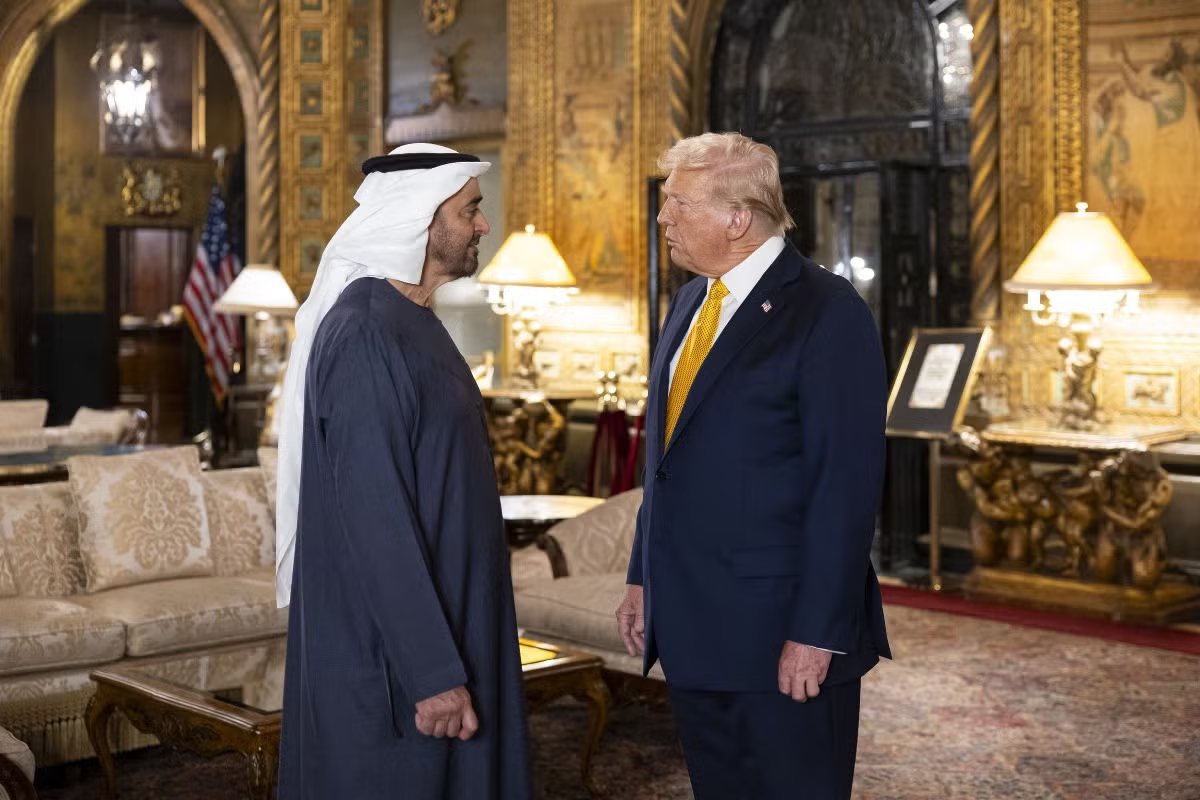



هذا التقرير متاح أيضًا بـ العربية
After the fall of the Assad regime, Syria became one of the region’s largest reconstruction markets, as estimates the World Bank direct physical damage at around $108.2 billion, while the cost of rebuilding physical assets was estimated at $215.6 billion, within a range of $140 billion to $345 billion.
The reconstruction cost figure is broken down into $82 billion for infrastructure, $75 billion for housing, and $59 billion for non-residential buildings figures that explain why Gulf states and companies moved quickly to secure positions in the energy, airports, ports, telecommunications, and real estate sectors.
But what is happening so far is not a full-fledged reconstruction drive, but rather an early positioning race: Saudi Arabia is announcing broad packages in airports, telecommunications, and gas; Qatar is moving in electricity, airports, and offshore gas; and the UAE is betting on ports, trade, real estate, and tourism.
Between promises and contracts, the key question remains: who is actually investing in the new Syria, and what has already begun on the ground?
Saudi Arabia: A Diversified Investment Package
Saudi Arabia was the first Gulf state to hold a joint investment forum with Syria in Damascus, months after Assad’s fall.
In July 2025, announced Riyadh 47 agreements worth nearly $6.4 billion, with the participation of more than 100 companies, in the sectors of real estate, infrastructure, telecommunications, education, and digital security.
The names put forward included companies such as STC (Saudi Telecom Group) and GO Telecom (a Saudi telecommunications and internet company).
The package also included Elm, which specializes in digital solutions and e-government services; Cipher, which operates in cybersecurity; and Classera, which specializes in education technology and educational platforms. Most of this package, however, remained within the framework of announcements and preliminary agreements.
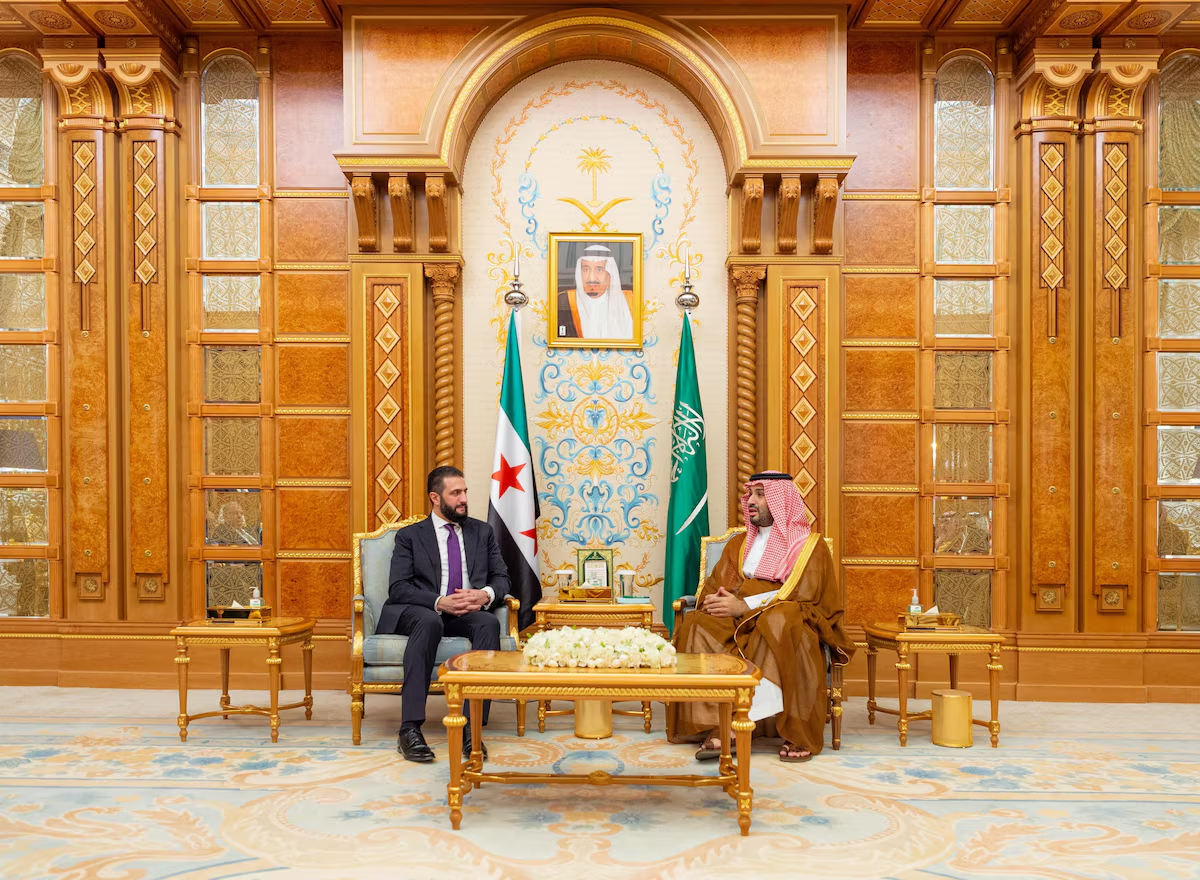
In February 2026, Riyadh moved to a clearer package after announcing that the Saudi Elaf Investment Fund had committed about 7.5 billion riyals, or around $2 billion, to develop two airports in Aleppo in phases.
It also signed an agreement to establish a joint airline under the name Flynas Syria, with a 51% stake for the Syrian side and 49% for Flynas, with operations expected to begin in the final quarter of 2026.
STC also announced an investment exceeding 3 billion riyals, or about $800 million, to develop a fiber-optic network stretching more than 4,500 kilometers, aimed at linking Syria regionally and internationally.
And signed ACWA Power (specialized in developing power plants and water desalination) and the Saudi Water Transmission and Technologies Company a memorandum and a set of agreements to develop Syria’s water sector, including plans for a desalination plant on the coast and water transfer to the south.
The kingdom also entered Syria’s gas sector. In April 2026, signed the Syrian Oil Company an executive contract with Saudi Arabia’s ADES Holding to develop a number of Syrian fields with the aim of increasing production, without disclosing the size of the financing or the timeline for the start of fieldwork.
In this sense, Saudi Arabia appears to be the broadest Arab player in terms of the number of sectors, but in most files it has not yet moved from announcement to the stage of tangible reconstruction.
As part of reopening the international financial track, announced Saudi Arabia and Qatar in April 2025 their intention to settle Syria’s arrears to the World Bank.
And said the bank later that arrears of about $15.5 million owed to the International Development Association had in fact been paid as of May 12, 2025, restoring Syria’s eligibility for new operations after a long suspension.
The World Bank explains that the settlement of arrears opened the door to new financing, including a $146 million grant for the emergency electricity project in June 2025, followed by $225 million in financing to restore water and health services in April 2026.
Qatar: Betting on Energy and Banking
Doha initially focused on energy. In May 2025, signed Damascus a $7 billion memorandum of understanding with an international consortium led by Qatar’s UCC Holding to develop the electricity sector.
The project includes four combined-cycle gas power plants with a total capacity of 4,000 megawatts, and a solar power plant with a capacity of 1,000 megawatts in southern Syria.
Work is supposed to begin after final agreements and financial close, with the gas plants to be completed within three years and the solar plant in less than two years.
Alongside the power plant project, Qatar has an energy file that has already begun at the supply level. In March 2025, announced Doha the supply of gas to Syria via Jordan to the Deir Ali plant south of Damascus, at a rate of 2 million cubic meters per day, with the aim of generating about 400 megawatts.
Then in August 2025, another, more regional track was launched after began Azerbaijani gas heading from the Shah Deniz field to Syria via Turkey, with a Qatari financing role, to operate plants capable of producing hundreds of additional megawatts.
In August 2025, Qatar also appeared in a broader deal worth $14 billion signed by Damascus with regional and international companies.
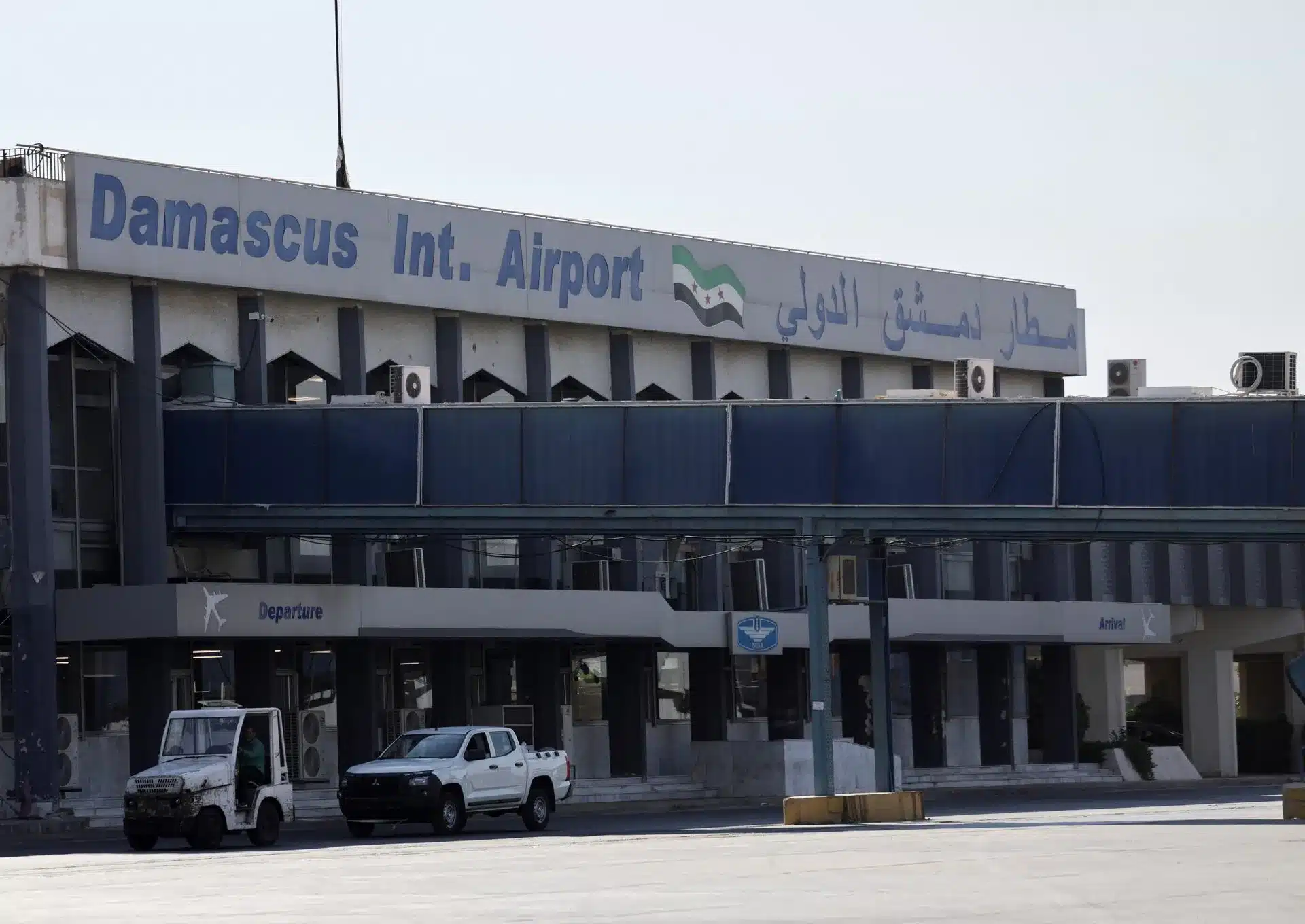
Its most prominent item was a $4 billion agreement with Qatar’s Urbacon Holding to build or expand Damascus International Airport, raising its capacity to about 31 million passengers annually, but no reports have emerged confirming the start of construction work on site.
In the banking sector, Reuters reported in January 2026 that Estithmar Holding of Qatar was moving to take control of Al-Shahba Bank and acquire 30% of the Syrian International Islamic Bank.
But the latest and more precise development came on April 26, 2026, when announced Qatar’s Estithmar Holding, through its subsidiary Masaref Holding, an agreement to acquire 49% of Al-Shahba Bank, with the deal remaining subject to obtaining regulatory approvals and completing the required procedures.
Qatar also entered the offshore oil and gas file. On May 11, 2026, announced the Syrian Oil Company the designation of an offshore block in the eastern Mediterranean for Syria’s first deepwater project with US-based Chevron and Qatar’s Urbacon Holding, paving the way for completing contracts and beginning technical operations in summer 2026.
One day later, signed France’s TotalEnergies, QatarEnergy, and US-based ConocoPhillips a memorandum of understanding with the Syrian Oil Company to conduct a technical review of offshore Block No. 3 near Latakia, paving the way for later commercial talks on exploration work.
The UAE: Ports, Real Estate, and Trade
The Emirati role has been marked by a combination of trade and investment. In May 2025, signed the Syrian government and DP World a memorandum of understanding worth $800 million to develop the port of Tartus.
Then in July 2025, it turned into an agreement with the General Authority for Land and Sea Ports to enhance port infrastructure and logistics services.
The deal focuses on developing a multi-purpose terminal in Tartus and cooperation in establishing industrial and commercial free zones.
DP World also announced that the agreement extends over 30 years, and that the company will invest $800 million over the concession period, while large-scale construction work has not yet begun.
In August 2025, announced Damascus a broader package of investment agreements worth $14 billion with regional and international companies.
included the package another Emirati project: the Damascus Metro, worth $2 billion, with the UAE National Investment Corporation, expected to serve up to 750,000 passengers daily, without any talk of implementation having begun.
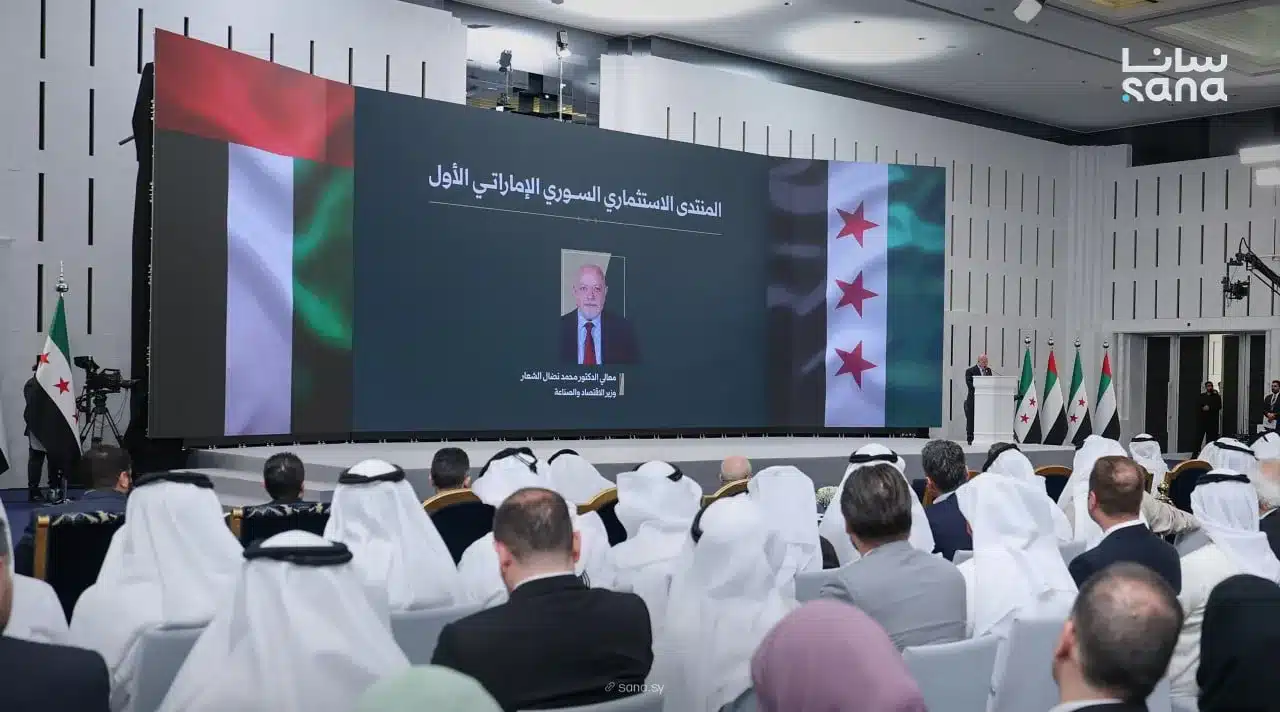
In May 2026, the first UAE-Syria investment forum in Damascus gave new momentum to the relationship, as announced UAE Minister of State for Foreign Trade Thani Al Zeyoudi that non-oil trade between the UAE and Syria reached $1.4 billion in 2025, an increase of 132% over the previous year.
During the forum, the two sides reached preliminary agreements in tourism, construction, infrastructure, agriculture, aviation, and logistics.
It also said Mohamed Alabbar, founder of Emaar Properties, that the company is studying projects that could be worth up to $12 billion in Damascus and $7 billion on the coast, while Etihad Airways announced the resumption of Abu Dhabi-Damascus flights in mid-June 2026.
In the gas sector, signed the UAE’s Dana Gas in November 2025 a preliminary memorandum of understanding with the Syrian Oil Company to assess the redevelopment of a number of fields in central Syria, including the Abu Rabah field.
Overall, the UAE is focusing on ports, logistics, trade, real estate, tourism, aviation, and agriculture, with emerging interest in gas.
By contrast, there are no announced Kuwaiti, Bahraini, or Omani investment projects in Syria after Assad’s fall; involvement has been limited to interest from the private sector in those countries in studying investment and exploring opportunities.
This inventory shows that the energy sector is the most attractive to declared Gulf capital, followed by airports and aviation, ports and logistics, telecommunications, and the real estate and tourism sectors.