







هذا التقرير متاح أيضًا بـ العربية
Ankara’s hosting of the North Atlantic Treaty Organization summit, and what it reflects of Türkiye’s growing presence within the Atlantic alliance, appears to have caused clear discomfort in Tel Aviv and within Benjamin Netanyahu’s government. Recent Israeli positions and statements reveal a striking state of political disarray, especially amid the friendly diplomatic rhetoric US President Donald Trump has recently adopted toward his Turkish counterpart, Recep Tayyip Erdogan.
Hours before the summit, which Türkiye is hosting on July 7 and 8, Netanyahu appeared on Fox News adopting openly inciting rhetoric against Ankara and its president, while making a direct appeal to the US president to reconsider any steps that could help strengthen Türkiye’s regional power, foremost among them the possibility of reopening the door for the Turkish Republic to acquire F-35 stealth fighter jets.
Israeli reservations about Türkiye’s expanding role within NATO are not new. What is notable this time, however, is that they have moved to an unprecedented level of openness and sharpness, far removed from traditional diplomatic calculations. The rise of Turkish influence within this major alliance was not a surprise to Tel Aviv, but it has now become more troubling in light of recent regional and international shifts. So what are the real motives behind this hard-line Israeli position at this particular moment?
Not a protocol event: How Tel Aviv sees the summit
Israel did not view Ankara’s hosting of the NATO summit as a passing event or a procedural matter falling within the alliance’s organizational rules. Rather, it read it through a different political lens, at an extremely sensitive moment for Tel Aviv. In its view, the hosting marks a revealing moment in the rise of Türkiye’s role within the Atlantic system and a message confirming Ankara’s ability to cement its presence as an influential player within one of the world’s most important military alliances.
According to the Israeli view, Türkiye’s hosting of the summit gives it, as the host country, broad symbolic and political space to showcase its influence and standing within the alliance, in addition to using the event to highlight its ability to move confidently within the Western camp. From the Israeli perspective, this could strengthen Ankara’s status and influence in Western decision-making circles, not only within NATO but also in regional files intertwined with the interests of the alliance and the United States.
The timing of the summit was also an important factor in shaping Israel’s reading of the event, as it comes amid escalating hostile rhetoric between Ankara and Tel Aviv, a widening political and media dispute between the two sides, and Türkiye’s recent diplomatic and military moves in the region.
Tel Aviv views these developments with concern and anticipation, considering them aimed at containing its regional influence and limiting its ability to push through its agenda in the Middle East, particularly on the files of Syria, the eastern Mediterranean and the balance of power in the region.
Incitement through and through
Tel Aviv preceded the NATO summit in Ankara with a clearly inciting political and media discourse, centered essentially on warning that Turkish President Recep Tayyip Erdogan would use the event to entrench a new image of Türkiye within the alliance as a partner that cannot be bypassed in the European security architecture and the region’s balance of power. From the Israeli perspective, Ankara is thus seeking to move beyond the image promoted for years of being the “troublesome member” within the Atlantic alliance and to shift into the position of a pivotal state capable of influencing the West’s security and political calculations.
From this standpoint, Israeli rhetoric warned NATO leaders and the broader Western camp of the consequences of growing Turkish influence, not only for the future of European security but also for Israel’s position and Western interests in the Middle East. Tel Aviv sees Turkish moves as an attempt to expand its sphere of influence in the region in ways that could narrow Israel’s room for maneuver and threaten the equation of superiority that Israel has long sought to entrench militarily and politically.
In this context came the moves by Benjamin Netanyahu, who urged the US president to refrain from selling advanced weapons systems to Ankara or taking any steps that could help Türkiye modernize its air force. He also warned against supplying it with F-35 fighter jets or advanced engines for its aircraft, arguing that such steps could affect Israel’s air superiority and upset the balance of power in the region.
Erdoğan’s Turkey welcomes the NATO summit tomorrow while arresting opposition leaders, silencing journalists, banning protests, and censoring independent media.
When a government fears its own people, it tells you everything you need to know about that regime.…
— Israel Foreign Ministry (@IsraelMFA) July 6, 2026
The same inciting rhetoric was adopted by Israeli Foreign Minister Gideon Saar, who sought to shift the dispute with Ankara from being a bilateral tension into an issue of concern to NATO countries themselves. He focused on Turkish Foreign Minister Hakan Fidan’s statements against Israel, describing them as “incitement to genocide,” and called on Türkiye’s allies within the alliance to condemn them, in a clear attempt to embarrass Ankara before its Atlantic partners ahead of the summit.
At the media level, the trajectory was not much different, though it was more explicit in expressing Israeli concern over Türkiye’s hosting of the summit. Hebrew-language media portrayed the event as a display of Turkish power and an attempt by Erdogan to emerge from it as a “strategic victor,” while other coverage suggested that Ankara is seeking to redefine its place within NATO, from a controversial member to an indispensable partner in Western security and military calculations.
What worries the entity?
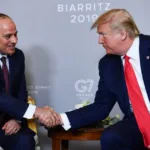
This Turkish rise within the Western equation represents one of the Israeli entity’s greatest sources of concern, out of fear that Ankara could become Washington’s preferred security partner on a number of regional files, especially in light of the strong relationship between the US president and his Turkish counterpart, whom Trump has described on more than one occasion as a “friend” and a “strong president.”
Israeli fears are growing that this positive relationship between Washington and Ankara could push the US president to show greater flexibility in reopening the path for Türkiye to return to the F-35 fighter jet program, despite its exclusion from it in 2019 after purchasing the Russian S-400 missile defense system. Tel Aviv believes that any breakthrough on this file would strengthen Türkiye’s military capabilities, especially in the air, with direct implications for the balance of power in the region.
From this perspective, Israel views Türkiye’s rise within NATO, at a time when the alliance has recently been suffering from fragility, as a development that could give Ankara greater standing and broader space to address the West from a position of strength and impose its approaches on a number of regional files, including those that directly intersect with Israeli interests and calculations.
According to the Israeli reading, this could reduce the room for maneuver that Tel Aviv has long been accustomed to operating within across the region.
In the same context, Türkiye’s growing presence within the Atlantic alliance could limit Israel’s ability to market its narrative within the Western camp and open the way for a different political narrative that contradicts the Israeli position on regional issues. That could have a clear impact on Tel Aviv’s network of allies at a time when fears of political and diplomatic isolation have been mounting over Israel since the outbreak of the Gaza war in October 2023.
Syria, energy and the Mediterranean: The main arenas of confrontation
This Israeli unease is driven by a number of files that have become the main arenas of confrontation between Ankara and Tel Aviv in recent months, foremost among them the Syrian and Lebanese files. Türkiye’s repeated warnings over Israeli operations in Syria and Lebanon have caused clear concern within Israeli circles, especially after Ankara came to view those operations as directly affecting its national security, placing Türkiye in a more confrontational position with Israeli calculations in the region.
Türkiye’s growing involvement in the Syrian scene has also stirred broad Israeli irritation, particularly amid the development of relations between Ankara and Damascus and the opportunities that has given Türkiye to strengthen its presence in files highly sensitive for Tel Aviv, such as rebuilding the Syrian army and entrenching a near-permanent Turkish military presence inside the country.
From this point, some Israeli assessments hold that Syria has become a sensitive test of Türkiye’s influence in the Middle East and a direct arena for measuring the limits of its ability to reshape regional balances.
The energy file has also imposed itself on the table of Israeli concern over Türkiye’s growing influence within NATO, as this presence gives Ankara broader Western legitimacy in the eastern Mediterranean and the Middle East more generally, in ways that could conflict with the Israeli agenda aimed at strengthening its influence in energy equations and maritime alliances. “Israel” views its network of cooperation with Greece and Cyprus as one of the tools for balancing Turkish influence, while seeing Ankara’s rise within the Atlantic alliance as a factor that could reshuffle the competitive landscape in this strategic region.
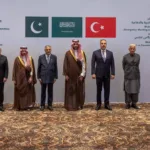
The US war against Iran has also cast its shadow over the scene, with the serious challenges and new obligations it has imposed in light of the geopolitical shifts it has produced on the regional and international map. In this context, Ankara is seeking a repositioning that enhances its regional influence through alliances, partnerships and understandings with influential powers such as Egypt and Saudi Arabia, in contrast to Israel’s growing and exposed isolation.
This further heightens Tel Aviv’s fears that Turkish expansion, backed by a rising Atlantic presence, could upset the region’s balances and strip away part of the margin of influence through which Israel has long operated.
In sum, Israel’s inciting rhetoric toward Türkiye cannot be read as mere reservations about Ankara hosting the NATO summit, but rather as a reflection of growing Israeli anxiety over Türkiye’s rising influence and Ankara’s expanding room for maneuver regionally and internationally.
That anxiety is intensifying as the Turks seek to establish themselves as an active Atlantic power and an indispensable partner on the files of security, energy and regional balances.
Tel Aviv views this Turkish ambition as a dual threat: On the one hand, it could strengthen Ankara’s influence within the Western camp; on the other, it could limit Israel’s ability to move freely across a number of sensitive regional arenas. From this perspective, Israeli concern appears likely to intensify further in the coming period, especially if the Turkish Republic succeeds in turning its presence within NATO from mere conventional membership into a force to be reckoned with inside the alliance, with direct repercussions for the balance of power in the Middle East.