










هذا التقرير متاح أيضًا بـ العربية
On Feb. 20, 1952, Türkiye and Greece formally joined NATO at the Lisbon meeting. It was part of the wave of expansion the alliance had seen since its founding. NATO describes, on its official websiteThis accession was seen as an effort to expand the alliance’s responsibilities to encompass the entire Mediterranean basin and the Black Sea. Militarily, this took shape that same year with the establishment of the Allied Land Forces Southeastern Europe command in the city of Izmir, whose area of responsibility stretched from the Caucasus to Greece’s western shores.
The most important element in this equation was not so much the land borders as the straits. Under the Montreux Convention, signed in 1936, Türkiye had the authority to restrict the passage of warships through the Bosporus and the Dardanelles in times of war, or when it felt an imminent threat of war.
After joining NATO, this authority enabled Türkiye to serve as an effective gatekeeper capable of confining the Soviet Black Sea Fleet to its own waters in the event of an all-out conflict the role on which Strategy “the Southern Flank” throughout the Cold War.
When the Soviet Union collapsed, the southern flank lost its original function of containing Moscow, and the alliance began redefining its relationship with its southern neighborhood through cooperation frameworks that did not require membership. In December 1994, NATO launched the “Mediterranean Dialogue,” which included countries such as Egypt, Mauritania, Morocco and Tunisia, alongside Israel; Jordan and Algeria joined later.
At the 2004 Istanbul summit, the alliance launched the “Istanbul Cooperation Initiative,” aimed at expanding cooperation with the Gulf states. Bahrain, Kuwait, Qatar and the UAE joined, while Oman and Saudi Arabia chose to take part in specific activities.
Were those initiatives “much ado about nothing”? That is the view of Carnegie researcher Jean-Loup Samaan. According to his article, “The Limits of NATO-Middle East Military Cooperation,” these frameworks remained limitedIn practice, its ambitions remained just that, and its achievements fell far short of its stated goals.
For example, the number of advisers in NATO’s mission in Iraq does not exceed about 500 personnel, while the alliance’s presence in Kuwait was limited to just two representatives from its headquarters in Brussels. Most of the training activities NATO provides in the region rely on mobile teams dispatched from the United States and Europe rather than permanent entities, to the point that one Kuwaiti security official described the partnership to Simaan as “a partnership without a purpose.”
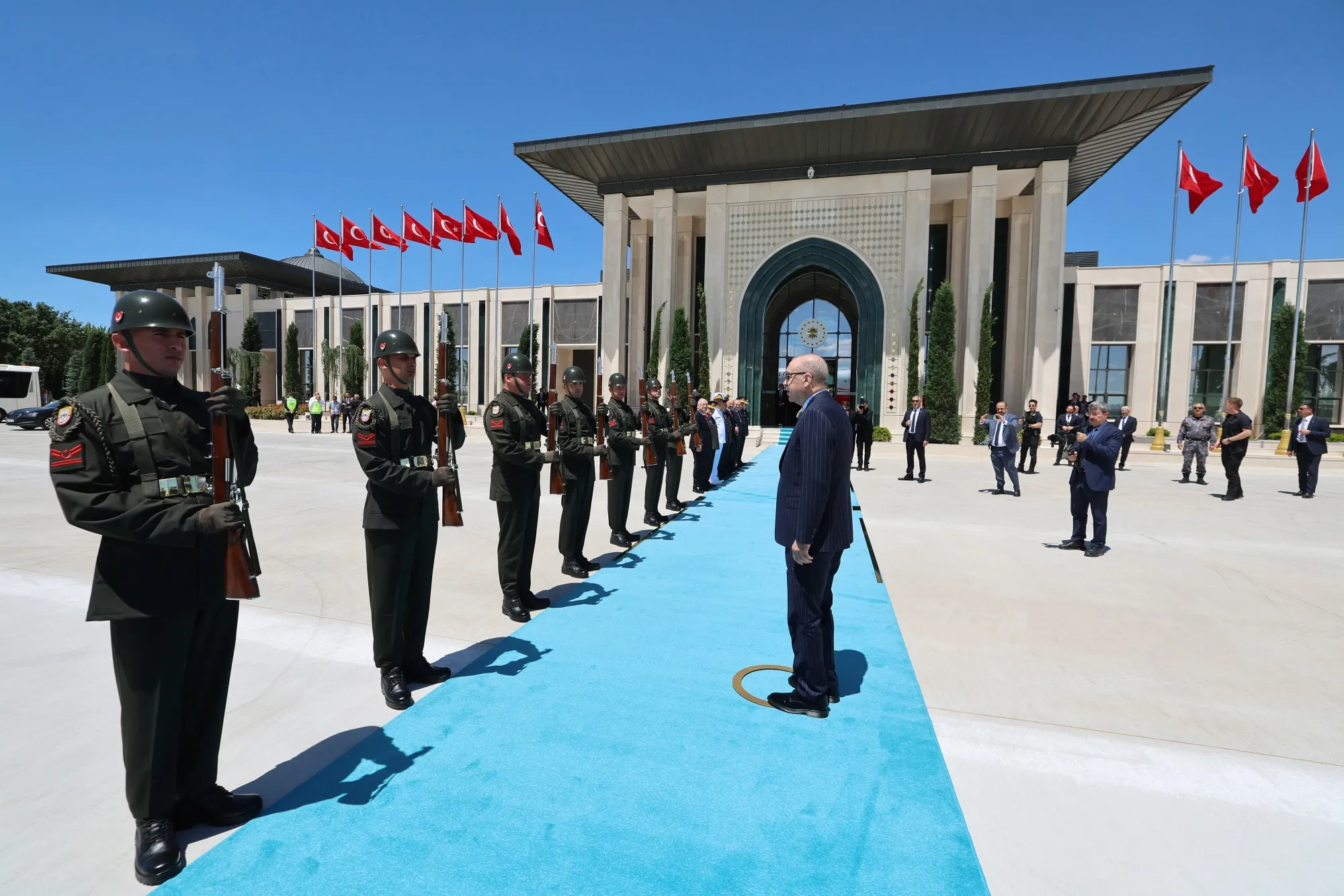
Against the backdrop of several regional shifts, Ankara will host NATO’s 36th summit on July 7 and 8, 2026, the second summit Türkiye has hosted since the 2004 Istanbul summit. Many issues will be on the table, but the question that summit will raise is an old one that resurfaces with every crisis on NATO’s doorstep: Where do the boundaries of the “Southern” in the alliance’s strategic lexicon end?
Does this south now include Damascus, Baghdad, Beirut, Gaza, and the Gulf as core areas for the alliance’s security, or does it stop at the northern shores of the Mediterranean? And why should this matter to the Arab citizen?
If we try to answer that question in the following lines, the first thing we can promise the reader is that the concept of the south in NATO strategy has never been fixed. It has undergone radical transformation more than once over the decades, and it may now be entering a new phase of change whose contours are still taking shape, as this article will show.
The New Beginning of Everything: The Invasion of Ukraine
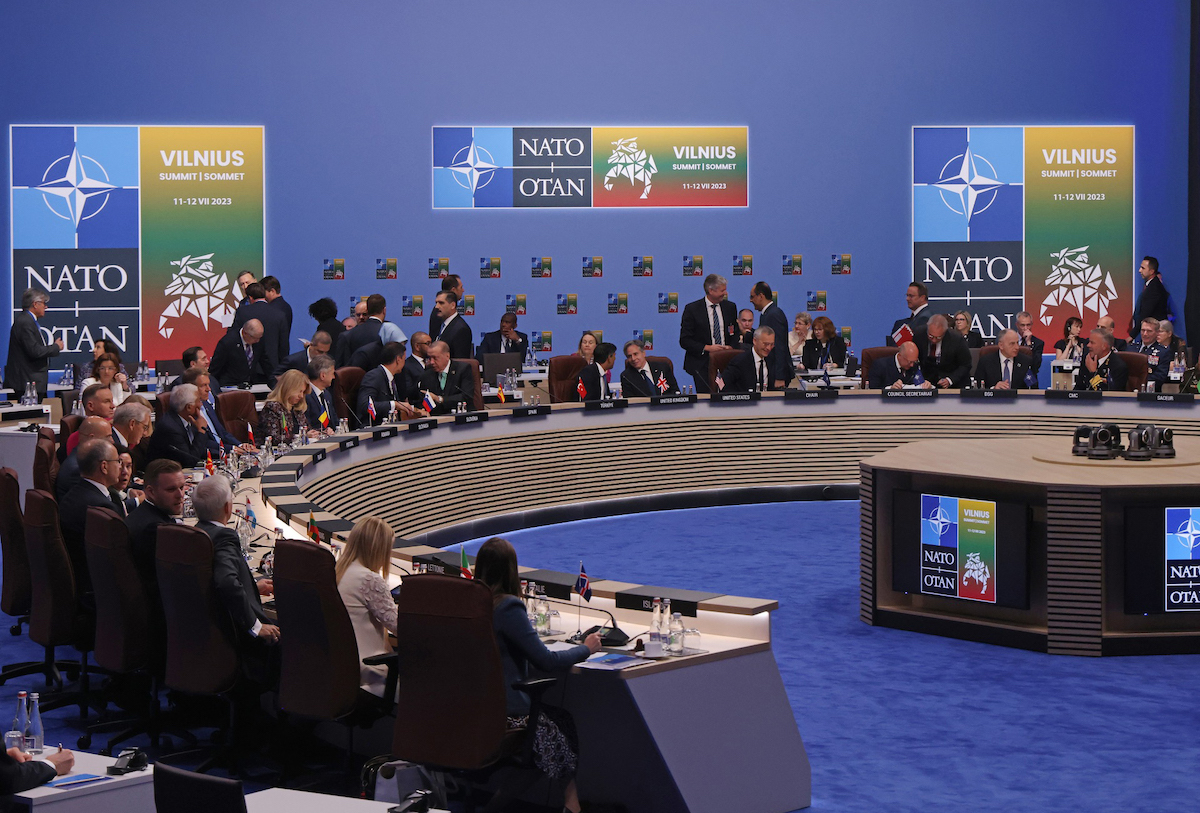
With Russia’s invasion of Ukraine, alliance leaders adopted a new Strategic Concept at the 2022 Madrid summit. Its 11th paragraph explicitly stated that conflict and fragility in Africa and the Middle East directly affect the security of the alliance and its partners, and that the “Southern Neighbourhood,” in its wording, document, specifically including the Middle East, North Africa, and the Sahel region.
In the aftermath, the 2023 Vilnius Summit declaration reaffirmed this definition, while alliance leaders at the 2024 Washington Summit adopted what known as the “Southern Neighbourhood Action Plan.” This was accompanied by the appointment of Spanish diplomat Javier Colomina in July 2024 as the secretary-general’s special representative for the Southern Neighbourhood, and the opening of a NATO liaison office in Amman, Jordan, the first institutional outpost of its kind in the region a move that stirred considerable anger in Arab circles.
Elsewhere, a team of independent experts commissioned by NATO prepared a report published by the secretariat in May 2024 that did more than describe the threats emanating from the Southern Neighbourhood; it also introduced the term “Southern Neighbourhoods,” in the plural, to reflect the diversity of the region stretching from West Africa to the Gulf, rather than viewing it as a single homogeneous bloc.
There was another development that imposed the Southern Neighbourhood as an urgent issue for the alliance. In the wake of the fall of Bashar Assad’s regime and Russia’s loss of its naval base in Tartus, Moscow moved quickly toward Libya through negotiations with the eastern government to secure a naval base in Derna a development NATO circles followed closely, according to one of the reports by the Gulf International Forum.
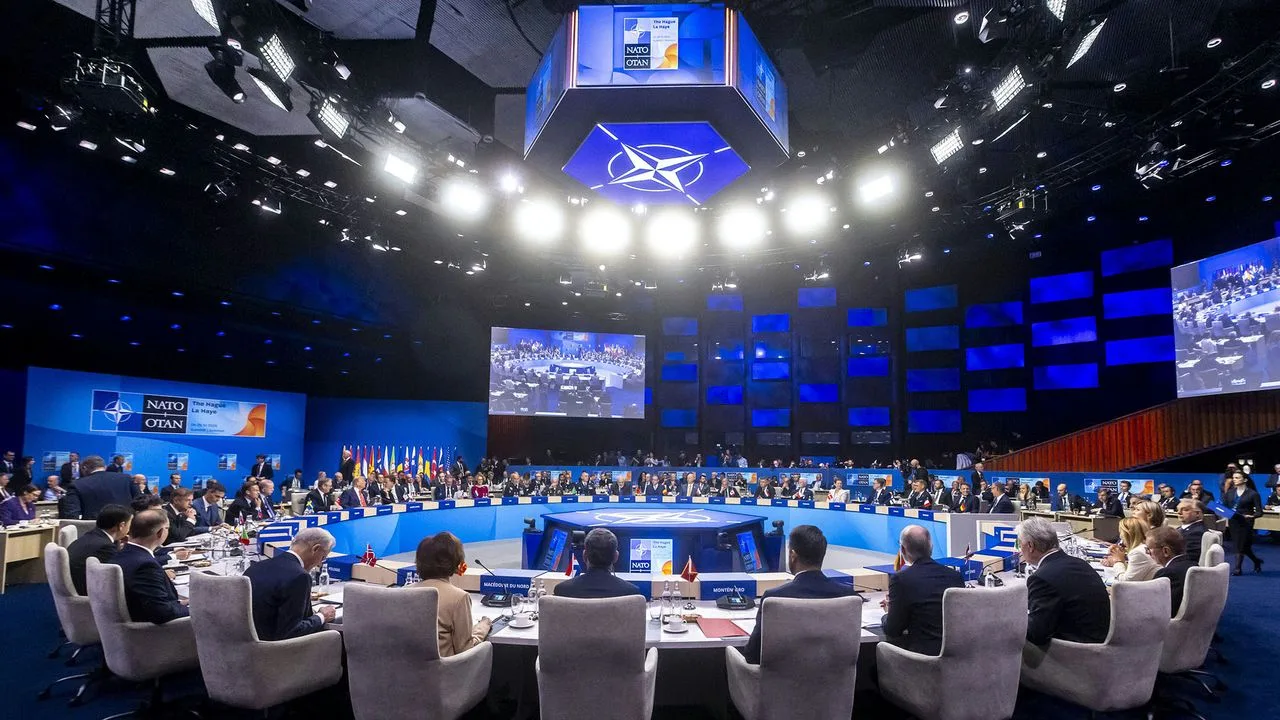
But a striking paradox emerged later. The Atlantic Council noted in another analysis titled “NATO has a Mediterranean blind spot, and it puts the alliance’s security at risk” that “despite all this talk about the South, no country from North Africa or the Middle East was invited to attend the 2025 Hague summit, unlike the alliance’s usual practice with its partners in Eastern Europe or the Pacific.”
But elsewhere, Javier Colomina brought together 90 participants from alliance countries and partners in North Africa and the Middle East for the first Southern Neighbourhood Security Dialogue in the Italian city of Naples the same headquarters that has hosted NATO’s Joint Force Command’s “NATO Strategic Direction South Hub” since 2017.
In recent years, NATO has been feeling its way hesitantly toward an approach to the Southern Neighbourhood. With this year’s Ankara summit taking place amid an exceptionally complex regional environment, it seemed likely that this file would feature among the summit’s priorities. The South’s presence has been cemented in recent months through tangible developments: In March 2026, NATO air defense systems intercepted several ballistic missiles in Turkish airspace during the war involving Iran, Israel, and the United States, prompting the alliance to deploy an additional Patriot system to the city of Adana.
But news recently announced by Türkiye’s state broadcaster about the decisionNATO bodies’ withdrawal of the alliance’s training mission from Baghdad in light of the recent security developments in the region has once again highlighted the paradox of the alliance’s relationship with its southern neighborhood. That decision reflected the fact that NATO’s engagement with the South is not a steadily upward trajectory, but rather a volatile path governed by conditions on the ground meaning it still lacks a clear policy and a fixed compass.
If we want to understand the reason behind this confusion in the alliance’s policy toward the southern neighborhood, we must look at the concept of the South through the lens of member states’ interests, not only through what is presented in the alliance’s security documents and reports. Here, we need to turn the clock back a little.
The crisis in the concept of the South: Türkiye’s view and everyone else’s
What makes the dispute over the concept of the South a complicated issue among member states is that the Eastern Mediterranean has always been a theater of friction among alliance members themselves, in addition to being a theater of external threat. Since the discovery of massive gas reserves off the coasts of Cyprus, Israel, Lebanon, and Egypt, competition over maritime border demarcation has intensified between Türkiye on one side and Greece and Cyprus on the other.
The European Council on Foreign Relations documented how tensions peaked in the summer of 2020, when a Turkish warship trained its targeting radar on the French frigate Courbet, in an incident that prompted Paris to temporarily withdraw from NATO’s Operation Sea Guardian in the Mediterranean, protesting what it saw as the allies’ failure to condemn the incident.
Türkiye also believes doctrine“Blue Homeland,” which refers to its claims to rights in the Mediterranean and its resources. This has split NATO countries into two camps in their approach to Ankara: a hard-line camp, led by France, Greece and Cyprus, that calls for sanctions, and a conciliatory camp, led by Spain, Italy and Germany, that favors mediation.
This division reveals a fragmentation in the alliance’s policy toward Ankara and makes any talk of expanding the southern flank to include the eastern Mediterranean inseparable from a purely internal dilemma within NATO itself, as much as it is tied to a unified confrontation against an external party.
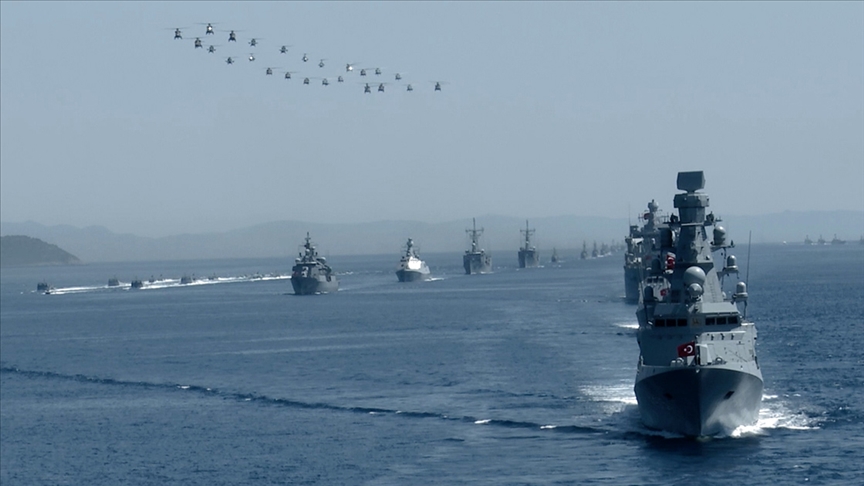
Türkiye’s long-standing central role on the southern flank, and later in the southern neighborhood, made agreement on its view of the South the most sensitive point in approving a working policy for the alliance on this issue. Since hosting the 2004 Istanbul summit, which launched the Gulf Initiative, Türkiye has consistently presented itself as a bridge between the alliance and its southern neighborhood.
Some Turkish analysts believe that hosting the Ankara summit will give this role fresh momentum. According to what one Turkish newspaper reported, citing retired officers who previously served in NATO bodies, the issues of Syria, Iraq, Iran and the Mediterranean will inevitably be on the summit table — evidence that Türkiye has demonstrated maturity in dealing with the sweeping transformations in Africa and the Middle East.
This deliberate maturity has made Türkiye one of the few major allies capable of reading NATO’s threats across two flanks: from the east, through the Black Sea and the Montreux regime, and from the south, through Syria, Iraq and the eastern Mediterranean. As a result, Türkiye will carry particular weight in shaping what is being described as the “NATO 3.0” phase, in which the alliance’s European members will assume greater responsibility for defending European security amid a major and unmistakable decline in US commitment.
Even so, Türkiye does not enjoy NATO-wide consensus for structural, not circumstantial, reasons. One study by the German Institute for International and Security Affairs showed, under Title “NATO’s role in Europe’s defense,” notes that NATO members differ over how to define the South, which, according to the study, stretches from Mauritania to Afghanistan. There is also no shared definition of terrorism itself: Türkiye focuses on Kurdish organizations, while Italy and Spain look to ISIS, and France prefers merely raising awareness of the threat without committing the alliance to an active role.
On the other hand, Jean-Loup Samaan, mentioned earlier, pointed out that Ankara has previously obstructed NATO activities in the region that do not align with its own approach, such as cooperation with Israel or Egypt. This shows that expanding the southern flank is not necessarily synonymous with unifying the alliance’s vision toward it.
From the perspective of the Turkish opposition, some voices argue that Atlantic membership has become more of a source of dependency than a producer of the security Türkiye needs. The “Blue Homeland” in the eastern Mediterranean, armed groups in northern Syria and Iraq, and the new geopolitical equation tied to Israel are Turkish security priorities that do not necessarily align with NATO’s priority of containing Russia.
Against the backdrop of that Eurasian conflict, it asserts strategyThe 2026 US National Defense strategy makes clear that Washington will be explicit with its European allies that their efforts and resources should be focused on Europe a sign that the Trump administration does not see engagement by the alliance in the south as a priority, given its growing focus on the Indo-Pacific. This conceptual divide, reflecting conflicting geostrategic interests among member states, has so far left the southern neighborhood little more than words on paper.
The report Konrad Adenauer Foundation of Germany, “The Ankara Summit and NATO’s Southern Neighborhood,” highlights the paradox of the alliance’s southern neighborhood. It notes that Türkiye’s hosting of the summit, along with the escalation involving Iran and the continuing turmoil in Gaza and Lebanon, helped keep the “southern neighborhood” issue firmly on the agenda. This was clearly reflected in the alliance’s foreign ministers’ meeting in Helsingborg, Sweden, on May 21 and 22, 2026, as well as in consultations held in Istanbul in February 2026.
But the same report warned against inflated expectations, arguing that any “comprehensive strategic reorientation” of the alliance toward the south remains unlikely in the foreseeable future.
Olaf Wientzek, director of Multinational Development Policy Dialogue in Brussels, therefore comments that “the focus on the joint action plan for the southern neighborhood reflects broader discussions within the alliance about the strategic importance of this neighborhood and the role NATO should play in the region. While allies are increasingly aware that developments in the Middle East, North Africa and the Sahel have direct implications for their security through terrorism, migration, maritime insecurity, energy security and strategic competition they also value the potential for practical cooperation with partners in addressing shared challenges.
At the same time, however, allies still differ over the level of priority these issues should receive compared with NATO’s core deterrence and defense missions. Such differences are not unusual in an alliance of 32 members with varying cultures, geographies and security interests, but they define the scope and ambition of NATO’s engagement in the south While Ankara, Rome, Madrid and Athens share common concerns about the south, the alliance’s eastern members are more focused on Russia and Ukraine, and Germany is trying to balance the two approaches.”
The southern neighborhood … for those who live in it
For Arab states located within NATO’s southern neighborhood, the alliance’s engagement remains, as one research center describes it, “sub-strategic” — present but not decisive. Existing frameworks, from the Mediterranean Dialogue to the Istanbul Cooperation Initiative, as well as the NATO Mission Iraq and Operation Sea Guardian in the Mediterranean, may provide channels for consultation and training, but they offer no security guarantees and open no path to membership.
It is also notable that the Palestinian issue remains marginal, despite a proposal made in 2024 to invite the Palestinian Authority to attend Mediterranean Dialogue activities as an observer a proposal that remains in its infancy.
As for the Gulf states, they appeared more cautious about expanding their public cooperation with the alliance, especially after the Doha incident and the killing of Hamas negotiators, along with the shameful positions taken by alliance countries, foremost among them the United States, which did not seriously rebuke Israel. Researcher Leonardo Mazzocco of the Gulf International Forum believes this stance has cooled the enthusiasm of some Gulf states for overt security rapprochement with the West in the near term.
Based on the above, the questions raised at the end of the introduction appear to have two simultaneous answers. On the conceptual and institutional level, the narrow southern flank, born in 1952 to protect the straits from the Soviet fleet, no longer exists in its old form. Instead, it has evolved into “southern neighborhoods” with broader, more flexible geographic boundaries, encompassing Syria, Iraq, Libya, the eastern Mediterranean, the Sahel and the Gulf, and now has a special representative, a liaison office in Amman and an annual dialogue forum in Naples.
More importantly, however, we are still at a stage closer to sound and fury signifying nothing. The alliance’s actual resources and attention remain tied first to the long, draining war in Ukraine, and second to competition with China in the Pacific. The south remains, to borrow Olaf Wientzek’s words, “more present in rhetoric than in the actual allocation of resources and decision-making.”
Thus, despite the importance and symbolism of its hosting, the Ankara summit appears closer to entrenching this uneasy balance in the alliance’s approach to its southern neighborhood, while giving Türkiye greater recognition for its role as a bridge between NATO and that neighborhood — without producing any major break from the logic of the old flank, which for decades viewed the south as a source of threats to be managed, not a partner to be consulted.