









هذا التقرير متاح أيضًا بـ العربية
Türkiye’s KAAN fighter program entered a new phase when President Donald Trump’s administration notified Congress in June 2026 of its intention to move forward with dealJet engines for Türkiye worth more than $700 million.
The deal involves F110 engines from GE Aerospace, which KAAN used on its maiden flight. Türkiye needs them to expand testing and move to the first production batches, while continuing to develop its indigenous TF35000 engine for later versions of the aircraft.
If approved, the importance of the deal lies in giving Ankara both engineering and political time in one of the most complex parts of fighter aircraft manufacturing. It would also help protect KAAN’s timeline from disruption caused by engine production delays in the initial phase.
At the same time, the deal remains tied to a sensitive US track in Congress, and to a broader backdrop that includes the Russian S-400 system, the Countering America’s Adversaries Through Sanctions Act, or CAATSA, and Türkiye’s removal from the F-35 program.
In this sense, the KAAN program is moving along two parallel tracks: the first relies on a ready, proven engine familiar to Türkiye’s defense industry through the F-16 fleet, while the second bets on a future indigenous engine that would give Türkiye broader sovereignty over production, modification and export. For that reason, F110 engines appear to be a highly valuable transitional solution until Türkiye realizes its ambition of producing a fully domestic engine.
Why did TUSAS Engine Industries choose the F110 family?
The agreement to develop Türkiye’s fifth-generation Kaan fighter jet was signed between Turkish Aerospace Industries, TUSAŞ, and Türkiye’s Presidency of Defense Industries, SSB, on Aug. 5, 2016, andcarried out Its first flight took place on Feb. 21, 2024, powered by two General Electric F110 engines, lasting 13 minutes at an altitude of 8,000 feet and a speed of 230 knots.
Then conductedTAI conducted a second test flight on May 6, 2024, lasting 14 minutes and reaching an altitude of 10,000 feet. The official KAAN brochure lists thrust at 29,000 pounds for each of the two engines, consistent with the F110-GE-129 class.
In the background of the project is TUSAŞ Engine Industries, or TEI, while General Electric manufactures the F110 engine family, which has moved to the center of the debate over KAAN’s first phase.
AndengineThe F110 is an afterburning turbofan engine. General Electric lists its baseline thrust class at about 29,000 pounds, and the company’s data shows it is used on fighter jets such as the F-16C/D and F-15EX.
TEI confirms that the F110’s applications include the F-16, F-15 and F-14 platforms, and that the company has become an authorized center for the assembly, inspection, testing and maintenance of this engine.
This background places the F110 close to Türkiye’s military and industrial environment, making it well suited to a transitional phase in which KAAN needs a familiar, low-risk engine.
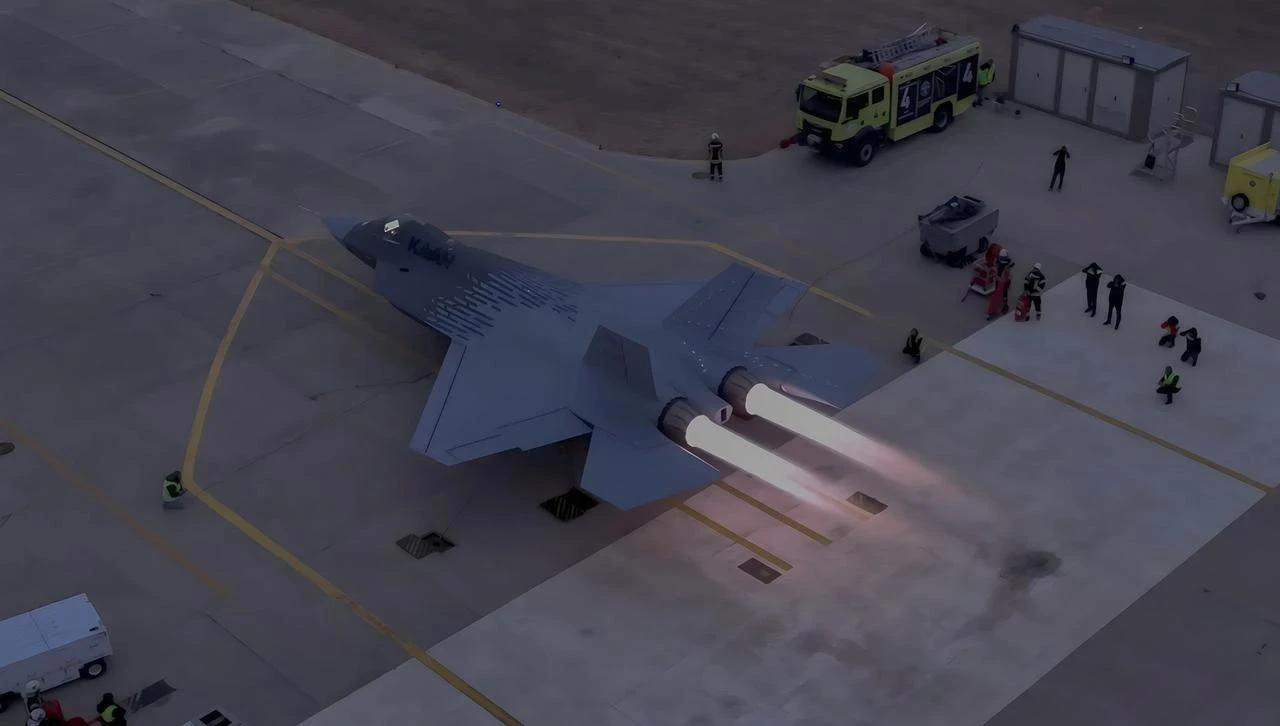
TUSAS said on June 21, 2023, that it extendedits agreement with General Electric for F110 engine maintenance services for F-16 and F-15 operators in several countries, and that it has carried out production of F110 engines for the entire fleet of Turkish Air Force F-16s. Its data also shows that it has manufactured more than 300 engines of this model, along with more than 100 different parts for it.
Türkiye’s need for additional engines is tied to the expansion of the testing campaign and the start of production. On June 19, 2025, the website Türkiye Today reported that six aircraft would enter the testing campaign, and that the goal was to deliver the first early versions of KAAN, known as Block 10, around 2028.
It then reported The US website Breaking Defense, which specializes in the defense industry, reported on May 8, 2026, citing TUSAS CEO that the first batch for the Turkish Air Force will consist of 20 aircraft in the Block 10 configuration. This makes the F110 a transitional engine that enables expanded testing and the move to early production.
By contrast, Türkiye’s domestic track is moving ahead through the TF35000 engine, which is being developed in partnership with TRMOTOR under the auspices of the Presidency of Defense Industries, to produce 35,000 pounds of thrust meeting the requirements of a fifth-generation fighter.
Andreported Türkiye Today on July 29, 2025, that initial engine tests are targeted for 2026 and that its integration with KAAN will begin in 2032, while a response by Turkish Defense Minister Yasar Guler in December 2025 indicates that the engine was planned for the Block 30 and Block 40 platforms.
Andsaid Haluk Gorgun, head of Türkiye’s Presidency of Defense Industries, in September 2025, that KAAN’s future will not depend on the engine of a single country a statement that sums up the logic of the program, as the F110 engines give the aircraft operational and testing capability in the first phase, while the TF35000 remains the bet for the more mature versions of the project.
What does Türkiye stand to gain from the potential deal?
Türkiye’s first gain lies in time: if the larger deal is completed, KAAN will have an engine inventory that keeps pace with the transition from experimental flights to the first production batches.
The Turkish defense minister said on Dec. 26, 2025, that 10 F110-GE-129E engines had been delivered by September 2025, and that discussions were continuing with the US government over 80 additional engines as part of the deal that has recently returned to the forefront.
Andexplained Haluk Gorgun that all the engines needed for the prototypes had been supplied and delivered to Türkiye, and that the formal US request for the engines for a specified number of first-batch aircraft had been completed.
The second gain is industrial, as the existence of an established Turkish base around the F110 makes it easier to integrate the engine into KAAN in terms of ground testing, personnel qualification, and maintenance and supply chains.
TEI has confirmed that it carried out assembly and testing activities for the F110 engines used by Türkiye’s F-16 fleet, while stressing in March 2025 that the F110 remains on an active production line, and that it has achieved 40 years of production and continuous improvement and more than 11 million flight hours.
These figures give Türkiye a reliable bridging engine at a stage when the national fighter cannot afford setbacks that would slow the program.
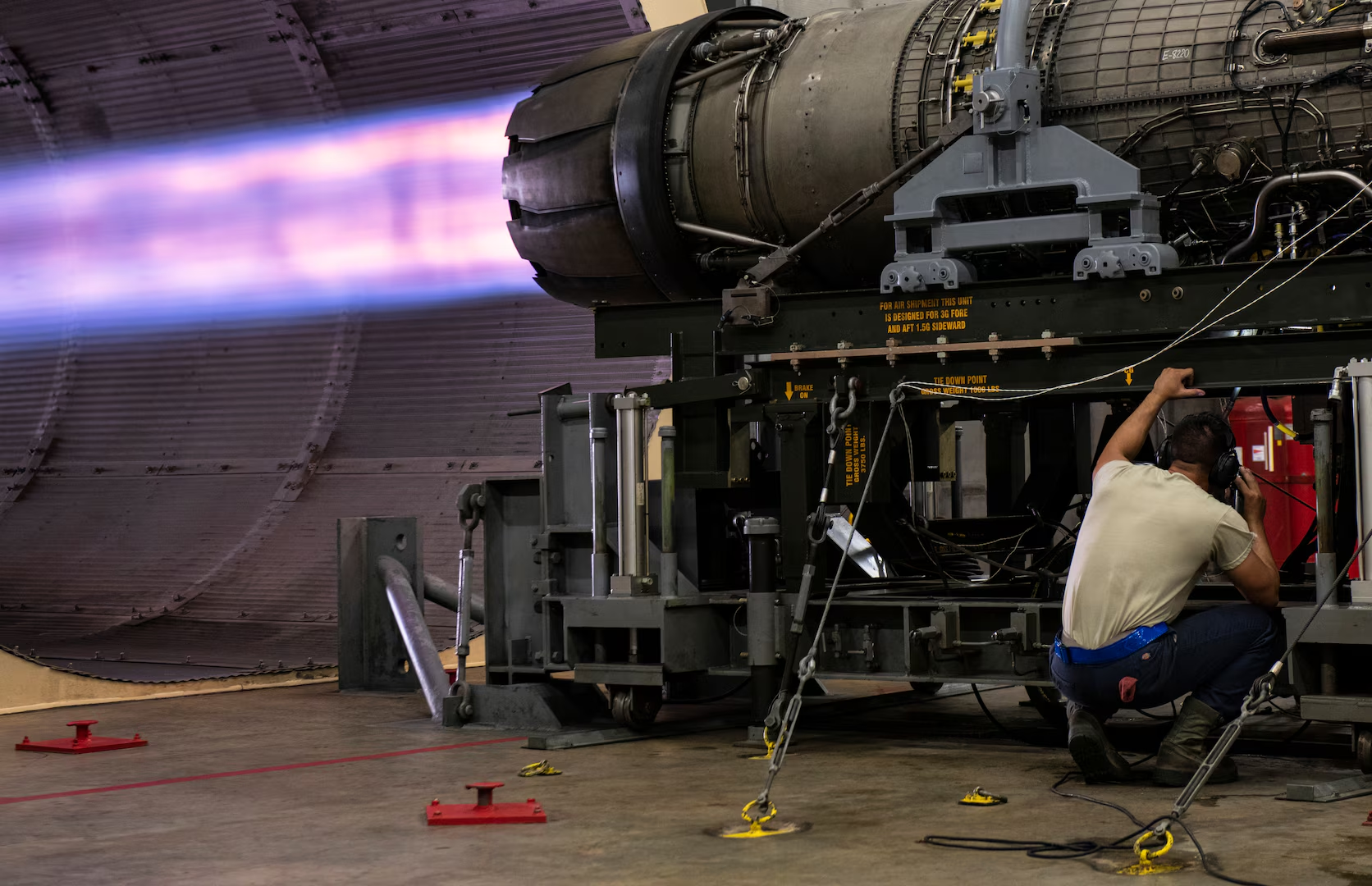
The third gain concerns market and operator confidence. General Electric says 17 countries have chosen aircraft powered by F110 engines, that the engine powers a large share of frontline fighters in the US Air Force, and that it is used across the entire new F-15EX fleet.
For KAAN, this background helps present the project to domestic and foreign customers as a program advancing with a well-known and widely used engine.
The importance of this factor is evident in the export file, particularly with Indonesia, which signedJakarta signed a contract with Türkiye at the end of July 2025 to purchase 48 KAAN fighter jets, and TAI confirmed that the agreement is final and binding and includes building local manufacturing capacity and training.
And said Haluk Gorgun in September 2025 that the KAAN jets designated for Indonesia will be powered by the Turkish national engine. Therefore, the impact of the F110 on the export file appears indirect at this stage, as it strengthens customers’ confidence in the project and prevents disruptions to its testing and initial batches, while more distant deals remain tied to the Turkish version powered by the national engine reaching maturity.
In this sense, the gains from the deal lie in buying engineering time, securing broader testing margins, and increasing the ability to raise the number of early aircraft, while providing a cover of confidence for the Turkish Air Force and foreign customers.
What are the main obstacles to pushing the deal through?
The deal entered an official US track in June 2026, as the Trump administration intends to move forward with the sale of dozens of jet engines to Türkiye worth more than $700 million, and has formally notified Congress of that.
The rules governing US defense exports explain the approval process. The State Department’s Directorate of Defense Trade Controls, or DDTC, states in its guide updated through June 6, 2024, that requests requiring notification first undergo an informal review by the two relevant committees, followed by formal notification to Congress, after which approval for NATO countries cannot be granted until 15 calendar days after official receipt.
The US Defense Security Cooperation Agency, or DSCA, also notes in a document updating its notification procedures the same time frame for NATO countries in major notification deals.
But political obstacles remained present. Democratic Rep. Gregory Meeks objected during the informal review and did not give the green light, criticizing what he considered a lack of sufficient briefing from the administration, and said these materials would not be delivered for years. Rep. Chris Pappas also opposed the deal, and Rep. Dina Titus threatened to introduce a joint resolution of disapproval.
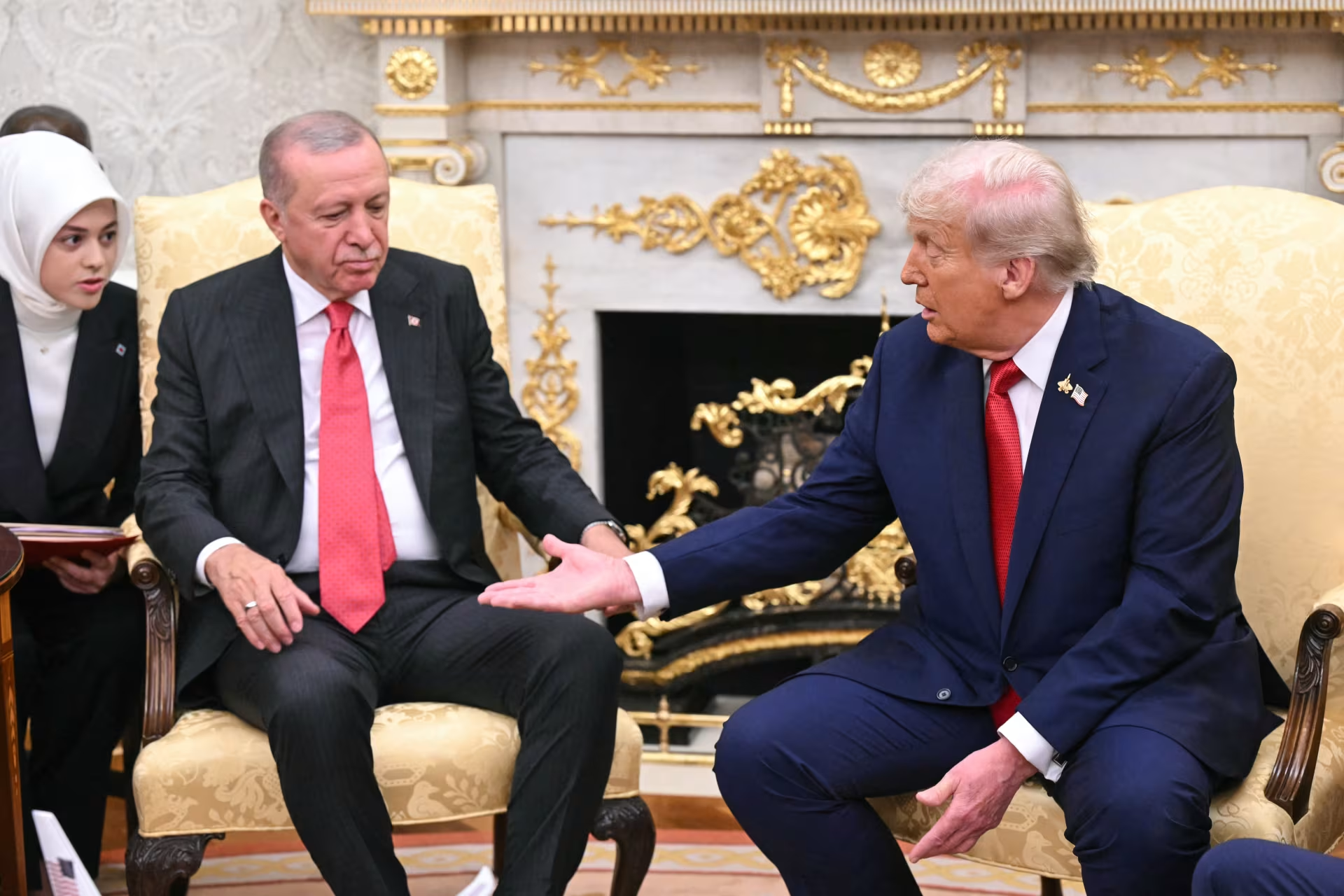
Legally, any resolution of disapproval would need to pass both chambers of Congress and then be signed by the president or override a potential veto, making it difficult to stop the package but still leaving political room for objection and bargaining.
The deeper political backdrop to the possibility of obstruction revolves around the S-400, CAATSA, and the F-35. Türkiye was removed from the F-35 program and subjected to CAATSA sanctions because of its acquisition of the Russian S-400 system.
US law also did not allow Türkiye to operate or possess the Russian system if it wanted to return to the F-35. Congress had also previously passed legislation banning F-35 sales to Ankara as long as the S-400 remained in its possession.
For that reason, the F110 deal is moving along a narrower, more clearly defined track, while the F-35 remains a heavier legal and political knot. The F110 gives Türkiye valuable time, eases the testing and production bottleneck, and supports the initial batches.
But it does not eliminate the need for a mature national engine that would give Ankara full sovereignty over modification, pricing, exports, and the pace of production away from any external approvals, as Haluk Gorgun insists that the final aircraft in serial production will fly with a Turkish engine.