












هذا التقرير متاح أيضًا بـ العربية
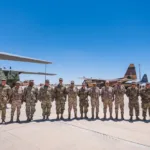
In a speech that carried striking political and military dimensions, Ethiopian army chief Berhanu Jula said during a graduation ceremony for a class at the National Defense College in Addis Ababa that the Ethiopian armed forces had expanded their organizational structure as part of ongoing reforms and maintained a high level of readiness, backed by the latest military equipment and technologies.
Jula linked that readiness to what he described as Ethiopia’s pursuit of maritime access, arguing that the deteriorating security situation in the Red Sea and the Horn of Africa requires his country to maintain a high degree of military preparedness. He went even further, issuing a direct warning to what he called “external actors” and “local armed groups” that he said were working in coordination to undermine Ethiopia’s security and prevent it from playing its role in achieving regional stability and becoming a pivotal state in the region.
Such remarks, which come after the ruling Prosperity Party’s sweeping victory in the recent elections, reflect a qualitative shift in Ethiopian rhetoric on access to the sea, as Addis Ababa has moved from speaking about economic and commercial need to explicitly tying the issue to military readiness and national security.
Ethiopia continues to assert what it considers a strategic right to have access to the Red Sea after becoming landlocked following Eritrea’s independence in 1993, leaving it primarily dependent on neighboring countries’ ports, foremost among them the Port of Djibouti, which it says imposes a heavy economic cost on its foreign trade.
By contrast, Egypt and Eritrea view with concern any Ethiopian attempt to gain a foothold on the Red Sea on the grounds that Ethiopia is not a littoral state. With Ethiopian Prime Minister Abiy Ahmed insisting on achieving this goal, and Cairo and Asmara rejecting any unilateral or military-tinged Ethiopian presence on the sea, relations between Cairo and Addis Ababa appear headed into a more complicated phase. So how is Cairo reading the Ethiopian army chief’s remarks?
دعا رئيس أركان القوات المسلحة الإثيوبية، المشير برهانو جولا، الضباط العسكريين إلى الاستعداد الجيد في إطار مسار إثيوبيا نحو الحصول على منفذ بحري.https://t.co/hvEkwLtPpf pic.twitter.com/wIOU9QXBcV
— Fana Arabic-فانا عربي (@fana_arabic) July 4, 2026
The militarization of the Red Sea file
The Ethiopian army chief’s remarks cannot be read as merely a passing position or limited domestic rhetoric. They reveal a notable shift in Addis Ababa’s approach to securing maritime access to the Red Sea. After decades in which the issue was framed as an economic and commercial matter that could be addressed through diplomatic channels and port-use agreements, the latest rhetoric has given it an unmistakably military dimension, employing veiled threatening language toward anyone who might obstruct what Ethiopia considers a strategic right and a national dream.
When the army chief links the pursuit of maritime access to raising the armed forces’ readiness, at a time when Addis Ababa insists that access to the sea is a strategic priority and that its military exercises now include the maritime domain, that means the issue has moved beyond its traditional framework, shifting from the realm of economic demands into the sphere of national security and military mobilization.
From this perspective, it can be said that Ethiopia is pushing the Red Sea issue into a more sensitive phase, one defined by expanding the tools of pressure and tying maritime ambition to military force. This is a message that will not go unheard by the states opposed to this direction, foremost among them Egypt, Eritrea and Somalia, which see any Ethiopian presence on the Red Sea with a sovereign or military character as a direct threat to regional security balances in the Horn of Africa and to vital shipping lanes.
Addis Ababa and the strategy of multi-pronged pressure
Cairo views Ethiopia’s recent moves as part of a pressure strategy that has become familiar in Addis Ababa’s behavior, one based on opening more than one front of crisis at the same time in order to widen its room for maneuver and impose new equations on its regional rivals. This approach began with the Grand Ethiopian Renaissance Dam, then extended to the demand for maritime access to the Red Sea, before later intersecting with the Somaliland file and the strengthening of ties with Israel.
From this perspective, Cairo reads the Ethiopian messages early on as an attempt to impose a strategic fait accompli and apply maximum pressure to push the Egyptian side to retreat or show greater flexibility in negotiating tracks. The Ethiopian view, as Cairo understands it, is that Egypt seeks to extract the greatest possible gains through negotiation: curbing Addis Ababa’s hard-line position on the dam issue, preventing Ethiopia from obtaining maritime access, rejecting any arrangements that affect Somalia’s unity, and expressing concern over the expansion of Ethiopian-Israeli ties in the Horn of Africa and the Red Sea.
In return, Addis Ababa is trying to use more than one strategic card to pressure Cairo, according to a logic of political and security bargaining. The maritime access issue may be raised implicitly as a negotiating card in the face of Egypt’s hard-line stance on the GERD, while rapprochement with Israel and openness to arrangements in Somaliland are being used as tools to reshape the balance of pressure in the Horn of Africa and the Red Sea.
Accordingly, Cairo does not deal with Ethiopian moves as separate files, but as a single package aimed at rearranging the rules of regional engagement. The matter is no longer confined to a water dispute over the GERD; it now extends to Red Sea balances, Somalia’s unity, maritime security, and the limits of Israeli influence in Egypt’s vital sphere.
كيف توظف "إسرائيل" اعترافها بـ "أرض الصومال" للعبث بتوازنات القرن الإفريقي وتطويق قوى إقليمية مثل مصر وتركيا؟ وهل يتحرك النظام العربي قبل فوات الأوان؟https://t.co/WI9qVXEzip pic.twitter.com/zbYnyqP16n
— نون بوست (@NoonPost) July 2, 2026
Three readings
The Ethiopian army chief’s remarks can be read through three main scenarios. The first is that they constitute mobilizational rhetoric aimed at a domestic audience, intended to stir Ethiopian nationalist sentiment, especially after the ruling party’s major electoral victory and amid its growing reliance on major national projects to bolster its legitimacy and popularity at home. Accordingly, the remarks may be read as an extension of this nationalist discourse that presents maritime access as a unifying national dream.
The second scenario concerns an attempt to send veiled messages of pressure and warning to Cairo and Asmara by hinting at the possible militarization of the maritime access issue after it had long been presented as an economic and political file. In this track, Addis Ababa relies on its awareness of Egypt’s sensitivity to any change in the balances of the Horn of Africa and the Red Sea, especially with “Israel” entering the line of regional interactions and seeking to expand its presence in an area of immense logistical and strategic importance.
The third scenario involves the possibility of moving toward direct military escalation in parallel with political escalation, though this is the weakest scenario at the current stage. Ethiopia is aware of the cost of such an option in light of the internal security unrest, border tensions and regional complications it faces, all of which could make any military adventure an additional burden on the state rather than a tool for enhancing its influence or achieving its ambition of reaching the Red Sea.
How is Cairo moving?
Regardless of whether the Ethiopian army chief’s remarks fall within the scope of domestic mobilizational rhetoric or reflect calculated escalation and an intensification of the pressure cards employed by Addis Ababa, Cairo cannot treat them as merely a passing position. Even if the remarks remain at the level of signaling and threat, simply moving the maritime access issue from the political and diplomatic track into the realm of military rhetoric opens the door to a more dangerous trajectory in regional interactions.
According to Egypt’s current political doctrine, a military response appears highly unlikely, something that has been clear since the beginning of the GERD crisis, when Cairo preferred to manage the dispute through political, diplomatic and legal channels despite their repeated setbacks. Accordingly, political and diplomatic action remains the most likely option for dealing with the new Ethiopian escalation, whether by supporting Somalia’s unity in Arab, African and international forums, strengthening rapprochement with Eritrea, or building broader regional understandings with influential powers such as Saudi Arabia and Türkiye to counter attempts to reshape balances in the Horn of Africa and the Red Sea, in addition to betting on Washington and the Donald Trump administration to support the Egyptian position on this track.
Yet the core problem is that Egyptian diplomatic activity, despite its importance, has so far failed to deter Addis Ababa from pursuing a policy of fait accompli. For more than 13 years, Ethiopia has dealt with Cairo according to a logic of “one step after another”: it began with the GERD until construction was completed, then moved on to demanding maritime access and signing a memorandum of understanding with Somaliland, in parallel with strengthening its ties with Israel and expanding its room for maneuver in the Horn of Africa.
Hence Cairo fears that the same scenario could be repeated in the Red Sea: that Ethiopia will continue its calm, calculated gradualism until the region finds itself facing an actual Ethiopian maritime presence, backed by Israel and perhaps the United States, under the pretexts of historical right, economic necessity or formal guarantees meant to dispel Egyptian and regional concerns.
At that point, the most pressing question becomes: What will Cairo do if Ethiopian ambition turns into an established maritime reality? And will any move then be capable of changing the equation, or will time already have run out, as happened in the GERD file?