










هذا التقرير متاح أيضًا بـ العربية
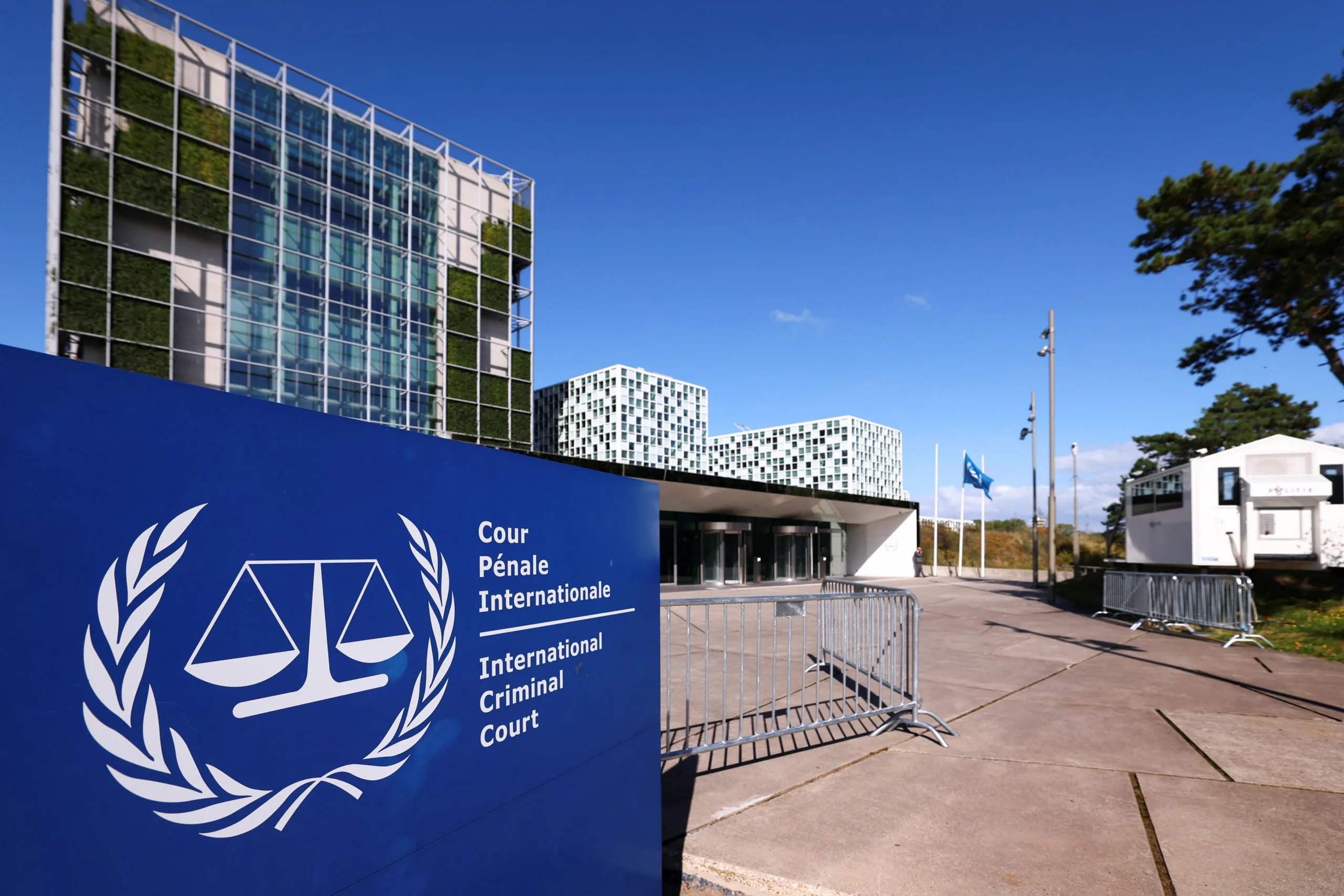
What is shaping up to be the most serious escalation since the International Criminal Court (ICC) was established in 2002 could see President Donald Trump’s administration impose sanctions on the court as an institution, rather than targeting only its officials, judges and prosecutors. Such a move would mark a significant shift in Washington’s confrontation with the ICC.
According to Reuters and several US media outlets, the measure is part of an escalating pressure campaign by the Trump administration against the court. Washington argues that the ICC has exceeded the limits of its jurisdiction, particularly after issuing arrest warrants for Israeli officials, following earlier investigations into members of the US forces in Afghanistan.
The relationship between the United States and the ICC entered a more confrontational phase after the court issued arrest warrants in 2024 for Israeli Prime Minister Benjamin Netanyahu and former Defence Minister Yoav Gallant over charges of war crimes and crimes against humanity during the war in the Gaza Strip. Since then, Washington has intensified its efforts to pressure the court.
The shift from targeting individuals within the ICC to targeting the institution itself represents a significant change in Washington’s approach. It also raises broader questions about what the administration is seeking to achieve, how far such measures could affect the court’s ability to carry out its work, and what options the ICC has to withstand the pressure while maintaining its operations in an increasingly difficult international environment.
– تجهز إدارة ترامب عقوبات جديدة تطال المحكمة الجنائية الدولية كمنظمة كاملة والجهات المتعاونة معها، بعد أن كانت العقوبات تقتصر على أفراد من القضاة والمدعين العامين.
– تسعى واشنطن للضغط على المحكمة لإسقاط مذكرات الاعتقال الصادرة بحق مسؤولين إسرائيليين، وتجميد التحقيقات السابقة… pic.twitter.com/CBjYe44V3V
— نون بوست (@NoonPost) September 21, 2026
Not the first step
This is not the first time Washington has sought to pressure the International Criminal Court. The US has previously imposed punitive measures on several court officials and judges, including former Prosecutor Karim Khan and court President Tomoko Akane, as well as several judges and deputy prosecutors involved in the investigation into Israeli Prime Minister Benjamin Netanyahu and other Israeli officials.
US Secretary of State Marco Rubio publicly threatened the ICC last July, saying the Trump administration was considering broad measures against the court and threatening to dismantle it “brick by brick” if necessary.
Rubio justified the threat by accusing the court of seeking to prosecute officials from non-member countries. From the US administration’s perspective, he argued, this amounted to an overreach of the court’s judicial authority and threatened the principle of US national sovereignty, particularly because neither the United States nor Israel is a party to the Rome Statute, which established the court.
Rubio’s position has nevertheless highlighted an apparent contradiction in US policy. During his time in the Senate in 2022, he supported a resolution calling on the ICC to investigate alleged war crimes by Russia in Ukraine, even though Moscow is also not a member of the court. The investigation ultimately led to the issuance of an arrest warrant for Russian President Vladimir Putin and other Russian officials.
Targeting the court as an “entity”: What is the goal?
The shift in US sanctions policy from targeting individuals within the ICC to targeting the institution itself signals a move towards a broader and potentially more consequential form of pressure on the court’s operations.
Previous sanctions targeting judges and officials were intended to pressure specific individuals, restrict their movement and create a deterrent effect. Targeting the ICC as an institution, however, takes the confrontation to another level. It could affect the wider operational infrastructure on which the court relies, including financial and technical services, suppliers, partners and other entities that cooperate with it.
Washington could pursue several objectives through such an escalation. One would be to increase institutional pressure on the court by affecting its ability to manage day-to-day operations and ongoing cases. Another would be to send a broader political and legal message signalling US opposition to certain practices and areas of jurisdiction pursued by the court, particularly in cases that the Trump administration believes could affect US citizens or US allies.
The most immediate objective, however, could be to influence specific judicial proceedings pursued by the court in recent months. As Reuters has reported, these include efforts to secure the withdrawal of the arrest warrants issued for Netanyahu and Gallant, as well as to bring an earlier investigation into US forces in Afghanistan to an end.
How could the sanctions effectively paralyse the court?
Such sanctions could have wide-ranging consequences for the ICC’s ability to carry out its work, even though the court does not rely directly or primarily on US funding. The structure of the global financial system, and the links between many international institutions and the US banking system, could give the sanctions an impact extending beyond the court’s direct dealings with US entities.
Among the most significant potential repercussions would be financial restrictions imposed by the US administration, including a ban on US companies and individuals providing services to, or conducting financial transactions with, the court without special licences. This could create operational difficulties, from processing financial transfers through the US banking system to meeting certain financial obligations to employees or contractors with links to the United States.
The potential impact would not necessarily be limited to US entities. The risk of losing access to the US financial system could prompt international companies and institutions to reassess their relationships with the court. Previous experience suggests that global banks and companies often take a cautious approach to dealings that could expose them to US sanctions, even where those measures do not directly apply to them.
The repercussions could also extend to the court’s technical and operational infrastructure. The ICC may face difficulties accessing essential services, including software, digital services, cybersecurity solutions, data storage and cloud services, as well as communications equipment and other technical tools that support its day-to-day operations.
If applied broadly, such restrictions could affect the speed and efficiency of the court’s work, potentially slowing investigations, evidence gathering and case management. They could also make it more difficult for the ICC to carry out its mandate in an operating environment already marked by growing financial and technical pressures.
Understanding how US sanctions could weaken the ICC’s ability to pursue justice globally is therefore important, particularly because such measures could set a precedent for how powerful states seek to constrain international accountability mechanisms and shape the future of international justice institutions.
US policy towards international organisations has long been a source of tension between Washington and some of its European allies. Any decision targeting the ICC could pose a difficult diplomatic and legal challenge for European governments, particularly because many European states are parties to the Rome Statute, the treaty that established the court.
European governments could find themselves caught between maintaining strategic relationships with the United States and supporting an international judicial institution that many regard as an important part of the international justice system and a mechanism for holding perpetrators of the gravest crimes to account.
The consequences would not necessarily be confined to governments. European companies and institutions could also face difficulties in dealing with the ICC, particularly if Washington imposed sanctions with cross-border effects. The prospect of exposure to US measures or losing access to the US financial system could lead some organisations to reassess their dealings with the court.
Such a scenario could also expose differences within Europe itself. Some governments may emphasise the need to defend the court’s independence and preserve its role in the international judicial system, while others may place greater weight on US concerns over the ICC’s jurisdiction and the limits of its mandate.
A confrontation between Washington and the ICC could have consequences well beyond the two sides’ immediate dispute. It could feed into a broader debate over the future of international institutions, the limits of political influence over their work, and the ability of the existing international system to maintain its cohesion as disputes between major powers intensify.
How will other cases and investigations around the world be affected?
Pressure on the ICC’s operational structure, coupled with staff concerns that the institution is facing systematic targeting, could directly affect the cases and investigations it is pursuing worldwide.
Potential sanctions could slow investigations by making it harder for the court to gather evidence, deploy investigative teams and analyse case-related documents and materials. These challenges could become more pronounced if financial and operational restrictions limit the court’s ability to carry out its work as efficiently as required.
The effects could also extend to the network of sources on which the ICC relies, including witnesses, experts and organisations that cooperate with the court. Concerns about pressure or punitive measures could make some parties more cautious about sharing information or providing testimony, potentially affecting the flow of evidence available to investigators.
Sanctions, together with the political and legal pressure surrounding them, could also affect the deterrent function at the heart of the court’s mandate: strengthening accountability for perpetrators of war crimes and crimes against humanity.
If the ICC’s ability to carry out its work or pursue its cases effectively were to decline, it could raise broader questions about the court’s capacity to maintain its standing and role within the international criminal justice system.
What scenarios and options are available?
This is not the first time the ICC has come under pressure or faced attempts to constrain its work. The current development, however, is different in scope: it goes beyond targeting individuals within the court to potentially affecting the institution itself and its operational capacity. That leaves several possible scenarios for how the ICC and its member states could respond to this shift in Washington’s approach towards one of the principal institutions of the international criminal justice system.
The first is for member states to strengthen their support for the court by increasing financial contributions, expanding European and international political and diplomatic backing, and developing alternative networks for funding and operational services to mitigate the effects of any potential US restrictions. This is among the options available to member states, given that the continuation of the court’s work depends on states parties providing it with political and financial support.
A second option would be to reduce the court’s reliance on parties and entities linked to the United States by seeking non-US alternatives for technical, financial and operational services. Such measures could help reduce the exposure of organisations working with the ICC to potential pressure or sanctions arising from US measures.
A third option would be for the court and its supporting states to pursue the legal and diplomatic track by raising the issue in international forums and emphasising the independence of international justice and the need to protect judicial institutions from political pressure. Such efforts could seek to mobilise broader international support for the ICC and draw attention to the wider implications of targeting an international judicial institution.
The most difficult scenario would be for the court to adapt to the reality of sanctions by reorganising its operational and judicial priorities. This could include focusing on more advanced cases, reducing the scope of some activities and adopting austerity measures affecting expenditure and operating budgets. While such steps could help the court manage some immediate pressure, they could also constrain its ability to carry out its work as before.
The significance of this shift extends beyond the immediate confrontation between Washington and the ICC. It raises questions about how far political and economic power can shape the work of international institutions, and whether international justice mechanisms can maintain their independence when confronted by pressure from powerful states.
The ICC now faces a potentially consequential moment for its future role within the international justice system, amid mounting political pressure and growing international polarisation. The broader question is whether international justice mechanisms can maintain their independence and continue their work under pressure from major powers, or whether political influence and competing international interests will increasingly constrain their room for action.
