












هذا التقرير متاح أيضًا بـ العربية
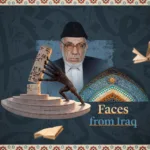
In the development of contemporary Islamic thought, Dr Taha Jabir Al-Alwani stands out as a prominent figure who combined methodological authenticity with an aspiration to reform the contemporary Muslim’s cognitive framework, beginning nearly two centuries ago, to raise questions of modernity and the relationship between religion, life, and the world.
Al-Alwani was not merely a jurist who transmitted texts or renewed their branches. He was a foundational thinker preoccupied with questions of epistemology and methodology, and throughout his academic and intellectual life he sought to present a project linking the “reading of revelation” with the “reading of existence” in order, as he saw it, to overcome the crisis of the contemporary Muslim mind.
Despite his long years of residence in the United States, he remained closely attached to the concerns of Muslim societies and near to their struggles, and through his writings and the publications of the International Institute of Islamic Thought which he chaired, he sought to offer visions and solutions to the most prominent problems facing these societies. He remained faithful to his roots and his faith, committed to advancing Muslim societies in their homelands and in the diaspora.
His writings were a genuine addition to the contemporary Islamic library, as many contemporary scholars and thinkers affirm, because the ideas he advanced and the questions he addressed were ones many had long stood at the threshold of, hesitant to engage because of their sensitivity and the inherited traditional understanding associated with them.
Early life and academic upbringing
Taha Jabir Al-Alwani was born in Fallujah in 1935 and grew up in a conservative scholarly and social environment. He received his earliest education in study circles, kuttabs, and mosques, where he memorised the Quran and learned the principles of Islamic sciences and Arabic. This stage laid the foundation for his passion for texts and for linguistic and foundational inquiry.
Al-Alwani later moved to the capital, Baghdad, to complete his formal education, where scholars and sheikhs influenced him by combining traditional learning with a desire to keep pace with modern methodologies.
Among the most prominent scholars he learned from was Sheikh Abdul Aziz Salem Al-Samarrai in Fallujah, who had the greatest influence on his early scholarly development. From him, he studied Islamic and linguistic sciences and memorised the Quran. He was also influenced by and studied under Iraq’s jurist Sheikh Amjad Al-Zahawi; Sheikh Mohammed Fouad Al-Alusi; Sheikh Najm al-Din al-Waiz; Sheikh Abdul Qader Al-Khatib; and others.
The most significant scholarly turning point in his formative journey, however, came when he moved to Egypt to study at the Faculty of Sharia and Law at Al-Azhar University in Cairo. In the mid-20th century, this institution witnessed broad intellectual and jurisprudential ferment in a world teeming with competing ideas and ideologies.
At Al-Azhar, Al-Alwani progressed through his undergraduate studies and earned his bachelor’s degree, then continued his graduate studies in usul and fiqh. In 1973, he received his doctorate with the highest honours for his critical edition of Imam Fakhr al-Din al-Razi’s “Al-Mahsul fi Ilm al-Usul,” widely regarded as a foundational work of fiqh and legal theory.
This choice was not merely a routine academic exercise, but a profound training in unpacking the rules and conditions of foundational legal thought, enabling him to master the tools of maqasid-based and usuli reasoning — the methodological instrument he would later employ in his renewalist projects.
From teaching to institution-building
After completing his studies in Egypt, Al-Alwani returned to Iraq and worked as a professor at colleges in Baghdad. He then left and settled in Saudi Arabia, where he taught fiqh and usul at Imam Muhammad ibn Saud Islamic University in Riyadh for about 10 years, from 1975 to 1984.
During this period, university teaching and interaction with students of knowledge and researchers allowed him to reexamine the intellectual and jurisprudential crises recurring in contemporary religious discourse. He concluded that the core problem did not lie in the absence of texts, but in the inadequacy of interpretive and inferential methodologies.
In the mid-1980s, Al-Alwani moved to the United States, where he unleashed his institutional and organizational energies on a global scale.

Together with an elite group of thinkers and scholars—foremost among them Dr Ismail Al-Faruqi, Dr Abdul Hamid Abu Sulayman, and Dr Hisham Al-Talib—Al-Alwani helped found the International Institute of Islamic Thought in 1981 in Virginia. He served as its president for several years, and under his leadership, the institute became an international centre for generating studies and concepts related to reforming the methodologies of Islamic thought.
His activity was not confined to the academic theoretical sphere. He also helped found and lead the Graduate School of Islamic and Social Sciences in the United States, “Cordoba University,” where he served as president, to prepare imams and Islamic studies scholars according to Western academic methodology.
He also served for years as head of the Fiqh Council of North America, through which he sought to provide jurisprudential answers and ijtihad suited to Muslims living in Western societies, and he helped found many Islamic universities and global academic councils around the world.
In his final years, he moved to Cairo, where he continued writing, research, and teaching students until his death in March 2016.
Intellectual landmarks and methodological contributions
Al-Alwani’s scholarly value cannot be understood apart from the pivotal issues he worked on. He distinguished between methodology and heritage, stressing that heritage is a human product shaped by the circumstances of its time, whereas the revealed text is an infallible and enduring truth.
The most prominent features of his intellectual project can be summarised in several axes, chief among them the “Islamization of knowledge,” meaning the reconstruction of the contemporary knowledge system through combining the sciences of revelation with the human sciences while preserving the independence of the Islamic worldview.
In addition, through his writings he grounded the idea of “combining the two readings,” by which he meant the necessary integration between reading God’s inscribed book — the Holy Quran — and reading His unfolded book — the universe and existence — in order to derive laws.
Al-Alwani also focused on the centrality of “tawhid and the objectives of the Quran,” affirming that the Quran’s supreme governing objectives are tawhid, tazkiyah, and umran.
Through “fiqh of minorities,” he laid down the rules and theoretical foundations for the usuli adaptation of Muslims outside the Islamic world in a way that preserves identity while accounting for coexistence.
“Islamization of knowledge” in formulation and movement
The “Islamization of knowledge” formed the hard core of Al-Alwani’s project. By this term, he did not mean Islamizing technology or giving Western methodologies a superficial religious colouring. Rather, the aim was to reconstruct methodologies and means of knowledge based on the Islamic civilizational perspective.
Al-Alwani held that the contemporary human and social sciences emerged in a Western context with its own biases and historical problems with religion. Therefore, transferring and absorbing them into our societies without critique and grounding creates a rupture in the Muslim mind.
In his theory of “combining the two readings,” Al-Alwani developed the concept of bringing together the “reading of revelation” and the “reading of existence.” In his view, the historical separation between religious scholars, whose reading was confined to revelation, and scholars of nature and society, whose reading was confined to the universe, led to the stagnation of the religious sciences and severed the life sciences from the values of ethics and tawhid.
For him, combining the two readings meant deriving cosmic and historical laws in the spirit and according to the definitive principles of the Holy Quran.

Al-Alwani also embraced the idea of the “structural unity of the Quran and its higher objectives.” He rejected dealing with the Holy Quran as disconnected texts or isolated verses from which jurisprudential rulings are derived apart from the Quranic whole, and he called for what he termed the “structural unity of the Holy Quran,” in which its verses and surahs are interconnected within a single comprehensive structure.
He also identified three major governing objectives of the Holy Quran: tawhid, to build pure belief and a vision of existence; tazkiyah, to build the human being and purify conduct; and umran, for humanity’s stewardship in building the earth and advancing civilisation.
Because he lived for decades in the West and headed many religious institutions there, Al-Alwani realised that transferring traditional fatwas formulated in majority-Muslim environments to Western societies could lead either to the isolation of Muslims or to their dissolution.
Hence, he helped establish the theoretical frameworks for “fiqh of Muslim minorities,” assuming that this fiqh is not a set of exceptional legal loopholes, but a flexible application of usuli and maqasidi principles that accounts for changing circumstances, place, time, and new social realities exceptional legal loopholes, but rather a flexible application of usuli and maqasidi principles that takes into account changing circumstances, place, time, and the new social reality.
The ethics of disagreement and the reformist dimension
For Taha Jabir Al-Alwani, thought was never separate from the educational and da’wah sphere. He was deeply preoccupied with reforming the condition of the ummah and overcoming division and sectarian conflict.
Among his most famous writings in this area is his book “The Ethics of Disagreement in Islam,” in which he traced the history of intellectual and jurisprudential disagreement among the Companions, the Followers, and the imams of the legal schools.
In his da’wah-oriented propositions, Al-Alwani stressed that disagreement and plurality in subsidiary matters are natural and a healthy phenomenon reflecting the flexibility and breadth of Sharia, and that the problem lies in conflict and fanaticism, and in turning secondary differences into battles of loyalty and disavowal.

He called for spreading a culture of scholarly tolerance and constructive dialogue, considering the absence of the ethics of disagreement one of the greatest obstacles to renewing Islamic thought.
On the da’wah level, Al-Alwani was committed to a discourse that addressed the mind and dismantled doubts through calm reasoning, far from emotionalism or slogan-driven rhetoric. He always stressed the need to build the “civilizational Muslim” who combines adherence to Islamic values with active participation in public life and the modern sciences.
The legacy of Taha Jabir Al-Alwani
Dr. Taha Jabir Al-Alwani left behind a rich library of books, research, and methodological frameworks spanning academic critical editions, usuli studies, and intellectual and reformist works.
Among his most prominent works is his critical edition of Imam Fakhr al-Din al-Razi’s “Al-Mahsul fi Usul al-Fiqh” in six volumes, a work that demonstrated his command of traditional methodology, as well as his book “The Ethics of Disagreement in Islam,” which received wide attention and was translated into several languages.
He also produced other foundational works such as “Islamization of Knowledge Between Yesterday and Today” and “Reforming Islamic Thought,” in which he analyzed the obstacles to renewal in the Muslim mind, in addition to “Landmarks in the Quranic Methodology,” “On the Fiqh of Muslim Minorities,” and his book “No Compulsion in Religion: The Problem of Apostasy and Apostates From the Early Days of Islam to the Present,” in which he discussed the issue of freedom of belief and the historical concepts related to it.

Dr. Taha Jabir Al-Alwani died in Cairo in 2016 after a long journey of scholarship, institution-building, and teaching, during which he travelled across capitals and universities and left behind a generation of researchers and academics who studied under him or were influenced by his intellectual projects at the International Institute of Islamic Thought and its affiliated institutions.
Al-Alwani’s historical value lies in the fact that he did not stop at criticism or content himself with lamenting the ruins of the past, nor did he surrender to imported ready-made solutions. Rather, he sought to probe the depths of the epistemic crisis afflicting Islamic thought, offering methodological alternatives grounded in the Holy Quran as a governing and guiding source of knowledge.
His project calling for methodological renewal and for bringing together revelation and civilisation will remain rich material for discussion, research, and study for generations of those concerned with reforming Islamic thought and developing its cognitive tools.
