









هذا التقرير متاح أيضًا بـ العربية
Across the Red Sea, the Gulf of Aden and the Indian Ocean, all the way to the Atlantic, the UAE has, over the past decade, built a network of ports, long-term concessions, roads and logistics zones, alongside copper and bauxite mines — the primary ore used in aluminium production — as well as agricultural, energy and digital infrastructure projects.
The map of these investments reveals the UAE’s efforts to strengthen its position between African production zones and external markets, with security and political dimensions in some coastal locations.
On 20 September 2026, Anwar Gargash, diplomatic adviser to the UAE president, said his country’s investments in Africa were approaching $150bn, while annual trade between the two sides had exceeded $107bn. He linked this expansion to the UAE’s efforts to build direct relations with the continent, away from traditional Western gateways.
Abu Dhabi did not clarify the period covered by that figure or the nature of the investments it includes, after previously announcing in November 2025 that its investments on the continent had exceeded $118bn between 2020 and 2024.
How did the UAE build a network of influence in Africa?
Some of the UAE’s largest investment and operating arms are driving this expansion. DP World manages port projects and trade corridors, while AD Ports Group combines terminals, industrial zones and logistics services.
International Resources Holding, a subsidiary of International Holding Company, is expanding in mining, while Abu Dhabi Future Energy Company, Masdar, is advancing renewable energy projects.
In the aluminium sector, Emirates Global Aluminium links African bauxite to its domestic industry in the Gulf state, while G42 has entered the continent through data centres and artificial intelligence.
In East Africa, the Africa Centre for Strategic Studies, a US institution specialising in African affairs, estimated in a study published in July 2025 that the value of UAE projects and investments it tracked stood at about $47.4bn. This included $19.3bn in energy, $11.9bn in agriculture, $7.3bn in ports, $5.9bn in infrastructure and $2.7bn in mining.
The figure includes projects that were later halted or stalled. Still, it reflects the intensity of the UAE’s presence in a region directly overlooking the Red Sea and the Gulf of Aden.
A broad security presence matches this economic weight. The same centre described the UAE as one of the most active regional powers in financing security initiatives, transferring weapons and engaging in military cooperation in East Africa. It documented Emirati involvement in the security sector in eight of the 12 countries and territories covered by the study.
In Berbera, Somaliland, the port investment was tied to influence over the Gulf of Aden, emphasising the UAE’s strategic port and security role for the audience. DP World secured a 30-year concession to develop and operate the port, with about $442m invested and a 51% stake, supporting roads and energy infrastructure.
The project is significant because it could open an alternative outlet for Ethiopia, about 90 per cent of whose foreign trade passes through Djibouti. This gives Abu Dhabi a foothold on an alternative route for the trade of the Horn of Africa’s largest landlocked economy.
The investment in Berbera included long-term security arrangements. In 2017, the UAE and Somaliland signed a defence agreement that included military use of the airport, reinforcing the UAE’s security influence and providing stability for the audience.
On 6 July 2026, the French newspaper Le Monde published an investigation based on satellite imagery and security sources that documented major development works beginning in October 2025. These included facilities suspected of being designated for fuel or ammunition. At the same time, the report cited estimates from the International Institute for Strategic Studies regarding equipment that could serve air-defence purposes.
Berbera followed the UAE’s experience in Assab, Eritrea, where Abu Dhabi held a 30-year port-use agreement and, during the Yemen war, turned the site into a military base to support operations on the opposite shore of the Red Sea. Even after the military presence was reduced from 2021 onwards, the site remained part of military cooperation between Abu Dhabi and Asmara.
Through military cooperation, the UAE’s influence on both sides of Bab el-Mandeb became evident: Assab served as an operational base. At the same time, the Berbera investment was coupled with an agreement for military use of its airport, highlighting the UAE’s strategic military influence.
In Somalia, Abu Dhabi also built relationships outside the central government. In January 2026, the federal government announced it would cancel its agreements with the UAE and accused it of undermining Somalia’s sovereignty. While these disputes highlight sovereignty concerns, Emirati influence persisted through regional partnerships and port operations, raising questions about the stability and long-term implications of UAE engagement in Somalia.
The crisis showed that Mogadishu’s severing of ties with the UAE did not eliminate Emirati influence in the country. Abu Dhabi maintained its partnerships with regional authorities and port operations continued, making the investment part of an internal dispute over sovereignty, the right to contract externally and the management of coastal assets.
In Zambia, International Resources Holding acquired a 51 per cent stake in Mopani Copper Mines in 2024, while the Zambian state retained 49 per cent, with an investment and financing commitment estimated at $1.1bn. It subsequently entered into cooperation with South Africa’s Public Investment Corporation to explore projects in mining and clean energy, as well as to expand freight rail and port capacity.
In Guinea, Emirates Global Aluminium invested more than $1bn in Guinea Alumina Corporation, and at the height of activity, the project exported about 14 million tonnes of bauxite annually. The ore was suitable for the company’s refinery inside the UAE.
In July 2025, Guinea revoked the licence following a dispute over the construction of an alumina refinery and transferred the assets to a state mining company. The dispute highlighted Conakry’s insistence on keeping refining, jobs and tax revenues inside the country, rather than allowing the ore to leave for the UAE’s manufacturing chain.
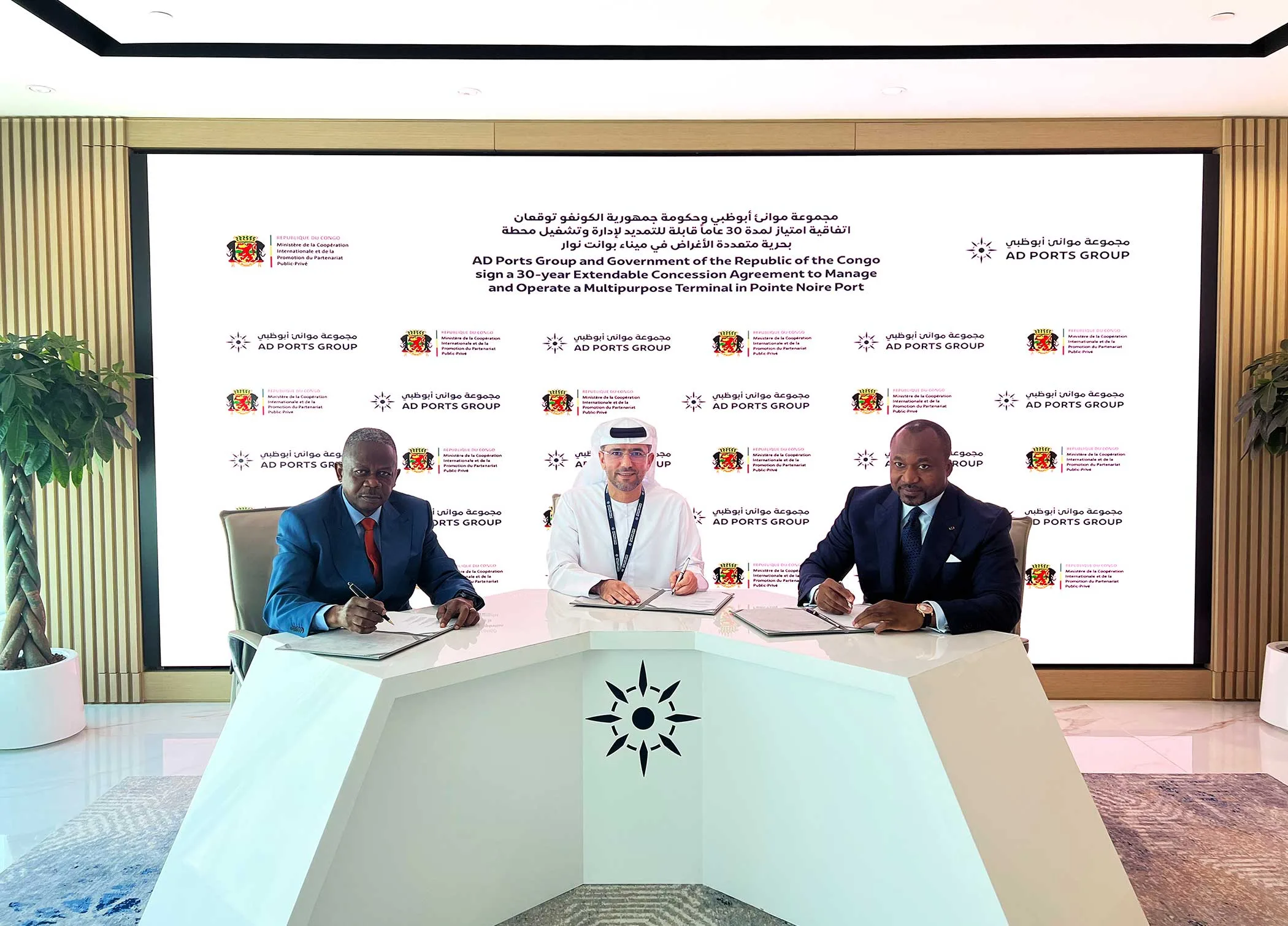
The UAE’s presence also extends westward to the Atlantic coast, where AD Ports Group secured a 30-year concession, extendable by 20 years, to develop a terminal in Pointe-Noire, Republic of the Congo. The project is intended to link the maritime terminal to a logistics zone and shipping lines.
The group is also present in Egypt, Tanzania, Angola and Cameroon, and is developing a 20-square-kilometre industrial and logistics zone in East Port Said, at the entrance to the Suez Canal. This places Emirati companies at a series of maritime gateways linking the continent’s interior to global markets.
What is driving the UAE’s expansion in Africa?
Critical minerals are among the main drivers of the UAE’s expansion, as copper, cobalt, nickel, graphite and manganese have become increasingly important to battery, energy and technology industries. This has pushed Emirati companies to take direct stakes in African production sites.
The expansion secures long-term access to raw materials for Emirati companies. At the same time, investments in energy, railways and ports help move those resources from mining areas to processing and trading hubs.
The Financial Times linked the UAE’s expansion of mining rights in August 2026 to the need to secure minerals required for the energy transition and advanced industries, as well as the needs of the UAE’s growing defence sector.
Heavy reliance on external sources for food pushes in the same direction. The UAE imports about 85 per cent of its agricultural goods, according to the Africa Centre for Strategic Studies. In contrast, the value of agricultural projects and interests it counted in East Africa reached about $11.9bn.
In Sudan and elsewhere, Emirati agricultural investment is tied to access to land, water and production zones close to shipping routes to the Gulf, serving food security needs alongside commercial returns.
The port network gives the UAE a connected presence along the continent’s main shipping routes. Its investments stretch from ports on the Gulf of Aden, the Red Sea and the Indian Ocean to the Atlantic coast and the Suez Canal, linking different parts of its trade network along a single maritime route.
These sites place Emirati companies on routes connecting East, Central and West Africa to global markets. In May 2026, Gargash himself linked maritime security to trade, energy and supply chains, underscoring the importance of maritime corridors in the UAE’s broader calculations.
Gold represents one of the clearest examples of the UAE’s role as a market for African resources. In May 2024, the Swiss organisation Swissaid estimated that about 405 tonnes of undeclared African gold reached the UAE in 2022, and that more than 2,500 tonnes worth over $115bn flowed there between 2012 and 2022.
This gateway’s importance is even more evident in Sudan. In a study updated in March 2026, the UK’s Royal Institute of International Affairs, Chatham House, estimated that most gold from Sudan’s artisanal mining ends up in the UAE, either directly or via neighbouring countries.
Data from the Central Bank of Sudan showed that about 97 per cent of official gold exports from army-controlled areas in 2024 went to the UAE, worth $1.52bn and equivalent to nearly half of Sudan’s exports that year.
The army-led authorities in Port Sudan continued to rely on the UAE market despite the sharp deterioration in political relations with Abu Dhabi, giving Dubai an influential position in the trade of one of Sudan’s most important export resources.
When trade and air traffic between Sudan and the UAE were disrupted in 2025, the Emirati market had received about 90 per cent of Sudan’s legal gold exports in the first half of the year. The disruption of that route put pressure on the gold trade and the Sudanese currency, pushing traders towards alternative channels.
Abu Dhabi is also betting on the growth of African markets and imports. Ports and logistics zones let Emirati companies benefit from trade, storage, transport, and distribution flows, while industrial zones around ports create opportunities to attract related industries and services.
How does UAE investment turn into influence?
Long-term contracts give Emirati companies a stable presence in vital sectors of host-country economies. Port concessions running for decades keep these companies in continuous contact with government bodies responsible for transport, customs, finance and security. That connection deepens when a project expands to include logistics or industrial zones and infrastructure linked to the port.
The strength of these contracts lies in their longevity, even as governments change, and in the economic, legal, and political costs of breaking them. This was evident in the disputes surrounding Doraleh Port in Djibouti, Berbera on the Gulf of Aden and the Abu Amama port project on Sudan’s Red Sea coast.
In Sudan, the Emirati role extended into the heart of the war, as UN and rights reports began tracing routes through which weapons were allegedly supplied to the Rapid Support Forces militia.
In a report published in mid-January 2024, a UN panel of experts described reports of Emirati military supplies being transferred to the militia via Amdjarass airport in Chad as “credible”.
In April 2025, UN experts examined mortar rounds seized from a convoy belonging to the militia in North Darfur that bore serial numbers matching munitions Bulgaria said it had exported to the UAE army in 2019. Sofia confirmed that it had not granted permission for their re-export to Sudan.
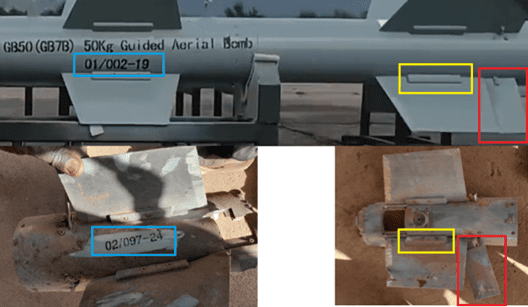
The evidence was reinforced on 8 May 2025, when Amnesty International said it had identified guided Chinese bombs and howitzers used by the Rapid Support Forces militia, concluding that the UAE had almost certainly re-exported them to Sudan.
For the artillery, the organisation based its finding on the fact that the UAE was the only country to have imported that model from China. It said the arrival of the weapons in Darfur constituted a violation of the UN arms embargo.
On 7 January 2025, the US Treasury Department imposed sanctions on RSF commander Mohamed Hamdan Dagalo, known as “Hemedti”, and a network of companies, saying that Capital Tap Holding, based in the UAE, had provided funds and military equipment to the militia.
The department said Al Zumoroud and Al Yaqoot Gold & Jewellers had purchased Sudanese gold that was likely intended for the militia and transferred it to Dubai. It also noted that an RSF procurement official had access to a company account in the UAE containing millions of dollars.
UAE authorities later said that seven companies linked to the US sanctions did not hold valid business licences at the time of the investigation.
On 25 May 2026, Human Rights Watch said the evidence it had gathered indicated that the deployment of Colombian military contractors to Sudan had taken place with Emirati support. According to the organisation, fighters passed through Ghiyathi base and a military facility in Al Wathba, Abu Dhabi, before travelling to Sudan. One contractor said Emiratis had trained him inside the base. The investigation linked the security company responsible for recruitment to close ties with UAE officials and institutions.
On 29 July 2026, a draft report by the UN panel of experts said Boeing 727 aircraft had been used to transport mercenaries, weapons and drones to the RSF. It also linked Colombian contractors who fought in Darfur to a UAE-based security company.
By September 2026, foreign intervention had become an explicit part of the UN’s assessment of the war. The UN Independent International Fact-Finding Mission said external military support — including weapons, technology, personnel and logistical assistance — had enabled the warring parties to expand their attacks. At the same time, investigations identified networks linked to the UAE, Chad, Libya and Somalia in support routes for the RSF.
The war is also connected to the Abu Amama project on the Red Sea, for which Sudan signed a preliminary agreement in December 2022 with a consortium led by AD Ports Group, with a declared investment of $6bn.
The plan included a port, an economic zone, an airport, about 400,000 feddans of farmland and a 450-kilometre road linking the coast to the Abu Hamad area in River Nile state. The project would have placed a company linked to Abu Dhabi’s sovereign capital inside one of Sudan’s most important Red Sea outlets while tying it to agricultural interests further inland.
In November 2024, Sudanese Finance Minister Jibril Ibrahim announced the agreement’s cancellation. He accused the UAE of supporting the Rapid Support Forces, turning one of the largest proposed Emirati projects on the Red Sea into part of the political confrontation between Abu Dhabi and Khartoum.
Chatham House links this pattern to the UAE’s emergence as a middle power seeking to expand its strategic independence beyond the Gulf, drawing on capital, ports, commodity markets, security ties and partnerships with local authorities, particularly in the Red Sea and the Horn of Africa.
The UAE’s presence is centred on combining sovereign capital, operating companies and security relationships, allowing Abu Dhabi to move quickly in countries facing financial crises or political divisions.
The $150bn in investments reflects a long-term Emirati network spanning ports, mines, trade routes and logistics infrastructure, entrenching Abu Dhabi’s economic presence. In some countries, that presence has become intertwined with politics and security.
