



هذا التقرير متاح أيضًا بـ العربية
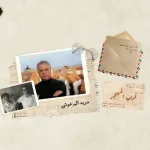
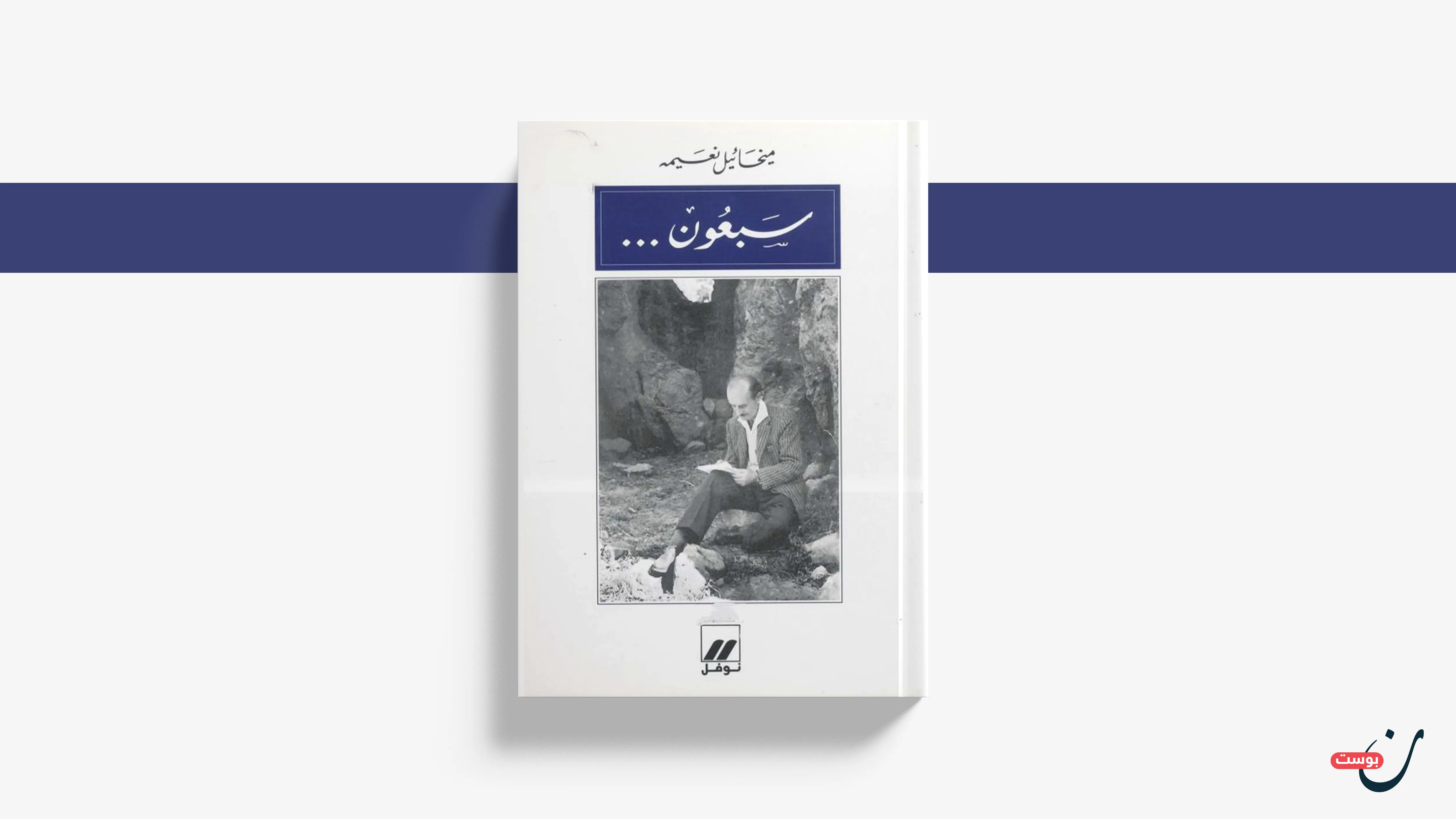
In his autobiography “Saboun,” the Lebanese writer and thinker Mikhail Naimy traces his life from 1889 to 1959 in three stages. The first covers his childhood and education, ending with his studies in Russia. The second follows his emigration to the US and his return to his hometown in Lebanon in 1932. The third takes him from that return to his 70th birthday, when he believed his life would end. He would, in fact, live to almost 99.
Readers need not admire Naimy or be particularly interested in his upbringing and the people and events that shaped his thought, character and writing to find something in “Saboun”. The series reaches beyond his own life to recount important historical events and turning points in the region. It offers a vivid, detailed picture of life in the 19th century. Although seen through Naimy’s memories, this is an unfamiliar world whose traces are absent from conventional history books.
Mikhail Naimy: A brief introduction
Naimy was born in October 1889 in Baskinta, a village at the foot of Mount Sannine in Lebanon. He completed his studies at the Russian Teachers’ Seminary, also known as the Muscovite school, in Nazareth, Palestine — the land of milk and honey, as he called it in his book. Between 1905 and 1911, he continued his education in Poltava province, Ukraine, then part of tsarist Russia, where Russian culture and literature influenced him. In 1912, he hoped to study at the Sorbonne but instead enrolled in the College of Law and Arts at the University of Washington in the US, graduating in 1916. He became one of the most prominent members of the Pen League, founded by Arab émigré writers.
He fell in love with three women but never married, believing that marriage was a graveyard for feelings. He returned to his homeland alone in 1932 and became known as the “Hermit of al-Shakhroub.” He wrote about 32 works, including novels, short stories and poetry. Among the best known are “The Barren One,” “Memoirs of the Speckled One,” “The Notables,” “Whisper of the Eyelids,” “Farther Than Moscow and Washington,” “The Voice of the World,” “Once Upon a Time,” “In the New Sieve,” “Encounter” and “Soliloquy of Sunset.”
The first stage (1889–1911): Nature and emigration
The first part recounts Naimy’s childhood in Baskinta during the Mutasarrifate era. He describes in detail the hut where he spent his first 13 years: a single rectangular room. He also explores his relationship with the natural world around him — wild trees, rugged terrain, valleys, orchards, birdsong, and flocks of sheep and herds of cattle.
He traces his early fascination with Arabic, its expressions and rich vocabulary, and his intense desire to go to school. His education began at one of the free Orthodox schools Russia had opened in his town, part of a network that spread across Lebanon, Syria and Palestine. During the Mutasarrifate era, Russia was the traditional protector of the Orthodox, France of the Maronites, Turkey of the Muslims, and Britain of the Protestants and Druze.
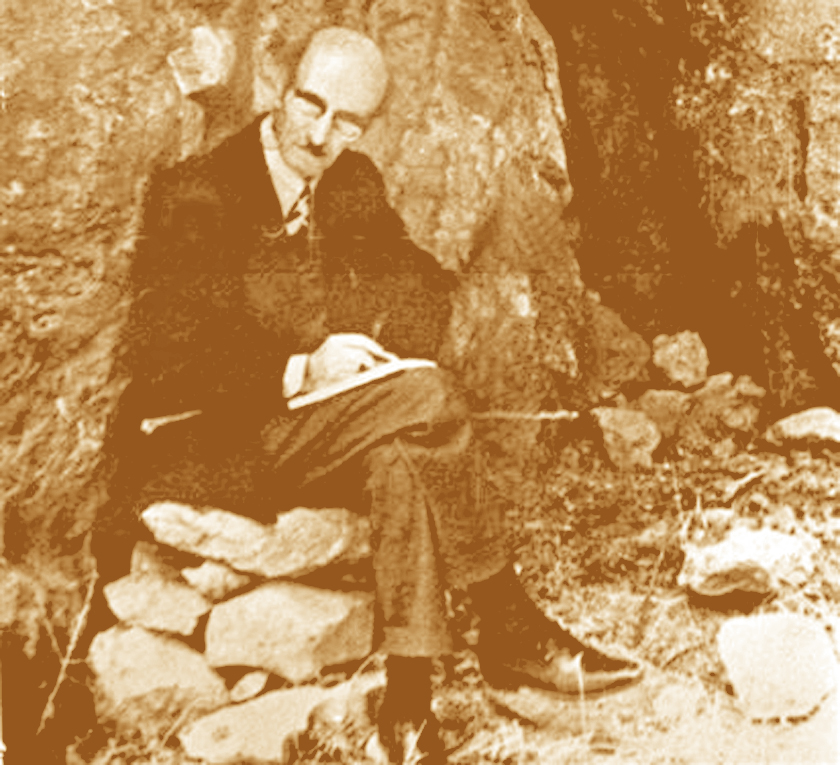
He gradually begins to speak about the beginnings of his relationship with the Arabic language and his great attraction to its
Emigration was still at its height, and Naimy recounts his father’s journey to America in search of riches. After six years away, living as a stranger, his father returned without finding the wealth he had sought. Naimy attributes the decision to emigrate to his mother’s persistent urging. She had seen others cross the sea to America and return wealthy enough to escape hardship and buy mulberry orchards. His father, however, returned with little to show for the journey.
Naimy describes the large numbers leaving and how few understood the differences between their destinations. To them, “Marka” meant North America and Brazil meant South America. Most bought tickets without knowing where they were going or what awaited them. They knew nothing of their new country’s character, customs or language, only that it would fulfil dreams that had withered at home. Most relied on the “kashsha”: a load of goods they carried and sold in exile, including clothes, incense, scissors, mirrors and crosses.
Alongside the emigrants’ determination, hope and enthusiasm, Naimy describes the grief of those leaving and those saying goodbye. He records the words spoken at these partings, including: “How happy and content we were before the roads to America opened.”
Despite the feelings of drive, hope and enthusiasm we sense when learning about the condition of the emigrants, Naimy draws us in
These emotions also accompany his own departure in 1902 to study at the Russian Teachers’ Seminary in Nazareth. He travelled on a steamer that sailed from Beirut to Damour, Sidon, Tyre, Acre, Haifa and Jaffa, then back again. The journey from Beirut to Haifa took about 36 to 40 hours. His account follows his feelings and anxieties as he approached an unfamiliar world.
His intellectual maturity is evident in his resentment of the hymns and poems recited to the pupils in praise of sultans and tsars. He regarded them as poison slipped into their minds.
It also emerges in his existential questions and doubts about death. After his maternal uncle died, he wrote: “What appalled me about death was that it should wield such power over people. Do I not hear them on every occasion repeating, ‘We are all the harvest of death,’ ‘Death is mercy,’ ‘Only God endures,’ ‘Death is truth’? Since they know that every living being is bound for death, that none endures but God, and that death is truth, why is it that whenever one of their living dies, they let down their hair, slap their cheeks, tear their clothes, shed tears, wail, lament and reproach, only to end by wrapping their bodies and hearts in black?”
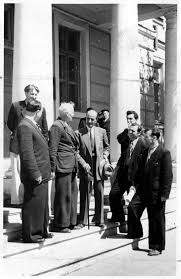
Mikhail Naimy in Russia
These questions deepened when his academic achievement and conduct earned him a place to study in tsarist Russia. He pursued that ambition cautiously, neither overreaching nor becoming complacent. There, he sought answers about the divine essence, nothingness, existence, eternity, and the beginning and end of creation. At other times, he concentrated on adapting quickly to Russian society, eagerly absorbing new experiences and immersing himself in its literature, poetry and other cultural works.
When this period of intellectual ferment, as he called it, ended, he returned to Lebanon intending to continue his education in Paris. His older brother persuaded him to go instead to America, the land of freedom. He went not for the lure of dollars and wealth, as people said, but because education there was free.
The second stage (1911–1932): City life and the Pen League
In the second part, the quiet rural life of al-Shakhroub and the spiritual connection Naimy felt in Nazareth, where Christ had lived and walked, give way to his irritation with the pace of city life, its congestion, noise and clamour. He describes his indifference on arriving in America after a journey of more than 30 days. Its broad streets, skyscrapers and vast buildings inspired neither wonder nor delight.
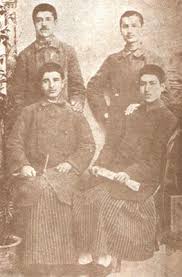
Mikhail Naimy and his brothers
Deeply resentful, Naimy saw the city as a place without mercy, justice or love. Greed and self-interest exhausted people and drew them away from their nature and the right path. Beyond contrasting it with peaceful Baskinta, he described America as a country without traditions or roots, where everyone sought adventure and money.
In several passages, he calls it the land of masters. To fit into its culture, language and conventions, and avoid ridicule over the letters in their names, emigrants began changing both their first names and surnames. He writes: “In the creed of our emigrants, a change of place and time required a change of names as well. Thus my brother Adib became ‘Joe’ and my brother Hikal became ‘Henry,’ and many an emigrant translated even his first and last name literally, so that Mansour Haddad, for example, became ‘Victor Smith.’”
Although he found an entire neighborhood in New York City settled by the Syrian and Lebanese community, he could not blend in
Although he found an entire New York neighbourhood populated by the Syrian and Lebanese community, he could not fit in. As he put it, “people did not leave their homelands without carrying with them to exile all their hatreds, disputes, grudges, and their political and sectarian nonsense.” He also recounts learning English from scratch, his first jobs, and how his literary works and articles began appearing in newspapers and magazines such as “Al-Funun” and “As-Sa’ih.”
From city life and efforts to win social acceptance, his thoughts and fears turn to Lebanon, where the First World War had begun. He describes the war as “the fire that engulfed the world,” and “the global massacre.” It was followed by another disaster: a locust plague that spread hunger, poverty and deprivation among the people of Mount Lebanon, leaving his country dry and barren, without a grain of wheat or barley.
His account then returns to America, recounting his entry into the army to take part in the war, his conscription, his arrest and his experiences on the battlefield. Bombs flew overhead, the guns never fell silent, and the wounded groaned and cried for help. He wrote at the time:
Brother! If, after the war, a Westerner boasts of his deeds
And sanctifies the memory of the dead and glorifies the might of his heroes
Do not sing of those who prevailed, nor gloat over those who humbled us
But kneel in silence with me, with a reverent, bleeding heart
That we may weep for the fate of our dead!
Brother! Who are we? No homeland, no family, no neighbor
If we sleep, if we rise, shame and disgrace are our cloak
The world has wearied of us as it has wearied of our dead
So bring the shovel and follow me, that we may dig another trench
In which to bury our living!
After the war, a new period of intellectual transformation began during his years in New York. He joined the Pen League, whose reputation grew quickly. The league and the 10 men behind it gained prominence on 20 April 1920.
The third stage (1932–1959): Reconnecting with the past
Naimy left America — a land of contradictions, opportunity and immense wealth — with just $500 in his pocket. Despite the many homes he had lived in, he always longed for his first home, for nature, and for the solitude and reassuring stillness that eased his anxieties, obsessions, memories and troubling thoughts.
For all his travels, he was still seeking answers to questions about existence, humanity, human origins and the value of thought. He also pondered the order, movement and course of the universe, and the meaning of birth and death, pain and pleasure, growth and decay.
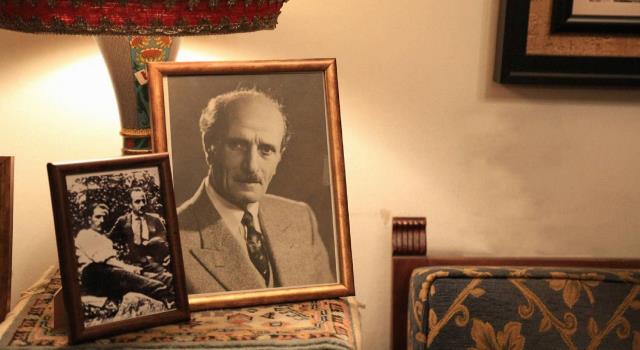
Back in the countryside, he again took up the sickle and shovel, tended livestock and irrigated the land. The villagers were astonished: they considered such work beneath a cultured, creative man. At every ceremony held in his honour, their astonishment and admiration for his intellect and writing grew as they heard him speak about life in America, urban civilisation, the machine age and broader questions of human life.
At first, however, he was pained by the changes that wars and the mandate had brought to Lebanon. He saw the mandate’s influence in people’s speech, in city shops and in the streets, where French had come to dominate conversation and expression, as though the country had not existed before the mandate. He was also distressed by his brother Nasib’s failing health and the mounting family responsibilities he took on after returning to the place he had once left.
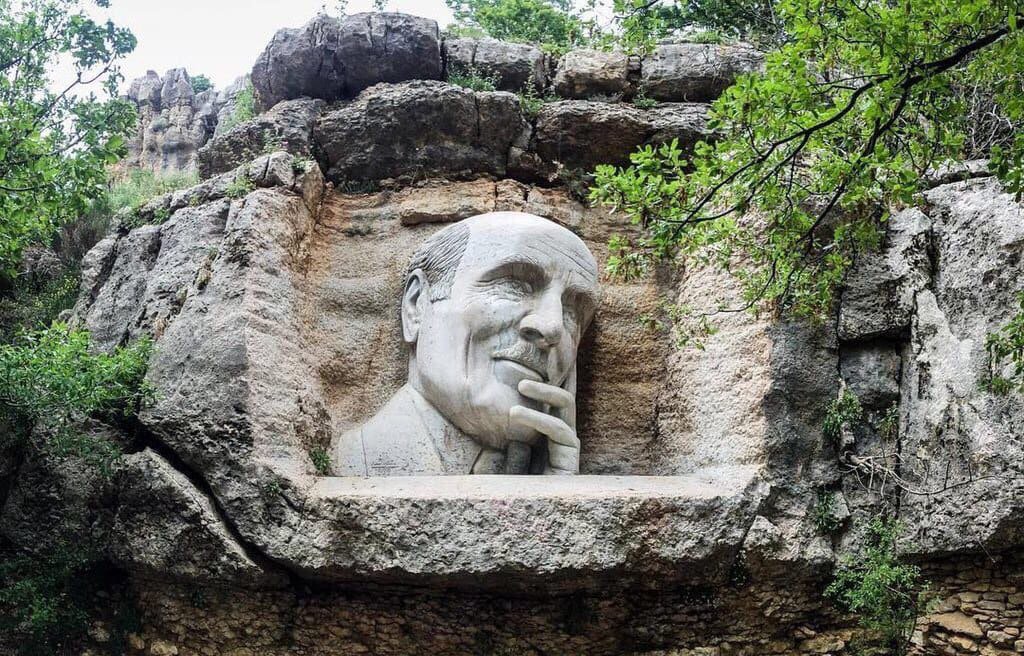
Amid these concerns, Naimy recounts his 15-year friendship with Kahlil Gibran and explores what made it so close and cherished. He revisits their correspondence, Gibran’s intellectual and artistic interests, his temperament and inclinations, and the difficulties in his personal life. He also describes receiving news of Gibran’s death after their many years of intellectual affinity and agreement.
From personal letters, the account moves to the Second World War, Lebanon’s independence in 1943, and the speeches Naimy broadcast on the radio to mark that momentous occasion. It then turns to revolutions and uprisings in Arab countries, including Syria, Sudan and Egypt. He closes the final part with warm words of farewell that have kept his name and writing alive to this day.
