











هذا التقرير متاح أيضًا بـ العربية
At the beginning of October, the US officially announced Secretary of State Marco Rubio’s decision to waive human rights conditions on aid to Egypt, allowing the release of $320 million in foreign military financing allocated for the 2025 fiscal year. The decision was based on US national security considerations and the importance of Egypt’s role in responding to regional crises.
On 21 September, Rubio had indicated that he would use the waiver authority available under US law in specific circumstances. This allows the administration to bypass some conditions on aid when it considers that national security or foreign policy priorities require it. His announcement paved the way for the release of funds subject to human rights conditions.
The release of the funds cannot be separated from the broader politics of relations between Cairo and Washington. It revives one of the most contentious questions of recent years: how much influence can human rights considerations have on US policy towards Egypt when they conflict with Washington’s strategic and security interests?
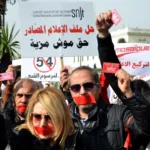
The question is particularly pressing as the decision coincides with the Egyptian authorities’ detention of six journalists working for the Matsada2sh platform. At the time of writing, Washington had made no public response comparable to its earlier criticism of Egypt’s human rights record. This raises broader questions about what Washington’s shifting priorities mean for human rights in Egypt, and whether the authorities can now commit abuses more readily without even symbolic external pressure.
— Alhurra Channel (@alhurranews) October 4, 2026
What the waiver means for Washington and Cairo
At first glance, the decision has two main implications. The first concerns the US approach: human rights appear to carry less weight in Washington’s dealings with Cairo. Legally, using the waiver does not mean removing or permanently abandoning human rights conditions. In practice, however, it means setting them aside in this case, giving US national security considerations and strategic interests priority.
The second concerns the use of the waiver itself. These funds were not part of the military financing routinely available for disbursement without restrictions. Congress had made their release subject to human rights conditions. In practical terms, the decision indicates that Egypt had not met the requirements needed to receive this funding without a waiver. Washington therefore had to use the waiver to release it.
The use of the waiver reflects US awareness that Egypt’s human rights situation has not improved enough for the funds to be released without it. The release therefore departed from the process prescribed by the laws and regulations governing the disbursement of US aid to Egypt since the early 1980s.
Where human rights fit into US policy
This shift shows how far Washington’s approach to human rights is governed by its interests and strategic priorities. When human rights considerations coincide with those interests, they feature prominently in political rhetoric and become a means of exerting pressure. They lose that prominence when upholding them comes into conflict with Washington’s security and political objectives.
This reflects a central feature of the pragmatism that has shaped US foreign policy for decades. It also calls into question the rhetoric that presents the defence of human rights as a fixed principle of US policy: in practice, the weight given to that commitment changes with the balance of interests and strategic needs.
The trend cannot be explained solely by Republican control of the White House, or by President Donald Trump’s emphasis on interests and security in foreign policy. Experience suggests that it is less a matter of party affiliation than a broader pattern shared, to varying degrees, by Republican and Democratic administrations. That gives the approach a degree of continuity regardless of who occupies the White House.
— Noon Post (@NoonPost) October 5, 2026
In 2024, during Democratic President Joe Biden’s term, Washington bypassed some of the human rights conditions on military aid to Egypt, citing national security considerations and Egypt’s role as a mediator in the war in Gaza. The Biden administration had previously withheld portions of that aid over human rights concerns. Its policy oscillated between putting pressure on Cairo and preserving the strategic interests that link the two countries.
US administrations may differ in how sharply they criticise Cairo, or any other country, how much pressure they exert, and how much funding they withhold or make subject to human rights conditions. But there is a limit to that pressure when it conflicts with broader US interests. When the two collide, human rights usually become a lower priority, while security, influence and strategic interests take precedence in US decision-making.
Why Cairo matters to Washington
The decision reflects Cairo’s importance to US interests in the Middle East. The two countries share a network of strategic interests, including preserving the Egyptian-Israeli peace treaty, military and security cooperation, counterterrorism, border security and maritime routes. Their partnership also encompasses Egypt’s role in managing regional crises, mediating disputes and reducing tensions.
From this perspective, Washington sees the aid it has provided to Egypt over decades as more than an entitlement linked to the peace treaty with Israel. It is a long-term investment in regional stability and a means of preserving US interests and influence in one of the world’s most turbulent regions. Cairo’s strategic value to Washington rises as tensions intensify and conflicts spread across the region. These developments increase the need for Egypt’s involvement in security, politics and diplomacy. Cairo’s role draws on its geographical position, regional influence and relations with the different parties involved in those crises.
A memorandum dated 4 September and signed by the US secretary of state set out some of these considerations. It linked the decision to bypass the aid’s human rights conditions to Cairo’s role in the aftermath of the war with Iran, its contribution to efforts to secure a ceasefire in Gaza, and its mediation to end the war in cooperation with Qatar, Pakistan and Turkey. Egyptian ports had also become important in responding to some of the effects that disruption to shipping in the Strait of Hormuz had on global energy markets, the memorandum said.
Under this approach, Washington finds it difficult to sacrifice its relations with Cairo or allow disagreements, including over human rights, to threaten the foundations of their partnership. From the perspective of US interests, Egypt’s strategic role extends beyond the bilateral relationship. It can maintain contact with parties whose interests diverge, help contain crises and preserve a degree of balance in a highly turbulent region.
This helps explain the limits of US pressure on Cairo. The more Washington needs Egypt’s help in managing regional crises, the higher the political and strategic cost of pressure that could threaten their cooperation. Shared interests once again determine how far Washington is prepared to go on other issues in the relationship, foremost among them human rights.
Europe: different tools, the same dilemma
Europe’s approach appears broadly similar. Its tools and motives may differ, but the outcome and the dilemma are much the same. The European Union provides substantial economic and financial support to Cairo, most notably through the partnership package worth about €7.4 billion for 2024–2027.
Europe makes little attempt to conceal the geopolitical motives for its closer ties with Cairo. It explicitly identifies them as factors shaping the partnership. Egypt’s importance to Europe is growing because of its role in regional security and stability, rising geopolitical tensions in the Middle East, and concerns about security and economic stability. Migration is foremost among those concerns, having become one of the main factors shaping European policy towards southern Mediterranean countries in recent years.
The US and European approaches differ in their tools and priorities. Washington views Cairo largely in terms of security, politics, military alliances and the regional balance of power. Europe takes a broader approach that combines economic and security interests with migration policy. It seeks to strengthen southern Mediterranean countries’ capacity to control migrant flows and prevent new waves of migration from reaching European shores.
Some European aid to Egypt also carries political and human rights conditions. European financial assistance is formally tied to tangible, credible steps towards respecting democratic mechanisms, upholding the rule of law and guaranteeing human rights. The relevant European institutions monitor whether these requirements continue to be met, and have the legal power to reduce, suspend or cancel aid if the conditions are not fulfilled.
The central problem, however, is less the absence of conditions than how they are interpreted, assessed and applied. This is where the gap between formal requirements and practice becomes apparent. Cairo presents measures such as the launch of the National Human Rights Strategy, the national dialogue, a review of pretrial detention, and some legislative and institutional reforms as signs of progress on human rights. These give Brussels room to continue cooperating with Egypt on the grounds that it is taking steps towards meeting the requirements.
Egyptian and international rights organisations, however, argue that these measures have not produced structural change commensurate with their stated ambitions. They point to continuing problems with detention and restrictions on public life, freedom of expression and political activity. The disagreement is therefore less about whether the authorities have taken steps than whether those steps have improved the human rights situation in practice, and whether they are sufficient to meet European institutions’ conditions.
The US and European approaches differ in their motives and tools, but converge on the same dilemma: both impose human rights conditions while remaining politically determined not to let those requirements obstruct their broader strategic interests with Cairo. This is likely to affect the wider human rights situation in Egypt.
What does this mean for human rights in Egypt?
US and European pressure on Cairo in recent years did not fundamentally change Egypt’s human rights situation. Despite its limited impact, however, it remained one factor pushing the authorities to show some flexibility and willingness to respond. Those responses were partial, and at times merely cosmetic, but external pressure still placed some constraints on the authorities’ freedom to act.
The situation now appears different. Washington has bypassed the human rights conditions on part of the military aid, diminishing their effectiveness as a means of putting pressure on Cairo. The shift sends a message that shared strategic and security interests can still override disagreements over human rights. That may give the Egyptian authorities greater latitude in dealing with the opposition and public life, as they become less concerned that Western criticism will bring direct political or economic costs.
— Noon Post (@NoonPost) October 4, 2026
Against this background, the recent crackdown on the six Matsada2sh journalists drew criticism from human rights advocates over the detention of several members of the platform’s team at around the same time. According to their defence team, they were also tortured during interrogation and forced to confess.
Alongside the detentions, intimidation also extended to supporters and sympathisers, including a female journalist who was summoned to appear before National Security.
This came despite appeals from rights advocates for the journalists’ release and an end to prosecutions linked to their work.
A direct connection between Washington’s aid decision and these domestic measures, whether conditional or causal, cannot be established. But the strikingly close timing of the two raises a legitimate question about the messages Cairo may take from the declining effectiveness of Western human rights conditions.
It also raises questions about how that decline affects the authorities’ assessment of the cost of measures against journalists, dissidents and public life.
This raises growing concerns about the outlook for human rights in Egypt. If Cairo becomes convinced that its strategic position and regional role allow it to disregard Western criticism without meaningful consequences for its relations or aid, the authorities could gain greater freedom to act at home. One of the external constraints on their decisions, limited though it was, could weaken further.
