






After the fall of Bashar al‑Assad’s regime in December 2024, the newly formed Syrian government entered into an agreement with the Syrian Democratic Forces (SDF) aimed at reintegrating northern and eastern regions into state institutions. However, the accord is being implemented at a snail’s pace amid mutual accusations of delaying tactics.
Despite some progress in education and energy, the SDF continues to deepen its military and security presence, detaining dissenters and recruiting fresh fighters—signaling reluctance to relinquish control.
Meanwhile, reintegrating former regime figures, particularly Alawites, into SDF structures is raising tensions, even as Russia repositions its forces at Qamishli Airport, complicating the dynamics further.
Amid disputes over airport authority and differing interpretations of decentralization, a critical question arises: Does the March agreement herald a new Syrian unity, or is it a temporary truce heading toward deeper division?
SDF Pursues Dual Tracks
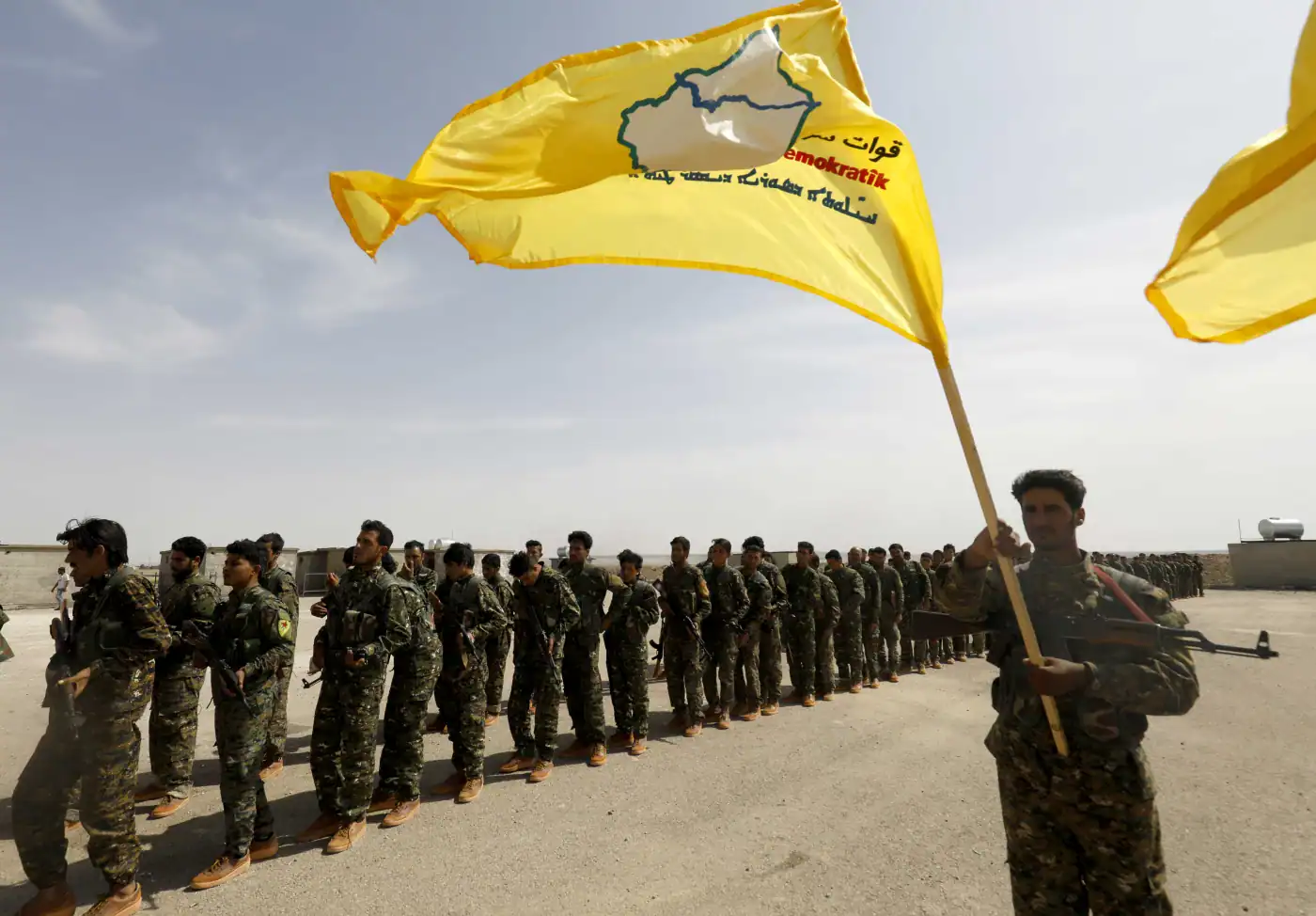
The slow implementation of the March 10 accord has led many Syrians to doubt its sincerity. Since the regime’s fall in December 2024, the SDF has intensified detentions of Arab residents in the Jazira region, dug defensive tunnels, bolstered military infrastructure, and accelerated recruitment—signs of preparing for battle rather than committing to integration.
SDF leadership has adopted two parallel approaches. First, stalling implementation by bogging down the agreement’s provisions in excessive detail. Their most recent government meeting took place in mid‑June in Aleppo, addressing energy issues after prisoner exchanges in the Sheikh Maqsud neighborhood.
The only smoothly progressing area has been education and exams for students in the Jazira provinces.
Second, they are militarizing their areas to deter potential attacks or popular uprisings that might threaten their leverage.
On the policy front, SDF and the Democratic Union Party (PYD)—the Syrian branch of the PKK—continue pushing for decentralization and maintaining their military bloc under the envisioned new Syrian army. A new Kurdish delegation formed to negotiate “Kurdish rights” in Damascus was rebuffed by the government, which insists that the March 10 accord, signed by SDF commander Mazloum Abdi and interim Syrian President Ahmad al‑Sharʿ, addressed all core issues, rendering side meetings unnecessary.
It is clear the Syrian government currently lacks the means to assert direct control over Jazira regions. A likely scenario would see SDF’s military councils merged nominally into the Syrian army through newly formed divisions and opening transit roads—while outright disbanding the SDF would create a dangerous security vacuum, as demonstrated by fragile conditions elsewhere under government control, akin to the situation in Deir ez-Zor.
Regime Remnants Exploited by the SDF
A more alarming development is the recruitment of former regime commanders and soldiers into SDF battalions. According to private reporting by Noun Post, several new battalions composed of ex-regime personnel—including Alawite recruits transported from the Syrian coast—were established in April and May. Female minority recruits from Latakia and As-Suwayda are being trained in Raqqa.
These SDF battalions are deployed across Hasakah’s Milbiya regiment, Mansurah and al-Tabqah in Raqqa, and the Omar and Koniko oil facilities near eastern Deir ez-Zor. The regime’s former fighters number over 3,000, with additional recruits moved via smuggling routes through southern Aleppo.
To stem internal fragmentation, SDF intelligence has launched an unprecedented security crackdown, including detaining prominent Arab leaders like Fawaz al‑Kreidi, head of Asayish forces in western Deir ez‑Zor.
Russia Also Reintegrates Regime Fugitives
In the Jazira region, Russia is similarly utilizing former regime loyalists. Field sources report that around 60 ex-Syrian army officers were flown in late May from Hmeimim airbase (Latakia) to Qamishli Airport, following a militant attack on Hmeimim that killed several Russian personnel.
These men, part of a ~70‑strong contingent, are assigned to guard and manage sections of Qamishli Airport—the only Russian outpost in eastern Syria since 2019, after Hmeimim.
While direct coordination between these regime recruits and the SDF remains unclear, today they form part of the airport’s security architecture. The SDF’s self‑administered authority has further complicated matters by creating a separate management structure there—unilateral and outside state or Syrian Civil Aviation Authority oversight. In response, the official authority closed the airport for “operational reasons,” warning that any use outside its supervision violates international law .
Where Next for the March 10 Accord?
In early June, a Kurdish delegation, close to the PYD, sought talks in Damascus, but government officials declined, citing the comprehensiveness of the March 10 accord. Joint committees continue functioning slowly, with recent discussions held on energy, dams, oil, and electricity.
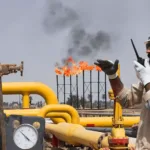
Under the energy agreement, the SDF requested Syrian mediation with Turkey to boost water flow into its dam turbines, while Damascus sought increased electricity. In oil‑sector discussions, pre‑2024 staff of the Syrian Petroleum Company will return to Jazira oil fields under nominal state oversight, while minority-held fields remain under SDF control. Oil remains temporarily supplied to the government for free.
Committees on camps and detention centers for IS families are also working with the coalition to repatriate residents; 43 Syrian families have returned to Aleppo‑controlled areas—the first such movement in years.
Turkey is meanwhile pressuring the disarmament and integration of the SDF’s YPG/YPJ forces into the Syrian army, leveraging time to force SDF concessions. Although Ankara denies direct Kurdish contacts, sources confirm ongoing channels of communication.
Observers suggest that this status quo will persist until Damascus completes military reorganization and defines a final integration mechanism. Meanwhile, people in the Jazira region remain skeptical as SDF and PKK‑linked groups continue child abductions, forced recruitment, trench digging, and anti‑government campaigns—fueling fears of undisclosed agreements that could threaten Syria’s unity.