







The launch of two rockets from inside Syria toward the occupied Golan Heights has stirred significant controversy and unleashed a wave of speculation. The incident comes at a particularly sensitive time for the new Syrian administration, which has cast doubt on the nature of the attack—reportedly the first of its kind since the fall of the Assad regime in December 2024.
According to Israel’s Channel 12, the rockets were launched from Syria’s Daraa province. At least two Grad missiles landed in open areas in the southern Golan. The Israeli military confirmed that it had detected at least one rocket falling in two separate locations in southern Golan, noting through a spokesperson that “after alarms sounded in Hispin and Ramat Magshimim, two rockets were detected crossing from Syrian territory into Israeli territory and landed in open fields.”
A militant group calling itself the “Martyr Mohammed Deif Brigades” claimed responsibility for the attack, prompting questions about the group’s emergence and its potential impact on the regional landscape. Israeli Defense Minister Yisrael Katz held Syrian President Ahmad al-Shara directly responsible for the rocket fire, stating that “he is accountable for any threat or attack against the State of Israel” and vowing a “comprehensive response soon.”
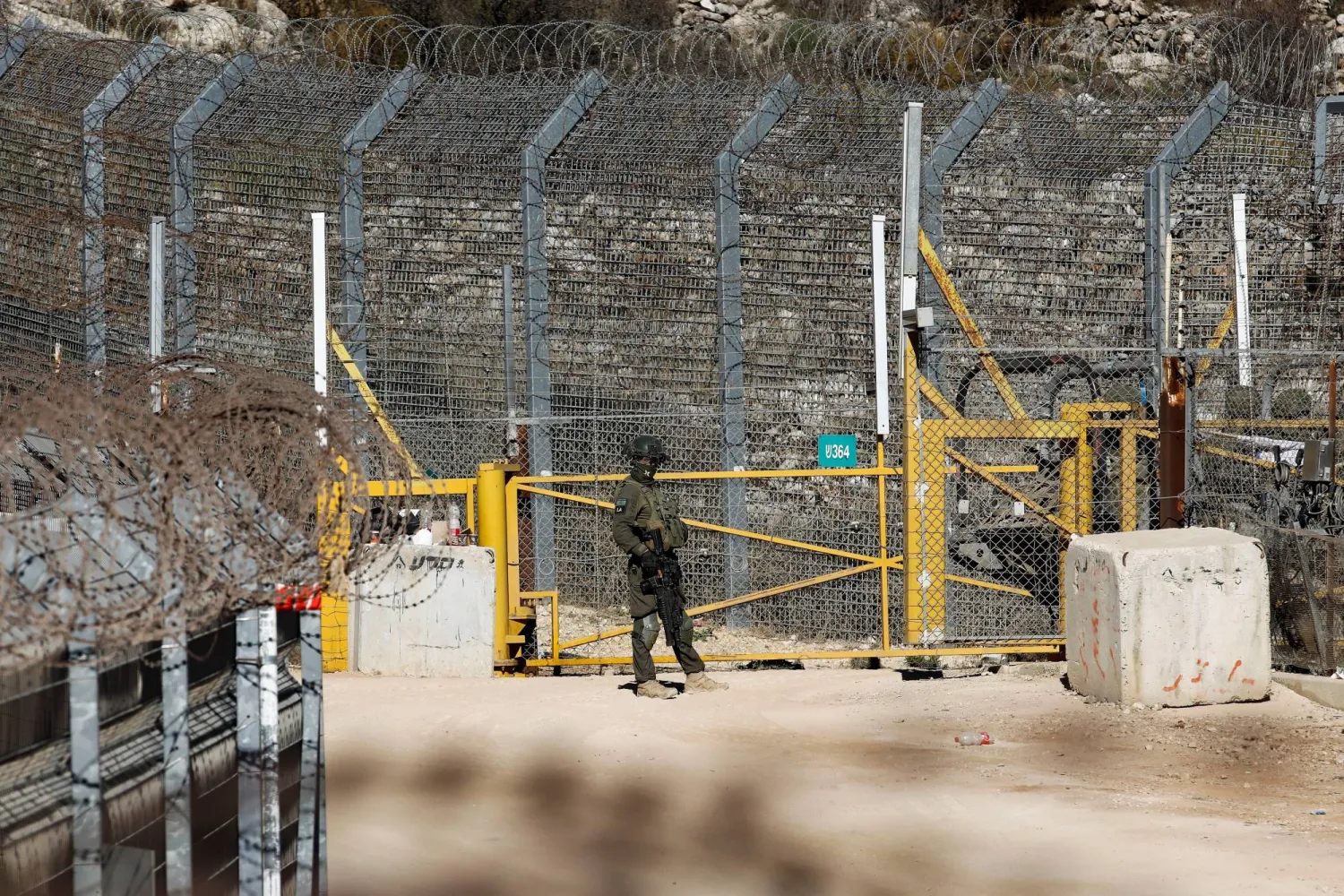
Indeed, Israel’s retaliation came swiftly. The Israeli army shelled the Yarmouk Basin in western rural Daraa with heavy artillery. The military issued a statement saying its warplanes had bombed Syrian regime weapons in southern Syria, claiming, “the Syrian regime is responsible for the current situation in Syria and will continue to bear the consequences if hostile actions persist from its territory.”
Given the public nature of the operation, the speed of Israel’s response, and the fact that Syria’s new administration has been adopting a diplomatic approach to its neighbors—Israel included—while rapidly opening up to the United States and re-engaging with the region and the world, many questions arise. Chief among them: who executed the attack, who benefits from it, and what are the likely consequences?
What kind of weapons were used?
The Israeli army noted that the rockets were of the Russian-made Grad type—easily operable and widely distributed. These 122mm rockets, developed in the 1950s, are capable of launching volleys from multiple platforms. Their use suggests the existence of fully operational rocket launch systems inside Syria.
The Grad system includes several variants: the original BM-21, equipped with 40 launch tubes; the BM-21V, with 12 tubes; the BM-21B, which has 36 tubes and uses larger warheads; and the more modern Prima (9A51), introduced in the early 1990s with 50 launch tubes.
How did such rockets enter Syria?
Given their advanced launch platforms, these rockets are not easily accessible to non-state groups. Four plausible scenarios emerge regarding their entry into Syria:
-
Smuggled in via Hezbollah or Iraqi routes under Iranian directive.
-
Transferred by Palestinian factions from Lebanon amid rising pressure to disarm.
-
Acquired from Syrian army stockpiles following the regime’s collapse.
-
Introduced covertly by Israeli forces, possibly for future strategic use—though this is considered less likely.
Who carried out the operation?
A newly declared group, the “Martyr Mohammed Deif Brigades,” claimed responsibility. Announced on May 31, 2025, the group identifies itself as a revolutionary Palestinian faction resisting Israeli occupation.
In a Telegram statement, they positioned themselves as heirs to Hamas founders such as Sheikh Ahmad Yassin, Abdul Aziz al-Rantisi, and Mohammed Deif, vowing to fight Israeli forces with no mercy.
The group’s rapid action—less than three days after its creation—and the use of Grad rockets raise serious questions about its true capabilities and backing, especially as Hamas has distanced itself from the group.
Could other actors be involved?
Though the brigades claimed responsibility, three other forces may be implicated:
-
Palestinian armed factions: Some remnants of former Hamas-aligned units remain in Syria and could have orchestrated or supported the attack.
-
Pro-Iranian militias: Loyal to the ousted Assad regime and connected to Hezbollah and Tehran, these groups may have acted on Iranian orders to destabilize the region.
-
Israeli intelligence: While controversial, some suggest Israel may have facilitated the attack to justify continued military presence in Syria.
Who stands to gain?
Three key actors benefit from this escalation:
-
Iran: Still reeling from Assad’s fall, Tehran may seek to undermine warming ties between Damascus and Washington, or to reaffirm its influence in Syria by provoking Israel.
-
Assad loyalists: Could be trying to derail the revolution by engineering conflict and discrediting the new government.
-
Israel: Syria’s regional reintegration and diplomatic thaw have weakened Israel’s justification for military action. This incident offers a convenient rationale for continued operations in southern Syria.
All three share a vested interest in derailing Syria’s diplomatic momentum with the West and dragging it back into military entanglements.
Who is the biggest loser?
The clear loser is Syria’s new administration. Such incidents jeopardize its strategy of diplomatic neutrality and de-escalation, especially at a time when it seeks to stabilize the domestic front.
A statement from Syria’s Foreign Ministry cast doubt on the incident’s authenticity, noting that no verification had yet been made and accusing unnamed actors of destabilizing the region for their own interests. The ministry reiterated President al-Shara’s position: Syria does not and will not pose a threat to its neighbors.
It condemned the Israeli strikes on Daraa as a blatant violation of Syrian sovereignty that escalates regional tensions at a time when de-escalation is urgently needed.
Is the Syrian administration responsible?
Israeli Defense Minister Katz’s accusation of direct responsibility contradicts the public position of the Syrian government, which has consistently emphasized its commitment to non-interference and peaceful regional integration—even floating the possibility of normalization with Israel.
Furthermore, Israel has actively hindered Syrian attempts to restore full control over the south, limiting the Syrian military’s ability to disarm rogue elements. With Israel maintaining de facto dominance in the region, responsibility for any attacks from southern Syria arguably lies more with Tel Aviv than with Damascus.
As US Senator Joe Wilson stated on X: “For the Syrian government to honor its commitments to President Trump, the Ministry of Defense must have access across the country. Syrian officials have made it clear Syria poses no threat to Israel. Restrictions on security forces will be exploited.”


