









NoonPost NoonPost

NoonPost

  • Politics
  • Economy
  • Society
  • Culture
  • In Depth
  • Focus
  • Explainers
  • Stories
AR
Notification Show More
NoonPost
Ali al-Taher hills: The key to control and the gateway to negotiations between Lebanon and “Israel”
NoonPost
From drones to diplomats: How the UAE is building its influence in Ethiopia
NoonPost
Egypt and Saudi Arabia in Tehran: condolence diplomacy and post-Khamenei messages
NoonPost
From border guard to power broker: Why NATO cannot afford to bypass Türkiye
NoonPost
Egypt’s “Octagon”: The January obsession that still haunts Sisi’s regime
NoonPost
Rebuilding Syrian-Lebanese relations: Respect for sovereignty and the logic of security balance
NoonPost
“Hebron is the laboratory of control Israel is extending across the West Bank”: Interview with Issa Amro
NoonPost
Energy diplomacy: Could gas become Syria’s gateway to economic integration?
NoonPost
Successive deaths of Syrian officers: Is the “heart attack” explanation enough?
NoonPost
Excluding UNRWA from Gaza: Trump’s council reveals its true face
NoonPost
Shaldag: a commando unit Affiliated to the Israeli Air Force
NoonPost
Land, water and crossings: A map of foreign investment in Syrian agriculture
NoonPost NoonPost
AR
Notification Show More
NoonPost
Ali al-Taher hills: The key to control and the gateway to negotiations between Lebanon and “Israel”
NoonPost
From drones to diplomats: How the UAE is building its influence in Ethiopia
NoonPost
Egypt and Saudi Arabia in Tehran: condolence diplomacy and post-Khamenei messages
NoonPost
From border guard to power broker: Why NATO cannot afford to bypass Türkiye
NoonPost
Egypt’s “Octagon”: The January obsession that still haunts Sisi’s regime
NoonPost
Rebuilding Syrian-Lebanese relations: Respect for sovereignty and the logic of security balance
NoonPost
“Hebron is the laboratory of control Israel is extending across the West Bank”: Interview with Issa Amro
NoonPost
Energy diplomacy: Could gas become Syria’s gateway to economic integration?
NoonPost
Successive deaths of Syrian officers: Is the “heart attack” explanation enough?
NoonPost
Excluding UNRWA from Gaza: Trump’s council reveals its true face
NoonPost
Shaldag: a commando unit Affiliated to the Israeli Air Force
NoonPost
Land, water and crossings: A map of foreign investment in Syrian agriculture
  • Politics
  • Economy
  • Society
  • Culture
  • In Depth
  • Focus
  • Explainers
  • Stories
Follow US

“Arad”.. Why Did the Occupation Create an All-Female Force to Protect Its Air Bases?

نون إنسايت
Noon Insight Published 22 May ,2026
Share
"أراد" هي وحدة "تدخل" مستحدثة في سلاح الجو التابع لجيش الاحتلال

"Arad" is a newly established "intervention" unit within the occupation army's Air Force.

هذا التقرير متاح أيضًا بـ العربية

The “Al-Aqsa Flood” operation on October 7, 2023 did not only expose the collapse of the border fence with the Gaza Strip; it also shattered the image of Israeli military bases that “Tel Aviv” had long promoted as “safe” rear installations.

According to investigations Israeli investigations, elite Qassam fighters, the military wing of Hamas, carried maps of air force bases, including Hatzerim in the Negev and Tel Nof in the central occupied Palestinian territories, as part of plans aimed at expanding the attack deep into the occupation’s military system.

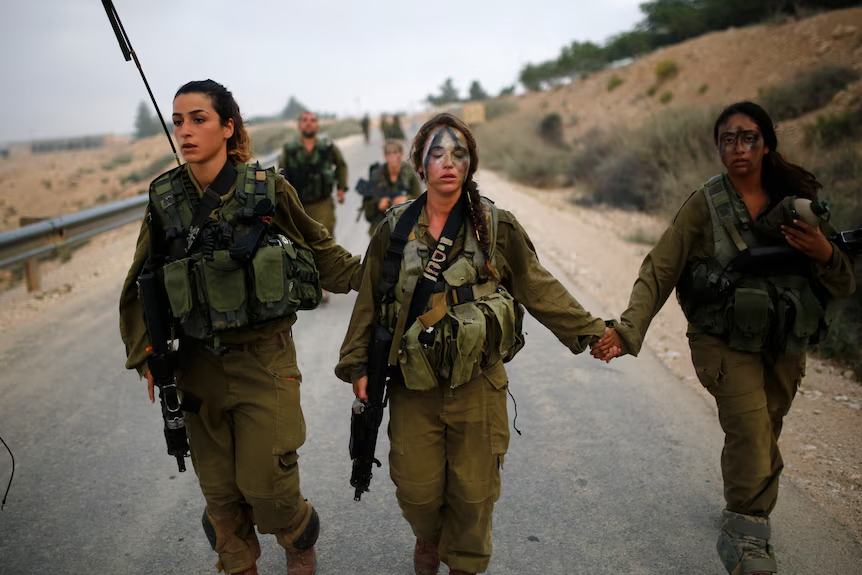
From this came the birth of the “Arad” unit, whose formation was announced by the occupation army in mid-May 2026. It is a new force in the air force made up exclusively of female soldiers, tasked with “rapid response” to scenarios involving infiltration or raids on bases and their surroundings.

The following report explains what we know about “Arad”: why it was created, how it operates, and what it reveals about the transformation of the occupation’s air bases from rear sites into anxious military installations seeking additional protection.

What Is the “Arad” Unit?

“Arad” is an intervention unit newly established in the occupation army’s air force, and it is seen as evidence of its manpower crisis, being the first group to rely exclusively on female conscripts.

The unit belongs to Wing 7, which is responsible for special units, and its mission is essentially to try to deal with any incursions or commando-style attacks inside fortified air force bases until additional reinforcements arrive to salvage the situation.

About 100 female conscripts joined the first course, according to the occupation army’s website, while the Hebrew-language site Mako said the female soldiers would initially be divided into three operational teams, and the army expects to recruit two cohorts each year.

Despite the specialized nature of the training, the unit is not officially defined as a “commando” force like “Shaldag,” but rather as a “specialized intervention force.”

Why Was It Created Now?

The creation of “Arad” was directly linked to the occupation army’s disastrous failure during the Al-Aqsa Flood operation, as Israeli investigations showed that Hamas elite fighters had been planning attacks against air force bases, and maps of Hatzerim and Tel Nof were found in their possession.

This revealed that air bases were no longer beyond the reach of the Palestinian resistance, and that traditional guard systems were insufficient to prevent such incursions. This coincided with internal Israeli warnings about military risks around some bases in the Negev, especially Nevatim.

What Is the Unit’s Main Mission?

Its declared mission is to try to contain collapse and form a “first line of defense” in the event of any major breach of air bases.

According to the Israeli description, the female conscripts are deployed to try to isolate the area and engage resistance fighters in an attempt to delay the fall of the base until reinforcements arrive.

Leaks indicate they may later be assigned to guard so-called “temporary operating zones” for fear of ambushes.
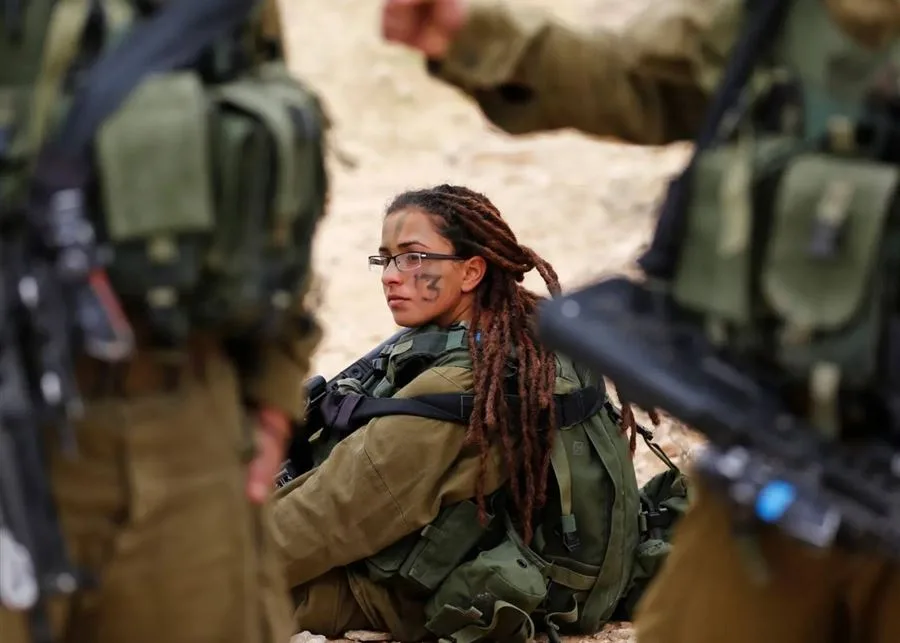
المهمة المعلنة لوحدة أراد هي محاولة تدارك الانهيار وتشكيل "خط دفاع أولي"
The declared mission of the Arad unit is to try to contain collapse and form a “first line of defense”

How Are “Arad” Female Conscripts Trained?

The occupation army’s website indicates that training lasts about a year and includes shooting, urban warfare, and attempts at psychological preparation for the shift from a state of calm to the shock of a sudden raid.

Hebrew-language reports expose the state of confusion, as the first course was shortened to just eight months because of the “urgent operational need” and the attrition the occupation army is experiencing.

They add that training also includes navigation and combat in an urban environment, while no details are available about the type of weapons or equipment used.

Why Is It an All-Female Unit?

Amid evasion of military service and the depletion of male soldiers in the genocidal war on Gaza, the occupation army found no way to fill the gap other than deploying female conscripts.

Although it is an all-female unit, its command remains mixed, as it is led by an officer from the “Shaldag” unit, and male and female officers serve in it in an attempt to repair the gaps created by October 7.

The declared goal, therefore, is to capitalize on the growing interest among female conscripts and build a force that fills military gaps after October 7.

What Does the Name “Arad” Mean?

In the enemy’s literature, the term “Arad” refers to a type of alloy or metal from which the so-called “first Hebrew shield” was made, according to a description on the occupation army’s website.

Through this name, the occupation army is trying to market the possibility of integrating technology and intelligence work, in an attempt to reassure its public that its bases, whose fragility was exposed by Al-Aqsa Flood, are now protected.

What Is the Occupation Concealing About It?

Despite what has been published, the occupation army is concealing the final number of female conscripts, their deployment locations, and the type of weapons they carry.

It is also concealing whether this unit will be pushed to the front lines outside the territories occupied in 1948, or whether it will remain confined within the walls of air bases, waiting for the unknown.
TAGGED: Israel ، The Israeli Occupation ، The Israeli Occupation Army
TAGGED: Explainers ، Israel ، The Israeli Occupation ، The Israeli Occupation Army
Download this article as PDF
Share this Article
Facebook Twitter Whatsapp Whatsapp Telegram Email Copy Link
نون إنسايت
By Noon Insight ُExplainers reports by NoonPost editors.
Follow:
Previous Article عاد قطار الخليج إلى الواجهة بعد الإعلان عن إنجاز 50 ٪ من المشروع A Revolution on Iron Rails: The Gulf Railway from the 2009 Dream to the 2030 Race
Next Article NoonPost How Is Turkish Military Technology Redrawing the Balance of Power in North Africa?

Read More

  • Ali al-Taher hills: The key to control and the gateway to negotiations between Lebanon and "Israel" Ali al-Taher hills: The key to control and the gateway to negotiations between Lebanon and "Israel"
  • From drones to diplomats: How the UAE is building its influence in Ethiopia
  • Egypt and Saudi Arabia in Tehran: condolence diplomacy and post-Khamenei messages
  • From border guard to power broker: Why NATO cannot afford to bypass Türkiye
  • Egypt’s “Octagon”: The January obsession that still haunts Sisi’s regime
part of the design
NoonPost Weekly Newsletter

You May Also Like

Ali al-Taher hills: The key to control and the gateway to negotiations between Lebanon and “Israel”

Ali al-Taher hills: The key to control and the gateway to negotiations between Lebanon and “Israel”

نون إنسايت Noon Insight 6 July ,2026
From border guard to power broker: Why NATO cannot afford to bypass Türkiye

From border guard to power broker: Why NATO cannot afford to bypass Türkiye

نون إنسايت Noon Insight 6 July ,2026
Land, water and crossings: A map of foreign investment in Syrian agriculture

Land, water and crossings: A map of foreign investment in Syrian agriculture

نون إنسايت Noon Insight 2 July ,2026
NoonPost

An independent media platform founded in 2013, rooted in slow journalism, producing in-depth reports, analysis, and multimedia content to offer deeper perspectives on the news, led by a diverse young team from several Arab countries.

  • Latest Reports
  • Politics
  • Society
  • Economy
  • Culture
  • Interviews
  • In Depth
  • Explainers
  • Stories
  • Profiles
  • Focus
  • About Us
  • Our Writers
  • Advanced Search
Some rights reserved under a Creative Commons license

Removed from favorites

Undo
Go to mobile version