

هذا التقرير متاح أيضًا بـ العربية
Since the outbreak of war in Sudan in April 2023, Türkiye’s presence has expanded through projects carried out by overlapping institutions moving along parallel tracks: relief, development, health, water, agriculture, education, and field diplomacy.
In a country where estimated the United Nations said 30.4 million people would need urgent assistance in 2025, daily services have taken on a significance that goes beyond their immediate humanitarian nature.
Port Sudan and the Red Sea have further increased the importance of this map, after moved the Turkish Foreign Ministry temporarily relocated its embassy to the city as of May 11, 2023, making it one of the few embassies still operating inside Sudan “at full capacity.”
The city has thus become a gateway for aid and ships, and a diplomatic and field contact point between Turkish institutions, Sudanese authorities, and organizations working on the ground.
1. Who is working? A map of Turkish institutions
Turkish Cooperation and Coordination Agency (TİKA)
leads TİKA’s development and service work in Sudan. It does not usually operate through aid that is quickly consumed, but through projects that remain in place: water, solar energy, health, agriculture, fisheries, education, and training.
In its latest package announced in May 2026, its projects included a solar energy system to operate water facilities in Arbaat in Red Sea State, the renovation of the orthopedics department at Al-Matamma Hospital, an agricultural nursery project, and support for freshwater fisheries.
This package is part of a broader portfolio that TİKA says is approaching 1,000 projects and activities since opening its office in Sudan in 2006.
In education and training, Turkish activity is visible through scholarships and TİKA’s educational projects, including the establishment of school and university laboratories, vocational training, and scholarships for Sudanese students.
Turkish Red Crescent
It handles a prominent share of direct relief, through food parcels, iftar meals, blankets, infant formula, hygiene supplies, and Eid clothing.
This assistance is tied to the daily needs of displaced people in cities and camps, and is carried out often in coordination with the Sudanese Red Crescent and other Turkish entities.
Disaster and Emergency Management Authority (AFAD)
It is especially visible in large shipments and aid vessels, as its role is not based on a specific service project, but on emergency management.
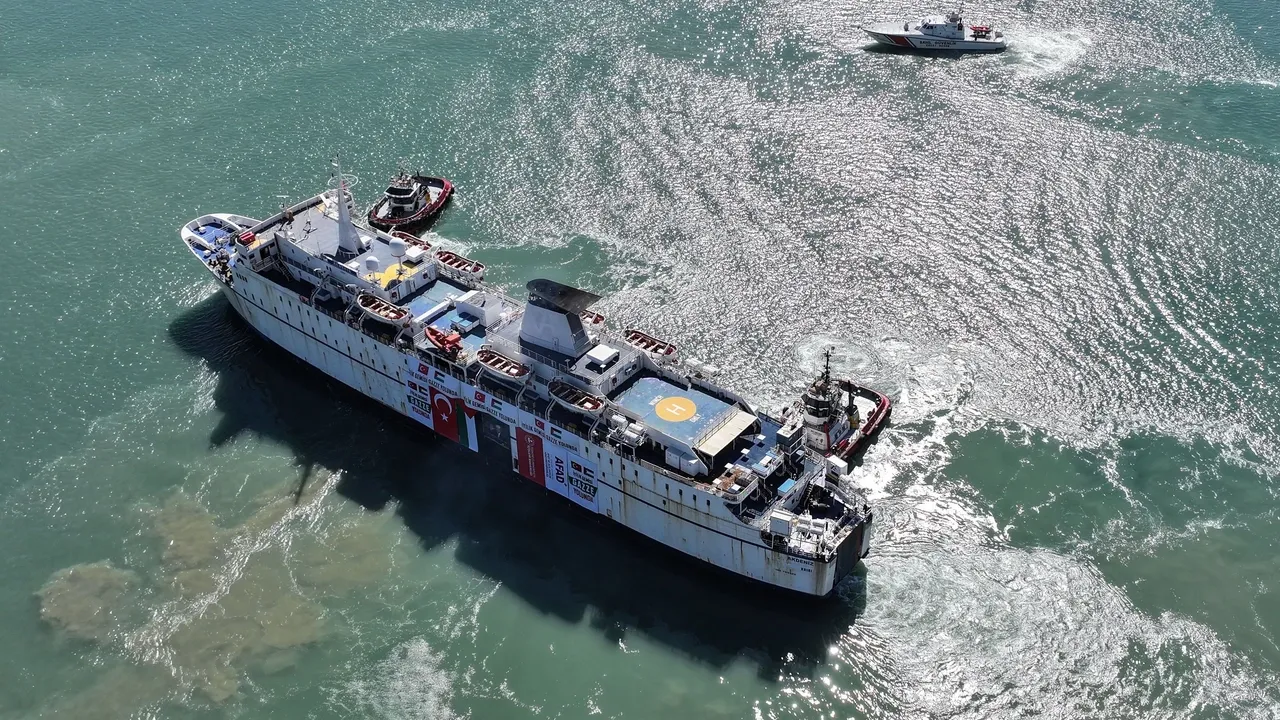
AFAD also works to transport massive quantities of food, tents, and health and shelter supplies by sea, particularly toward Port Sudan, which has become a main gateway for aid since the outbreak of the war.
Non-governmental organizations
Alongside these institutions, Turkish NGOs such as the Humanitarian Relief Foundation (İHH) and the Turkish Diyanet Foundation
(TDV) operate in the field and seasonal relief space.
İHH intervenes through community kitchens, food baskets, water, cash assistance, and health supplies, while TDV appears especially in Ramadan campaigns and Eid clothing drives.
2. How much has Türkiye provided? The scale of support in numbers
Turkish support for Sudan relies on two parallel tracks: large relief shipments arriving by sea, and field assistance distributed inside cities and displacement camps.
In the first track, AFAD appears as the leading body managing aid ships arriving from Türkiye, carrying food, tents, and health and shelter supplies.
In the second track, the Turkish Red Crescent moves alongside NGOs to distribute parcels, meals, blankets, and hygiene supplies to displaced people and the most affected groups.
The figures show that a large share of this support goes to emergency relief, especially food, shelter, clothing, and water, but Turkish aid is not measured only in tons.
TİKA operates on a different track, based on service projects that remain after the moment of distribution, such as running water systems on solar power, equipping hospital departments, and supporting agriculture and fisheries.
The following infographic shows the most prominent figures of declared Turkish support in Sudan, broken down by the implementing or supporting entity.
3. Where? The geography of Turkish activity in Sudan
Port Sudan and Red Sea State emerge as a main hub, where the Turkish embassy has been operating since its temporary relocation, aid ships arrive through the port, and Red Crescent activities are carried out in displacement camps.
In the same state lies the Arbaat water and solar energy project, while Suakin appears in health and development projects such as the maternity unit at the city hospital.
In River Nile State, the city of Al-Matamma stands out through the project to renovate the orthopedics department at its hospital, while Atbara appears in the activities of the Turkish Diyanet Foundation, which announced the distribution of Ramadan food parcels.
This means Turkish activity does not remain confined to the coast, but also advances along the Nile corridor in areas hosting displaced people or affected by the war.
In Khartoum, the picture is different because of the war itself, as the city appears in relief activity by organizations such as İHH, and in earlier development or educational projects by TİKA, but it is no longer today a fixed center for Turkish diplomatic activity as it was before the war.
In Sennar State, support for freshwater fisheries appears within TİKA’s latest package, linking Turkish activity to local livelihoods on the Blue Nile.
In Darfur/Nyala, the educational and health dimension appears through the Turkish-Sudanese Nyala Hospital and training and education projects supported by TİKA. Kassala, meanwhile, appears through physics and chemistry laboratories at a girls’ school, while Al-Qadarif appears through kitchens or meals mentioned by İHH among its relief activities.
Thus, the Turkish map is distributed across the Red Sea, Nile regions, displacement cities, and educational and health institutions, within a low-profile presence that links Ankara to highly sensitive daily needs in a country exhausted by war.