




هذا التقرير متاح أيضًا بـ العربية
The process of ending the conflict between the Turkish state and the Kurdistan Workers’ Party (PKK) has not reached its conclusion, but it has entered its most difficult phase: moving from declarations of intent to verifying disarmament.
For Ankara, it is not enough for an armed group it classifies as a terrorist organization to announce that it will dissolve itself. It insists that this must be proven in practice through the surrender of weapons and the dismantling of its armed structure before any broad legal arrangements are made.
Meanwhile, PKK leaders and Kurdish parties close to the process tie the final handover of weapons to political and legal guarantees, while the regional landscape has deepened this hesitation.
The Iran war heightened Türkiye’s sensitivity toward any cross-border Kurdish mobilization, while the retreat of the Syrian Democratic Forces (SDF) strengthened Ankara’s conviction that conditions for ending armed activity have become more favorable, and made the PKK more insistent on guarantees. From here, this report explains why peace has become suspended at the cost of implementation.
What was achieved before the stalemate?
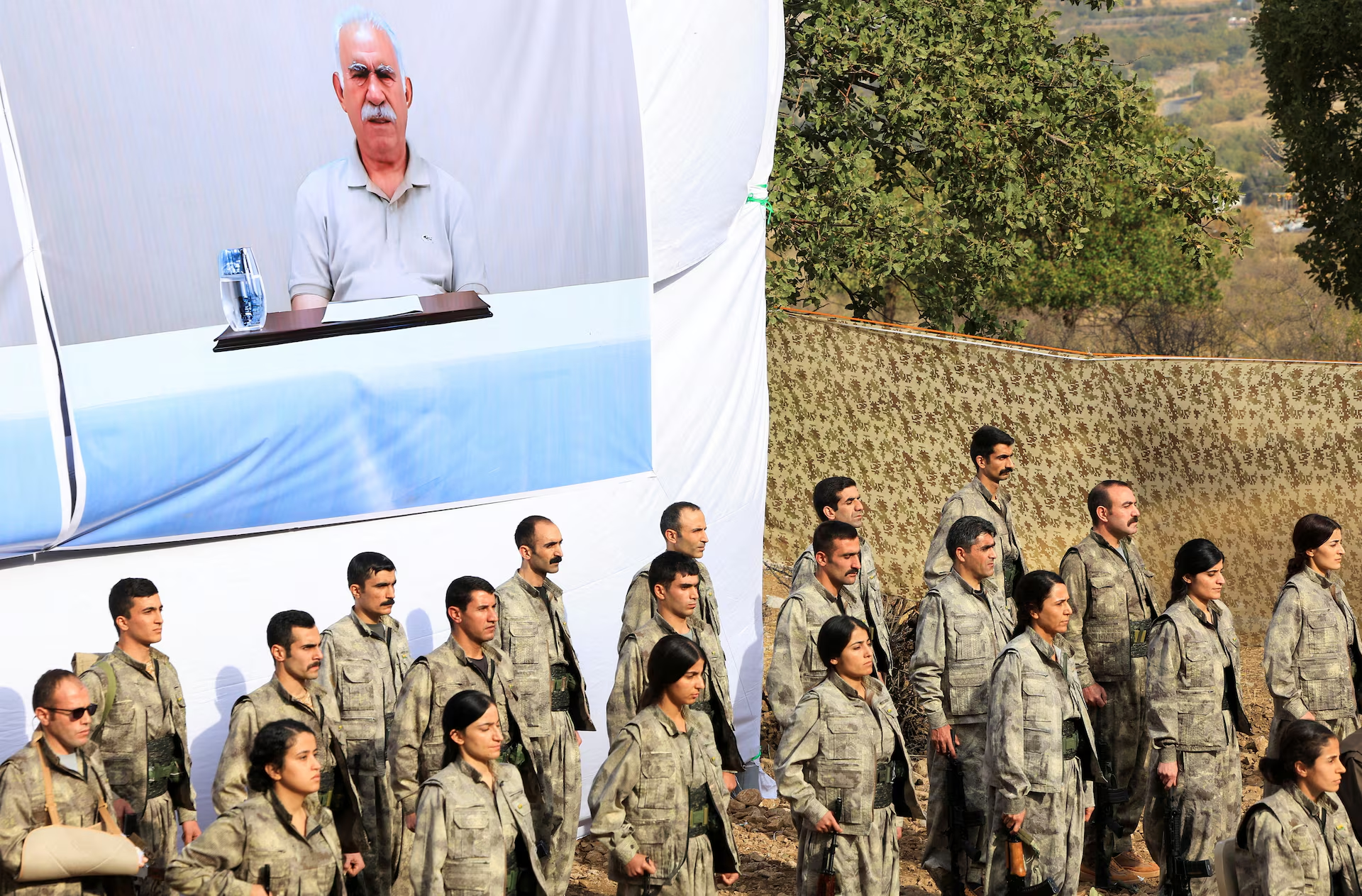
The process began with an unexpected political signal from Nationalist Movement Party leader Devlet Bahçeli in the fall of 2024, then was propelled by a message from PKK leader Abdullah Öcalan from his prison cell on İmralı, shifting the conflict from the question of war to the question of how to dismantle a four-decade-old armed organization.
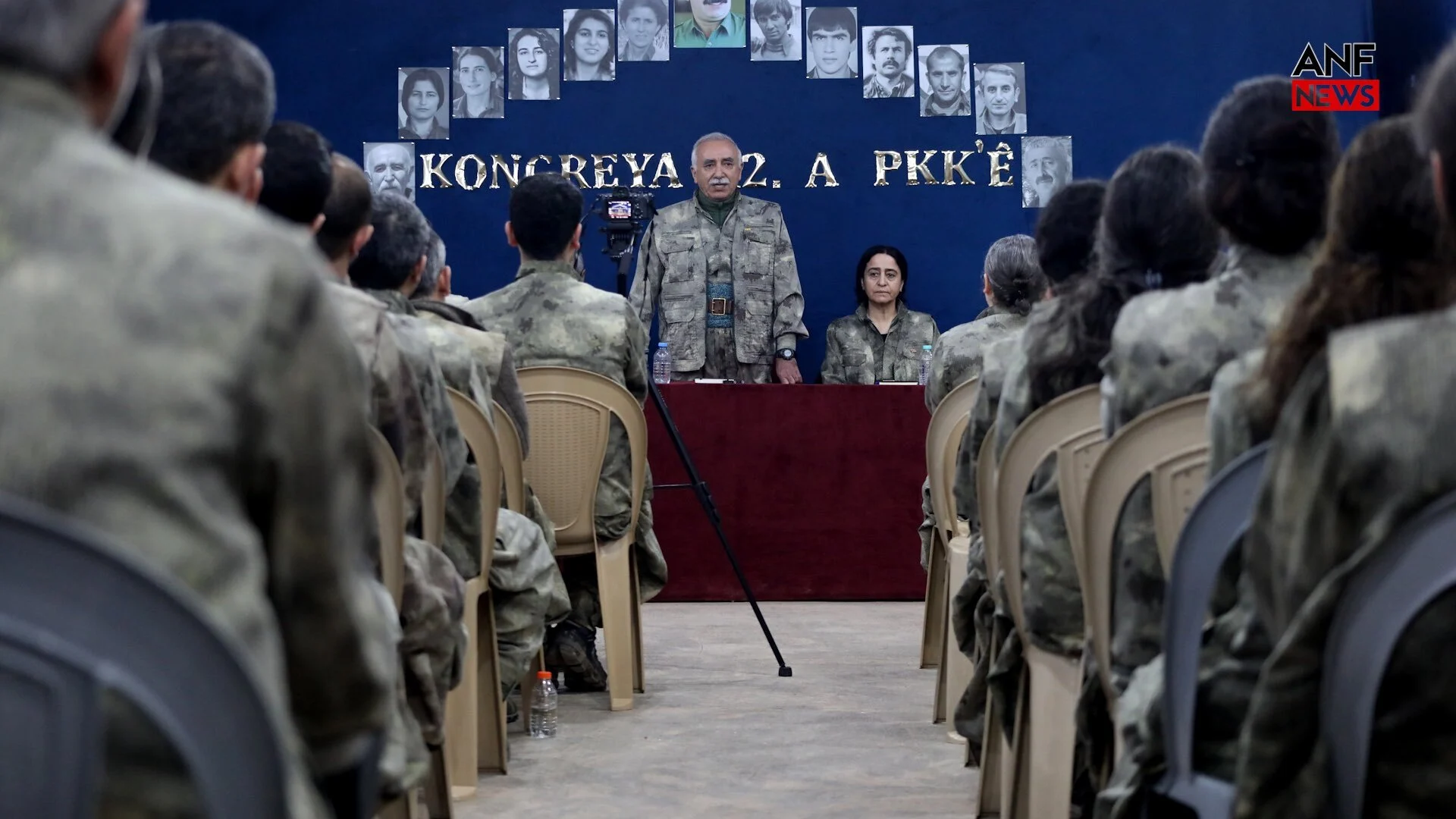
In February 2025, Öcalan called on the PKK to dissolve itself and disarm, opening the door to a ceasefire. The group then announced in May 2025 its decision to dissolve itself and end what it called the “armed struggle.”
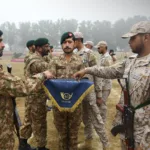
On July 11, 2025, the first symbolic step on the ground came when about 30 party fighters burned their weapons at the entrance to Jasana Cave near Dukan in northern Iraq, in the presence of Kurdish, Iraqi, and Turkish officials.
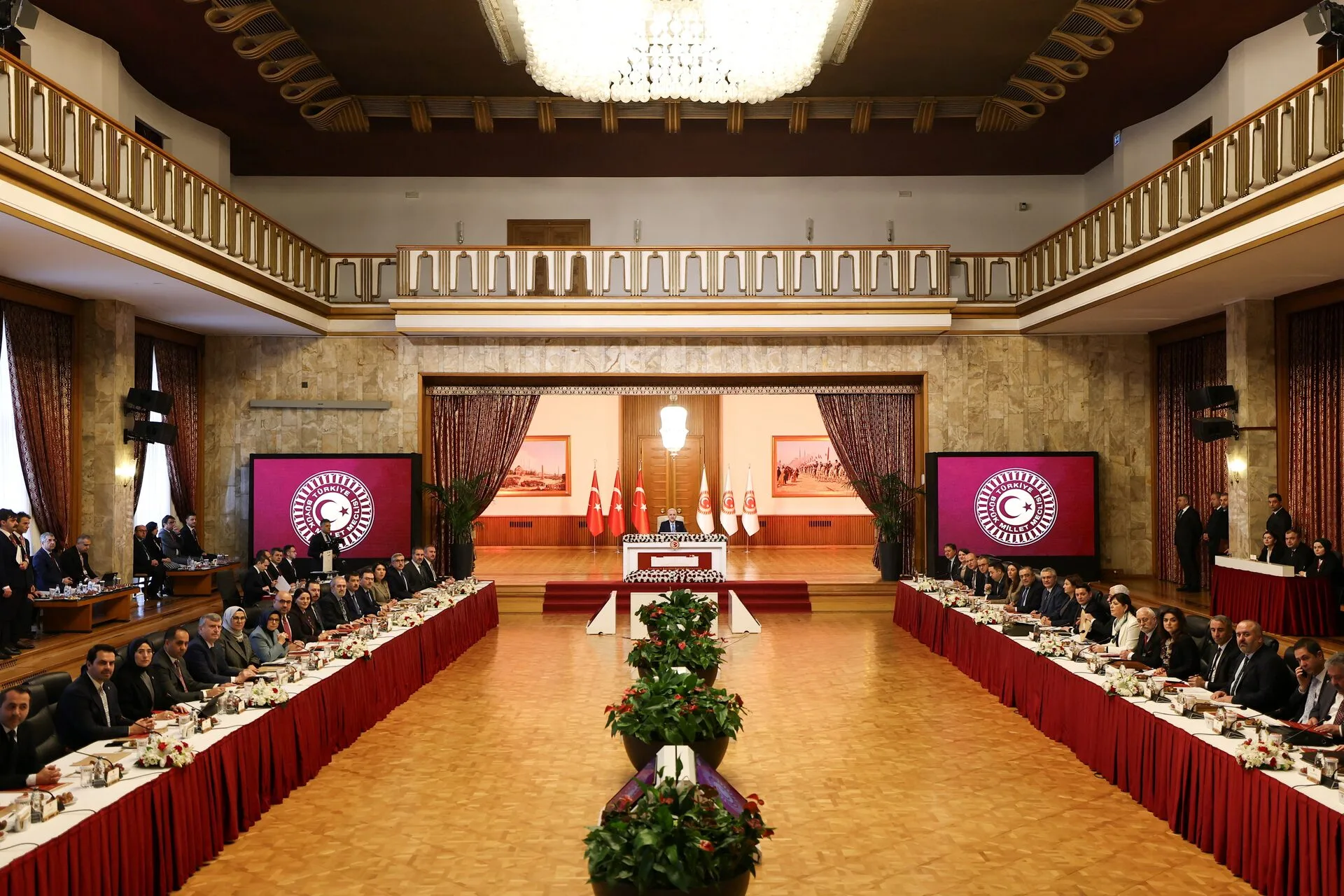
After that, the file moved to the Turkish parliament, which formed a special committee in August 2025, then approved in February 2026 a report recommending legal measures to reintegrate those who reject violence, expand freedom of expression, review the use of anti-terror laws, and end the practice of appointing trustees in place of elected mayors in Kurdish areas.
But the report tied any legal steps to the state’s verification that the group had actually surrendered its weapons and dissolved itself, while avoiding any proposal for a general amnesty.
In parallel, Ankara discussed a special legal formula allowing civilians and fighters from northern Iraq to return after individual screening. Reuters reported that the plan could begin with the return of around 1,000 civilians and non-combatants, followed by about 8,000 fighters after vetting, while disagreement persists over the fate of senior and mid-level leaders.
Where did the path toward a solution stumble?
The stumbling block centers on the question of sequencing, as Ankara considers the symbolic burning insufficient, and demands that the group hand over all its weapons and vacate its remaining hideouts in northern Iraq, specifically in the Hakurk and Gara areas, before the government proceeds with any legislative reform.
Türkiye says security verification is necessary to ensure there is no return to taking up arms. By contrast, PKK leaders believe the group has complied with the ceasefire and dissolved itself, but it will not hand over its full stockpile of weapons until it obtains a legal framework guaranteeing the rights of its fighters and protecting them from prosecution.
Why did the Iran war complicate the path to a solution?
The American website Al-Monitor reported that thousands of Kurdish fighters in Iraq and Iran had been preparing to exploit the US-Israeli war on Tehran to carry out cross-border attacks with Israeli backing, raising Ankara’s concerns as it fears growing cross-border Kurdish ambitions.
And Ankara believes the war makes any cross-border Kurdish activity more dangerous, and therefore insists on full disarmament and verification. Meanwhile, the group’s leaders use the Iran war to justify keeping their weapons, reinforcing Ankara’s doubts about the seriousness of any final renunciation of them.
How did the SDF’s retreat change the calculations?
The Damascus-SDF agreement announced in January 2026 was a turning point in northeastern Syria, as it stipulates the integration of the militia’s fighters into the Syrian army, police, and state institutions, and the handover of its administration and oil and gas fields to the government.
Turkish President Recep Tayyip Erdoğan described the agreement as a positive step that eases pressure on the peace process, but he stressed that the SDF must be dissolved along with the PKK, as Ankara sees it as an extension of the group.
By contrast, PKK leaders and leaders of the pro-Kurdish Peoples’ Equality and Democracy Party (DEM) believe that the SDF’s retreat or integration into Damascus does not mean abandoning their demands in Türkiye.
Some of them fear that the Syrian agreement could become a model for surrendering weapons and influence in exchange for political promises that may not be fulfilled, and warn that the difficulties in implementing the Damascus agreement—where clashes broke out in Aleppo after the announcement—show the fragility of any settlement without guarantees, in their view.
What are the PKK’s demands?
The PKK and Kurdish parties close to the process tie the final surrender of weapons to a package of demands that goes beyond the security file to broader political and legal issues.
From Ankara’s perspective, the problem is that expanding this package before disarmament is complete could turn the process from dismantling an armed organization into negotiations under the pressure of weapons.
First, the PKK and Kurdish parties close to the process are raising the demand that returnees not be prosecuted collectively. But the formula Ankara is discussing is not based on a general amnesty; rather, it is a limited and conditional legal path: the return of civilians and fighters from northern Iraq after individual screening, excluding those accused by the state of involvement in major crimes or leaders whose cases may be handled through separate arrangements.
Second, they reject sending party leaders into exile, and demand the establishment of a communication channel with Öcalan, who is imprisoned in Turkish jails, and an improvement in his prison conditions.
Third, they speak of reviewing anti-terror laws, clarifying the definition of the term, and expanding freedom of expression and protest, as recommended by the parliamentary committee’s report.
Fourth, they stress linguistic and cultural rights, including adopting the Kurdish language in education and administration, as well as the issue of some municipalities where the government appointed trustees after their former mayors were found to have ties to terrorism.
Why does Ankara reject a general amnesty?
The dispute over amnesty reflects the sensitivity of the Turkish scene, as the parliamentary committee’s report recommended reintegrating individuals who reject violence without issuing a comprehensive amnesty, in order to avoid suggesting impunity.
Nevertheless, a leaked draft law points to phased individual reintegration, with the first phase allowing the return of around 1,000 civilians, followed by about 8,000 fighters after verification, with the possibility of sending some leaders to other countries.
This law emphasizes conditional release and individual assessment, and does not include prisoners accused in other cases such as the Fethullah Gülen movement.
By contrast, PKK leaders and Kurdish parties are pressing for broader legal protection for returnees, but Ankara fears that such protection could turn into a disguised political amnesty before dismantlement is complete.
What is Abdullah Öcalan’s role now?
Öcalan was a decisive factor in pushing the PKK to announce that it would abandon weapons, after he called for disarmament and the dissolution of the organization in February 2025.
But his expected role in the implementation phase is disputed, as Bahçeli has proposed creating an “Office for Politicization and Peace” in which Öcalan would be given an official role, and DEM leaders see that as a guarantee for implementing the agreement.
By contrast, the government has remained silent on the idea. Erdoğan says the process is proceeding according to plan, but he has not announced any change in Öcalan’s status, while some nationalists fear that giving the Kurdish leader an official role could anger voters.
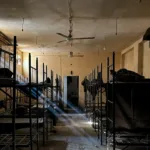
Öcalan himself remains in prison under strict restrictions and is allowed visits only at widely spaced intervals, raising questions about how far he can manage the details of disarmament.
Can parliament regulate the agreement?
Parliament is the track through which Ankara wants to regulate any transition from weapons to politics. The report that was approved in February 2026 recommends amending anti-terror laws, expanding freedoms, and reintegrating fighters, but it has not become binding law.
The biggest obstacle lies in the absence of consensus within the ruling alliance, in addition to pressure from nationalist parties that fear any legislation could be interpreted as a concession.
As for the DEM Party, it is trying to expand the process from dismantling the PKK to a broader political and rights-based agenda that includes municipalities, prisoners, and cultural rights.
Although the draft “Opportunity Law” opens the door to reintegrating fighters, its implementation is subject to internal balances and could face objections from the nationalist opposition.