



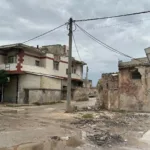









After the fall of Bashar al-Assad’s regime, the return of displaced Syrians and refugees to their homes has become more than a journey back to shattered cities. It has turned into a daily test of survival against something invisible: landmines, improvised explosive devices, and unexploded ordnance hidden beneath rubble, in fields, along access roads, and even near water sources.
As more than one million refugees and internally displaced people began returning to their towns and villages in early 2025, they discovered that the road home was booby-trapped with unexploded munitions and landmines planted during 14 years of war.
Number of Mines and Areas of Contamination
Landmine and unexploded ordnance contamination in Syria extends across vast areas of cities, villages, roads, and agricultural land.
UNICEF warns that more than 300,000 landmines remain scattered across the country, while five million children live in contaminated areas turning every step into a potentially fatal risk.
The Syrian Arab Red Crescent confirms that at least 200 villages in northern Syria are mined, in addition to more than 260 documented minefields marked with warning signs. In the countryside of Aleppo alone, around 65 minefields have been identified, each containing between 2,500 and 3,000 mines.
Maps prepared by the Syrian Civil Defense (White Helmets) indicate 117 minefields and contaminated sites across Aleppo, Idlib, Hama, Latakia, and Deir ez-Zor in the weeks immediately following the regime’s collapse.
Virtually no region has been spared. Idlib, Aleppo, Hama, Homs, Damascus and its countryside, as well as Raqqa and Deir ez-Zor in the east, are among the most heavily affected areas.
Forces loyal to the former regime, along with their Russian and Iranian allies, extensively used anti-personnel and anti-tank mines around military positions, shifting front lines, and strategic roads.
They also deployed cluster munitions and aerial ordnance in Homs, Hama, Aleppo, and the outskirts of Damascus, leaving behind dangerous unexploded remnants. As they withdrew, they planted improvised explosives and booby traps inside homes, vehicles, and public buildings.
The Islamic State group relied heavily on planting improvised explosive devices in abandoned houses, roads, and infrastructure in Raqqa and Deir ez-Zor.
According to a 2025 report by the Mines Advisory Group (MAG), more than four million square meters of contaminated land were identified in northeastern Syria alone, including destroyed homes, farmland, grazing areas, roads, and water sources.
An Associated Press report noted that landmines hampered efforts to combat wildfires in Latakia in 2025, forcing firefighters to work cautiously amid explosives. The United Nations estimates that up to 300,000 landmines could detonate as a result of fires.
Risks and Civilian Casualties
The most immediate consequence of this contamination has been a sharp rise in civilian casualties. UNICEF documented 422,000 incidents involving unexploded ordnance over nine years across 14 Syrian governorates, half of which resulted in child casualties.
A report by Human Rights Watch states that landmine and unexploded ordnance contamination has killed at least 249 people including 60 children and injured 379 others since December 8, 2024.
New data from the International NGO Safety Organisation (INSO) indicates that more than 1,600 people have been killed or injured by landmines since that date, including over 600 children. The actual toll is believed to be higher due to underreporting.
In another report, MAG warned that Syria could record the highest number of landmine casualties worldwide in 2025.
INSO has also recorded a marked rise in casualties following the return of displaced populations, as civilians move through contaminated areas. The HALO Trust reports an average of 160 injuries or deaths per month caused by landmines and unexploded ordnance, noting that more than 1,000 civilians have been killed or injured since Assad’s fall, one-third of them children.
According to the Syrian Civil Defense, 35 civilians including eight children were killed and 54 injured between late November 2024 and early January 2025 due to landmines and remnants of war. In the first month alone after the regime’s collapse, around 80 civilians were killed, among them 12 children.
These incidents spared no age group. In December 2024 alone, 116 children were killed or injured by unexploded ordnance nearly four children every day.
UNICEF reports show that unexploded ordnance has become the leading cause of child deaths and injuries in Syria. In the first half of 2025, 369 people were killed in explosive-related incidents, according to United Nations data.
In field hospitals in Idlib, doctors treat an average of four landmine victims daily. One medical center has treated nearly 500 injured people since December 2024, 60 of whom died; 68 of the injured were children.
In Deir ez-Zor, at least one hospital emergency room receives a mine-related injury every day, with children accounting for 45 percent of recorded cases.
Demining Efforts and Ongoing Challenges
Following the regime’s collapse, the new Syrian administration led by Ahmad al-Sharaa began forming new institutions but has yet to establish a civilian national authority to manage mine clearance.
Human Rights Watch has urged the government to create a national body in cooperation with the United Nations Mine Action Service (UNMAS), develop policies and standards, and revise registration agreements to enable humanitarian organizations to operate.
Media reports indicate that engineering units affiliated with the new Internal Security Forces began clearing mines from major roads in eastern Aleppo in February 2026, though these efforts remain limited.
The primary burden of mine clearance falls on international and local organizations. The HALO Trust has operated in Syria since 2017 and currently employs 250 staff across wide areas from southern Idlib to northern Aleppo. The organization focuses on small-scale controlled detonations and reports that cluster munitions are the most commonly encountered explosives, alongside shells, rockets, and grenades.
HALO also operates an emergency hotline, which has seen a tenfold increase in calls since the regime’s fall. However, with only 120 staff in northwest Syria, the organization acknowledges it requires approximately $40 million annually to launch comprehensive operations.
MAG has removed around 81,000 explosive items in Syria over the past decade and employs more than 220 local staff. It also works closely with the Syrian Civil Defense, signing a memorandum of understanding in 2025 to expand survey and awareness activities.
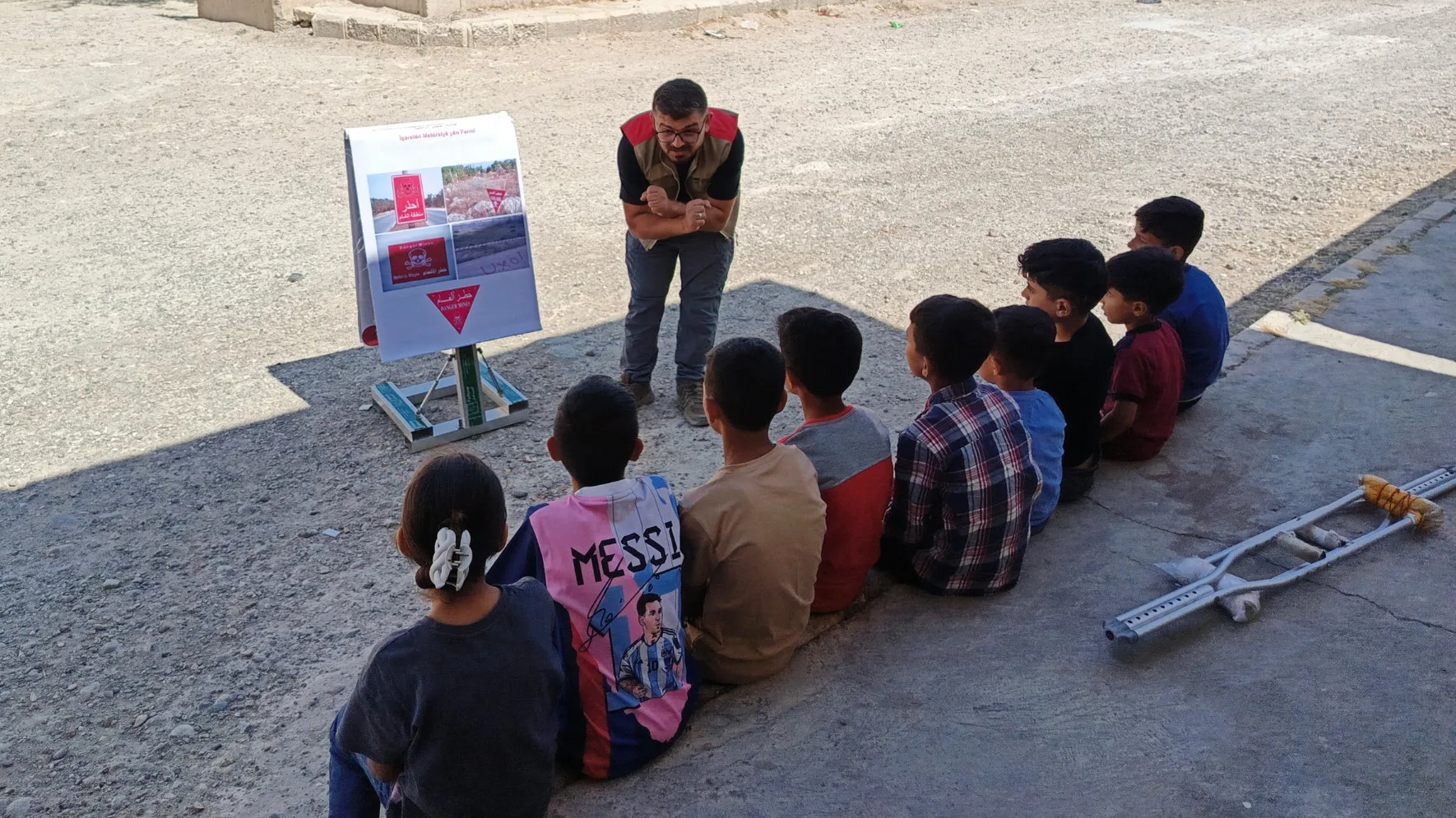
MAG places strong emphasis on mine-risk education, delivering sessions to children and adults in schools, homes, and community centers, while also using digital campaigns to reach refugees and displaced people.
The International Committee of the Red Cross provides care for the wounded and has called for increased funding, estimating that decontamination will cost tens of millions of dollars. Other organizations, such as Doctors Without Borders, provide treatment to victims and report that children make up roughly 45 percent of cases in Deir ez-Zor.
Despite these efforts, mine-clearance operations face severe challenges:
-
Funding shortages: Cuts by donor states have already led to the closure of mine-action programs elsewhere and threaten to do the same in Syria.
-
Lack of accurate maps: The absence of reliable minefield maps increases risk and prolongs operations, particularly with crude improvised devices that are difficult to detect.
-
Security risks: Ongoing instability and the presence of highly volatile munitions, such as cluster bombs, endanger clearance teams.
-
Geographic and climatic obstacles: Mountainous terrain, sandstorms, and wildfires hinder progress and may trigger detonations.
-
Limited local expertise and technology: A shortage of trained local deminers and limited use of modern tools such as drones and advanced sensors especially in vast rural areas.
Ultimately, the legacy of landmines and unexploded ordnance threatens Syria’s post-war future, while delays in response leave millions of Syrians trapped by this deadly inheritance.


