








New York City, perched on the eastern seaboard of the United States, holds powerful symbolic weight not only economically, as the home of Wall Street, but also for its unique social fabric and outsize influence on the country’s political and cultural life.
With 3.1 million immigrants among its 8 million residents, roughly 70% of whom are people of color, New York is a global capital of art, media, diplomacy, and human rights. It mirrors the nation’s progressive ambitions and often acts as a bellwether for American public sentiment, both domestically and abroad.
Today, however, New York’s most globally significant distinction may be that it hosts the second-largest urban Jewish population in the world, after Israel. Around 1.3 million Jews live across the city’s boroughs, alongside an estimated one million Muslims. This interfaith coexistence, long complex, has grown increasingly tense since October 7, 2023.
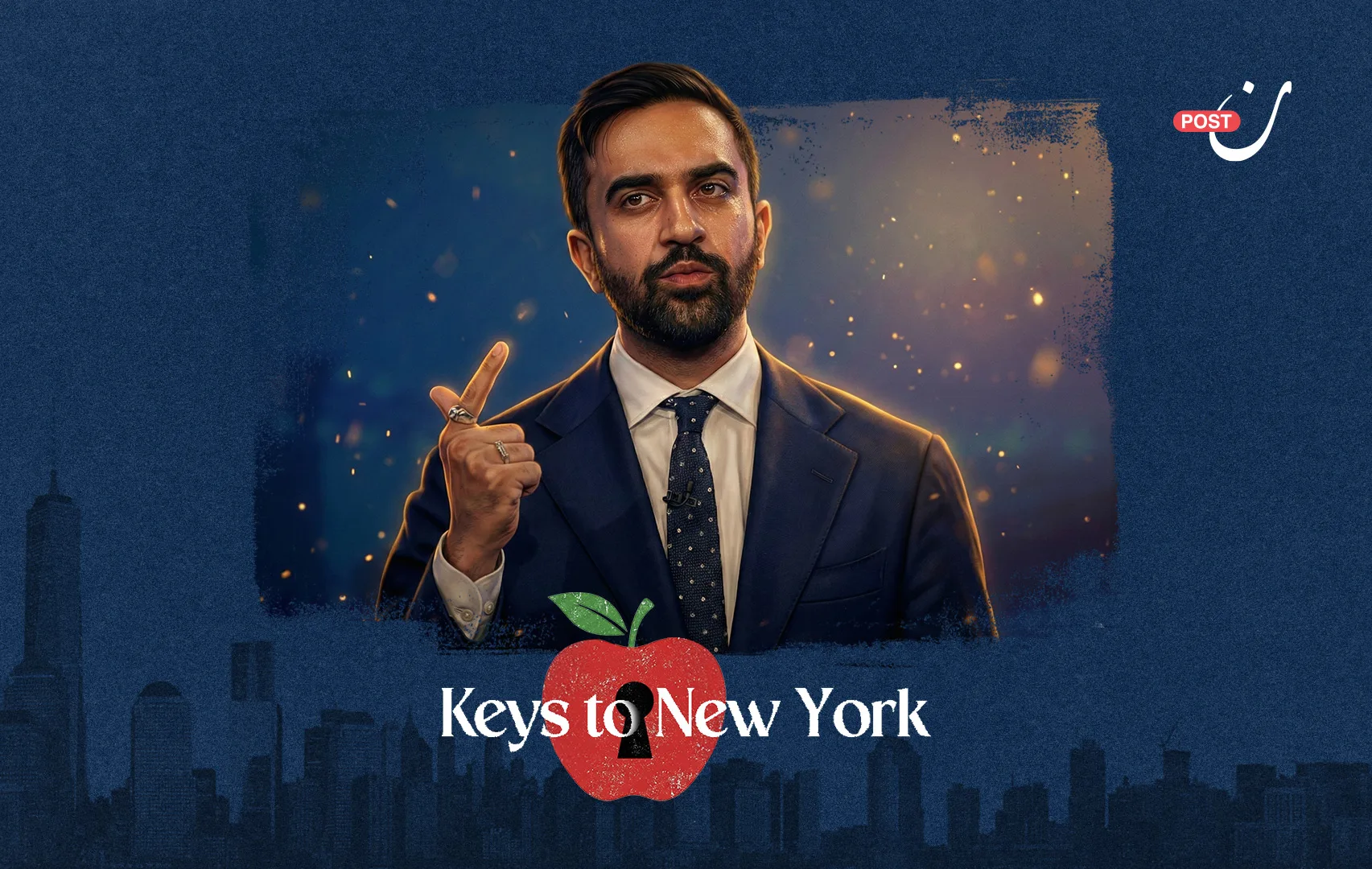
In this volatile atmosphere, some 33% of the city’s Jewish voters cast their ballots for Zohran Mamdani, a Muslim candidate openly critical of Israel. The outcome stunned many. It pointed to a deepening rupture within a community often portrayed by pro-Israel lobby groups as a unified political force one wielding the wealth, cohesion, and influence to set a pro-Israel agenda across American political institutions.
So what is Mamdani’s relationship with New York’s Jewish community? What does his election signify in a city where Jewish identity and Israeli politics have long been intertwined? Does this vote signal a lasting rift among Jews catalyzed by the events of October 7, or is it merely a fleeting convergence of political interests? This article seeks to answer those questions.
Breaking with Voting Traditions
Zohran Mamdani, the 34-year-old socialist, ran a fiery campaign rooted in the Democratic Socialists of America (DSA) agenda. He took aim at the city’s capitalist elite, called for defunding the police, and proposed sharp tax increases. Yet perhaps his most formidable hurdle was the Jewish electorate, divided between concerns over his outspoken anti-Israel views and apprehensions about his Muslim identity.
Their anxieties were amplified by a vast media campaign led by mainstream Zionist institutions in the US.
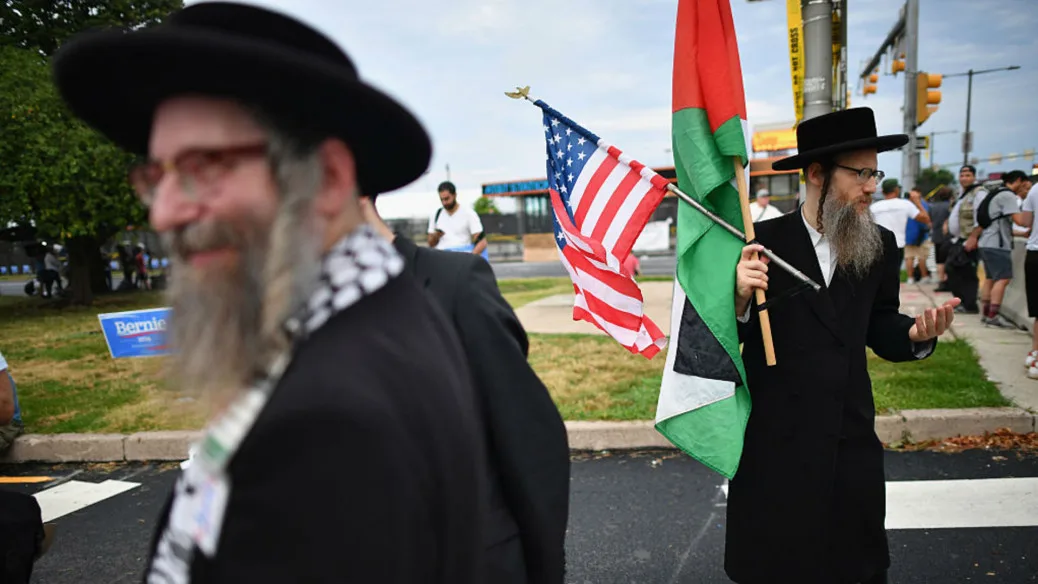
Jewish voters in New York representing approximately 15% of the electorate traditionally fall into ideological camps: secular, unaffiliated, Reform, Conservative, and Orthodox. According to Jewish News Syndicate (JNS), 47% are secular or unaffiliated, 20% Reform, 15% Conservative, and 19% Orthodox. The ultra-Orthodox, concentrated in Brooklyn, lean heavily Republican, while moderate Orthodox Jews tend to swing based on the candidate.
These patterns, however, offered little guidance in the 2025 Democratic primary. For the first time, a Muslim, pro-Palestinian candidate was not only viable but victorious. Mamdani defeated Independent candidate Andrew Cuomo in a decisive primary win, despite early polling suggesting Jewish voters would gravitate toward the staunchly pro-Israel former governor.
Observers argue that Mamdani did not so much create a new fracture in the Jewish community as expose one already in place. Age and ideology emerged as the defining divides. Jewish voters known for their “liberal Zionism” appeared particularly conflicted.
Samuel Abrahams of the American Enterprise Institute notes that Mamdani’s victory revealed a profound moral split within a community long mythologized as monolithic. In neighborhoods like Park Slope, Prospect Heights, and Clinton Hill, 90% of Jewish voters supported Mamdani. These voters skew young, highly educated, and left-leaning. Social media plays a central role in shaping their worldviews, and they tend to distance themselves from Orthodox institutions and establishment Zionism.
Meanwhile, across the East River in Boro Park, Crown Heights, and Manhattan’s Upper East Side, support for Cuomo reached 80%. These communities are wealthier, more conservative, highly religious, and deeply connected to Israel. Their political and communal identities are shaped by traditional Jewish institutions.
Generational divides are also crucial. A 2024 Pew Research Center survey found that only 45% of American Jews under 35 view Israel positively, compared to 64% of those over 50. A Washington Post poll reported that just 38% of Jews aged 18 to 34 feel connected to Israel, far below the national average of 56%.
Religious affiliation plays a key role, too. In Pew’s 2021 study, 82% of Orthodox Jews expressed strong ties to Israel, compared to less than 60% of Reform and unaffiliated Jews. Yet, even among those who feel a connection, Israel is rarely a top priority.
A 2024 Democratic Jewish Polling survey found that only 9% of American Jews named Israel among their top two political concerns. Issues like democracy (44%) and abortion rights (28%) ranked far higher.
Fearmongering and Pushback
In the run-up to the election, pro-Israel rabbis and media outlets launched a fear-based campaign against Mamdani. Rabbi Elliot Cosgrove of Park East Synagogue led the charge, supported by over a thousand Zionist rabbis nationwide. Mainstream outlets including The Wall Street Journal, The New York Times, and The Washington Post amplified the alarmist rhetoric.
The campaign conflated criticism of Israeli policies occupation, apartheid, and the war on Gaza with antisemitism. Cosgrove urged Jewish voters to prioritize religious and Zionist identity over everyday concerns that might lead them to back Mamdani.
Andrew Cuomo, eager to exploit the tension, pledged allegiance to Israel and labeled Mamdani a “terror sympathizer.” His inflammatory rhetoric was echoed by figures like Donald Trump, Republican Rep. Elise Stefanik, and Democratic Rep. Laura Gillen, who branded Mamdani a “jihadist” and Hamas supporter. Cuomo ultimately secured 63% of the Jewish vote, while Mamdani captured 33%.
Yet progressive Jews fought back. Groups like Bend the Arc: Jewish Action and Jewish Voice for Peace endorsed Mamdani as a defender of pluralism and justice. Thousands of rabbis signed letters supporting him, condemning Zionist fear tactics, and asserting that real Jewish values align with compassion and equity not Israeli nationalism.
Even within the insular Hasidic Satmar community, two factions chose not to endorse any candidate. One circulated a letter highlighting Mamdani’s pledges to protect religious schools, subsidize childcare, and ensure affordable housing. This ambiguity led to widespread abstention among the 80,000-strong Haredi voting bloc.
Bridge-Building Amid Hostility
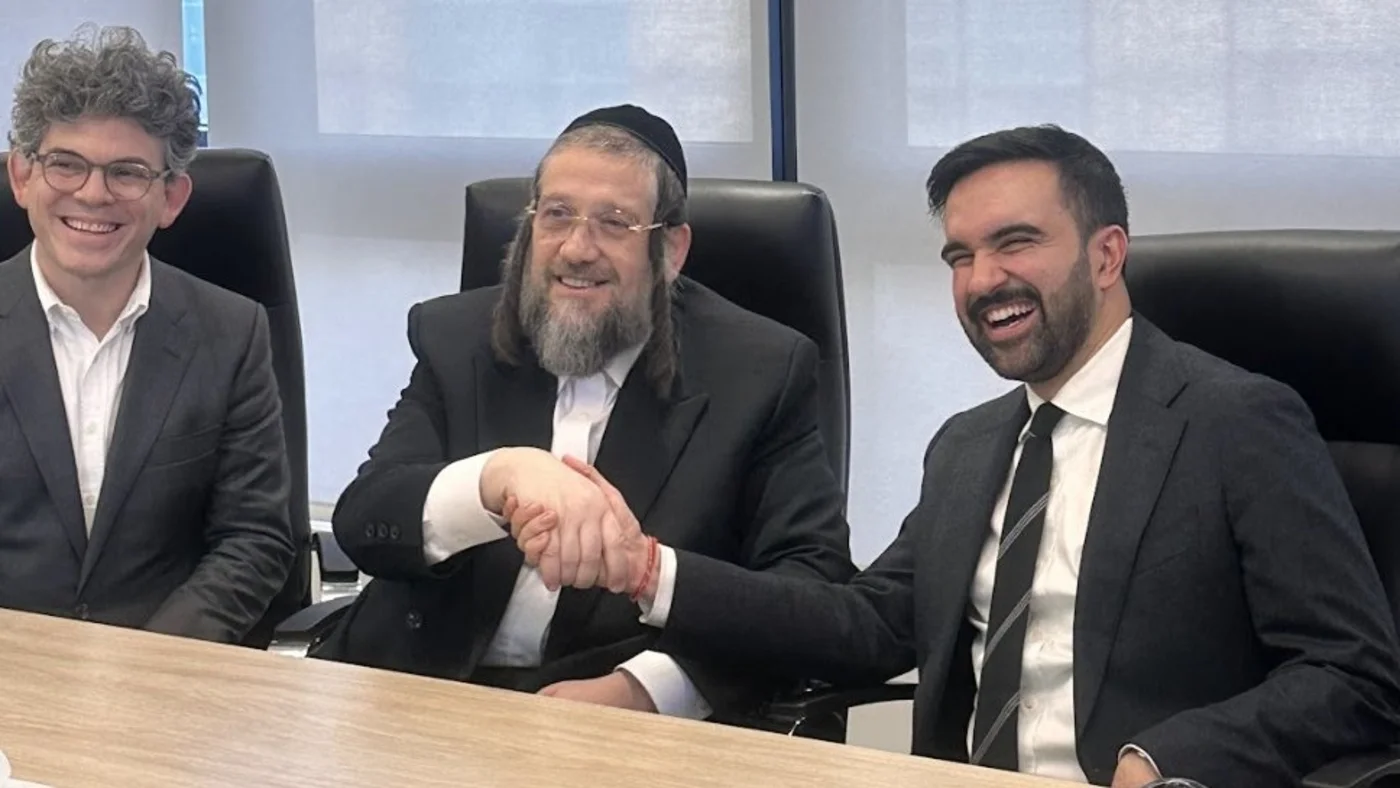
Despite fierce opposition, Mamdani continued outreach to Jewish communities. He attended holiday services at major synagogues, met with Hasidic leaders in Williamsburg, addressed congregants at Beth Elohim, and published an op-ed in Hasidic Yiddish outlining his anti-hate initiatives.
He also met publicly and privately with establishment Zionist rabbis including Rabbi Cosgrove, Rabbi Emil Hirsch of Stephen Wise Free Synagogue, and Rabbi Joseph Potasnik, head of the New York Board of Rabbis.
Mamdani assured them of his commitment to combating antisemitism and increasing police protection for synagogues, while maintaining his support for Palestinian rights and the Boycott, Divestment, Sanctions (BDS) movement.
With measured language, Mamdani pledged to avoid slogans like “Death to the IDF” and “Globalize the Intifada,” which Jewish leaders might interpret as incitement. He retained Police Commissioner Jessica Tisch as a gesture of continuity and trust.
Charismatic and tactful, Mamdani forged rare alliances across Jewish factions from progressive activists to liberal Zionists. He earned backing from prominent figures like former Manhattan Borough President Ruth Messinger and City Comptroller Brad Lander. Even Rep. Jerry Nadler endorsed him, while Senate Majority Leader Chuck Schumer remained neutral, signaling the tensions between political loyalty and religious ideology.
An Old Fracture Reopened
Felicia Wisdem of the Jewish New York Agenda argues that Israel’s war on Gaza and the collapse of the two-state solution forced New York’s Jews to confront a painful contradiction. For many, voting for Mamdani would once have been unthinkable. Now, even some anti-Netanyahu Zionists backed him.
In a tongue-in-cheek CNN op-ed titled “I Hate My Options: How Mamdani’s Run Split New York Jews,” voters described their inner turmoil: Should they focus on city policy or fear retribution from a pro-BDS mayor? Most chose Cuomo—the “lesser evil”—despite acknowledging their dislike for him.
The pro-Israel stance remains dominant among New York Jews, but its foundations are beginning to shift. Many who voted for Cuomo kept their preferences private, wary of the cognitive dissonance between a faltering Zionist dream and a city increasingly critical of Israel.
Among the broader Jewish population, the rift is more visible. The image of a “unified Jewish vote” is dissolving. Following Mamdani’s victory, progressive synagogues issued a public letter invoking the Prophet Jeremiah’s call to “seek the peace of the city,” urging cooperation with the new mayor.
Bend the Arc framed the post-election moment as a chance to rebuild fractured communal ties. It called for a new coalition that transcends generational and ideological divides and redefines what it means to be Jewish in New York today.
The notion of a single, monolithic Jewish voting bloc that once crowned kings and toppled opponents is now a thing of the past.