







هذا التقرير متاح أيضًا بـ العربية
The United Arab Emirates offers a case worth examining: a small state that has transformed itself from an economic hub into a regional diplomatic force and now seeks international influence. It aims to gain control over levers of power within international and UN institutions and organisations, and over the decisions and laws they produce, using that influence to its diplomatic, economic and cultural advantage.
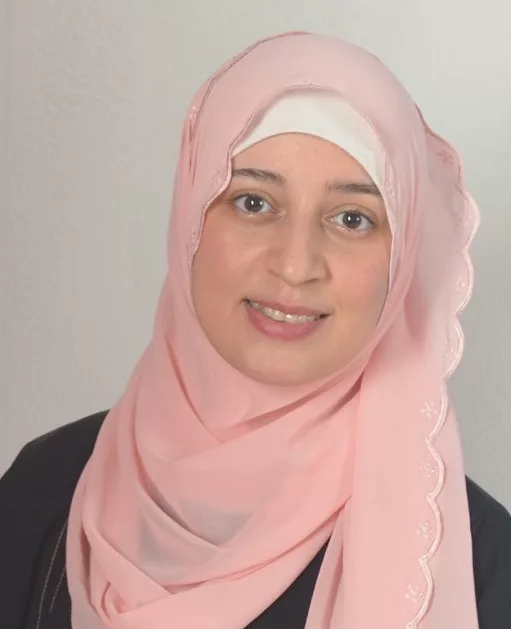
Lana Nusseibeh’s nomination for UN secretary-general has recently brought this ambition back into focus. But it spans two decades of domestic and external changes that prompted the UAE to reassess the limits of its economic power and strengthen its image and networks. Its first major achievement came in 2009, when it won the bid to host the permanent headquarters of the International Renewable Energy Agency.
That victory marked an important shift from competing to host international business events and meetings to hosting multilateral intergovernmental institutions. Further achievements followed in aviation, tourism, security and climate, extending its reach beyond its borders and steadily strengthening its presence in international institutions.
Behind the scenes, this presence served its economic, political and regional interests, giving it greater flexibility, more alliances and more opportunities. These ranged from connecting markets for exports of services and capital to laundering the UAE’s image and its record on freedom of expression and human rights, while promoting it as a luxurious eastern oasis where East and West meet without restrictions and enjoy numerous benefits and privileges.
What has Abu Dhabi’s ascent involved, and how has its international and UN presence become important to protecting its interests and promoting its narrative? Does Nusseibeh’s candidacy test her independence while offering an opportunity to scrutinise the domestic and regional human rights issues associated with her?
An ascent beyond its borders
The UAE’s rise dates back to the early years of the new millennium, specifically the DP World ports crisis of 2006. DP World, owned by the government of Dubai, acquired the British shipping company P&O in a deal worth about $6.8 billion. The acquisition included the management of operations at six US ports, including New York, New Jersey and Philadelphia.
The agreement prompted widespread objections from Republicans and Democrats in the US Congress over the security risks of assigning port operations to a company owned by an Arab state. The company was forced to announce that it would transfer its US operations to an American entity, and subsequently withdrew from them.
The backlash also exposed the limits of Emirati economic power when it collided with US domestic politics and stereotypes about Arab states. The UAE then began a concerted effort to expand its influence among US political, media and academic elites and build relationships with think tanks and policymaking institutions. This enabled it to exert considerable political pressure in Washington and made it the West’s “Little Sparta.”

According to a Financial Times report published in August 2026, the DP World crisis prompted Sheikh Mohammed bin Zayed, then crown prince, to convene an emergency meeting with his advisers. This launched a strategy to correct the fundamental misunderstanding of the UAE, using money and extensive engagement in international organisations as tools of influence.
This was the starting point for its engagement with international organisations. It joined the International Civil Aviation Organization, ICAO, in 2007, then began hosting international organisations and institutions, starting with the International Renewable Energy Agency in 2009. The agency officially began operating in 2011. Its presence connected the UAE’s clean energy sector to the global energy sector and presented the country as a centre for international dialogue on energy, despite its economy’s dependence on oil.
The UAE then launched the World Government Summit in Dubai in 2013, establishing an annual platform that brings together government officials, experts, companies and international institutions to discuss the future of government, innovation and public policy. That year, it also began the first of two consecutive terms on the UN Human Rights Council, spanning 2013 to 2018, before returning for the 2022–2024 term.
While the summit provided an Emirati platform for shaping discussions on government policy, Human Rights Council membership enabled the UAE to participate actively in one of the UN’s main institutions.
Hosting the permanent headquarters of the International Renewable Energy Agency enabled Abu Dhabi to host the 24th World Energy Congress in 2019. More than 18,000 people from 146 countries participated, according to the World Energy Council. The event gave the UAE’s oil expertise and energy investments a prominent place in discussions on the energy transition and the future of energy markets, including renewable energy.
In mid-2021, the UN General Assembly elected the UAE as a non-permanent member of the Security Council for the second time in its history. In October that year, it was also elected to the Human Rights Council for the 2022–2024 term. During its Security Council membership, the UAE held the council’s presidency and participated in drafting resolutions and other outcomes concerning international peace and security.
In 2023, it hosted the UN climate conference, followed in 2024 by the 13th WTO Ministerial Conference. Ministers and representatives of member states attended the latter, chaired by UAE Minister of State for Foreign Trade Thani bin Ahmed Al Zeyoudi.
Over these years, Emirati representation in international organisations expanded through the election of its envoys to several bodies. In 2021, Ahmed Nasser Al Raisi was elected president of the International Criminal Police Organization, Interpol, at its session in Istanbul. After three rounds of voting, he secured 68.9 per cent of member states’ votes in the final round.
Al Raisi had served as inspector general at the UAE Ministry of Interior since 2015 and had previously represented the country on Interpol’s executive committee. His election drew criticism from rights organisations, including Human Rights Watch, over allegations concerning torture and mistreatment in the UAE, including complaints filed against him in France and Türkiye.
The election also raised questions about the UAE’s financial contributions to Interpol and whether funding was being used to strengthen its influence. Those questions and criticisms gradually faded, while Al Raisi continued in his new role.
By contrast, Razan Al Mubarak’s election as president of the International Union for Conservation of Nature drew praise in the Arab world and internationally. Elected by 1,400 members in 2021, she became the first Arab woman to hold the post. She brought experience from previous environmental roles in the UAE, including leading the Environment Agency Abu Dhabi and helping establish the Mohamed bin Zayed Species Conservation Fund. In mid-October 2025, she was re-elected for a second four-year term during the World Conservation Congress hosted by Abu Dhabi.
During the same period, Abdulla Al Mandous was elected president of the World Meteorological Organization, WMO, at the 19th World Meteorological Congress in Geneva, winning 98 votes. The organisation’s importance lies in its role as a specialised UN agency coordinating international cooperation on weather, climate, water and atmospheric observation.
Al Mandous had served as director of the UAE’s National Center of Meteorology and as the country’s permanent representative to the WMO since 2008. He became the first meteorological expert from a Gulf Cooperation Council state to lead the organisation.
In late May 2025, UN Tourism’s executive council selected Emirati Shaikha Nasser Al Nowais as its nominee for secretary-general for the 2026–2029 term. She was scheduled to begin her term at the start of January 2026, becoming the first woman to lead the organisation since its founding 50 years earlier and the first Emirati to hold the post.
The position’s importance stems from UN Tourism’s role as a specialised UN agency promoting responsible, sustainable and universally accessible tourism, and developing policy and international cooperation in the sector.
Together, these different forms of ascent — vertically through leadership posts and horizontally through participation and hosting — reveal the political mobilisation, funding and sustained government backing supporting the UAE’s rise. Some researchers interpret this as “niche diplomacy,” through which small states amplify their influence by concentrating foreign policy resources in specific fields, combining international services with efforts to strengthen their status and geopolitical interests.
A study by Mordechai Chaziza and Carmela Lutmar, published through the University of Haifa, interprets the UAE’s specialisation in aid, renewable energy, health, culture and sport as a means of converting sectoral achievements into symbolic capital and international legitimacy while diverting attention from the nature of domestic rule. It describes this effort as “authoritarian strategies of a middle power using symbolic capital to enhance legitimacy.”
The practical gains appear in different sectors where domestic investment intersects with investment in international posts. In aviation, the UAE states in its 2025 ICAO candidacy document that its airports received 147 million passengers in 2024 and that it has 189 air services agreements. It presents its training and technical assistance, its experts’ participation in ICAO groups and its chairing of the Aviation Security Committee as reasons to support its advancement.
In tourism, the Emirates News Agency reported that travel and tourism contributed 257.3 billion dirhams, or 13 per cent of the economy. Al Nowais drew on these figures as she advanced towards the post, alongside her experience as corporate vice president for owner relationship management at Rotana. Her candidacy was thus linked to commercial expertise in a sector in which the state invests heavily.
Al Mandous’s experience and specialism, meanwhile, connect him to the UAE’s longstanding interest in water and cloud seeding. He has been the country’s permanent representative to the WMO since 2008 and headed its Regional Association for Asia between 2017 and 2023. The UAE launched an award in cooperation with the organisation in 2005, followed by an international research programme in 2015. This demonstrates that his ascent to the presidency rested on accumulated scientific and administrative experience, backed by diplomatic campaigns.

In the environment and green finance, an international presence allows policy to be connected with investment. During COP28, the UAE launched the Altérra fund to invest in climate and clean energy projects, with a funding commitment of $30 billion and an ambition to attract investment that would bring total financing to $250 billion by 2030. This brings it closer to the circles in which priorities are set and relationships built, while strengthening its image as a partner capable of delivering.
When funding and office converge
Despite the national benefits of this rise, the UAE’s ascent raises questions that became particularly clear after it gained the Interpol presidency. In March 2017, the UAE announced a contribution of €50 million to the Interpol Foundation for a Safer World, supporting seven projects covering areas including counterterrorism, cybercrime, narcotics and the protection of vulnerable groups.
Four years later, Al Raisi, inspector general at the UAE Ministry of Interior, was elected president of the organisation. Human Rights Watch and the Gulf Centre for Human Rights had objected on the grounds of his position in the security apparatus and the record of abuses attributed to him. Both organisations also cited a report by David Calvert-Smith, former director of public prosecutions in England and Wales, alleging that the UAE had sought to exert improper influence through funding and other mechanisms.
This establishes the existence of substantial funding and serious human rights objections, but does not prove that the election result was bought. Interpol said Al Raisi won 68.9 per cent of the vote in the third round. Even so, media reports said the UAE had sought to influence the organisation and that red notices had been used to pursue individuals over bounced cheques.
In tourism, the controversy took a different form. At the last minute, in May 2025, the Georgian government withdrew its support for Zurab Pololikashvili’s re-nomination and announced its backing for the Emirati candidate. Reports published by the specialist outlet eTurboNews, which tracks financial and political influence in elections, pointed to an Emirati role in the reversal. The government described claims that it had withdrawn its support because of a particular candidate as “speculation.”
At the climate conference, conflicting roles and interests came under scrutiny when the UAE appointed the head of its national oil company, ADNOC, as conference president. This prompted Western organisations and media outlets to reveal meetings on the conference sidelines between the president and governments that included commercial requests relating to ADNOC. Guardian reports also said ADNOC had been able to read conference emails.
Global Witness said the presidency enabled ADNOC to strike about $100 billion in oil, gas and petrochemical deals during 2023. ADNOC rejected the findings as misleading and inaccurate and denied that Al Jaber had used the presidency to conclude deals. The conference presidency also rejected the accusations.
The secretary-generalship: Arab issues redefine the post
On 21 October 2026, the UAE entered the race for UN secretary-general by nominating Minister of State Lana Nusseibeh, its former envoy to the organisation from 2013 to 2024. Six days later, she participated in a public dialogue with member states, moving from representing Abu Dhabi’s policies to trying to persuade the world that she was fit to lead an institution meant to be independent of governments.
The nomination came late in a contest that had failed to produce consensus among the Security Council’s permanent members. From the Emirati perspective, however, it rested on a broader process of building qualifications through international organisations. It also brought the UAE’s rhetoric on peace and human rights under scrutiny, particularly over Sudan and Gaza.
The UAE faces official Sudanese accusations of supporting the Rapid Support Forces. It denies them, stresses its humanitarian and diplomatic role and seeks to present itself as a neutral mediator. In a Foreign Ministry statement in November 2025, Nusseibeh condemned abuses by both sides in the war and called for an unconditional ceasefire, humanitarian access and a transition to civilian rule.
Those objections followed her into the UN race. On 27 October, Reuters reported criticism on human rights grounds of her defence of her country’s policies. Yet during the dialogue with member states, Nusseibeh said Sudan would be her top priority if elected. She also expressed support for the work of fact-finding missions, accountability and transitional justice, setting out pledges against which her performance could be tested.
View this post on Instagram
The dismissal of Sudan’s case before the International Court of Justice does not settle this controversy. In May 2025, the court ruled that it lacked jurisdiction because of the UAE’s reservation to Article IX of the Genocide Convention and struck the case from its docket. It made clear that the absence of jurisdiction prevented it from taking a position on the substance of the allegations. This also points to the constraints Sudan faces in seeking to sue the UAE and subject it to international justice.
Sudan is not the only obstacle facing Nusseibeh. In Libya, UN findings on the consequences of the intervention attributed to the UAE are more direct and precise. A 2019 panel of experts report concluded that the UAE had repeatedly violated the arms embargo in support of Khalifa Hifter’s forces. This is a documented finding by a monitoring body, but it does not carry the weight of a judicial ruling assigning responsibility for specific crimes.
The UAE’s domestic human rights record also remains an issue alongside its interventions in Arab states. Rights organisations described the mass trial that resulted in convictions in 2024 as unfair, keeping demands for guarantees of improvement in that record alive during Nusseibeh’s candidacy.
Israel, selectivity and the limits of influence
It would be inaccurate to characterise Nusseibeh’s stance towards Israel as uniformly reassuring. Yedioth Ahronoth described a range extending from ties with Jewish organisations and support for the Abraham Accords process to accusations that Israel was bombing Gaza indiscriminately, alongside calls for a ceasefire and opposition to the annexation of land in the West Bank.
In practice, from the earliest days after 7 October, Nusseibeh moved quickly to condemn Hamas explicitly and deny that it represented the Palestinians. At a Security Council session on 16 October 2023, she described the group’s attack as unjustified and said that “Hamas does not represent the Palestinian people or the residents of Gaza”.
She drew the same distinction a year later, though with greater balance, stressing that the Palestinian victims were civilians rather than Hamas fighters. In the same speech, she condemned the Israeli attacks as disproportionate, harsh and inhumane, and called for an end to the siege.
Explaining the UAE’s strategy of expanding its presence through international organisations, Barbara Leaf, the former ambassador to the United Arab Emirates, said: “They have always looked at Israel and Singapore as models: small countries, small populations, with global influence, politically and diplomatically and economically and militarily and so forth.”
This supports the view that the UAE is pursuing a greater international presence and that money, influence and alliance-building can produce both useful contributions and national influence.
Today, the secretary-generalship presents the foremost challenge. It places different legal and political constraints on its holder, barring them from taking instructions from their government and obliging them to respect the demands of other states. It is a demanding test for a model that seeks to turn every foothold into an opportunity to advance an interest. Can its candidate turn her experience and networks into independent international service, including by subjecting Abu Dhabi’s policies to the same standards it asks others to respect?
