











هذا التقرير متاح أيضًا بـ العربية
An internal US government document has revealed that Washington is set to lift some sanctions on Eritrea. Observers see the move as directly linked to the Red Sea’s growing strategic importance and the rapid geopolitical developments following the US-Israeli war on Iran, tensions over the closure of the Strait of Hormuz, and their regional and global repercussions.
The document, a memo sent by the US State Department to several countries, indicated that sanctions would be lifted this May, without specifying when an official announcement would be made. Speaking positively about US-Eritrean relations, a department spokesperson said: “The Trump administration aims to promote peace and prosperity in the Horn of Africa and looks forward to strengthening the United States’ relationship with the people and government of the State of Eritrea.”
According to The Wall Street Journal, Massad Boulos, the US president’s adviser for Arab and African affairs, secretly met Eritrean President Isaias Afwerki in Cairo late last year to discuss easing US sanctions and launching high-level talks to reset relations.
Alongside the war in Iran and the closure of the Strait of Hormuz, many analysts link the move to Washington’s attempt to reshape the balance of power in the Red Sea and the Horn of Africa. It comes amid rising regional tensions, the continuing war in Sudan, security tensions in Somalia, and growing fears of another confrontation between Ethiopia and Eritrea, as well as renewed internal conflict in Ethiopia’s Tigray and Amhara regions.
A strategic location left untapped
Eritrea is now central to the reshaping of the geopolitical landscape in the Horn of Africa and the Red Sea. After decades of isolation during which it failed to capitalise on its location, its geography has once again become a factor in international strategic calculations. Understanding the current shift in US policy towards Asmara requires examining two factors: the geography that gave it unmatched importance, and the sanctions that shaped its relationship with the West.
Eritrea lies in the north-eastern corner of the Horn of Africa, with the Red Sea to its east. Its coastline stretches about 1,200 kilometres, making it one of the longest along this vital waterway. The Dahlak archipelago, comprising more than 350 islands, extends its maritime reach beyond its land borders and strengthens its control over shipping lanes.
The East African country borders Sudan to the west and north-west, its bitter rival Ethiopia to the south, and Djibouti to the south-east. Across the Red Sea lie Saudi Arabia and Yemen. This places Eritrea at the intersection of three geopolitical spheres: the Horn of Africa, the Arab world and the Red Sea security system.
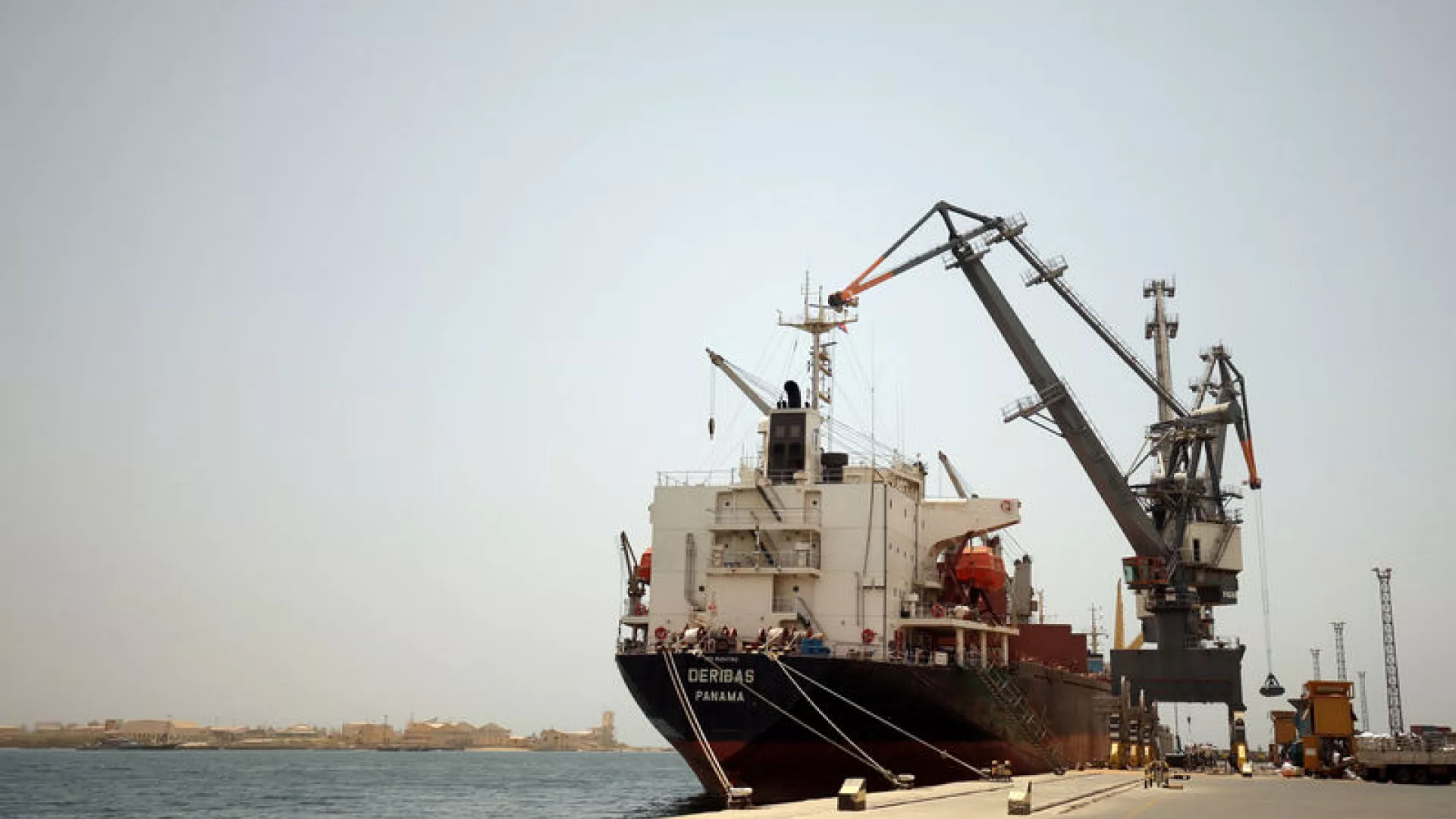
A crane unloads containers from a ship in the port city of Massawa, Eritrea, July 22, 2018. Reuters/Tiksa NegeriThe most important feature of Eritrea’s location is its proximity to Bab al-Mandab, the vital strait linking the Red Sea to the Gulf of Aden and the Indian Ocean, and separating the Horn of Africa from the Arabian Peninsula. The Eritrean port of Assab lies only about 60 kilometres from the strait, making Asmara indispensable to any maritime security arrangement.
This location is all the more important because the Suez-Red Sea corridor usually carries about 12 to 15 per cent of global trade and around 30 per cent of container traffic. Bab al-Mandab is also a major energy chokepoint linking the Red Sea to the Gulf of Aden.
Along its 1,200-kilometre coastline, Eritrea has two natural deep-water ports capable of accommodating large ships: Massawa and Assab. Near the historic port of Massawa, in the Ras Medr area, companions of the Prophet Muhammad, peace be upon him, landed during their first migration to the Kingdom of Aksum in Abyssinia. Massawa was Ethiopia’s main maritime outlet before Eritrea’s independence in 1993. Assab’s deep waters, meanwhile, have attracted the attention of regional and international military powers.
Eritrea also faces Saudi Arabia across the Red Sea, placing it at the heart of regional security considerations, from confronting Houthi threats to broader competition for influence among major regional powers.
Yet despite these advantages, Eritrea has been treated internationally as a marginal state since gaining independence from Ethiopia on 24 May 1993, because of the rigid dictatorial regime that has ruled it ever since. The regime adopted controversial domestic and foreign policies based on the doctrine of “self-reliance,” alongside repeated conflicts and tensions with its neighbours and most regional and international powers.
Those policies brought successive rounds of Western and US sanctions. Although UN sanctions were later lifted entirely, Eritrea’s strategic location has once again brought it to the forefront of regional and international calculations amid rapid changes in the Red Sea and the wider world.
From friendship to entrenched hostility
Strikingly, the early years of Afwerki’s rule were marked by close friendship and high-level coordination between Asmara and Washington, particularly from 1993 to 2000. Under former President Bill Clinton, Washington pursued a strategy of supporting what he described as the “new generation of African leaders”: Isaias Afwerki of Eritrea, Meles Zenawi of Ethiopia, Yoweri Museveni of Uganda, Paul Kagame of Rwanda and Laurent Kabila of the Democratic Republic of Congo. The aim was to isolate and contain Omar al-Bashir’s regime in Sudan, which Washington then classified as a “rogue state” and a major threat to its interests in the Horn of Africa.
Ambassador Susan Rice shaped that policy. She served as director of African affairs at the US National Security Council from 1995 to 1997, before becoming assistant secretary of state for African affairs from 1997 to 2001, during Clinton’s second term.
Rice, who wielded considerable influence in both Clinton administrations, saw these leaders as a vanguard capable of securing regional stability and countering the Khartoum regime’s Islamist expansion without direct US military intervention. She therefore strongly supported arming Sudan’s neighbours and forming what became known as the “frontline states”. This involved coordinating logistical, military and material support for John Garang’s Sudan People’s Liberation Movement across the Eritrean, Ethiopian and Ugandan borders, with the aim of toppling Bashir’s regime or at least weakening it.
The period saw high-level US-Eritrean coordination, including Washington’s support for Asmara’s efforts to topple Bashir’s regime in the mid-1990s, after Asmara accused him of backing Eritrean Islamist opposition figures.
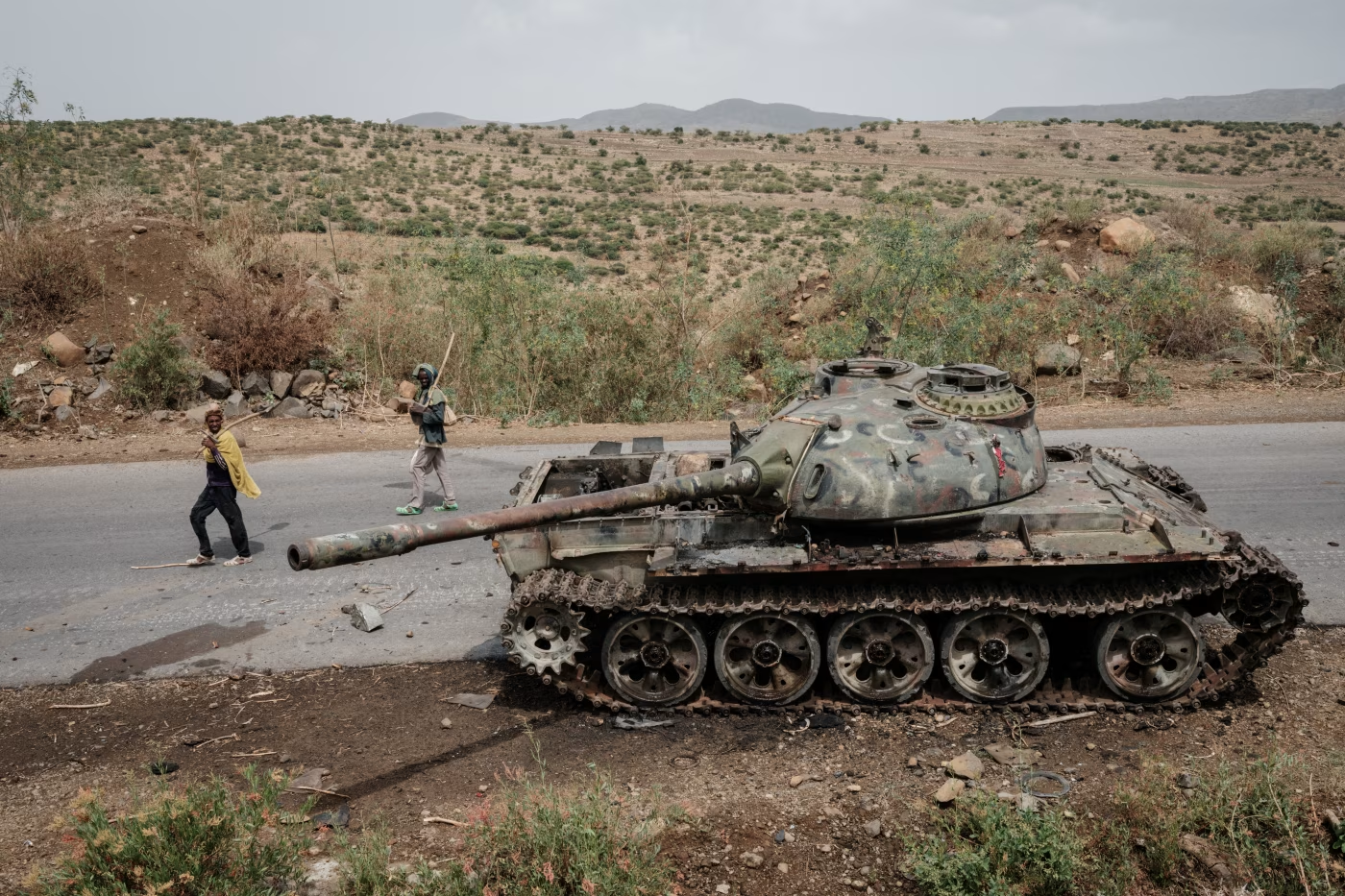
But Rice’s broader strategy soon failed. The US-backed regional alliance unravelled abruptly in 1998, when a fierce and unexpected border war between Eritrea and Ethiopia shattered its unity. Another direct military confrontation broke out among Washington’s allies, as Uganda and Rwanda fought Kabila’s regime in Congo.
That same year, Bashir’s regime changed course. Having expelled Osama bin Laden in 1996, Khartoum began secret intelligence cooperation with Washington after the 1998 bombings of the US embassies in Nairobi and Dar es Salaam.
The period also brought a significant thaw in Sudan’s relations with Ethiopia. Meles Zenawi had been a close ally of Bashir, who had helped him come to power. Their relations deteriorated in 1995 after the attempted assassination of former Egyptian President Mohamed Hosni Mubarak, in which figures and elements linked to the Sudanese government were implicated.
The 1998–2000 Ethiopian-Eritrean border war and its aftermath also marked a new phase in relations between Washington and Asmara. Eritrea accused the US of siding with Addis Ababa, ending their honeymoon and ushering in a period of cooling relations followed by deterioration.
The first US sanctions on Eritrea came in September 2005, when then Secretary of State Condoleezza Rice banned defence exports and commercial defence services covered by the Arms Export Control Act (AECA). This was a direct punitive response to the regime’s violations of religious freedom. The US ban remained in force independently and without interruption, including after the comprehensive UN embargo was imposed in 2009 and lifted in 2018.
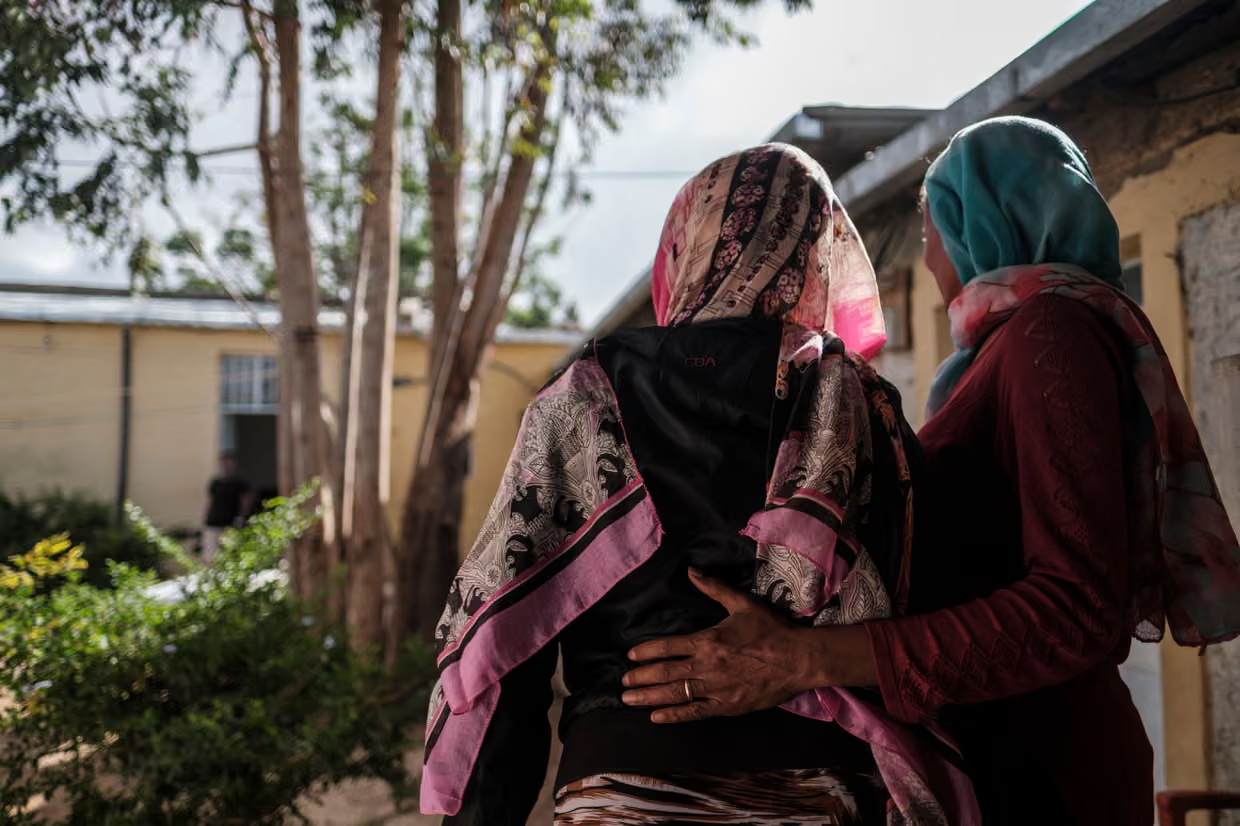
In 2011, further sanctions were imposed under the US State Department’s annual Trafficking in Persons report, following Washington’s criticism of Eritrea’s compulsory, open-ended national service programme, which US law considers a form of ongoing forced labour.
International sanctions had been imposed in December 2009, when the UN Security Council adopted Resolution 1907, introducing an arms embargo and economic sanctions. The US was the principal force behind the resolution, which rested on two main accusations. The first concerned Eritrea’s support for Somalia’s al-Shabab movement, which Washington considers a direct terrorist threat. The Eritrean regime was accused of using Somalia to put pressure on Ethiopia, a US ally in the war on terror. The second concerned the 2008 border dispute with Djibouti, during which Eritrea refused to comply with UN requests to withdraw its forces.
The sanctions Washington is believed to be preparing to lift, according to the document recently reviewed by Reuters, were imposed on Asmara by former President Joe Biden’s administration in 2021. They target Eritrea’s ruling party, its military and several senior officials. They were imposed over the role of Eritrean forces fighting alongside the Ethiopian army in the Tigray war, during which both were accused of horrific atrocities against civilians in the region.
On 17 November 2021, Biden signed Executive Order 14046, under which sanctions were imposed on Eritrea for its role in the Tigray war. The conflict broke out in November 2020 between Ethiopia’s federal government and the Tigray People’s Liberation Front and involved extensive Eritrean military intervention.
For many months, Eritrea denied deploying forces in Tigray to support Ethiopian troops. It later acknowledged their presence but denied responsibility for any abuses. Eritrean forces committed violations documented by the UN and human rights organisations, including massacres, widespread sexual violence, kidnappings and looting during the 2020–2022 conflict.
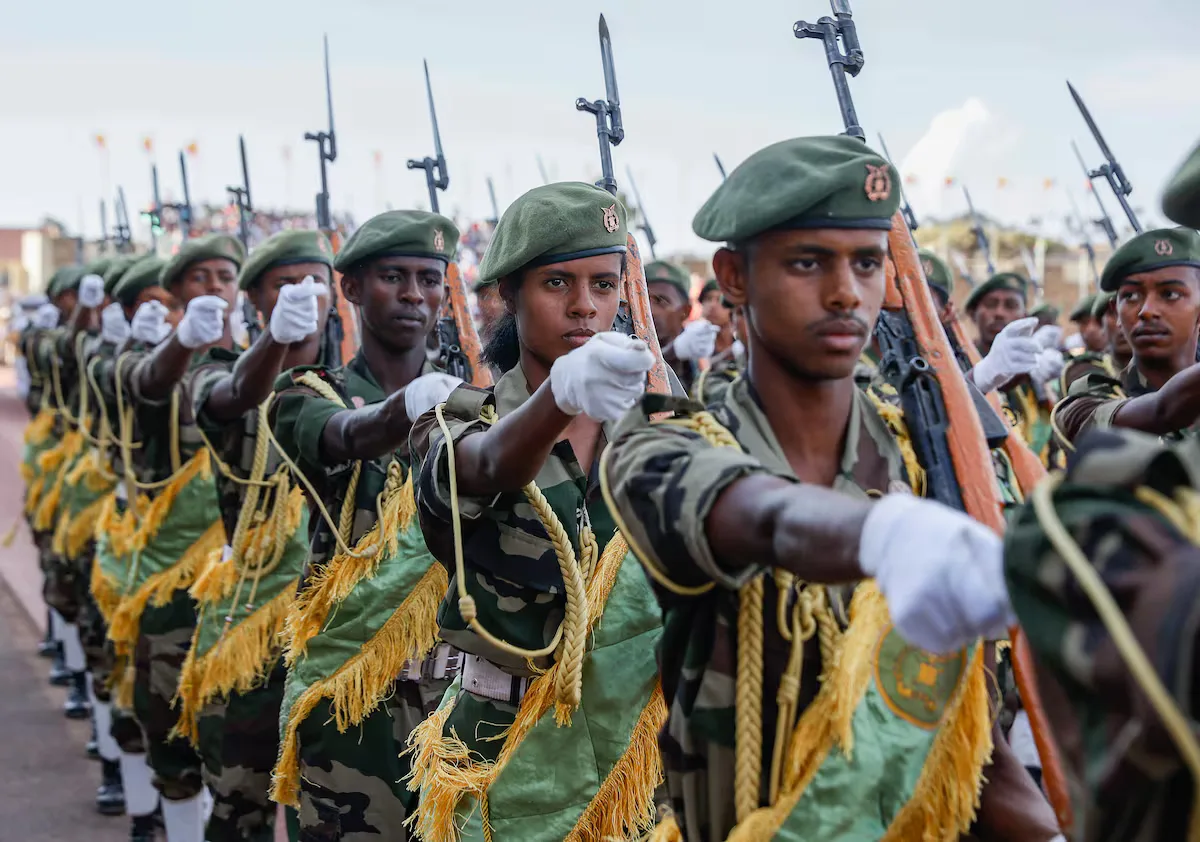
The sanctions covered the Eritrean Defense Forces, the Eritrean military, the People’s Front for Democracy and Justice (PFDJ), Eritrea’s ruling party, and the Hdri Trust Fund, the party’s economic arm.
They also targeted senior figures, including Abraha Kassa, head of Eritrea’s National Security Office, or intelligence service, and Hagos Ghebrehiwet, the ruling party’s top economic adviser. Separately, Eritrean army chief of staff General Filipos Woldeyohannes was sanctioned in August 2021 under the Global Magnitsky Act for serious human rights abuses.
These sanctions were more symbolic and political than an effective means of economic pressure. Eritrea has a closed economy, and Freedom House has described its system as a military authoritarian one akin to North Korea’s. The country was not sufficiently integrated into the Western financial system for asset freezes or transaction bans to have a significant effect. The targeted entities and individuals — the military, the ruling party and the intelligence chief — also hold no significant assets in the West and have limited dealings with the international banking system.
The same applies to General Filipos Woldeyohannes, intelligence chief Abraha Kassa and the ruling party’s economic adviser. They have no foreign assets and little interest in travelling abroad except to Eritrea’s allies, such as Russia or China.
The sanctions mattered, however, because they carried a political stigma, placing Eritrea among the “pariah states,” and creating a diplomatic obstacle that blocked normalisation and the appointment of a US ambassador. They also encouraged other countries to avoid dealings with Asmara and provided a legal tool that could hinder future military or intelligence cooperation.
The anticipated shift
On 6 November 2024, immediately after Donald Trump’s US election victory was announced, Eritrean Information Minister Yemane Gebremeskel revealed in a post on X that Afwerki had sent a warm message of congratulations. Writing on behalf of Eritrea’s government and people, and in his own name, Afwerki congratulated President-elect Trump on his “historic return and election as the 47th president of the United States of America.”
The minister said Afwerki concluded by expressing hope that “Trump’s election will open a new chapter of fruitful and constructive cooperative relations between Eritrea and the United States.”
This may seem unusual for the leader of a country supposedly deeply at odds with Washington. It can perhaps be explained by similarities between the two men: both prefer to keep tight control over decision-making outside traditional institutional structures. Trump has also made no secret of his admiration for authoritarian leaders he describes as “strong,” including Egyptian President Abdel Fattah el-Sissi. The Wall Street Journal reported that, during the 2019 G7 summit in France, Trump called out loudly among US and Egyptian officials: “Where’s my favorite dictator?” He was referring to Sissi.
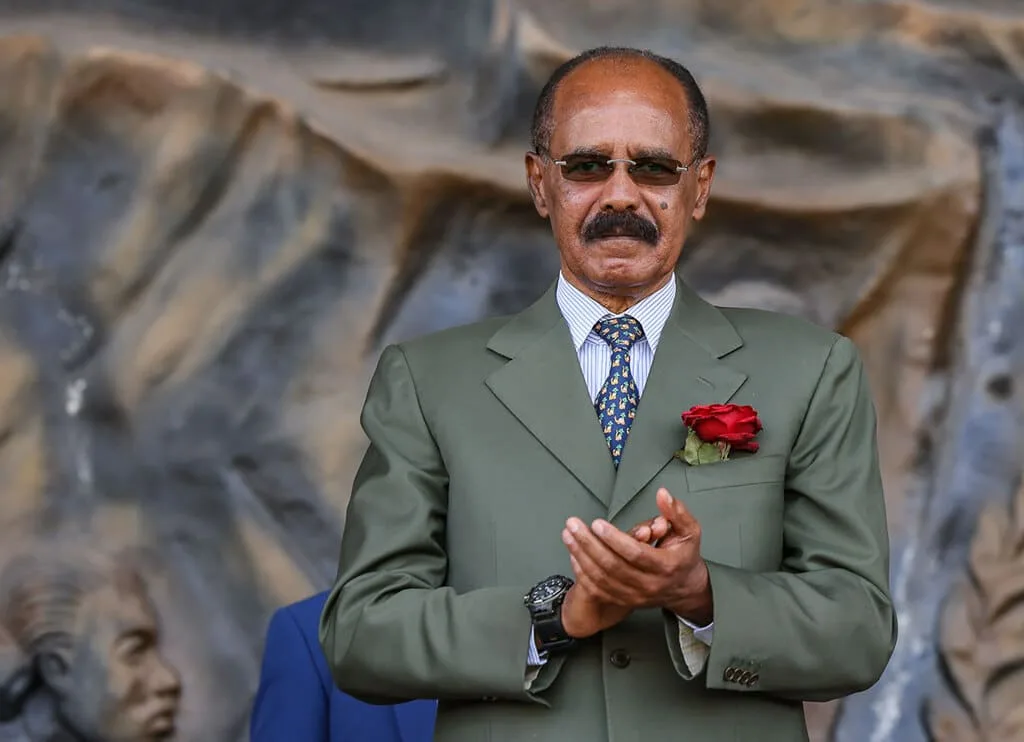
In another sign of Asmara’s readiness to engage with Washington under Trump, Afwerki reiterated his desire for partnerships with the US based on mutual respect and national sovereignty during a January 2026 interview with media outlets close to the regime. He called for Trump’s second term to be used to build “fruitful and stable” relations.
The potential rapprochement extends beyond the personal dimension of relations between Trump and Afwerki. It is also linked to broader geopolitical shifts. Recent developments have prompted the US administration to review its approach to Eritrea, amid discussion of possibly easing some sanctions. The shift reflects strategic calculations taking precedence over human rights and other political issues.
Foremost among these changes is the Red Sea’s return to the centre of international strategic calculations following the war with Iran and the closure of the Strait of Hormuz, alongside Houthi threats to shipping. Other factors include Washington’s need to address Ethiopian ambitions to secure access to a seaport by force, and the repositioning of US military forces from the Gulf towards the African coast.
Leaks indicated that Cairo acted as an intermediary between Washington and Asmara. The Wall Street Journal reported that Trump’s envoy for African affairs, Massad Boulos, secretly met Afwerki in Cairo late last year to discuss easing US sanctions and opening high-level talks to reset relations.
Winners and losers
The anticipated US decision to lift sanctions on Eritrea is more than a tactical realignment. It is a geopolitical development that redistributes gains and losses between two competing camps in the Horn of Africa and the Red Sea. Understanding its implications requires identifying those alliances. The losing camp comprises Ethiopia, the UAE, the Rapid Support Forces, Somaliland and Israel. The winning camp comprises Egypt, Eritrea, the Sudanese army, Saudi Arabia, Türkiye and Qatar.
Ethiopia appears to be the biggest loser from any US-Eritrean rapprochement, with losses on several levels. The first is the loss of its exclusive status as the “preferred partner.” For three decades, Ethiopia has been Washington’s most important regional ally in the Horn of Africa, relying on that status to justify much of its domestic and regional policy. Lifting sanctions on its historic rival changes the equation from “Washington with Ethiopia” to the more complex “Washington between Ethiopia and Eritrea,” a strategic shift that troubles Addis Ababa.
The second loss is the obstruction of Prime Minister Abiy Ahmed’s ambition to reach the sea. Abiy has repeatedly argued that landlocked Ethiopia has a “historic right” to access a seaport. Within Eritrea, these statements have been interpreted as possible groundwork for military action. The leaked US document sent Addis Ababa a clear message that Washington opposes any attempt to obtain a seaport by force. It also warned Ethiopia and Eritrea about the destabilising roles each plays in the other’s affairs. In practical terms, this US position puts any potential Ethiopian military option to seize Assab on hold.
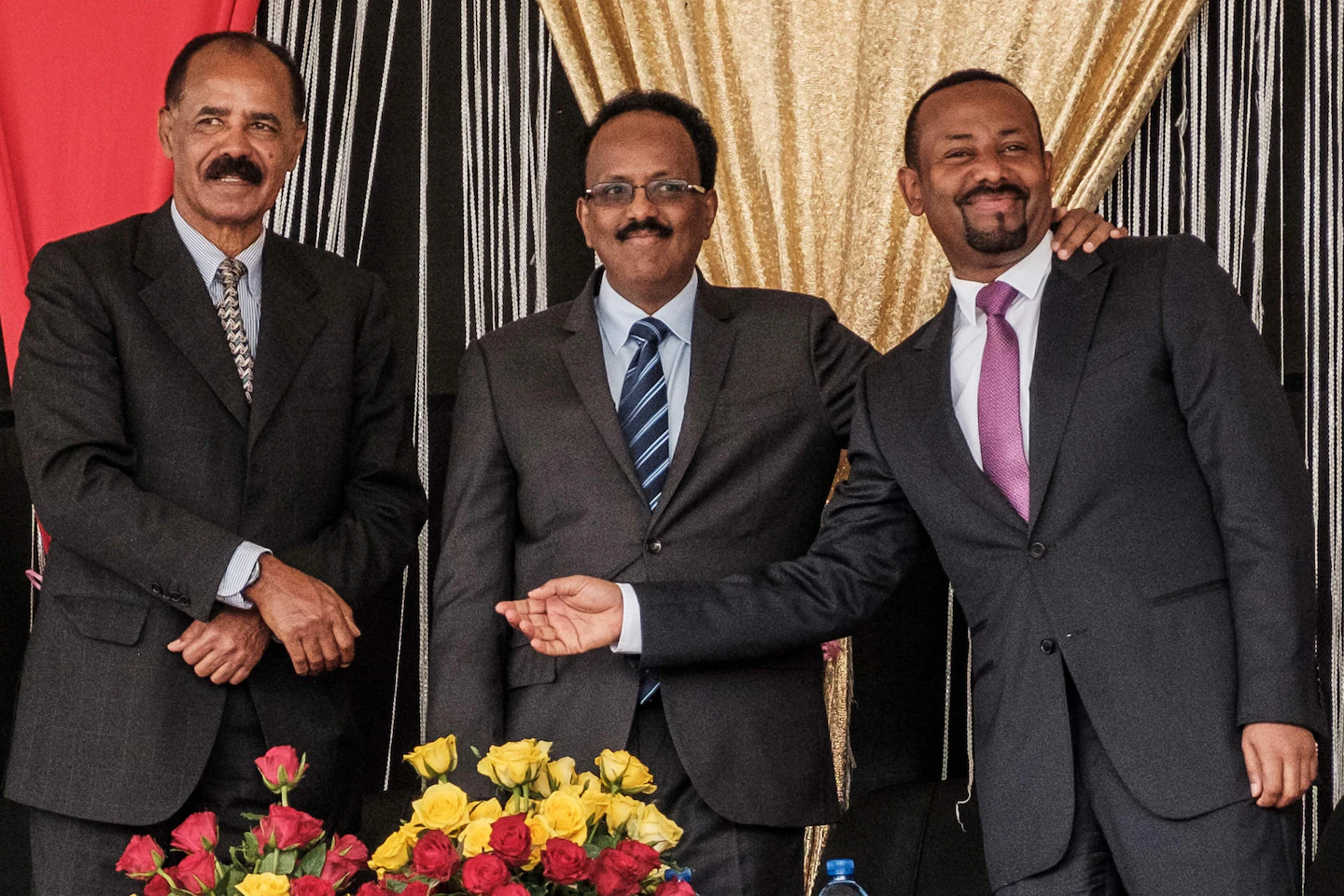
From left: Eritrean President Isaias Afwerki, Somali President Mohamed Abdullahi Mohamed, and Ethiopian Prime Minister Abiy Ahmed during a meeting held on Nov. 9, 2018, in Bahir Dar, Ethiopia. (Eduardo Soteras / AFP)The UAE and Somaliland are the next losers from sanctions relief for Eritrea. Over a decade, Abu Dhabi built a cohesive network of influence in the Horn of Africa and the Red Sea. It relied on Ethiopia as a strategic partner, the Rapid Support Forces militia in Sudan, and Somaliland through DP World’s investments in Berbera port. Israel was also part of this network, strengthening its relationship with Somaliland and showing openness to recognising it.
That entire network now appears to face a profound shake-up as Washington turns towards Asmara, possibly including US use of facilities built by the UAE itself. These include the Assab base, which Abu Dhabi operated during its “honeymoon” with Eritrea from 2015 to 2021. As Washington begins to engage with Asmara, the UAE faces a striking paradox: its new strategic competitor may be the US itself, which could benefit from infrastructure Abu Dhabi originally helped finance and build.
The UAE also invested politically, financially and militarily in Sudan’s Rapid Support Forces militia. Eritrea’s rehabilitation means, in practice, strengthening the position of the RSF’s rival, the Sudanese army, which Asmara backs. The stronger Eritrea’s regional position becomes, the stronger the Sudanese army’s hand and the less room there is for the Emirati project in Khartoum.
Abu Dhabi has also invested heavily in Somaliland through DP World and recently expanded the military base attached to Berbera port, seeking to bring in Israel and the US as partners in using it. Assab, however, has a geopolitical advantage that is hard to match: it lies only about 60 kilometres north of Bab al-Mandab, compared with more than 250 kilometres between Berbera and the strait.
This difference means a naval force stationed in Assab can intervene in Bab al-Mandab within hours rather than days, giving the port a clear tactical advantage in confronting Houthi threats or other hostile maritime threats in the Red Sea.
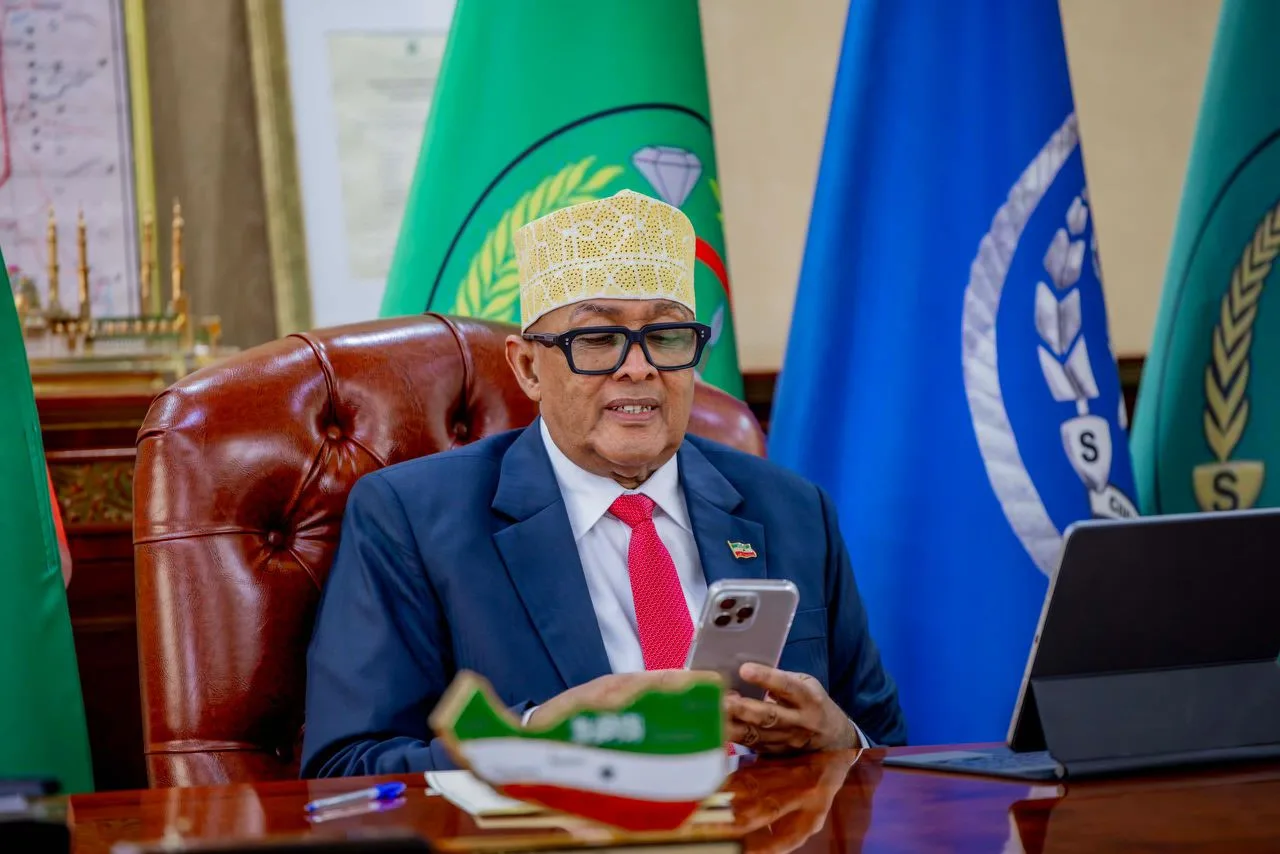
More importantly, closer US relations with Asmara do not require Washington to pursue diplomatic options that would bring it into conflict with the African Union and influential states such as Saudi Arabia and Egypt. Somaliland, backed by the UAE, is offering access to Berbera port in exchange for recognition of its independence — a politically and diplomatically costly option.
The US has no need to enter another confrontation with an influential continental organisation such as the African Union, or with allies such as Saudi Arabia and Egypt, both of which categorically reject recognition of Somaliland. Somalia’s federal government also refuses to accept any infringement of its sovereignty. Recognition would undoubtedly destroy its relations with Washington and affect US efforts to combat al-Shabab.
Assab, by contrast, offers a superior geopolitical location, just 60 kilometres from Bab al-Mandab compared with more than 250 kilometres for Berbera. It also has existing infrastructure and lies within an internationally recognised state, meaning there are no legal complications. The process is easier, too, requiring only a single executive order lifting sanctions and perhaps a few limited humanitarian concessions.
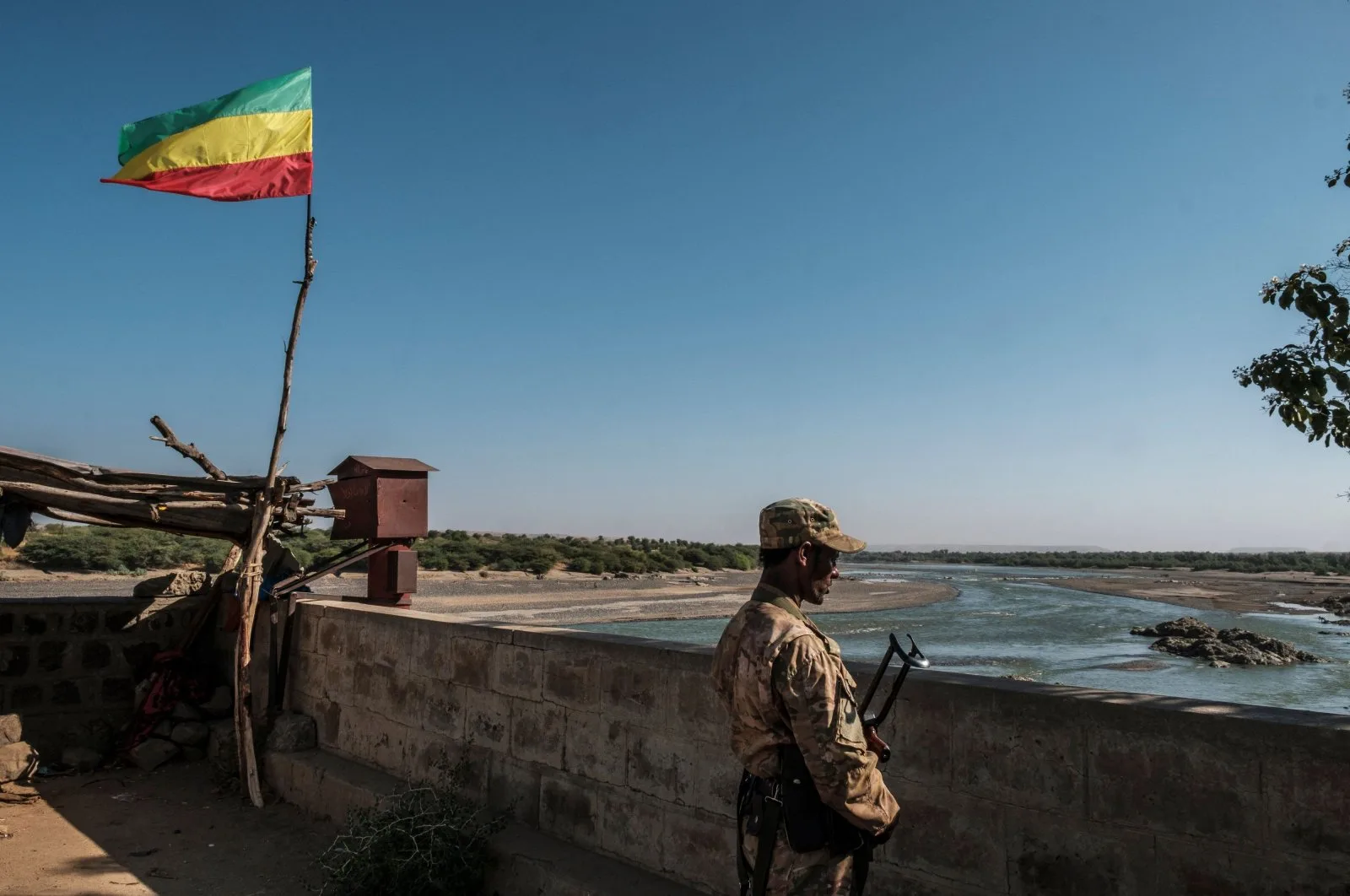
A member of the Amhara special forces keeps watch at the border crossing with Eritrea, where an old Ethiopian flag flies, in the city of Humera, Ethiopia, on Nov. 22, 2020. (AFP)On this basis, Washington’s decision to choose Assab over Berbera can be seen as undermining the UAE’s project in Somaliland, leaving Abu Dhabi unable to respond publicly, particularly given Afwerki’s repeated scathing criticism of the UAE. He has accused it of backing what he described as Abiy’s “expansionist delusions” of obtaining a seaport through illegitimate means. He has also asserted that Abu Dhabi acts as an agent for broader international agendas, pursuing destructive and divisive schemes against the sovereignty of states in the region, explicitly naming Israel.
Sudan, meanwhile, emerges as one of the main beneficiaries of the anticipated US decision, as Eritrea provides strategic depth for the Sudanese army. Since the war began, Eritrea has hosted and trained Sudanese armed groups allied with the army. Asmara has also provided particular support to groups from eastern Sudanese communities, specifically the Beni Amer and Habbab tribes. These communities speak Tigre, a language also spoken by tribal groups in neighbouring Eritrea. Lifting sanctions would give Eritrea legal cover to expand this support.
Eritrea has been supporting the Sudanese army militarily and politically despite the pressure of US sanctions. Removing that pressure would allow more open and effective military and intelligence support, free of US legal obstacles.
The Sudanese army’s backers include Egypt, Eritrea, Türkiye, Qatar, Iran and, increasingly, Saudi Arabia. Each member of this alliance gains additional weight from the lifting of sanctions on Eritrea.
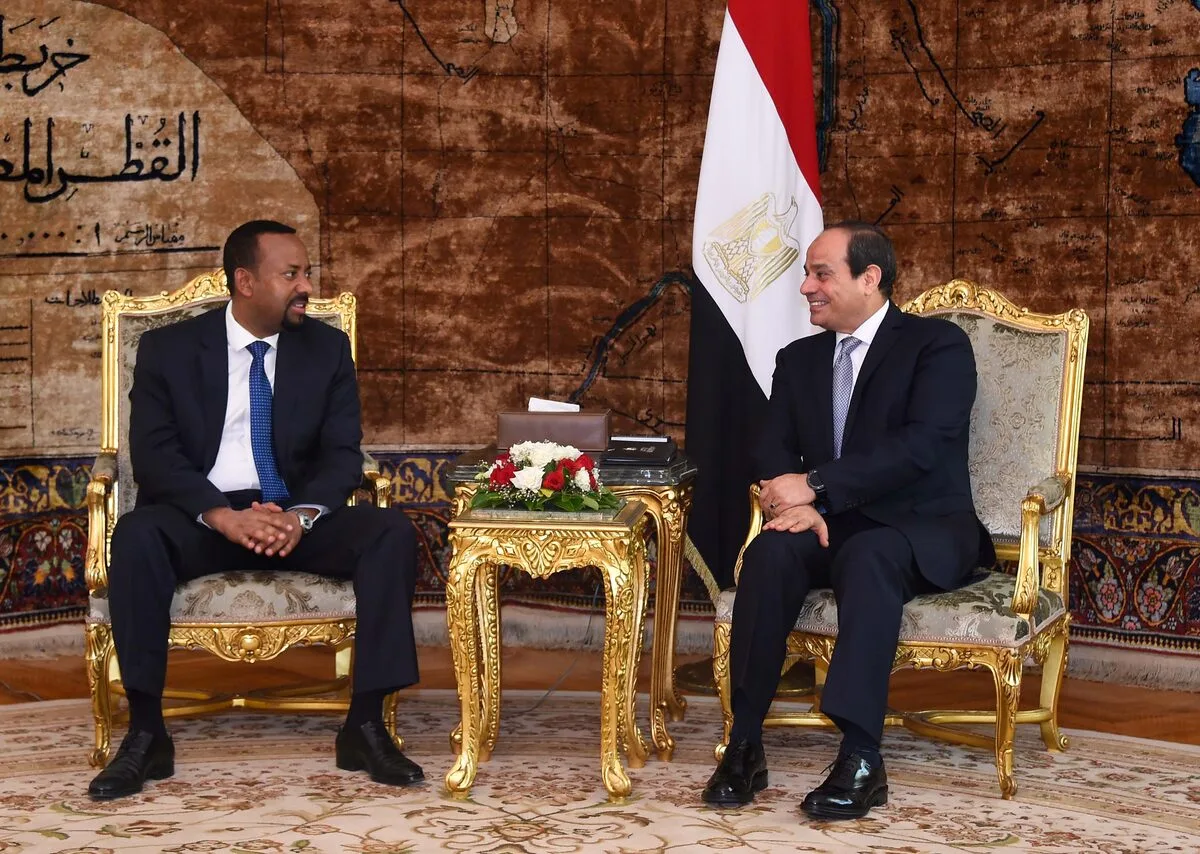
As noted earlier, Cairo helped mediate between Eritrea and the US. This builds its political capital in Washington as a party capable of shaping and influencing regional understandings.
Ethiopia’s geographic encirclement also strengthens Egypt’s negotiating position over the Grand Ethiopian Renaissance Dam, which remains a source of deep strategic concern for Cairo. Egypt therefore benefits from any pressure on Addis Ababa, which has used its demographic and economic weight in recent years to exert broad influence across the Horn of Africa. Cairo had been in a relatively weaker position because of its geographic distance. Through its alliance with Eritrea and Somalia, however, it has now secured a forward foothold in the region from which to counter Ethiopian influence.
Egypt’s economy also depends heavily on Suez Canal revenues, and any disruption at Bab al-Mandab directly affects the canal and shipping through it. Strengthening Eritrea as a stable power and an Egyptian ally therefore enhances the security of the entire maritime corridor, an existential interest for Cairo.
Securing the Red Sea also reduces the likelihood of ships rerouting around the Cape of Good Hope. Such rerouting caused flows of crude oil and petroleum products through Bab al-Mandab to fall by more than 50 per cent in the first eight months of 2024 compared with the same period in 2023.
Appeasing Ethiopia before lifting sanctions on Eritrea
Despite this, Washington is unlikely to abandon its strategic partnership with Ethiopia entirely in favour of stronger ties with Eritrea, given the balance of power in the Horn of Africa. The US understands that engagement with Asmara and sanctions relief could alarm Addis Ababa. Before partial normalisation with Eritrea, it therefore took a parallel step: lifting the arms embargo on Ethiopia. This gives Addis Ababa a strategic gain that ensures its security partnership with Washington continues, particularly in counterterrorism.
In recent days, the US has lifted the arms ban it imposed on Ethiopia in September 2021. The ban was introduced as fighting intensified between the Ethiopian federal government and the Tigray People’s Liberation Front, and in response to crimes and abuses committed by Ethiopian forces alongside Eritrean troops in Tigray.
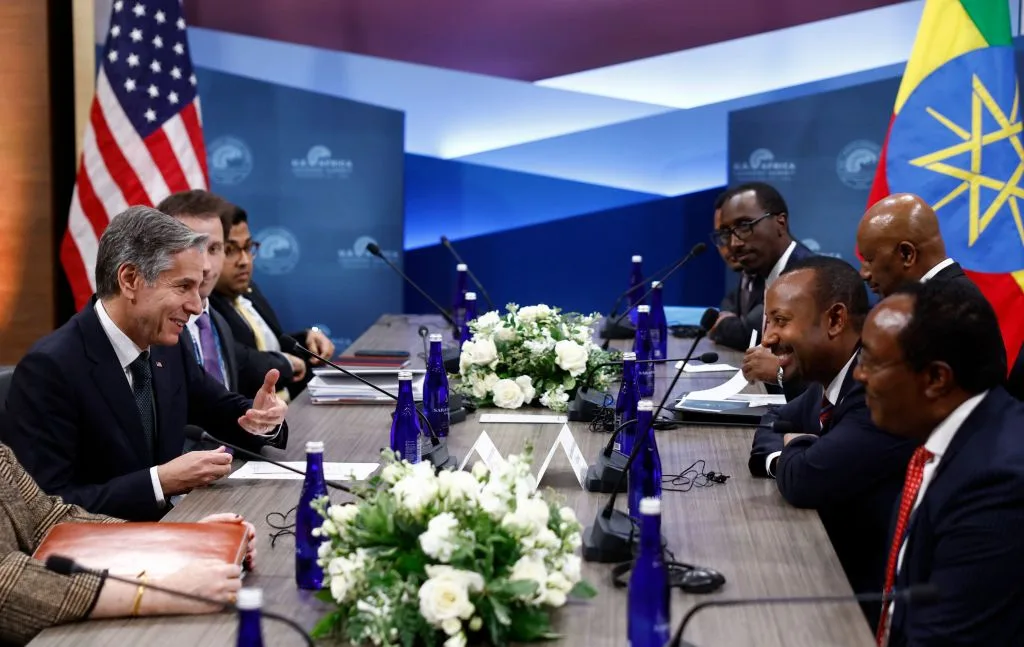
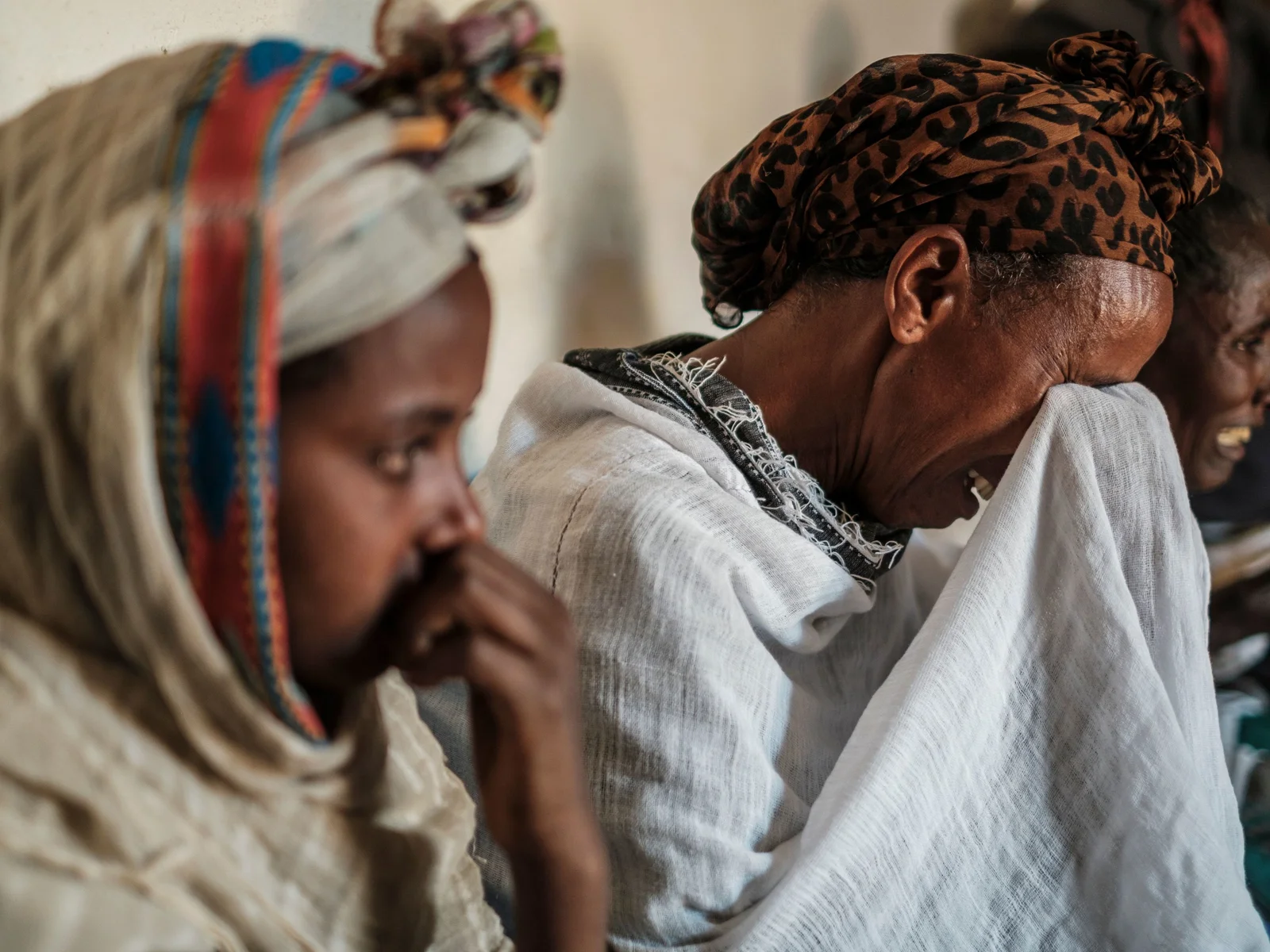
Photo: Eduardo Soteras / AFP
The Trump administration, however, appears ready to dismiss these criticisms with little hesitation. It has repeatedly and explicitly set out its new national security strategy, based on ending decades of policies focused on “exporting democracy” and human rights as a condition of international cooperation.
The administration has said its goal is to promote peace and prosperity in the Horn of Africa, replacing the humanitarian aid and development agency system with direct investment and trade partnerships focused on energy and critical minerals. This includes reducing the role of the US Agency for International Development (USAID).
Even so, Washington is expected to retain parallel sanctions, including Magnitsky sanctions and visa suspensions, to present sanctions relief for Asmara as a calibrated step rather than a “blank check,” and frame it in the language of “peace and stability.”
The administration also benefits from the declining influence of human rights organisations during Trump’s second term and Congress’s preoccupation with more pressing issues. This leaves a central paradox: in an age of geopolitical pragmatism, human rights move from the centre of decision-making to its margins.
How will Afwerki respond to Washington’s rapprochement?
The Eritrean regime is likely to offer a “cautious welcome,” to the US decision. This is clearly reflected in a statement by the Eritrean embassy in Washington, which welcomed what it described as a “shift toward engagement,” while stressing that Eritrea does not adopt models based on dependency. Instead, it promotes mutually beneficial partnerships grounded in sovereignty and respect for national ownership of development priorities.
Afwerki, now 80 and accustomed to isolation as a doctrine of rule, will not suddenly turn Eritrea into a full Western ally. He will use the decision to secure specific gains, including greater international legitimacy, reduced isolation and potential investment in Assab port, without making substantive concessions on domestic issues such as human rights, compulsory conscription and elections.
At home, the regime will present the decision as a “victory of steadfastness” and proof that its policy of “self-reliance” ultimately forced Washington to retreat and return to Asmara. This narrative would strengthen Afwerki’s legitimacy and defer any pressure for political reform.
Economically, Eritrea may see limited investment inflows, including development of Assab port, stronger military cooperation with Saudi Arabia and new channels of engagement with US mining companies. These would not, however, bring any real structural transformation of its closed economy. Regionally, Asmara’s confidence in confronting Ethiopia will grow, and it may seek to expand its role in Sudan and along Yemen’s coasts as it gradually regains a place in international strategic calculations.
Considered together, the anticipated lifting of sanctions on Eritrea in May 2026 and the earlier lifting of Ethiopia’s arms ban reveal the outlines of Trump’s actual strategy. Rather than aligning fully with one side at the other’s expense, Washington is building a balance between the two, seeking to turn the historic hostility between Asmara and Addis Ababa from open conflict into a rivalry managed under US auspices.
Washington has recently recognised Eritrea’s strategic importance, both geographically and logistically. Its roughly 1,200-kilometre Red Sea coastline, exceptional proximity to Bab al-Mandab and existing ports at Assab and Massawa have brought Asmara back to the centre of US calculations. At the same time, the US cannot afford to sacrifice Ethiopia: a country of more than 120 million people, with one of Africa’s largest economies, a longstanding counterterrorism partner and a destination for billions of dollars in US investment.
From this perspective, Washington appears to have chosen to “split the difference”: Ethiopia gets weapons, accompanied by a clear warning against using them to reach the sea by force, while Eritrea gets sanctions relief, alongside a message urging it not to provoke its larger neighbour.
Given Trump’s fondness for presenting himself as a “peacemaker,” and his repeated claim to have mediated nine wars, it is conceivable that he could instruct his advisers to try to mediate between Afwerki and Abiy, even if the result is only a fragile agreement similar to that reached between Rwanda and the Democratic Republic of Congo on 4 December 2025.
Analysts agree that Trump’s intense desire to win the Nobel Peace Prize drives him to exaggerate his diplomatic achievements and cite inaccurate figures to demonstrate his worthiness. This includes describing temporary truces or short-lived ceasefire agreements as “peace agreements.”
Ultimately, Washington itself can be seen as the real winner from the latest regional arrangements. It is moving from being Ethiopia’s ally to becoming an arbiter between the two countries, at a time when both need the US more than it needs either of them. The biggest loser, meanwhile, appears to be the UAE. Abu Dhabi built its regional strategy around backing Ethiopia as the Horn of Africa’s sole dominant power, alongside its bet on Somaliland and Berbera port, only to find Washington suddenly turning towards Asmara and favouring it for several geopolitical and military reasons.
The latest US moves reveal that Washington does not want a single dominant power in the Horn of Africa and the Red Sea. It seeks a dynamic balance that serves its own interests first. This reflects the core of Trump’s foreign policy doctrine: no permanent allies, no permanent enemies, only deals and shifting balances.
