








هذا التقرير متاح أيضًا بـ العربية
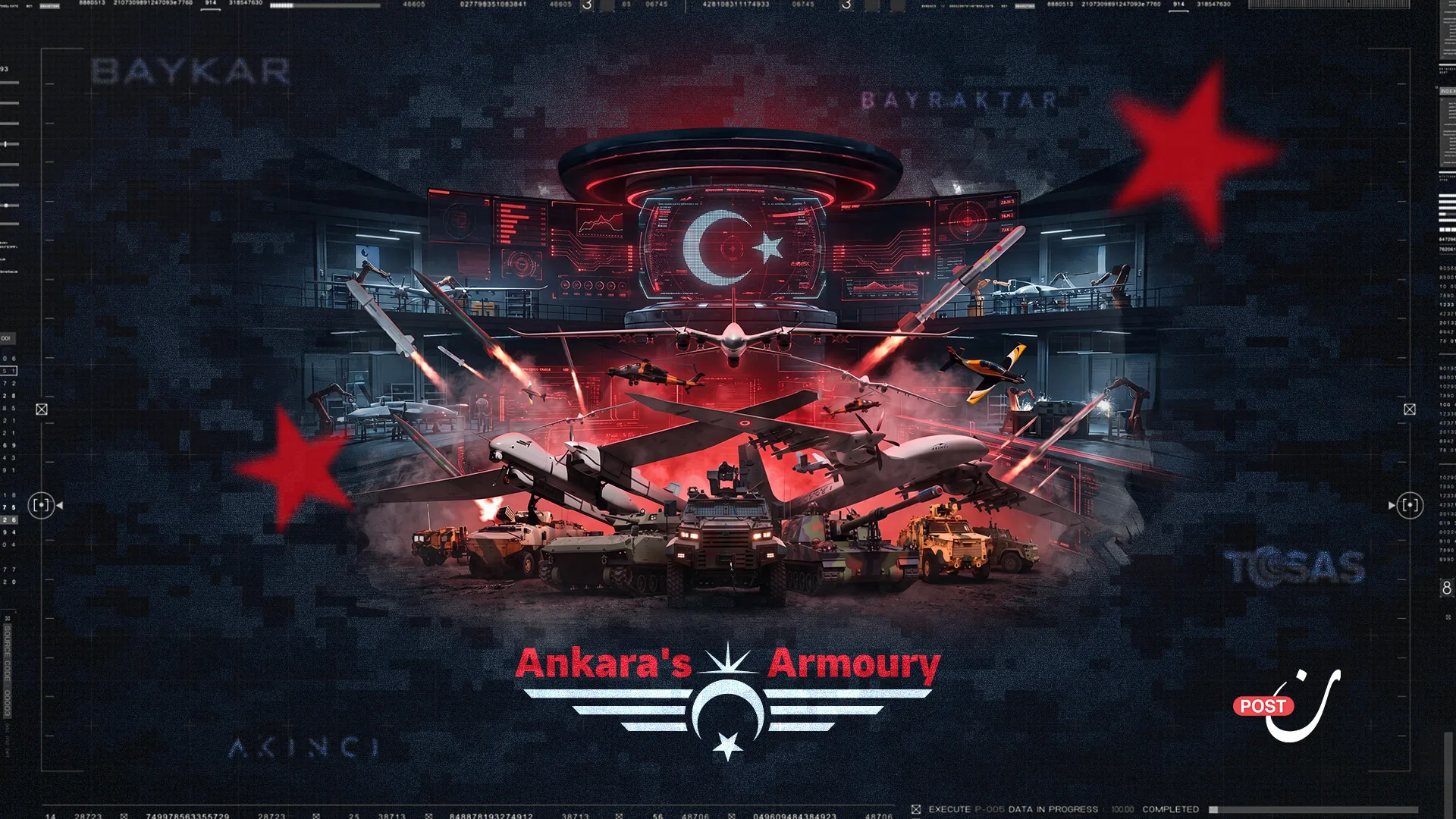
Over the past decade, Türkiye’s defence industry has become a channel for its foreign policy. The state and private companies work together through a process that begins with a presidential visit or military cooperation agreement and extends to supply, training, maintenance and local production.
This relationship gives Ankara a recurring presence in the defence ministries, militaries and arms procurement institutions of importing countries. It may later develop into security and economic partnerships that outlast the initial contract. State institutions manage this export expansion alongside companies with complementary specialisms in drones, electronics, missiles, ships and armoured vehicles.
This approach gained greater significance as Türkiye rose to 11th place among the world’s major arms exporters in 2021–2025, according to a report published by the Stockholm International Peace Research Institute on 9 March 2026.
Türkiye accounted for 1.8 per cent of global exports, and its export volume rose by 122 per cent compared with 2016–2020. Pakistan took 16 per cent of its exports, the UAE 12 per cent and Ukraine 8.4 per cent.
The value of Turkish defence and aerospace exports reached $10.05bn in 2025, according to Türkiye’s Presidency of Defence Industries. The sector includes more than 3,500 companies and employs more than 100,000 people. This growth is tied to the industry’s need for markets that fund development programmes and keep production lines running.
In a report published in May 2024, the International Institute for Strategic Studies concluded that the continued development of Turkish manufacturing had become linked to expanding exports and international cooperation. Challenges remain in advanced technologies, components and supply chains.
The German Institute for International and Security Affairs (SWP), a think tank that advises the German government and parliament, also argued in a 2024 study that Ankara uses arms exports strategically to expand its networks and enter markets that other Nato countries are reluctant to engage with. The results vary according to the relationship with the importing country and the depth of military and industrial cooperation.
How does Türkiye turn deals into influence?
The Turkish state retains a central role in directing the industry towards foreign markets. The Presidency of Defence Industries (SSB) reports to the presidency and oversees armament, development, contracting and manufacturing programmes.
The Defence Industry Executive Committee is the sector’s highest decision-making body. Its members include the president, vice president, the ministers of treasury, interior, defence and industry, the chief of the general staff and the head of the defence industries authority.
The committee’s powers include decisions on defence exports, industrial offsets and countertrade arrangements, as well as coordinating institutions and funding training programmes. This ties exports to political, military and industrial considerations from the point at which markets are selected.
The state’s direct role is evident in ASFAT, the state-owned military factories and shipyards management company operating under Türkiye’s Ministry of Defence. It markets the expertise of military factories and shipyards and undertakes design, construction, modernisation, training and logistical support projects abroad.
This structure allows Ankara to enter into long-term contracts led by a government institution, with shipyards, engineering firms and suppliers of systems and components taking part. Companies contribute according to their specialisms. Baykar, a private company specialising in unmanned aerial systems, develops the Bayraktar TB2 and Bayraktar Akinci.
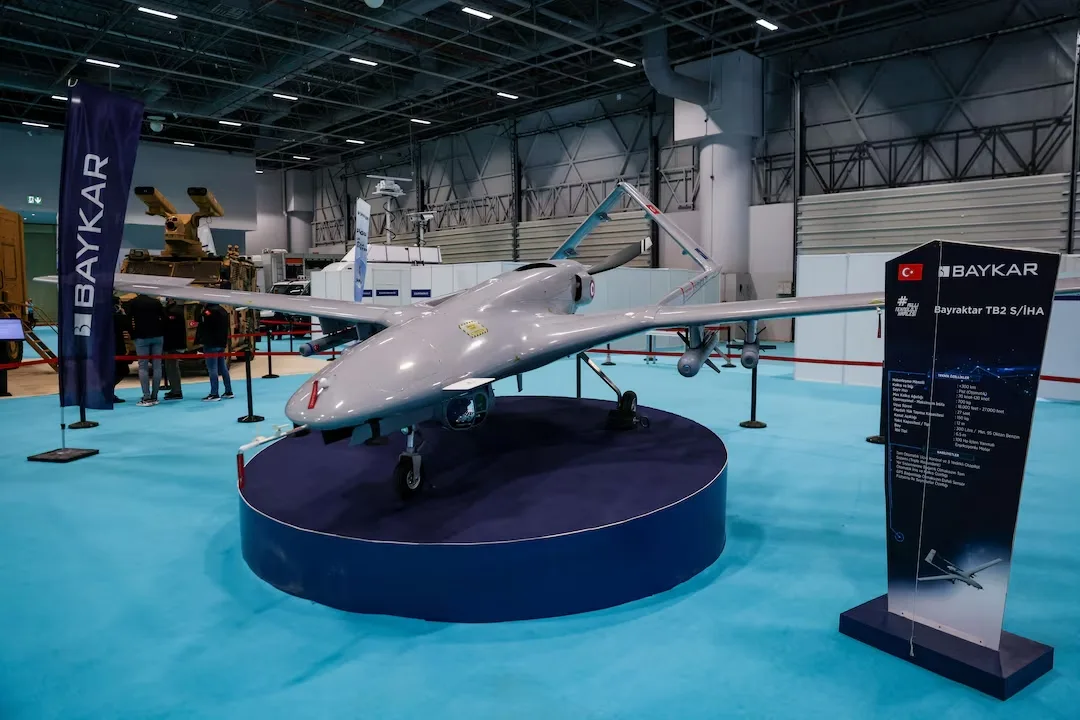
Baykar, the private company, develops the Bayraktar TB2 and Bayraktar AkinciAselsan, the defence electronics company, produces radars and communications, sensing and targeting systems. Roketsan, the missile manufacturer, specialises in missiles and guided munitions.
STM Defense Technologies Engineering works in warship design, systems integration and logistical support, while FNSS Defense Systems produces armoured vehicles and undertakes manufacturing and modernisation programmes in partner countries.
This pattern was evident during President Recep Tayyip Erdogan’s visit to Jeddah in July 2023, when a cooperation plan between the two defence ministries was accompanied by defence contracts. The political visit thus opened the way for an industrial programme extending beyond the initial supply deal.
Türkiye’s presence continues after weapons are delivered, through training, maintenance, spare parts, munitions, upgrades, service centres and production lines. Ships require years of design, construction, trials and qualification, while drones depend on control stations, sensors, software, munitions and operator training.
At this stage, the contract develops into an ongoing relationship between Turkish companies and militaries, defence ministries and local manufacturing institutions. This allows them to follow up on existing projects and start new programmes. The impact grows as cooperation moves from training and maintenance to joint production and permanent military committees, then extends to broader security or economic arrangements.
Saudi Arabia: Arms deals cement reconciliation
Saudi-Turkish defence cooperation developed as part of a reconciliation process in which high-level visits reopened relations between the two countries.
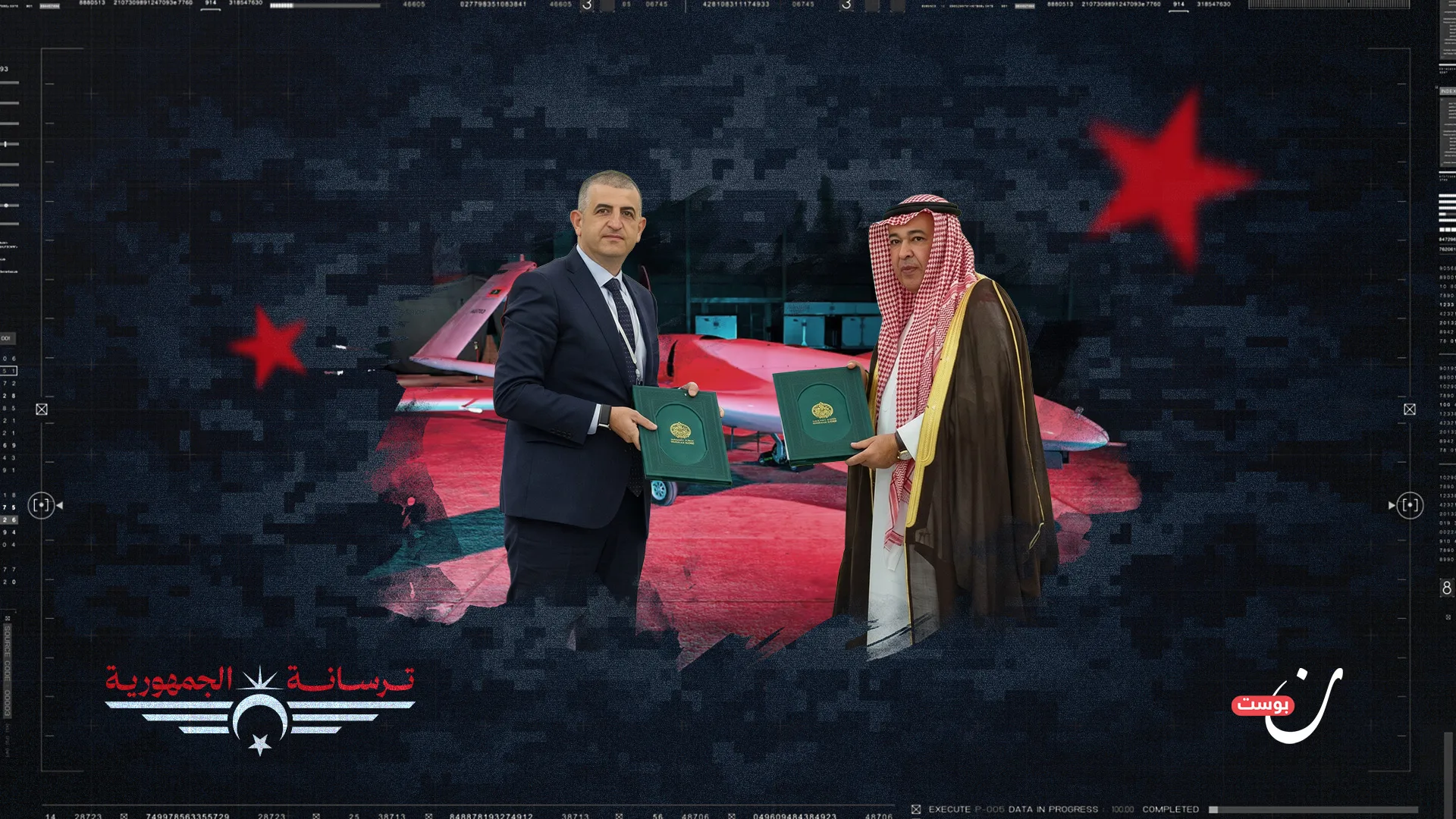
In July 2023, the Saudi Ministry of Defence signed two contracts with Baykar to acquire Bayraktar Akinci heavy combat drones. These accompanied a cooperation plan between the two defence ministries and other agreements on energy, investment and communications.
The two contracts were followed by localisation agreements between Baykar and Saudi Arabian Military Industries (SAMI). The agreements also brought the Saudi National Company for Mechanical Systems together with Aselsan and Roketsan to localise the production of sensors and munitions used in drones.
After the two Baykar contracts were signed, Saudi institutions responsible for localisation moved quickly to bring parts of production, testing, training and technical support into the kingdom.
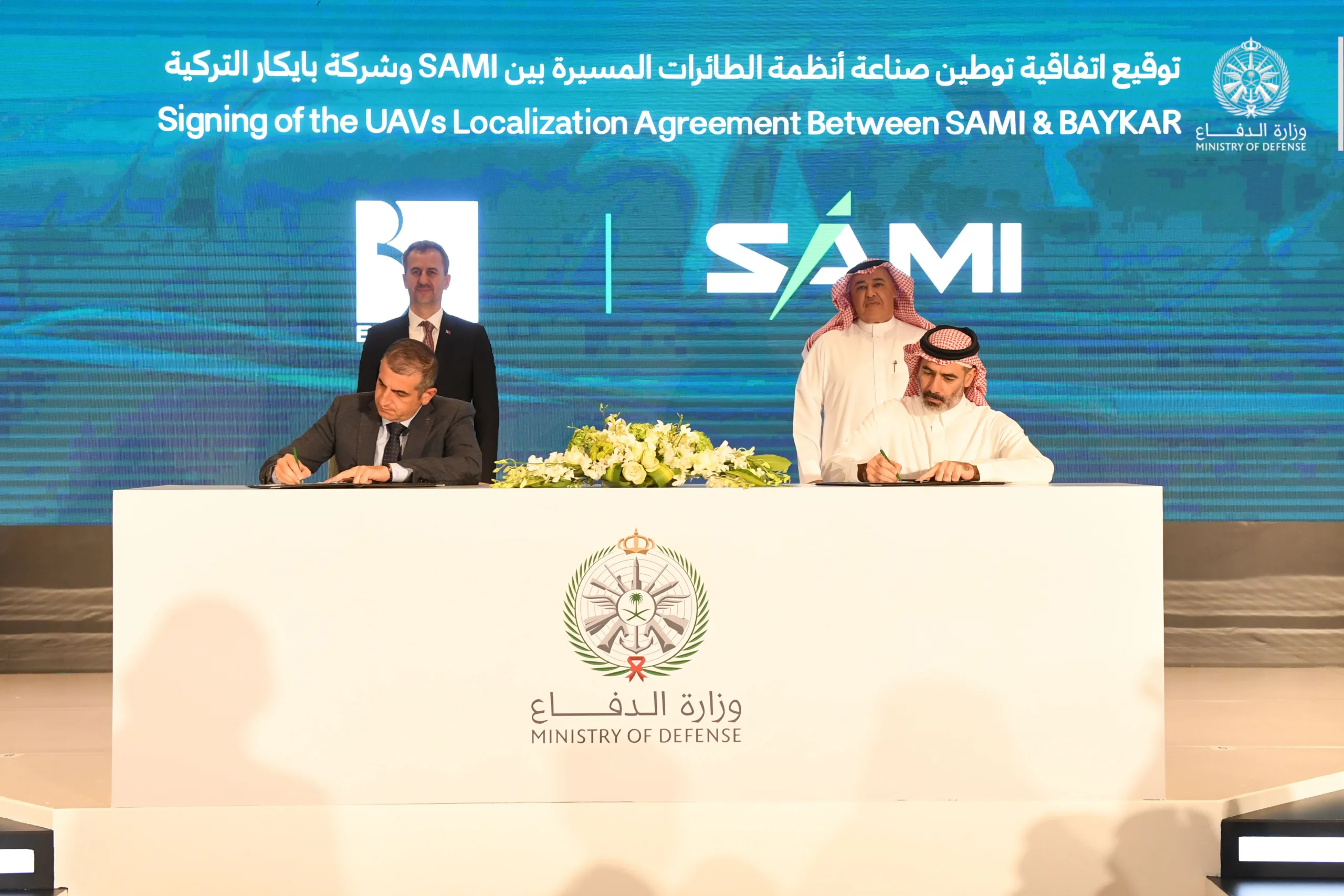
On 25 July 2025, FNSS expanded the presence of Turkish companies by signing an agreement with SAMI Land Systems, a subsidiary of Saudi Arabian Military Industries, to manufacture next-generation eight-wheeled armoured vehicles in the kingdom. The agreement was signed under the patronage of defence and industrial officials from both countries.
These contracts gave Ankara access to Saudi Arabia’s localisation programme and linked several Turkish companies to the kingdom’s defence and manufacturing institutions. They also underpinned political reconciliation with long-term interests in production lines, testing, munitions and training.
During the same period, the bilateral agenda expanded to include major economic projects. These included agreements to establish two solar power plants in Sivas and Karaman, with a combined capacity of 2,000 megawatts and investments approaching $2bn.
The investment and power-purchase agreements were signed on 20 February 2026. They formed part of a simultaneous expansion in economic and defence ties that helped build a broader network of shared governmental and industrial interests.
Turkish influence in Saudi Arabia serves to consolidate rapprochement. Turkish companies gained a large market and a foothold in Saudi Arabia’s localisation strategy, while Ankara established a permanent institutional channel with the Ministry of Defence and industrial bodies.
Riyadh uses the same arrangements to develop its local capabilities and diversify its suppliers. Maintaining Türkiye’s position therefore depends on its companies’ ability to offer new technologies, products and programmes as Saudi manufacturing advances.
Saudi Arabia’s regional positions remain governed by its own calculations, alliances and interests. Defence cooperation, meanwhile, adds shared industrial and security interests that help cement reconciliation and reduce the chances of renewed serious tensions between the two countries.
Pakistan: A partnership reaching into the military establishment
Pakistan represents a deeper form of access to the military establishment. On 13 February 2025, the seventh session of the High-Level Strategic Cooperation Council between Türkiye and Pakistan was held in Islamabad, chaired by Erdogan and Prime Minister Shehbaz Sharif.
The joint statement stipulated that Turkish defence products would receive priority in Islamabad’s procurement, with Pakistani products receiving similar priority in Turkish procurement. It also encouraged joint projects, research and development, and industrial localisation.
Cooperation continued through the High-Level Military Dialogue Group between Türkiye and Pakistan, which held its 20th session at the Ministry of Defence in Rawalpindi on 7 April 2026.
The political-military and defence industries working groups reviewed existing projects and new avenues for cooperation. The meeting covered regional security, training, capacity building, and military and industrial cooperation. These regular meetings give Ankara a presence in the process of assessing the army’s needs and modernisation programmes.
Türkiye’s MILGEM warship-building project is central to this presence. In 2018, the Pakistani navy signed a contract with ASFAT to build four warships: two in Türkiye and two at Karachi Shipyard, with technology transfer.
STM provided engineering solutions and integrated the propulsion system in a project bringing together shipyards, suppliers and engineers from both countries. The programme drew on experience gained through the fleet tanker PNS Moawin project, designed by Türkiye’s STM and built at Karachi Shipyard.
The Moawin project included training for crews and shipyard workers, alongside technical and logistical support. It also enabled about 20 Turkish companies to participate in the supply chain. Cooperation later extended to ship maintenance, submarine modernisation, spare parts and technical services.
This relationship gives Türkiye repeated institutional access to the Ministry of Defence, the military command, the navy and the naval industry, alongside participation in programmes lasting years.
China’s dominance of Pakistani arms imports places a clear limit on the scale of this influence. The Stockholm institute reported in March 2026 that Pakistan had become the world’s fifth-largest importer of major arms in 2021–2025, with China supplying 80 per cent of its imports. Türkiye’s position, meanwhile, is concentrated in specific naval and air sectors.
Ukraine: From supplier to security partner
Ukraine offers an example of defence cooperation developing into a security and industrial partnership. The naval relationship began with a contract signed by the Ukrainian Ministry of Defence and STM on 17 December 2020 to build two Ada-class warships with technology transfer.
Construction of the first ship began in April 2021, when steel plates were cut for its hull. It was launched in October 2022 and began sea acceptance trials in May 2024.
The second ship was launched in August of the same year and is due for delivery in 2027. The programme continued during the war, maintaining naval cooperation between the two countries despite operational and economic risks.
On 3 February 2022, the Turkish and Ukrainian governments signed a framework agreement on cooperation in advanced technology, aviation and space. It covered the development, production and operation of Bayraktar systems, as well as Ukrainian engineers’ participation in manufacturing, maintenance, modernisation and training.
The agreement established an aviation and industrial strand of defence cooperation, combining Baykar’s drone expertise with Ukrainian capabilities in engines and components.
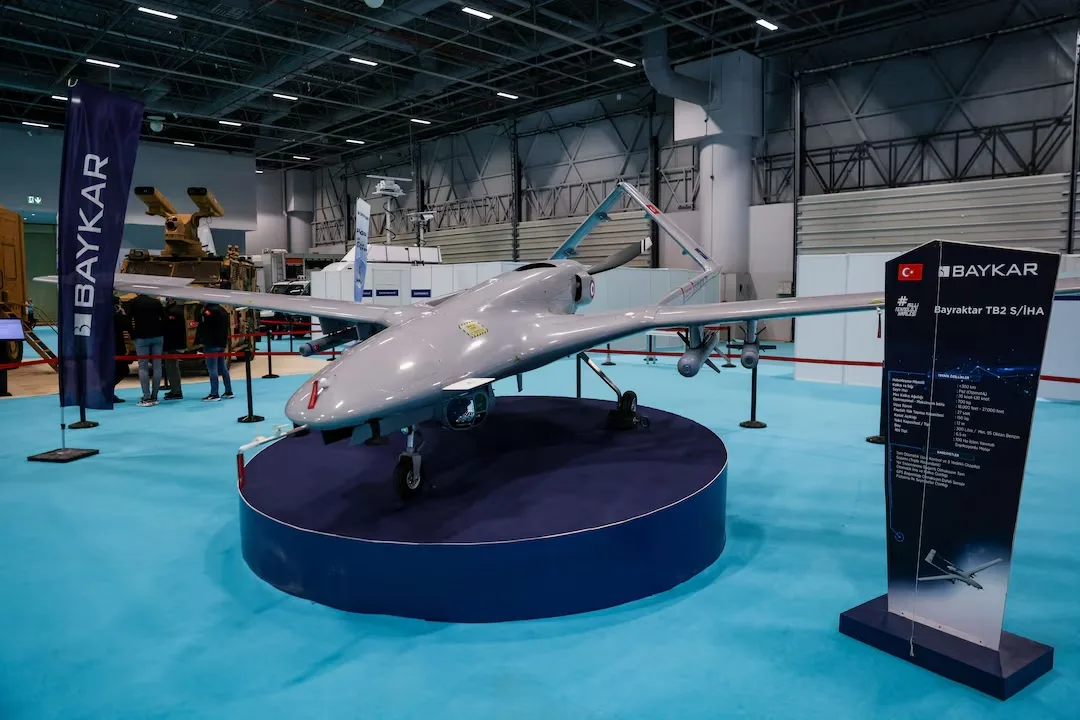
In September 2022, Zelenskyy and Baykar chief executive Haluk Bayraktar discussed plans to establish a Baykar factory in Ukraine and produce new systems using Ukrainian components.
In February 2024, Bayraktar announced that construction had begun on the plant near Kyiv, which is expected to create about 500 jobs. This moved aviation cooperation from development agreements to long-term industrial investment in Ukraine.
On 13 March 2025, Zelenskyy described Türkiye as a strategic partner, particularly on security guarantees, during a meeting with government officials and representatives of Turkish businesses.
Zelenskyy linked countries’ participation in guaranteeing Ukraine’s security to priority access to reconstruction projects. He also referred to Bayraktar supplies and Kyiv’s desire to expand cooperation in drone manufacturing.
These statements brought defence, reconstruction and investment together within a single political framework and gave Turkish companies a potential role in the postwar period.
The two sides continued to expand the relationship in 2026. After meeting Erdogan in Istanbul on 4 April, Zelenskyy announced agreement on new steps in security cooperation and joint defence industry projects. He also spoke of Ukraine’s ability to support Türkiye with expertise, technology and battlefield experience.
On 14 July 2026, the Ukrainian parliament ratified the free trade agreement signed between the two countries on 3 February 2022. Türkiye’s Foreign Ministry described the decision as an important milestone in strengthening their economic and investment partnership.
Defence exports helped Türkiye move from supplier to security and industrial partner for Kyiv. This position also rests on Ankara’s role in regulating the passage of warships through the Bosporus and Dardanelles, its position in the Black Sea, its relationship with Moscow and its role in hosting negotiations.
The partnership works in both directions: Ukraine gains military systems, investment and cooperation with a Nato country, while Türkiye benefits from Ukrainian engines, components and expertise.
A study published in June 2025 by the Center for Applied Turkey Studies (CATS), a research network coordinated by the German Institute for International and Security Affairs, concluded that Turkish-Ukrainian defence cooperation could form the basis for Black Sea security arrangements.
The experiences of Saudi Arabia, Pakistan and Ukraine show the varying gains Türkiye derives from defence exports. Military cooperation helped cement reconciliation with Riyadh and opened its localisation programme to Turkish companies. It gave Ankara broad access to Pakistan’s military establishment and naval industry, and raised its standing in Kyiv’s discussions of security, reconstruction and trade.
The scale of these gains depends on the prior relationship with each country, the depth of the industrial partnership and the extent to which operating the systems remains tied to Turkish support.
Poland and Albania: Military presence with limited political influence
Poland and Albania illustrate another level of Turkish presence. Companies gained access to markets and military institutions, but the deals had a limited effect on the countries’ political and security positions.
Warsaw signed a contract on 24 May 2021 to purchase four sets of Bayraktar TB2 drones, comprising 24 armed unmanned aerial vehicles, control stations, radars, simulators, munitions, spare parts, training programmes and logistical support.
The contract included technology transfers allowing maintenance and repairs to engines, control stations and cameras to be carried out in Poland. Deliveries began in October 2022.
The deal placed Baykar’s system in the military of a Nato member state for the first time and opened a channel for training, maintenance and industrial cooperation with one of Eastern Europe’s largest armies.
The Center for Applied Turkey Studies argued that defence cooperation with Ankara supports Warsaw’s efforts to strengthen Nato’s eastern flank and expand coordination on Ukraine and the Black Sea.
Poland views Türkiye as a military partner within the Western framework. Its defence strategy continues to rely on Nato and the European Union, as well as major deals with the US, South Korea and European countries.
Albania offers a similar example on a smaller scale. Tirana introduced Bayraktar TB2 drones into its armed forces, with operators receiving training in Türkiye.
In March 2025, Albanian Defence Minister Pirro Vengu announced that the drone squadron had become fully operational and could carry out night missions, monitor borders and coastlines, and support civil protection operations.
This Turkish presence was based at Kucova Air Base in Berat county, south-central Albania. Nato renovated the base as a hub for air operations and training, and the minister described it as a strategic Nato facility.
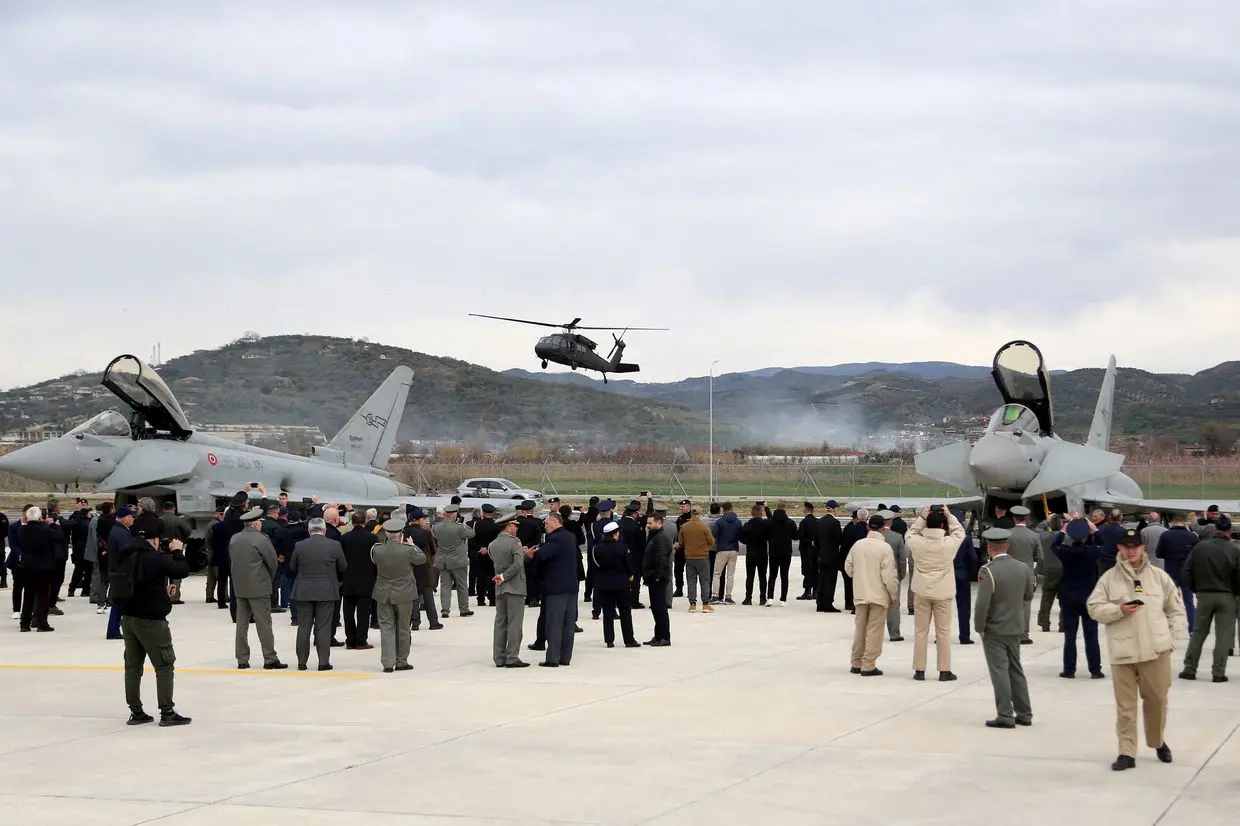
The drones and training gave Ankara a channel for operational cooperation and supply within the Albanian military, while the country’s security policy remained tied to Nato and the US.
The Polish and Albanian experiences show that Turkish arms entering a foreign military open doors for Ankara in training, maintenance and military contact. The scale of the political impact, however, remains tied to the purchasing state’s position, alliances and other arms suppliers.
Localisation and technology transfer: Influence and independence
Localisation and technology-transfer programmes present another constraint. In their early stages, production lines require Turkish designs, components, experts, training programmes and technical support. This increases contact between the company and local military and industrial institutions.
As experience grows, the importing country becomes more capable of carrying out maintenance, production and development on its own territory. It also gains greater scope to negotiate and choose suppliers.
Saudi Arabia uses its agreements with Baykar, Aselsan, Roketsan and FNSS to pursue military-industrial localisation goals under Vision 2030. Pakistan is developing expertise in ship design, construction and programme management at Karachi Shipyard, while Ukraine contributes engineers and components to the development of aerial systems.
Localisation deepens the relationship while production lines are established and expertise is transferred, then increases the buyer’s ability to manage systems locally. Maintaining Türkiye’s position therefore depends on its companies’ ability to offer new products, technologies and projects, and to retain an advantage that the local partner would find difficult to replace.
Ankara’s ability to fulfil its contracts is linked to the independence of its industry and supply chains. The T129 ATAK attack helicopter provides a clear example of this constraint. Developed by Turkish Aerospace Industries under a programme based on an Italian-British design, it uses an engine from the LHTEC T800 family whose export requires US approval.
In 2018, Pakistan signed a contract to buy 30 helicopters, but delivery was later delayed because an export licence for the engines was not issued. Islamabad subsequently turned to the Chinese Z-10ME helicopter.
The deal showed that assured delivery remains dependent on the supplier’s possession of sensitive components and the licences to export them. Delivery failures open the market to competitors and weaken the Turkish supplier’s ability to build a long-term relationship.
Greater independence in engines, electronics and advanced materials thus becomes a condition for sustaining the influence Türkiye seeks to build through exports.
Exports have given Türkiye regular access to defence ministries, militaries and manufacturing bodies, and a role in modernisation programmes that last for years.
Maintenance, training, munitions supply and joint manufacturing bring Turkish companies back to the contracting table, while military councils and dialogues give Ankara insight into armies’ needs and future plans.
The “arsenal of the republic” project began with Türkiye’s effort to reduce foreign suppliers’ influence over its military decisions. As exports expanded, Turkish companies began giving Ankara a role in other countries’ armament and modernisation decisions.
Purchasing states, meanwhile, use Turkish technology to broaden their options and strengthen their local industries. Ankara’s efforts to establish a lasting presence, and buyers’ efforts to become more independent, determine the political value of each deal and how long Türkiye can retain influence beyond its borders.