










In early December, The Wall Street Journal revealed that the Sudanese government has offered Moscow the opportunity to establish its first naval base on African soil a move that places Khartoum at the center of an international power struggle and reshuffles the dynamics in one of the world’s most strategic maritime corridors.
According to Sudanese officials quoted in the report, the proposed agreement would span 25 years and grant Russia the right to station up to 300 military personnel and four naval vessels including nuclear-powered ships at Port Sudan or another coastal facility on the Red Sea.
The deal would also allow Moscow to expand its economic footprint by bolstering its operations in Sudan’s gold sector, where the country ranks as Africa’s third-largest producer.
This development comes as Sudan is engulfed in a war between the national army and the Rapid Support Forces (RSF), during one of its most precarious phases. The RSF has gained the upper hand on the battlefield, thanks in large part to external backing chiefly from the United Arab Emirates tilting the balance of power internally.
If the proposed Russian move materializes, it will not merely be a military arrangement. It could trigger a geopolitical earthquake that reshapes the Red Sea region and reverberates through the interests of major global powers. The United States is actively working to prevent Russian and Chinese expansion in Africa.
Meanwhile, Russia seeks a permanent maritime foothold, and China watches cautiously as competitors vie along the route of its primary trade corridor. The move also carries direct implications for Arab national security and the stability of its broader strategic environment.
Not a New Proposal
It’s important to note that the Wall Street Journal report does not break new ground in Sudan-Russia relations. Rather, it revives and expands upon longstanding understandings, most notably dating back to November 2020, when agreements were signed allowing Russia to use part of Port Sudan and its surrounding waters.
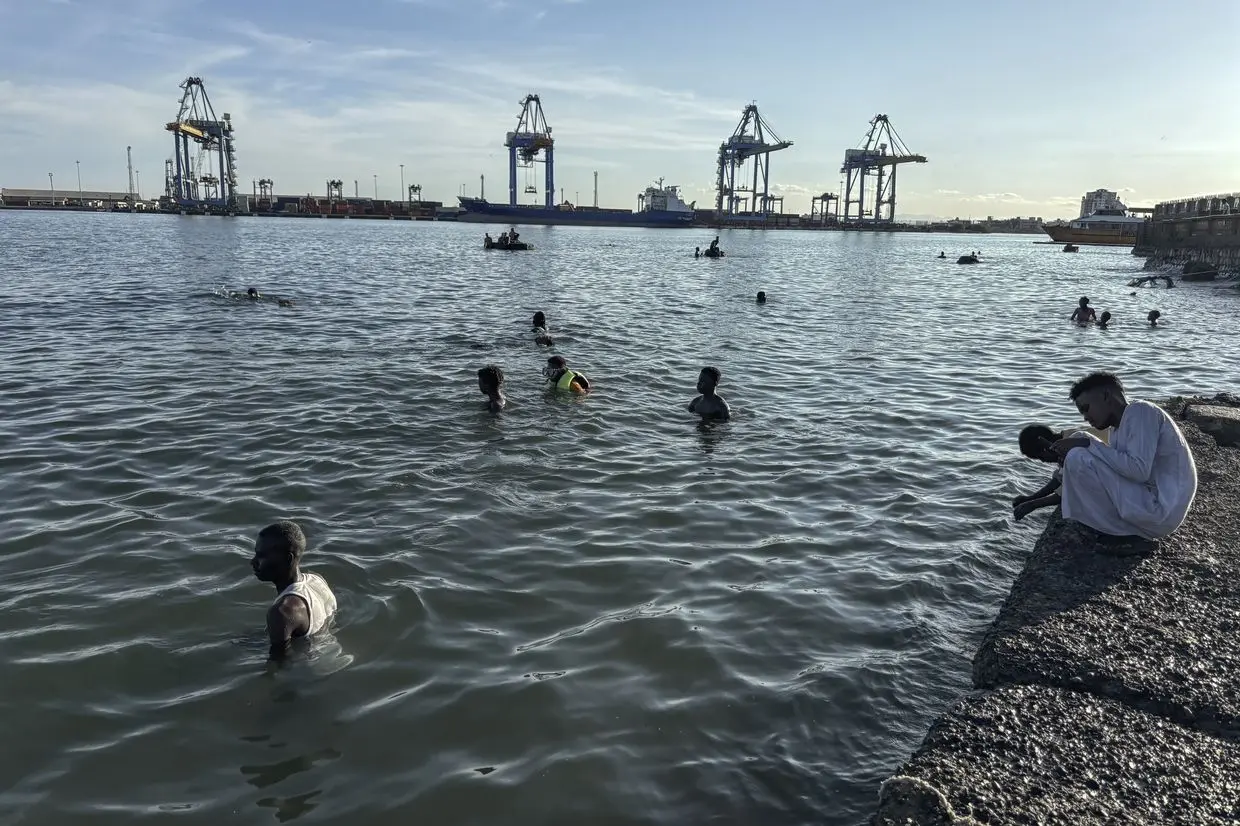
Those earlier agreements capped the Russian military presence at 300 personnel with diplomatic immunity and permitted the simultaneous deployment of four warships, including nuclear-powered vessels.
In March of this year, Sudanese Foreign Minister Ali Al-Sadiq told Russia’s RIA Novosti that Khartoum was not fundamentally opposed to a Russian base on its territory. However, Russia’s response via Ambassador Andrei Chernovol signaled a pause, describing the project as being in a state of “temporary freeze.”
Between this freeze and potential activation, the base remains a strategic card for both parties one that could be played when regional conditions align and internal power dynamics become clearer. This raises a pivotal question: why has Khartoum revived the offer now?
Why Now?
The Sudanese army finds itself at a critical juncture, facing a rapidly deteriorating military balance in favor of the RSF. The paramilitary force has been buoyed by a steady stream of foreign support, particularly from the UAE, which, according to reports, has supplied it with advanced weaponry including drones that have dramatically shifted the battlefield dynamics.
In May, when the army declared full control over Khartoum, many believed the war was nearing its end, with General Abdel Fattah al-Burhan and his command preparing to conclude the conflict. But the tide has since turned.
The RSF has expanded its capabilities and territorial reach, prompting the Sudanese military leadership to seek new sources of advanced arms, especially air defense systems and high-tech weaponry, to neutralize the RSF’s technological edge.
In this context, the Russian naval base proposal has resurfaced as a strategic emergency option for the Sudanese army. Ironically, Moscow had previously aligned itself with RSF leader Mohamed Hamdan Dagalo, known as Hemeti, through Wagner Group operatives and logistical backing from Libya’s Khalifa Haftar.
Yet in geopolitics, especially during moments of crisis, alliances are often redrawn with brutal pragmatism. Yesterday’s adversaries can become today’s indispensable partners if the strategic payoff is deemed worthwhile.
Russia’s Denial Reveals Intent
In its first official reaction to the Wall Street Journal report, the Russian Embassy in Khartoum sought to downplay what it called “media sensationalism,” dismissing the report as a revival of a five-year-old “horror story.”
In comments to RIA Novosti, the embassy argued that the absence of any tangible developments rendered the article an attempt to recycle outdated material on Russia’s Red Sea ambitions.
Still, this diplomatic denial fails to mask Moscow’s longstanding drive to secure a strategic foothold on the Red Sea. Russia has engaged in extensive negotiations and pressure campaigns for years but has yet to achieve its goal.
Thus, the embassy’s remarks may be better understood as a “calculated diplomatic denial”—one that pauses public engagement while the Kremlin assesses new developments and weighs the potential gains of partnering with Khartoum amid shifting regional and global dynamics.
A Russian base in Sudan would offer a critical vantage point over global trade routes through the Suez Canal and Bab al-Mandeb Strait, which together account for about 12% of global trade, and would enhance Russia’s security presence at one of the world’s most vital maritime chokepoints.
Washington’s Response
Washington views a potential Russian naval base on the Red Sea as a strategic threat, granting its rival influence over crucial sea lanes and commercial corridors. As a result, the U.S. has issued stark warnings to Khartoum, cautioning that hosting such a base in Port Sudan could trigger “severe consequences,” including sanctions and deeper international isolation for Sudan’s military leadership.
A U.S. administration official stated that Washington is “closely monitoring” all reports of negotiations between Moscow and Sudan’s military regarding a coastal facility. The official emphasized that all nations especially Sudan should avoid engagement with Russia’s defense sector, as doing so could result in sanctions on individuals and entities involved.
The same official warned, in language that stopped just short of an ultimatum, that pursuing military cooperation with Moscow be it through a naval base or broader security partnership would not bring Khartoum protection or support, but rather intensify its isolation, escalate the civil conflict, and destabilize the region further.
Implications for Arab National Security
Naturally, the establishment of a Russian naval base deep within a vast Arab country like Sudan must be seen as a direct threat to the security of the Red Sea and the arteries of global energy and trade. Such a presence would provide Moscow with strategic parity to the U.S. military’s AFRICOM and further intensify great-power rivalry, turning this sensitive region into an exposed arena for global competition.
Against this shifting backdrop, Arab national security faces a difficult equation. The rise of Russian influence along the Arab world’s maritime flank will compel regional capitals to reassess their strategic priorities and security alliances in an area long considered militarily fragile and vulnerable to escalation.
In Khartoum, the Sudanese military stands at a crossroads. Its urgent need to regain the upper hand against the RSF may cost it key allies chief among them Saudi Arabia, Egypt, and potentially even the United States, whose president has expressed willingness to intervene to end the conflict.
Worse still, accepting the Russian offer could unleash a fresh wave of international pressure and punitive sanctions, with the political cost far outweighing any temporary military gain.
Sudan now finds itself isolated in the heart of a war between generals. Its territory has become a battleground for competing international and regional powers. The RSF opted early on to throw in its lot with external patrons, most notably the UAE, forging a deal of influence in which agendas are traded for weapons and funds.
On the other side, the Sudanese army appears to be treading a similar path regardless of the justifications engaging in a dangerous quid pro quo that risks mortgaging the country’s sovereignty in exchange for military aid aimed at restoring battlefield parity with Hemeti’s forces.
Between Hemeti’s opportunism and al-Burhan’s ambitions, the Sudanese people are left facing a historic inflection point. Their nation teeters on the edge of a brutal geopolitical collision that threatens to drag it into a new, more sophisticated form of colonial entanglement one with modern actors, updated tools, and a far heavier national price.


