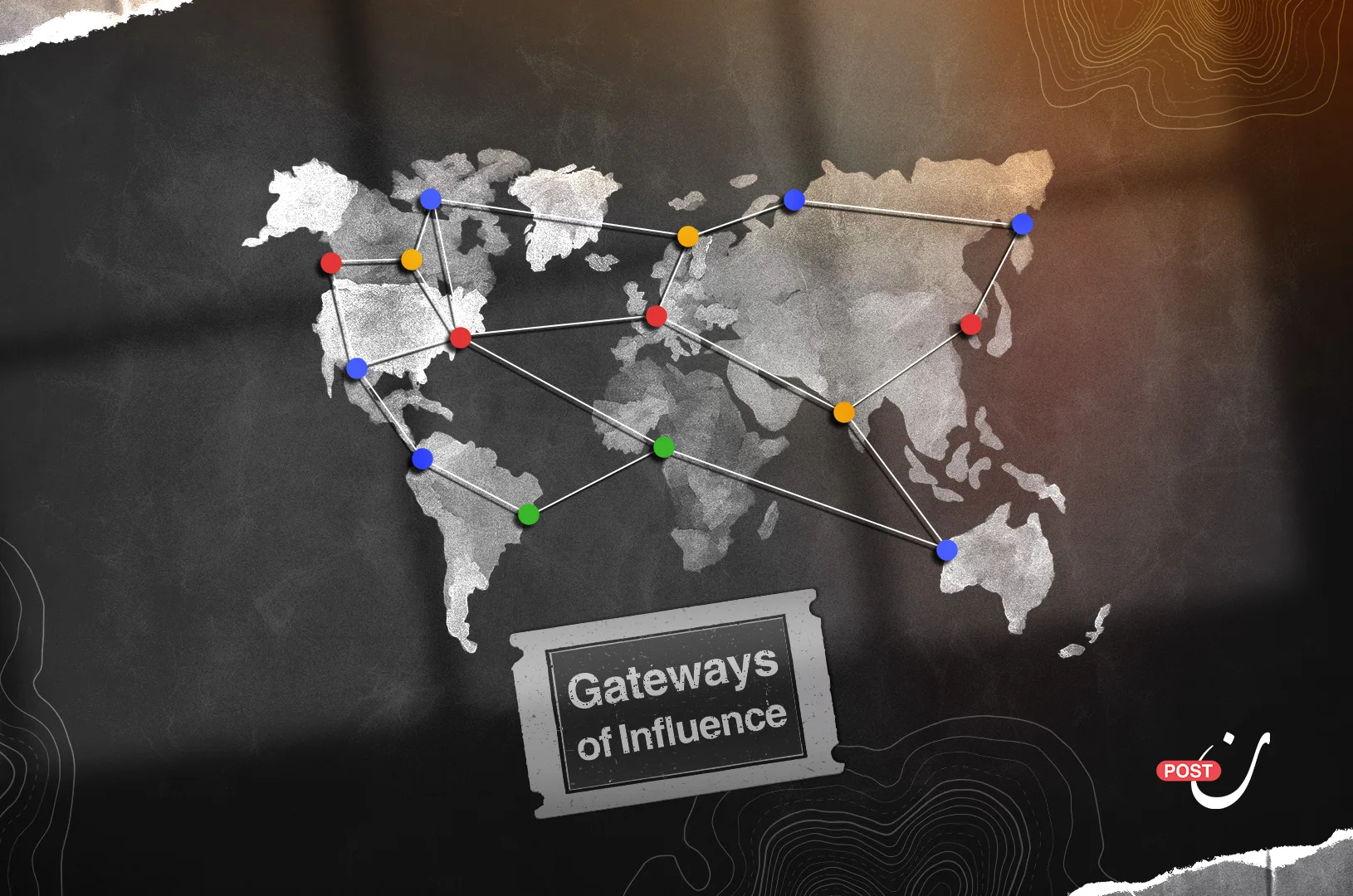










Despite growing Chinese influence, the United States and its closest allies still hold significant economic advantages over Beijing and its partners, according to a year-end report from Capital Economics. Although the Chinese bloc spans nearly half of the world’s landmass compared to 35% for the U.S.-aligned bloc it contributes only 27% of global GDP, while the U.S. bloc accounts for roughly 67%. Furthermore, half of global goods trade occurs between countries aligned with the U.S.
Yet, China’s economy cannot be underestimated. It is growing at a faster pace than the American economy, capitalizing on the fragmentation of the U.S.-led bloc and the developing world’s need for a “strong partner who doesn’t impose conditions.” Beijing’s expansive Belt and Road Initiative (BRI), also known as the New Silk Road, continues to reach an increasing number of nations.
Although Washington understands that China surpassing its economic bloc is a distant—and perhaps unattainable prospect, it is nevertheless racing to contain Beijing’s growing global influence and curb its dominance over international trade.
In the eyes of the U.S., controlling global trade means controlling its routes. In a direct challenge to China’s Silk Road, Washington and its allies unveiled the India-Middle East-Europe Economic Corridor (IMEC) last fall a grand infrastructure initiative connecting Asia to Europe via some of the world’s largest emerging and developed economies within the G20. Yet the ambitious plan faces a series of serious obstacles.
The Spice Route Revival
In September, on the sidelines of the G20 summit in India, President Joe Biden announced the launch of the IMEC referred to by some as the “Spice Route” calling it a “historic” agreement.
Signatories included India, the U.S., France, Germany, Italy, and two Arab Gulf states Saudi Arabia and the UAE—uniting advanced and emerging economies from the G20. The initiative links the Indo-Pacific to the Middle East and Europe.
The agreement envisions a trade corridor connecting India to the Middle East and Europe to boost economic growth, expand trade among U.S. partners, improve energy access, and enhance digital connectivity. If fully implemented, the corridor could cut transit times between India and Europe by 40% and reduce costs by approximately 30%.
The proposed 4,800-kilometer corridor would include rail lines, port links, electricity and hydrogen pipelines, and data cables stretching from India to Europe via the UAE, Saudi Arabia, Jordan, and Israel.
Project advocates say the route would interconnect ports across continents, stimulate prosperity in the Middle East, benefit lower- and middle-income countries, and reposition the region as a vital trade hub.
According to initial maps, the corridor would begin in Mumbai, travel by sea to Dubai, then move overland by rail to the UAE’s Al Ghuwaifat, cross into Saudi Arabia, continue through southern Jordan, reach the Israeli port city of Haifa, and finally sail to Greece’s Piraeus port before entering the broader European rail network.
Reasserting U.S. Influence
Washington’s willingness to shoulder a large portion of the project’s cost is strategic. By financing most of the corridor in U.S. dollars, it reinforces the greenback’s global primacy at a time when rival powers are pushing to reduce their dependence on it.
The U.S. has long sought a major infrastructure initiative to reinforce ties with Asia, Europe, and the Middle East, strengthen the position of its allies, and counter integration into rival Chinese-led projects. The IMEC also aims to maintain peaceful and cooperative relations between Asia and Europe outcomes that ultimately serve American interests.
Additionally, the corridor serves to maintain U.S. influence in key regions by positioning Washington as a robust investor and reliable partner for both developing and developed nations. This explains the Biden administration’s full-throated backing of a project that remains largely conceptual nearly eight months after its launch.
The timing is critical. U.S. allies like Saudi Arabia and the UAE have recently joined BRICS, the China- and Russia-aligned economic bloc, signaling an openness to rebalancing their foreign policy and economic partnerships.
Thus, the corridor is, in part, a response to the Gulf states’ growing alignment with China and Russia. It aims to tether traditional allies back to Washington’s orbit and discourage deeper integration with competing power centers.
A key goal is also to secure energy supply lines for U.S. allies and create an alternative to Russian energy a lesson hard-learned during the supply shocks that followed Russia’s invasion of Ukraine.
The corridor, often referred to as the Spice Route, unites leading oil and gas exporters and importers under one framework. The global energy crisis prompted by the war in Ukraine highlighted the urgency of developing alternatives to Russian energy to ensure market stability and security.
Future plans include facilities for the production and transport of green hydrogen, further enabling energy transfers from producer to consumer nations reinforcing the U.S. view that energy security is national security.
A Direct Response to China’s Belt and Road
Although U.S. officials insist the IMEC isn’t aimed at any specific country or initiative, the timing, structure, and narrative of the project clearly suggest it is a counter to China’s Belt and Road Initiative.
Washington hopes the IMEC will unlock new trade routes across the Middle East, South Asia, and Europe, decreasing dependence on China and bolstering its own allies amid intensifying U.S.-China competition.
Unlike the Chinese model, which often relies on debt financing, IMEC will be funded by its member states without loans or aid each partner bearing a defined share of the financial burden. Reports estimate the project’s cost at $47 trillion, with the U.S. expected to be the primary contributor to offset Beijing’s expanding global reach.
China, for its part, launched the Belt and Road Initiative over a decade ago to link its economy with vast swaths of Asia, the Middle East, and Africa. By 2027, spending on the BRI could exceed $1.3 trillion, bringing not only economic rewards to Beijing but also significant diplomatic and strategic clout.
In recent years, China has cemented its presence in the Middle East, investing in Gulf infrastructure projects such as Abu Dhabi’s port, Qatar’s Hamad port, Kuwait’s Silk City, and regional digital networks, including numerous contracts awarded to Huawei. Gulf nations have also shown interest in Beijing-led multilateral frameworks developments that have caused concern in Washington.
Elevating India’s Role
The project’s unveiling in New Delhi was no coincidence. The U.S. is intent on deepening ties with India, a key player in global geopolitics and economics.
India has posted strong economic gains in recent years. In 2022, its GDP accounted for 3.37% of global output, and its population at 1.41 billion is the largest in the world.
Under Prime Minister Narendra Modi, India has moved closer to the U.S. and its allies. Still, Washington remains wary, particularly given India’s active role in BRICS.
New Delhi seeks to avoid being perceived as part of any geopolitical bloc or subordinate to a major power. Nonetheless, the U.S. continues to woo India as a counterbalance to China in the Indo-Pacific.
Washington also hopes that by investing in India, it can coax New Delhi into taking a firmer stance against Russia and Iran longtime Indian allies and isolate the core of the Chinese-Russian-Iranian triangle.
A Path to Normalization?
The IMEC carries another key geopolitical aim: integrating Israel into the region and laying the groundwork for expanded normalization with Arab states—a prospect that has been welcomed by Tel Aviv.
Israeli Prime Minister Benjamin Netanyahu appeared in a video after the project was announced, touting Israel’s central role in the proposed route.
The U.S. sees the corridor as a vehicle to further normalize ties between Israel and Arab nations especially Saudi Arabia, a crucial player in the project. Full integration of Israel into the regional infrastructure would serve U.S. strategic interests.
Normalization efforts have advanced in recent years. In 2020, the UAE and Bahrain signed the Abraham Accords with Israel, brokered by Washington. Sudan and Morocco soon followed. Egypt and Jordan have had peace agreements with Israel since 1979 and 1994, respectively.
While Saudi normalization has yet to materialize, it remains a key U.S. objective. Riyadh appears open to the idea in principle but is seeking concessions—particularly on the Palestinian issue.
Obstacles Ahead
Despite its promise, the IMEC faces serious challenges. Chief among them are the conflicting geopolitical and economic agendas of the signatory states. Each country has distinct interests, and divergent views may hinder collective implementation.
Rather than moving as a cohesive bloc, each participant may pursue its own goals especially Middle Eastern nations hoping to extract strategic advantage from the U.S.-China-Russia rivalry. Washington will need sustained diplomatic engagement to maintain cohesion.
Financial uncertainty also looms. The corridor’s full cost remains undetermined, and it’s unclear how the burden will be distributed. If the costs outweigh the benefits, the project’s economic viability may be questioned.
Even with funding secured, the corridor’s implementation will take many years—if not decades. Much of the current infrastructure along the route will require massive upgrades.
Security is another major concern. The recent war in Gaza demonstrated how quickly conflict can disrupt global supply chains. Given that part of the corridor passes through occupied Palestinian territory, the route’s stability remains uncertain. Investor confidence has already been shaken.
Moreover, several key regional powers Iran, Turkey, and Egypt have been excluded from the plan. Their geographic and strategic importance makes their absence notable and may fuel further opposition.
These combined hurdles could delay or derail the project. Yet Washington appears committed to pressing ahead, seeing the IMEC as an essential instrument for balancing China’s growing influence in Asia and beyond, and for reasserting American global leadership.