










As the US Congress prepares to vote later this year on amending or repealing the Caesar Act sanctions on Syria, attention is increasingly focused on Washington. This critical political juncture coincides with reports of a potential visit by Syrian President Ahmad Al-Shara to the US on November 10, part of a growing push led by the Syrian-American diaspora.
Having gained greater influence in policymaking circles, this community has been advocating for the end of sanctions and the opening of a new chapter in US-Syrian relations since the fall of the former regime.
However, these efforts face stiff resistance from Israel and its allies within Congress and powerful lobbying groups. These actors are working to prevent any change to the sanctions framework, fearing that it could allow the new Syrian leadership to regain political and economic stability potentially shifting the regional balance of power.
The question remains: will Israeli pressure succeed in keeping the sanctions intact, or will Washington’s new strategic outlook backed by the Trump administration grant Damascus the opportunity to break out of its long-standing isolation?
Israel’s Lobbying Campaign
As the debate over the Caesar Act gains momentum in Washington, Israel has intensified its diplomatic and political maneuvering. This includes both official channels and efforts through pro-Israel organizations across the United States, all aimed at blocking any softening of sanctions.
Israel’s central argument has been a security-based one: lifting sanctions, it claims, could realign regional power dynamics in a way that threatens Israeli national security.
Reuters reported that Israeli officials have warned Washington that Syria’s new leadership “poses a threat to Israel’s borders.” Israeli figures have also expressed concern that renewed US engagement with Syria could empower Islamist movements or bring Turkey into the fold as a guarantor of a new, religiously-inclined government potentially turning Syria into a base for Hamas and other militant factions.
According to Al-Monitor, some pro-Israel organizations in Washington continue to support the sanctions on what they view as a potential threat to Israel and to minority groups such as the Alawites and Druze.
This stance persists despite arguments from many members of the Syrian Jewish diaspora including those still in Damascus who advocate easing sanctions to help preserve Syria’s rich heritage.
Sources also revealed that senior Israeli figures, including Ron Dermer a close advisor to Prime Minister Benjamin Netanyahu have directly lobbied US lawmakers to maintain the sanctions.
This pressure campaign has already borne fruit. A draft of the National Defense Authorization Act (NDAA) initially included a provision from Senator Jeanne Shaheen proposing the repeal of the Caesar Act.
However, the final version passed by Congress incorporated an amendment from Senator Lindsey Graham (R-SC) requiring the US president to certify every six months that the Syrian government is meeting several conditions such as refraining from military action against Israel and expelling foreign fighters. Failure to meet these conditions twice in a row would trigger the re-imposition of sanctions.
This compromise reflected Israel’s deep influence in Congress and raised concerns within the Trump administration about narrowing its diplomatic flexibility.
Netanyahu’s Personal Intervention
Beyond lobbying, Israel has elevated its pressure to the highest political level, with Prime Minister Benjamin Netanyahu personally intervening to block any US move toward lifting sanctions on Syria.
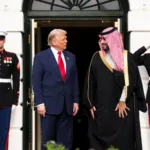
Israeli Channel 12 reported that Netanyahu directly asked President Trump to maintain the sanctions a request that was ultimately rejected. This followed Trump’s meeting with President Ahmad Al-Shara in Riyadh, during which Trump announced the lifting of economic sanctions on Syria.
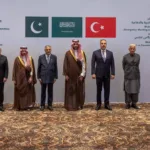
Israel Hayom reported that while Israel America’s chief regional ally opposed the rapprochement with Al-Shara, Trump revealed that Saudi Crown Prince Mohammed bin Salman and Turkish President Recep Tayyip Erdoğan had helped mediate the meeting and the decision to lift the sanctions.
Zaki Lababidi, director of the Syria office at the Syrian American Council, confirmed to Noon Post that Netanyahu’s influence extends beyond rhetoric. According to Lababidi, Netanyahu exerts direct pressure on members of both the House and Senate, and even within the US executive branch.
He added that many Israeli officials also hold US citizenship, allowing them to more easily sway legislative and executive institutions.
Israel’s position rests on the belief that lifting sanctions could pave the way for a future Syrian adversary, even though the regional military balance of power remains heavily in Israel’s favor thanks to US-backed nuclear and conventional superiority, Lababidi noted.
As a result, Netanyahu is no longer a mere observer of US policy toward Damascus. He has become an active player seeking to institutionalize sanctions as part of a broader Israeli strategy to prevent Syria’s regional and international rehabilitation.
Syrian-American Advocacy Gains Ground
Counterbalancing Israeli influence, the Syrian-American community has emerged as a powerful force advocating for sanctions relief. Since the fall of the former regime, Syrian civil society organizations in the US have intensified their political engagement organizing forums and meetings with lawmakers and administration officials to argue that continued sanctions no longer serve as leverage against the regime but rather hinder reconstruction and long-term stability.
In what has been described as the largest mobilization since the regime’s collapse, the Syrian American Council organized an “emergency advocacy day” inside the Capitol building in Washington, D.C. The initiative aimed to persuade lawmakers to repeal the Caesar Act and offer direct stabilization aid to support the Syrian people.
According to Council President Farouk Bilal, the campaign succeeded in winning new congressional support for a repeal bill sponsored by Representative Joe Wilson, backed by both Republican and Democratic members.
Over the past few months, the diaspora has held more than 40 meetings with bipartisan lawmakers—marking one of the most organized and effective efforts on the Syrian file in US political history.
Syrian-American political analyst Ayman Abdel Nour emphasized that this advocacy is helping break Israel’s narrative monopoly in Congress. Many lawmakers, he said, previously had little exposure to Syrian perspectives outside of Israeli channels.
The community’s outreach, Abdel Nour explained to Noon Post, has shifted the tone of several congressional committees from one focused solely on conditions and pressure to one supporting the Syrian people and recognizing the importance of giving Damascus a chance to rebuild.
Zaki Lababidi added that the community’s efforts are unfolding along two parallel tracks in the lead-up to the Caesar vote. The first involves sending official letters from the Syrian American Council and other civil organizations to members of Congress. The second is mobilizing community members to call lawmakers’ offices directly tapping into the weight voter opinions carry in legislative decisions.
The first formal meeting between the diaspora and the new US administration took place on January 3, when former Secretary of State Antony Blinken met with community representatives.
The meeting highlighted key demands: lifting sanctions, boosting economic recovery, reestablishing diplomatic ties with Damascus, and reopening the US embassy in Syria.
Will Israeli Pressure Succeed?
The tug-of-war in Washington continues, with a clear American shift toward lifting sanctions facing off against Israeli efforts to preserve the Caesar Act as a strategic leverage tool. The US State Department has stated that the Trump administration supports repealing the law as part of the NDAA, viewing investment in Syrian stability as a step toward securing a safe and prosperous future for its people.
Still, nothing is certain. Inclusion of the repeal in the NDAA does not guarantee immediate implementation, as the Senate and House versions must be reconciled before the final bill reaches the president’s desk.
Observers estimate that a final decision may come before the end of 2025 the timeline the Trump administration is targeting for lifting the sanctions, according to Al-Monitor.
Political analyst Ayman Abdel Nour argues that the complexity of the issue lies not only in Israeli opposition but also in congressional concerns about how the new Syrian government will address minority political participation. He views President Ahmad Al-Shara’s upcoming visit to Washington as a crucial opportunity to offer lawmakers direct assurances—potentially clearing the way for full repeal of the Caesar Act.
Zaki Lababidi, meanwhile, downplayed the likelihood of Israeli success, stating: “I don’t think Israel will succeed. A new equation is in play: President Trump supports lifting the sanctions, and there is strong regional pressure from Saudi Arabia, Turkey, Qatar, and Jordan in favor of Syrian stability.”
These countries, Lababidi explained, see a stable, economically viable Syria as key to stopping drug smuggling and ending the violence threatening the region’s security. He also noted that the recent tensions between Washington and Tel Aviv over Gaza have limited Israeli influence on this particular issue.
This momentum was echoed in remarks by President Donald Trump, who described the Syrian people as “great” and President Ahmad Al-Shara as “strong and loyal,” saying the sanctions were lifted “to give Syria a chance.” Secretary of State Marco Rubio reinforced this message, stating that the US is taking steps to support “a unified and stable Syria.”
Rubio added on X that this move aligns with President Trump’s decision to lift sanctions and emphasized that US sanctions will no longer stand in the way of Syria’s future.
In the end, the battle over sanctions remains finely poised: between Israeli efforts to delay the process and a growing US–regional consensus pushing for their removal. As the congressional vote approaches, the world will soon learn whether Syria can finally move past the burden of Caesar or whether Israeli calculations will once again postpone a critical turning point.


