







At the age of six, Hind Rajab bore all of Gaza’s features upon her small dark face, a face that resembled her city: warm, pure, and shining despite the war. But that little girl who filled the world with fear and voice was forcibly silenced under the fire of an Israeli tank in late January 2024, when her family’s car was targeted as they fled with medics to a safe place.
Hind was not just another victim in a war that devours childhood day by day; she became a global symbol of betrayed innocence, and a human conscience chasing killers from Gaza to The Hague.
Her story resonated from its besieged alleys to the halls of the Venice Film Festival, where Hollywood stars including Joaquin Phoenix and Rooney Mara applauded a 24‑minute film of Hind’s voice, tears streaming from their eyes in a rare moment in the festival’s history.
Hind’s story did not end with the burial of her remains, but instead began new chapters of justice written in her name. Her spirit became the banner of a human‑rights organisation bearing her name, pursuing the killers in international courts, and continually reminding the world that justice is not a luxury but an ethical obligation toward victims who no longer have a voice.
Today, twenty months after the crime, the channel Al Jazeera, through its investigative programme Ma Khafiya A‘zam (What Was Hidden is Greater), presented by Palestinian journalist Tamer Al‑Mashhal, reveals the identity of the perpetrators who believed the truth would be buried with their victims.
The new investigation, backed by field evidence and imagery, unmasks the names of officers and soldiers from an Israeli occupation unit known as the “Vampires,” who were implicated in the direct shooting of Hind’s family vehicle.
The killers and behind them their military and political leaders had hoped the crime would be swept away in the maelstrom of war. But Hind’s story kept shouting at the world whenever it tried to bury its ears and shut its eyes.
And today, with the truth now exposed and the evidence emerging, a new phase of accountability begins, turning the little Gazan girl into an eternal witness that human voice is stronger than indifference and neglect.
Names of the Killers with Images and Evidence
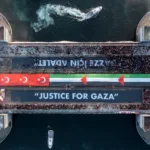
From the heart of Brussels the city known as the capital of justice and home to voices demanding rights Hind’s portrait rises on the façade of a European institution bearing her name.
The image is not just a photo, but a symbol of the slaughtered innocence. From there, the thread of truth begins to unspool via Al Jazeera’s new investigative report, The Pursued.
From this tranquil European city initiated the journey toward justice, tracing the soldiers and officers of the Israeli army involved in one of the most brutal crimes witnessed in the genocidal war on Gaza a crime that turned Hind’s family vehicle to ashes, and her childhood into a timeless testimony to the absolute cruelty endured by civilians in the Strip.
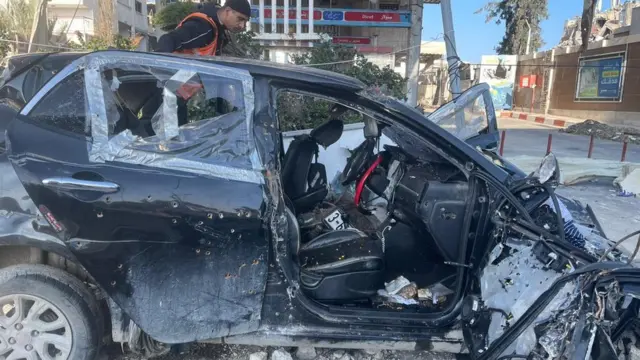
The investigation team relied on digital archives, satellite imagery, forensic and field analyses to reconstruct what happened, moment by moment. In a heartbreaking audio recording, Hind’s voice whispers in childish fear across the phone: “The tank is beside me…” Then silence enveloped her, after the occupation soldiers finished their barbarous act.
In collaboration with the Forensic Architecture laboratory at Goldsmiths, University of London, the programme team concluded that the car carrying the girl was struck by 335 bullet holes fired from an Israeli tank positioned no more than 23 meters away.
a scientific finding that formally refutes the official “alleged engagement” narrative propagated by the occupation, confirming that the gunfire came from a single direction only meaning that the family was not in an armed confrontation, but in a silent, deliberate massacre.
From that point the justice journey took on a legal trajectory: the programme traced the crime’s threads to Armoured Corps Brigade 401 under the command of Brigadier‑General Beni Aharon, and specifically to Battalion 52 under Colonel Daniel Ella. Within that battalion appeared the name of the company responsible for the massacre tragically bearing a title that encapsulates the cruelty of the act: “Empire of the Vampires”.
This company is led by an officer named Shon Glass, who describes his soldiers as “monsters that know no retreat,” and who gave the order to fire on Hind’s car and then on the ambulance that attempted to rescue her.
The photographic and field evidence has been included in a comprehensive legal file submitted by the Hind Rajab Foundation to the International Criminal Court in The Hague.
According to the foundation’s executive director Diab Abu Jeheh, the legal team is currently pursuing officer Shon Glass and his commander Ella, alongside another soldier from the company holding both Israeli and Argentine citizenship named Itay Shukerkov, who participated from inside the tank in the lethal operation.

A formal complaint has already been filed against him in Argentine courts a first of its kind against an Israeli soldier with foreign citizenship.
The investigation The Pursued does more than simply narrate the crime; it opens a new door in the international justice path, and reminds that Hind’s voice, which went silent in Gaza, still echoes loudly in court corridors, telling the world that the assassination of childhood should not pass in silence.
Documenting the Crimes of Military Engineering Units
But the story did not stop at the murder of Hind Rajab. As the investigative team delved into war archives, broader files emerged implicating military engineering units of the Israeli army that carried out systematic destruction of homes in Khan Yunis and Khuza’a, turning military documentation into legal evidence.
One such soldier was Shimon Zuckerman, who himself captured photos documenting the moment of blowing up dozens of Palestinian homes, thinking them “field memories,” but they have become today powerful evidence against him in German courts. His German lawyer Melanie Schweitzer described his case as “an outrageous example of a soldier turning from executor of orders into participant in genocide.”
In another scene of the investigation, soldier Adi Karni planted explosive devices inside civilian buildings and then smiled at the moment of detonation. Legal entities traced his path to Brazil and then Peru in a precedent‑setting case against an Israeli soldier outside Europe.
Yet, with mounting diplomatic pressure, he was clandestinely smuggled before arrest, in what investigations described as an “organised smuggling network” operated by Israel to protect its soldiers from international prosecutions.
Despite this, the cost of truth has been high: according to Kareem Hassoun of the Hind Rajab Foundation, some witnesses who provided testimony after publishing their names were killed, while others were threatened. As Hassoun says mournfully: “Whoever holds evidence of genocide becomes a target.”
A Real Test for the World’s Justice
Such moves from gathering evidence and exposing the identities of those involved in the genocidal war against Palestinians in Gaza seem to break a long‑standing silence and disrupt the calculations of the occupation, which has grown accustomed to impunity.
Every published document, every declared name, plants fear in the corridors of the Israeli Army and security agencies, bringing back the obsession of prosecution that follows soldiers and officers beyond their borders.
Israeli security expert Yossi Melman described these developments as “a real nightmare,” saying the Mossad and Shin Bet are now factoring prosecution files into travel and protection plans for the soldiers involved in the Gaza war an explicit indication of the fear that the evidence might become a legal chain pursuing them wherever they go.
On the other hand, international judge Donald Peter Herbert who previously worked on genocide files in Rwanda says these cases represent “a real test of the conscience of the world,” adding: “International justice is still stumbling over politics, but opening these files puts an end to a culture of impunity.”
Today, the cameras return to the International Criminal Court in The Hague, where files continue to stack and lists of accused grow: over a thousand open cases against Israeli soldiers and officers an unprecedented step toward redrawing the boundaries of justice from Gaza to Europe.
In the final scene, the lens stops on a photograph of Hind Rajab hanging on the institution’s building in Brussels her little Gazan face appearing there as though asking the world that was long late in hearing her voice the child’s voice that once said: “The tank is beside me…” then faded away, but whose echo still shakes the human conscience today, reminding us that justice, however delayed, is inevitably coming.
Legal Pursuits: Multiple Tracks
The investigative team of Ma Khafiya A‘zam is not only focused on exposing the names of those involved in the murder of Hind Rajab or the genocide crimes in Gaza for media documentation; it is seeking to convert the evidence into practical steps to hold perpetrators accountable.
Lawyer and human‑rights activist Sabri Jad, director of the Centre for Justice for Defence, told Noon English Translator there are four main legal tracks through which the killers can be pursued based on what the investigation uncovered and other evidence collected by rights organisations since the start of the war:
First track: International Criminal Court (ICC).
It prosecutes individuals from political and military leaders to officers and soldiers involved in war crimes or genocide. A complete file of evidence satellite images, testimonies and documented reports is prepared and submitted to the prosecutor, who then issues international arrest warrants. These obligate member states of the Rome Statute to execute the arrest when suspects enter their territory.
In the first practical step to translate what Al Jazeera uncovered into tangible legal measures, the Hind Rajab Foundation announced the filing of an official complaint with the ICC against 24 officers and soldiers from a unit in the Israeli army known as the “Empire of the Vampires.” This step marks the start of the legal path to hold the perpetrators of the murder of Hind Rajab and those involved in crimes of genocide in Gaza accountable.
Second track: International Court of Justice (ICJ).
Focuses on holding states not individuals accountable, via suits alleging crimes against humanity or via advisory opinions requested by the UN General Assembly concerning the legal consequences of Israeli occupation policies in Gaza and the Palestinian territories.
Third track: Universal jurisdiction (national courts).
Allows prosecution of soldiers and officers with dual citizenship or lower ranks in states that adopt the principle, such as Germany, Belgium, the Netherlands and Spain. Cases are filed by rights organisations and often conclude with national arrest warrants limiting travel and mobility of those involved similar to war‑crime cases in Syria.
Fourth track: Special international tribunal.
A judicial mechanism used previously for Yugoslavia, Rwanda and Lebanon, which can be established via the United Nations or the Organisation of Islamic Cooperation to try Israeli war criminals. In 2023, the late Iranian President Ebrahim Raisi called for establishing such a court to evade US vetoes in the Security Council.
Through these four tracks, journalistic and rights‑based investigations are transformed into a multi‑level justice plan aimed at extracting retribution from the killers of Hind Rajab and proving that the voice of a small child can open the doors of international courts long closed to criminals.
Political and Media Campaigns
Alongside judicial tracks, the journalistic evidence opens other paths for action political and media channels that can multiply the impact. On the media front, the strength is clear: organised campaigns to expose the faces and names of those involved in war crimes, putting them in the international spotlight.
This public exposure does not simply reveal the act, but turns perpetrators into isolated figures whose lives are changed once tagged as “killer” or “vampire” in the eyes of others.
Parallel to this, diplomatic activism by Arab and Islamic governments and entities uses this evidence as a tool of political pressure on the occupying power. The goal is twofold: first, impose diplomatic, economic and moral isolation to curb practices of oppression; and second, compel the leaders of occupation to recalculate before repeating such crimes, in fear of international and legal repercussions that cannot be ignored.
In the end, Hind Rajab is more than a name of a little girl who left in her springtime; she is Gaza’s memory that refuses to fade, and the voice of her innocence that broke the walls of silence. Her image emerged from the rubble and destruction to become an icon of accountability, evidence that truth does not die however long the time or however many wars pass.
Perhaps the road to justice remains long and arduous, but what Hind began with her fearful voice “The tank is beside me…” has today become a global cry chasing killers from Gaza to The Hague, from the investigative field to court chambers.
Every document published, every case opened is a small step toward breaking the cycle of impunity and restoring humanity to its true meaning. Hind departed in body but remains alive in the human conscience, carving the world’s conscience so it may wake from the shame and disgrace of silence.


