








هذا التقرير متاح أيضًا بـ العربية
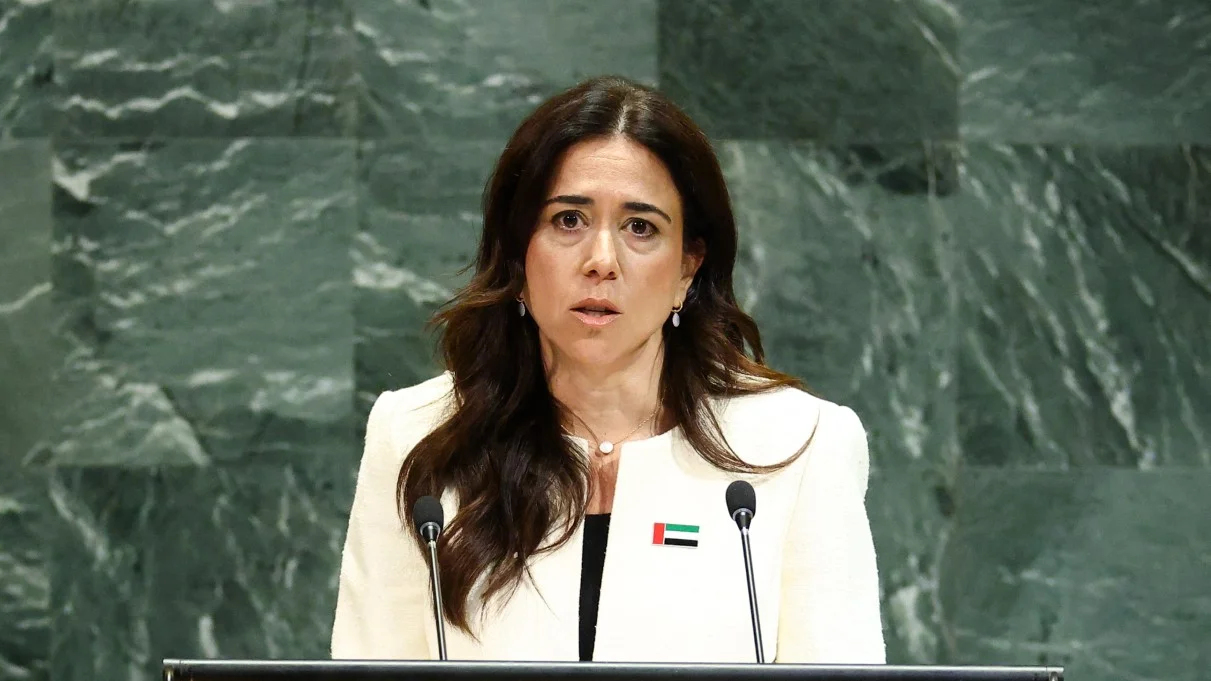
Emirati diplomat Lana Nusseibeh’s career reflects some striking intersections in Abu Dhabi’s foreign policy. She comes from a Palestinian family rooted in Jerusalem with ties to the UAE’s founder, served as the country’s permanent representative to the United Nations for more than a decade, and is now a candidate to lead the organisation.
Throughout her career, Nusseibeh has defended normalisation with Israel, taken part in Security Council negotiations on Gaza and rejected accusations that Abu Dhabi armed Sudan’s Rapid Support Forces militia, amid international investigations that uncovered supply and recruitment networks linked to the UAE.
Her candidacy to lead the United Nations in October 2026 has brought her career under political and human rights scrutiny. Nusseibeh enters the race with Gulf and Palestinian backing and extensive ties to major powers, benefiting from her rivals’ setbacks in the Security Council.
But allegations surrounding the UAE’s role in Sudan, along with objections to bypassing the principle of regional rotation, complicate her prospects, amid questions about her independence from the government whose policies she represented throughout her diplomatic career.
Who is Lana Nusseibeh?
Lana Zaki Anwar Nusseibeh was born in Abu Dhabi in 1978 to a Palestinian family with roots in Jerusalem. She belongs to one of the city’s historic families, associated with opening and closing the doors of the Church of the Holy Sepulchre, while the Joudeh family holds the church’s key.
Her grandfather, Anwar Nusseibeh, born in Jerusalem in 1913, was a leading Palestinian political figure during the British Mandate and the period of Jordanian rule. He served as Jordan’s defence minister and governor of Jerusalem after losing a leg to wounds sustained in the 1948 war.
Her uncle, Sari Nusseibeh, the Palestinian philosopher, academic and former president of Al-Quds University, was also prominent in political life. He joined Ami Ayalon, the former head of Israel’s internal security service, Shin Bet, in launching a Palestinian-Israeli political initiative.
Her father, Zaki, born in Jerusalem in 1946, moved to Abu Dhabi in the late 1960s after studying at the University of Cambridge in Britain. He became close to the UAE’s founder, Sheikh Zayed bin Sultan Al Nahyan.
His official biography, published as part of the UAE Experts Program, a government initiative to develop national talent, states that he worked as Sheikh Zayed’s personal translator and adviser until 2004. He subsequently held government and cultural posts, including minister of state and cultural adviser to the UAE president.
Lana grew up in this environment, with its close ties to the UAE’s ruling circles, before being educated in Britain. She studied history at the University of Cambridge, then earned a master’s degree with distinction in Israeli studies and Jewish diaspora studies from the School of Oriental and African Studies at the University of London in 2003. In addition to Arabic and English, she speaks French and Hebrew.
In a report published by the Israeli outlet Yedioth Ahronoth, her former professor, British researcher Colin Shindler, described her as an outstanding student who produced in-depth research on Zionism and Israeli history. He noted that she later played an important role in advancing the Abraham Accords, which launched normalisation between the UAE and Israel in 2020.
Nusseibeh began her career at the United Nations Educational, Scientific and Cultural Organization, Unesco, before entering UAE government service. In 2009, she established the Foreign Ministry’s political planning department and became its first director. She then served as joint envoy to Afghanistan and Pakistan between 2010 and 2012, and took part in preparations for the G20 summit during the French presidency in 2011.
In September 2013, she became the first woman appointed as the UAE’s permanent representative to the United Nations, a post she held until April 2024.
During that period, she chaired the executive board of UN Women in 2017, served as vice-president of the General Assembly’s 72nd session, and co-led negotiations on Security Council reform and the revitalisation of the General Assembly. These included efforts to make the selection of the secretary-general more transparent.
Her role in the UAE’s foreign policy institutions expanded with her appointment as assistant foreign minister for political affairs in February 2021. She was granted ministerial rank in December that year, then returned to Abu Dhabi in 2024 to serve as the minister’s assistant and envoy.
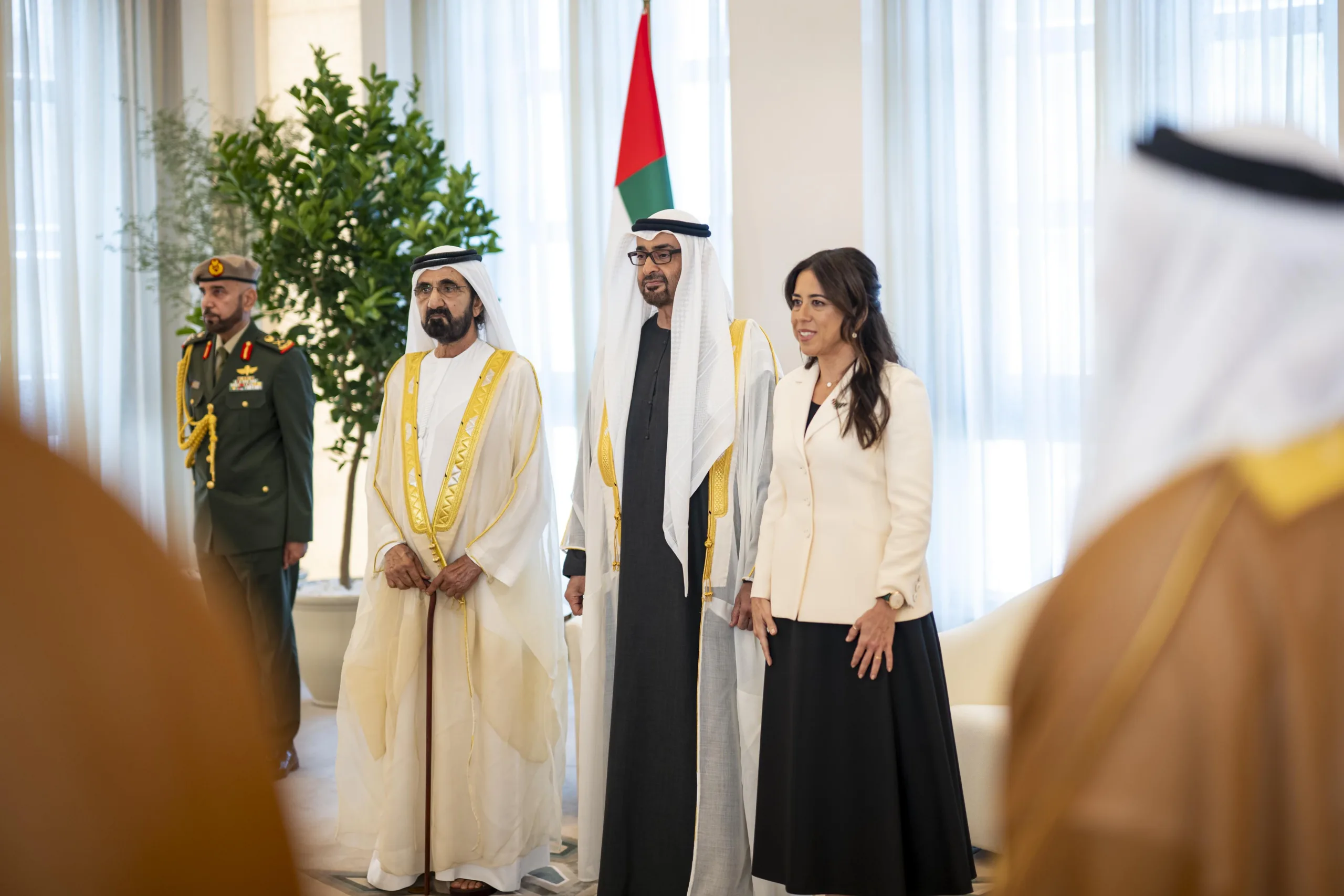
On 9 September 2025, UAE Prime Minister Mohammed bin Rashid Al Maktoum announced her appointment as minister of state at the direction of President Mohammed bin Zayed. She subsequently became the foreign minister’s envoy to the United Nations and the European Union, drawing on relationships built over more than a decade in New York. These included cooperation with the British mission in co-chairing the Group of Friends on the Future of the United Nations, which discusses reform of the organisation.
What is her record on contentious issues?
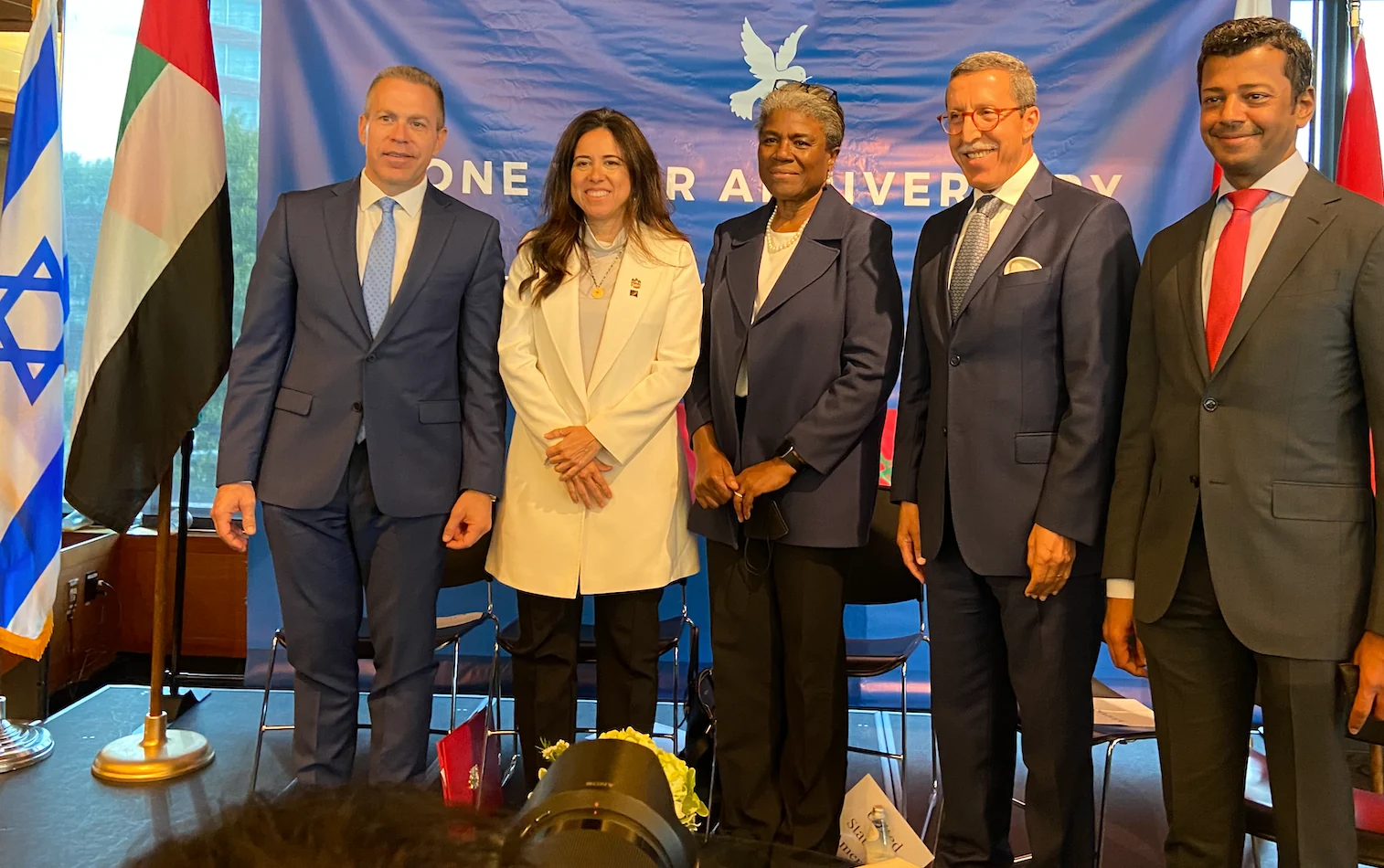
Nusseibeh came to prominence in UAE-Israeli relations with the signing of the Abraham Accords in Washington on 15 September 2020. She defended opening relations with Israel, arguing that boycotts and the absence of dialogue had failed to achieve a political settlement. She later took part in events organised by the American Jewish Committee (AJC), which advocates for Israel and the strengthening of its international ties. Her participation focused on expanding the accords and strengthening the regional relationships that emerged from them.
In December 2022, she joined a delegation of UN ambassadors visiting Israel, where they met Israeli President Isaac Herzog and then-prime minister-designate Benjamin Netanyahu. The delegation had previously visited the UAE, where Nusseibeh hosted them.
The Emirates News Agency said that, during those meetings, Nusseibeh discussed the growth in trade between the two sides to $2bn in the first nine months of 2022, as well as cooperation in science, medicine, agriculture and tourism. She stressed the importance of expanding the benefits of the Abraham Accords.
She continued to defend normalisation during the Israeli assault on Gaza, presenting the accords as a way to preserve channels of communication and influence Israeli decision-making. But on 3 September 2025, she publicly warned against annexing the occupied West Bank. In an interview with the Hebrew-language newspaper The Times of Israel, she said such a move would be a “red line” for the UAE and would threaten the vision of regional integration on which the accords were built.
During the UAE’s term as a non-permanent member of the Security Council in 2022 and 2023, Nusseibeh took part in diplomatic efforts concerning the assault on Gaza. On 8 December 2023, Abu Dhabi submitted a draft resolution calling for an immediate humanitarian ceasefire. It won the support of 13 members before the US vetoed it, while Britain abstained.
Two weeks later, the council adopted Resolution 2720 with 13 members voting in favour and the US and Russia abstaining. It provided for the appointment of a senior UN coordinator for humanitarian affairs and reconstruction, and a mechanism to speed up aid deliveries into Gaza. Nusseibeh was among the Emirati officials who led negotiations on the resolution, which ultimately produced humanitarian arrangements following amendments and bargaining with Washington over a ceasefire.
She attributed part of the negotiations’ success to organising a visit by Security Council members to the Rafah crossing in December 2023 to show them the obstacles to bringing in aid. She presented the experience as an example of the practical diplomacy she seeks to apply in leading the United Nations.
On 21 February 2024, she also led the UAE delegation at the International Court of Justice in The Hague during advisory opinion hearings on the legal consequences of Israel’s occupation of the Palestinian territories. She said the occupation was “illegal and must end,” criticising settlement activity, collective punishment and forced displacement, and stressing Palestinians’ right to self-determination and the application of international law to all states.
Through her contribution to the humanitarian resolution on Gaza and her defence of normalisation, Nusseibeh represented the policy Abu Dhabi has pursued since 2020: maintaining relations and economic and diplomatic cooperation with Israel, while calling for a Palestinian state and criticising the occupation, despite ongoing Israeli violations and settlement expansion.
Sudan, however, is the issue that has drawn the sharpest criticism of her candidacy, given the evidence and international investigations concerning UAE military and logistical support for the Rapid Support Forces militia. Led by Mohamed Hamdan Dagalo, known as Hemedti, the militia has been implicated in mass killings, sexual violence, ethnic cleansing, war crimes and crimes against humanity, particularly in Darfur.
Nusseibeh was among the officials who publicly defended the Emirati position. On 22 April 2024, she categorically rejected accusations made against Abu Dhabi by Sudan’s representative at the Security Council, describing them as baseless. She argued that promoting them was intended to divert attention from responsibility for the conflict and undermine international efforts to address the humanitarian crisis, according to a UAE Foreign Ministry statement issued that day.
Her response followed a report issued by the UN panel of experts on Sudan in early 2024, which found allegations that weapons and ammunition had been transferred from the UAE through Amdjarass airport in eastern Chad to the Rapid Support Forces to be “credible.”
On 12 December 2024, Reuters published an investigation tracking 170 flights to Amdjarass by aircraft based in the UAE since the war began in April 2023. It verified that at least 86 had departed from Emirati airports, but could not establish the origin of the remaining flights because of gaps in tracking data.
The investigation found that about three-quarters of the 86 flights verified as departing from the UAE were operated by airlines that UN experts had previously accused of transporting Emirati military support to the forces of retired coup commander Khalifa Hifter in Libya. They included the Ukraine-registered Zet Avia and Fly Sky Airlines, and the Kyrgyzstan-registered Fly Sky Kyrgyz and Sapsan Airlines.
Reuters drew on satellite imagery, flight data and testimony from officials. Abu Dhabi claimed its flights were intended to carry humanitarian aid and said it had operated 159 relief flights and delivered more than 10,000 tons of food and medical supplies.
On 8 May 2025, Amnesty International revealed that the Rapid Support Forces militia had used Chinese GB50A guided bombs and 155mm AH-4 howitzers.
After analysing images, video footage and weapons-related data, Amnesty concluded that the equipment had almost certainly been re-exported from the UAE, in violation of the arms embargo on Darfur. Abu Dhabi rejected the investigation’s findings.
On 25 May 2026, Human Rights Watch published an investigation titled “From Bogota to El Fasher,” documenting the routes through which Colombian fighters were recruited and transferred to work alongside the Rapid Support Forces militia.
The organisation linked the operations to Global Security Services Group, an Abu Dhabi-based security services company with ties to Emirati officials and members of the ruling family. The investigation concluded that fighters had passed through Emirati military facilities and along transport routes through Libya, Chad and Somalia, and had taken part in combat operations around El Fasher.
The UN Human Rights Council’s Independent International Fact-Finding Mission for the Sudan then presented broader findings in a report issued in early September 2026. It concluded that there were reasonable grounds to believe that cross-border networks had provided weapons, training, fighters and logistical support to the Rapid Support Forces militia.
The mission identified a significant role in recruitment, financing, transport and military support for individuals and entities operating from, registered in or linked to the UAE. It estimated that the total number of Colombian military contractors recruited and deployed to support the Rapid Support Forces may have approached 2,000, based on testimony, independent sources and estimates ranging from 350 to 2,000 fighters.
It documented their involvement in operating drones, artillery and advanced weapons systems through networks extending into Chad, eastern Libya and Somalia’s Puntland region. The mission called on the UAE to take stronger measures to investigate and halt the activities of companies and individuals linked to these networks. Abu Dhabi continued to deny providing military, financial or logistical support to the Rapid Support Forces militia.
The report followed massacres committed by the militia during its control of El Fasher in October 2025, accompanied by mass killings, sexual violence and the targeting of civilians on ethnic grounds. In February 2026, the fact-finding mission said evidence relating to the attack pointed to acts bearing the hallmarks of genocide against non-Arab groups in Darfur.
The Sudanese government also brought a case before the International Court of Justice, accusing the UAE of complicity in genocide against the Masalit tribe through its support for the militia.
But on 5 May 2025, the court closed the case for lack of jurisdiction because of Abu Dhabi’s reservation to Article 9 of the Genocide Convention.
Criticism has also extended to Nusseibeh’s candidacy. Sudanese diplomats at the United Nations told the British outlet Middle East Eye that her nomination was an attempt to “whitewash” the UAE’s role in the war. They questioned her independence and credibility as a prospective leader of an organisation tasked with investigating crimes committed during the conflict.
Nancy Okail, president of the US-based Center for International Policy, also criticised Nusseibeh’s candidacy. She argued that Nusseibeh had been the UAE’s diplomatic face in denying that it armed the Rapid Support Forces, despite mounting evidence of the militia’s abuses. She said Nusseibeh’s political record and ties to the Emirati leadership made her an unsuitable choice to lead the United Nations.
Will she lead the United Nations?
Nusseibeh entered the race for secretary-general on 21 October 2026, after UAE President Mohammed bin Zayed formally submitted her nomination to the presidents of the General Assembly and the Security Council. She is seeking to succeed Portugal’s Antonio Guterres, whose second term ends on 31 December that year.
The following day, Gulf Cooperation Council Secretary-General Jasem Mohamed Albudaiwi announced that all six member states, including Saudi Arabia and Qatar, had agreed to support her, despite earlier reports suggesting possible Saudi reservations because of competition between Riyadh and Abu Dhabi on some regional issues.
The State of Palestine also announced its support, saying its decision reflected confidence in Nusseibeh’s diplomatic experience and her role in supporting Palestinian rights. It called on Arab and friendly states to back her candidacy, a position of particular political significance given her defence of normalisation with Israel.
Other countries have also offered support. Albanian Prime Minister Edi Rama announced his backing, citing his familiarity with her work during Albania’s membership of the Security Council. Cyprus, Kazakhstan and the Maldives also expressed support, before Jordan’s Foreign Ministry formally announced its backing.
Iranian Parliament Speaker Mohammad Bagher Ghalibaf, by contrast, attacked Nusseibeh’s candidacy, linking it to the UAE’s relations with Israel. Anwar Gargash, diplomatic adviser to the UAE president, criticised his remarks and called for the candidate to be judged on her experience and competence.
Nusseibeh also faces reservations from countries in Latin America and the Caribbean, which argue that the next secretary-general should come from their region. Peruvian Javier Perez de Cuellar was the last to hold the post, from 1982 to 1991.
Nusseibeh is competing against a group of diplomats with international experience. Leading contenders include Rebeca Grynspan, Costa Rica’s former vice-president and secretary-general of the UN Conference on Trade and Development, Unctad; Rafael Grossi, the Argentine diplomat and director-general of the International Atomic Energy Agency; and Carolyn Rodrigues-Birkett, Guyana’s former permanent representative to the United Nations.
Other candidates include Ugandan diplomat Olara Otunnu and Ecuadorians Ivonne Baki, a former trade minister, and Maria Fernanda Espinosa, a former president of the UN General Assembly. Burundi has formally withdrawn the candidacy of former Senegalese President Macky Sall. The sixth Security Council straw poll, held on 16 October, revealed setbacks for the leading candidates.
Grynspan received nine encourage votes, five discourage votes and one no opinion. Grossi and Rodrigues-Birkett each received eight encourage votes, with at least two permanent members objecting to each candidate, according to results published by the campaign “1 for 8 Billion,” an international initiative calling for greater transparency in the selection of the secretary-general.
These results create an opening for Nusseibeh as a compromise candidate, particularly as she entered the race after the latest poll and has yet to face a vote testing the positions of the five permanent members. Under Article 97 of the UN Charter, the Security Council recommends a candidate for appointment by the General Assembly. The decision requires at least nine votes out of 15 and no opposition from the US, Britain, France, Russia or China, all of which hold veto power.
Middle East Eye reported, citing sources close to the British government, that London is inclined to support Nusseibeh, with consultations continuing on a final decision. A British Foreign Office spokesperson said the country’s priority is to choose the candidate most capable of leading the United Nations in addressing shared international challenges.
The US, meanwhile, continues to seek a candidate aligned with the approach of President Donald Trump’s administration to reforming the organisation and reducing its bureaucracy, amid reports of US reservations about the leading candidates.
The UAE-US relationship gives Nusseibeh important channels of communication within the administration. Criticism by US officials and lawmakers of the UAE’s role in Sudan remains an issue for her candidacy. Consultations also continue on the positions of Russia, China and France, with which Abu Dhabi maintains close political and economic ties.
In an effort to reinforce the independence of her candidacy, Nusseibeh announced that she was taking leave from her government duties. She affirmed her commitment to Article 100 of the UN Charter, which requires the secretary-general to remain independent of government instructions.
She presented a campaign platform centred on early intervention to prevent conflicts, expanding preventive diplomacy and reforming UN institutions to reduce duplication and strengthen accountability. It also includes addressing crises in development financing and debt, and advancing international cooperation on artificial intelligence.
Her rivals’ setbacks, together with support from Gulf states, Palestine and other countries, give her an opportunity to compete as a consensus candidate. But her prospects of securing the post still depend on the positions of the five powers, amid objections to UAE policies and her record of defending them.
The first vote to include her name will give a clearer indication of her chances of becoming the first woman to lead the United Nations, the second Arab after Egypt’s Boutros Boutros-Ghali, and the first secretary-general of Palestinian origin.
