

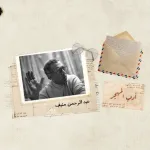







Every prisoner exchange deal brings with it a measure of relieved pain and renewed hope in the hearts of Palestinians, who see the liberation of a prisoner as a real rupture in the long-standing policies of oppression aimed at turning prisons into silent graves. At the heart of this moment stands the name Basim Khandaqji the imprisoned writer who resisted isolation with words and conquered walls with ink.
For two decades, Basim lived within Israeli prison cells, carrying the banner of awareness and intellectual resistance, writing his novels from the depths of captivity. He became one of the most prominent Palestinian literary voices in the Arab world not only known as a militant who orchestrated a daring operation against the occupation, but also as a writer who transformed the darkness of prison into light and captivity into a language that transcends borders.
Khandaqji’s story is that of a Palestinian generation that never reconciled with the occupation a generation that saw the written word as an extension of the rifle, and literature as another form of resistance. Today, with his release secured in a deal that the resistance insisted include his name, “Abu Guevara” returns from behind bars to resume his storytelling not just about suffering, but about a rare human experience that united intellect and revolution, ink and freedom.
The Beginnings That Shaped a Consciousness
Basim Saleh Muhammad Adeeb Khandaqji was born in the city of Nablus on December 22, 1983, to a deeply patriotic Palestinian family. He has two brothers, Adeeb and Nidal, and two sisters, Amani and Amina.
His early consciousness was shaped by scenes of violence and oppression during the First Intifada, an experience that deeply impacted his personality and led him to political engagement at a young age. At just fifteen, he joined the Palestinian People’s Party (formerly the Communist Party) and became one of the most active student organizers in his school.
He received his primary education at Al-Ma’arri School and completed his secondary studies at King Talal School in Nablus. He later enrolled at An-Najah National University, where he initially studied political science before switching to journalism and media, driven by his passion for words as a tool of resistance and a means of expressing collective Palestinian consciousness.
A Revolutionary Turn Toward Armed Struggle
Khandaqji’s ideological transformation was a natural outcome of the accumulated Palestinian national experience. Yet a pivotal moment would shift his path completely. According to his sister, Basim was following the events of the Second Intifada with pained awareness and quiet rage until he saw a photo of Iman Hiju, a toddler from Gaza killed in her mother’s arms by an Israeli artillery shell.
That image sparked an inner explosion. From that moment, Basim no longer saw the occupation as merely a political adversary, but as a merciless entity. “He decided he would show no mercy either,” his sister recalls.
In 2004, a suicide bombing in Tel Aviv’s Carmel Market killed three Israelis. The news spread through Nablus with mixed feelings of pride and disbelief. Little did his family know that Basim had been among the masterminds of the operation. It was later revealed that he was a member of the executing cell.
His involvement in armed resistance was highly unusual for a cadre of the Palestinian People’s Party, which historically had no record of military activity. His arrest was therefore a shock to both his community and political circles, and even confused Israeli intelligence services, who had not listed him among their pre-monitored targets.
Basim had joined a cell affiliated with the Martyr Abu Ali Mustafa Brigades the military wing of the Popular Front for the Liberation of Palestine which orchestrated the “Hellfire Operation in Carmel Market,” executed by Amer Al-Far from Askar refugee camp. The attack was a direct challenge to Israel’s failed Operation Defensive Shield, which aimed to dismantle the resistance.
He was arrested before graduating from university, subjected to harsh interrogation and prolonged detention without trial until June 7, 2005, when he was sentenced to three life sentences. The court also ordered him to pay $11.6 million in compensation to the families of the victims. He was imprisoned in Hadarim prison, marking the beginning of a new chapter in his long struggle behind bars.
Lines That Pierced Bars and Reached the World
From behind prison walls, Basim Khandaqji chose not to remain silent. Instead, he turned his prison into a window to the world, speaking through words, principles, and ideas. His literary journey began with ten essays titled Drafts of a Homeland Lover, followed by his first book, Thus Humanity Dies, which detailed the daily experiences of Palestinian prisoners and their existential struggles.
Over time, his poetic voice matured into two notable collections: Knocks on the Walls of Place and The Lust of the Rose Is a Crown of Nothingness, followed by a third in 2014, Breaths of a Nocturnal Poem, a work filled with longing and a constant search to intensify life inside the cell.
Yet Basim did not confine himself to poetry. He ventured into the world of fiction, seeking a broader space to articulate Palestinian collective pain. His debut novel, The Sufficient Musk: The Tale of the First Lady of Shadows, was a fantastical journey through the Abbasid era, exploring human schemes and survival instincts in a symbolic reflection of modern tyranny and moral conflict.
He then spent six years writing Narcissus of Isolation (2010–2016), launched in 2017 during the first Palestine Arab Novel Forum in Ramallah. His mother and sister signed copies on his behalf in a poignant moment that encapsulated both his absence and presence. The novel portrayed Palestinian social and political divisions, with vivid depictions of Nablus—a city painted with longing, beauty, and rebellion.
In 2018, he released The Eclipse of Badr al-Din, a philosophical inquiry into whether knowledge without dignity is of any value. The novel’s protagonist challenges corruption, hypocrisy, and religious complicity with power.
Khandaqji continued his literary output with The Breaths of a Betrayed Woman (2020), culminating in his latest novel, A Mask the Color of the Sky, published by Dar Al-Adab in Beirut in 2023. The novel won the 2024 International Prize for Arabic Fiction (Arabic Booker Prize) on April 28.
The novel tells the story of Noor, a young Palestinian man who finds an Israeli ID card in the pocket of a second-hand coat. This discovery launches him into a search for identity, entangled in imagined conversations with his imprisoned friend Murad, and accompanied by Samaa, a woman who helps him navigate cultural and spiritual battles against erasure and isolation.
The book transcends the limits of prison and geography, posing profound questions about identity, belonging, and racism. It reimagines the Palestinian prisoner not merely as a national symbol, but as a global voice for human dignity.
After the novel made the Arabic Booker Prize shortlist, Khandaqji faced punitive measures from the Israeli Prison Authority, including 12 days of solitary confinement and prolonged shackling. These coincided with an incitement campaign led by National Security Minister Itamar Ben-Gvir, who went so far as to call for his assassination.
Yet his voice reached global platforms. Rana Idriss, the owner of Dar Al-Adab, accepted the prize on his behalf an award bearing the name of a prisoner and literature born from captivity.
The Cultural and Political Symbolism of Khandaqji’s Experience
Basim Khandaqji was never merely a prisoner writing to pass time. He practiced writing as an act of resistance parallel to armed struggle an instrument to dismantle the language of oppression and convert personal suffering into collective memory. He turned his cell into a realm of ideas, transforming pain into creativity rather than defeat.
In his literature, prison and homeland merge; the walls between isolation and freedom dissolve. He writes in a voice that resembles rebellion not as a literary luxury, but as a natural continuation of his revolutionary mission. His works always felt as though they were written “from beyond the walls,” from a constrained reality striving to produce meaning and liberty simultaneously.
Khandaqji’s experience stands as a singular case in modern Palestinian literature. He combined political steadfastness with literary imagination, helping reshape the image of the Palestinian prisoner in Arab and global consciousness. In his writing, the prisoner is no longer just a victim or a symbol of suffering but a philosopher who interrogates reality and addresses the world—not just the jailer.
His writings bridged Palestinian national memory and the Arab literary scene, gaining recognition as world literature born from confinement. With his 2024 Booker win, his journey became living proof that Palestinians can overcome their captors by asserting their intellectual and spiritual presence globally.
Khandaqji succeeded in making the pen an instrument to expand the prison cell—and writing a life project that disrupts the occupation’s narrative about Palestinians. He redefined heroism not only as armed resistance but as the ability to generate beauty from the harshest forms of captivity.
Freedom Delayed Twenty Years
After two decades behind bars, Basim Khandaqji has finally stepped onto the path of freedom. The Palestinian resistance insisted that “Abu Guevara” be among those liberated—he left prison as he entered it: proud, resolute, and exemplary.
The occupation’s three life sentences collapsed, along with the notion of imprisonment as an eternal fate. The writer whose words reached the world before his body did now lives among us not just as a novelist, but as a witness to experience and a voice for all who have written from behind bars in defense of life.
Basim is forcibly barred from returning to his hometown of Nablus, and his family is banned from visiting him in exile. But these restrictions will not halt his journey. The man who defied the cell to reach distant continents with his words will not be erased by exile. He remains present in the collective memory of his people and in the hearts of all who believe that freedom is not measured by geography, but by meaning.
With his release, the resistance has shattered yet another chain, granting life to a new struggler who emerges even stronger than before. It proves once again that the prisoners whom the occupation sought to condemn to slow death are the very ones who now inscribe themselves in the memory of freedom. For Basim Khandaqji does not simply return to life he redefines freedom itself: the freedom of the word, the spirit, and the Palestinian who writes his history from behind walls and carries it into the light of the world.


