












As Israel’s war on Gaza intensifies and its plans to invade Gaza City take shape, tens of thousands of Palestinian families find themselves forced once again to flee southward. The latest mass evacuation orders have driven residents to abandon their homes, dreams, and the few remaining memories buried beneath the rubble left by the relentless machinery of war.
Tiny bags, terrified children, the elderly collapsing from exhaustion, hunger, fear, and illness these are the scenes that now define Gaza’s roads, packed with displaced civilians seeking shelter.
Yet with every step southward, the emotional and financial toll of displacement grows heavier, turning this journey into one of pain and endless waiting for a future that only grows bleaker with each passing day.
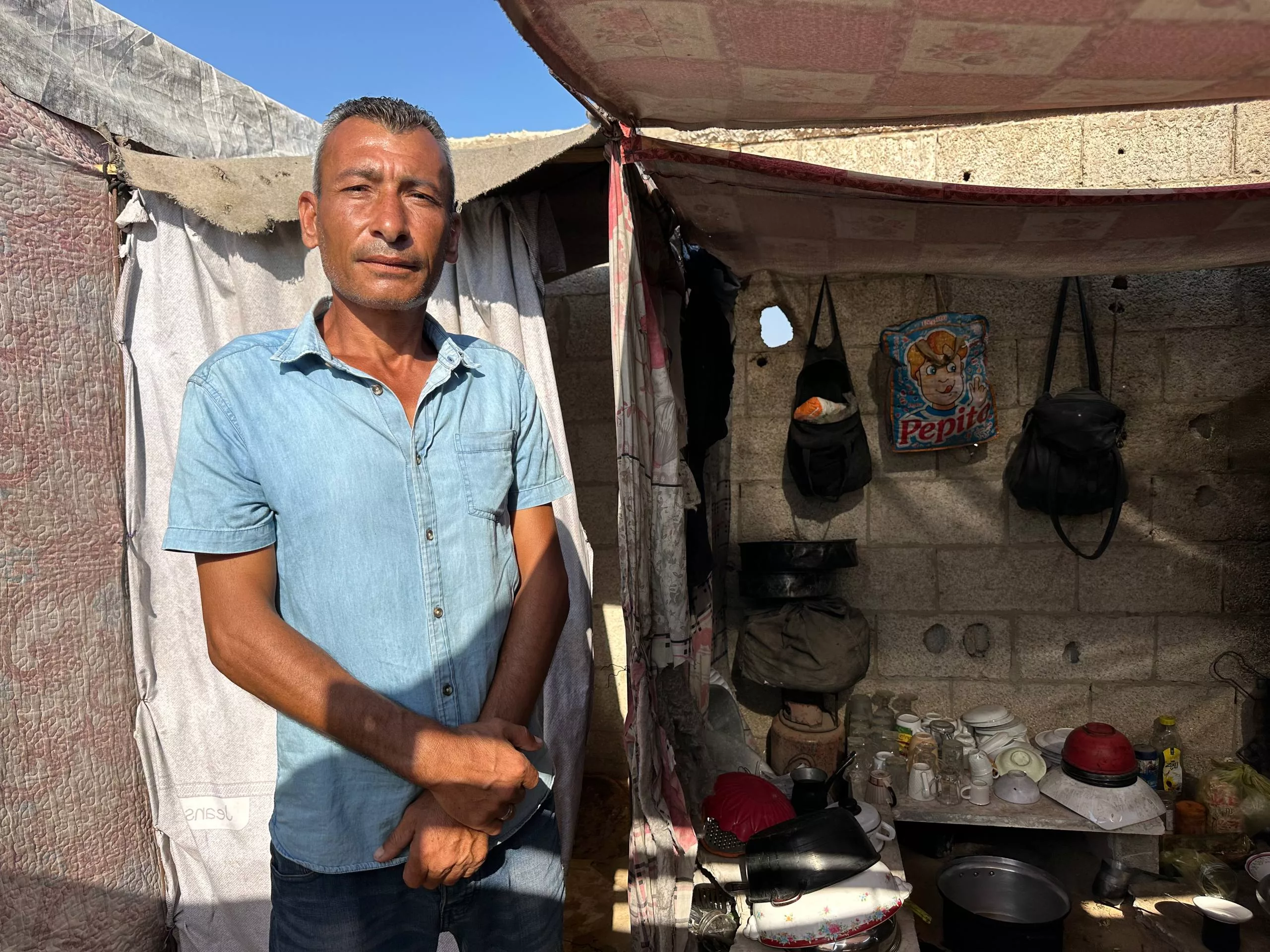
Despite the poverty and famine that grip the region, those fleeing Gaza City to the center and south of the strip are forced to shoulder staggering costs. “The cost of displacement is far beyond what we can afford,” says Mohammad al-Basyouni, a resident of Beit Hanoun who fled from the al-Nasr neighborhood to Khan Younis in the south.
“It cost us around 5,000 shekels that’s about $1,500 at a time when people have lost their jobs, income sources are cut off, and humanitarian aid is scarce.”
According to the United Nations Relief and Works Agency for Palestine Refugees (UNRWA), the average cost of displacement from northern Gaza to the south has reached $3,180. Fuel is nearly nonexistent, and shelter supplies have been blocked from entering the Strip for over seven months due to Israel’s blockade.
Al-Basyouni dismisses Israeli claims that “safe humanitarian zones” exist in the south. He says the only space he could find to pitch his tent was among the graves in a cemetery in Khan Younis.
He recounts how he left Gaza City five days ahead of his family, searching for a plot of land to pitch their tent. Renting land a necessity for most displaced families due to the absence of public shelters or organized camps costs between 800 to 1,000 shekels per month (roughly $280–$300), a sum far beyond most families’ reach.
The available land in southern Gaza is already overcrowded with displaced people from Rafah and Khan Younis, cities previously emptied by Israeli offensives and whose populations were pushed toward the al-Mawasi area and the coastline. After nearly two years of war, there’s hardly any room left for new tents. Residents have lost all income and now rely entirely on limited and sporadic humanitarian aid.
The UN Office for the Coordination of Humanitarian Affairs (OCHA) reported that over 250,000 people were displaced from Gaza City in the past month alone, as Israeli ground forces advanced into densely populated neighborhoods like Sheikh Radwan and Tel al-Hawa.
With anguish and despair in his voice, Ahmad al-Tayyib, who fled northern Gaza for Khan Younis, tells Noon Post that every time he tries to settle in a new location, the cycle repeats — new evacuation orders force them to flee again. This time, he went to the al-Iqlimi area southwest of Khan Younis, but had to leave because of the heavy, random gunfire. The area is close to the Shakoush checkpoint, a hub for American aid distribution.
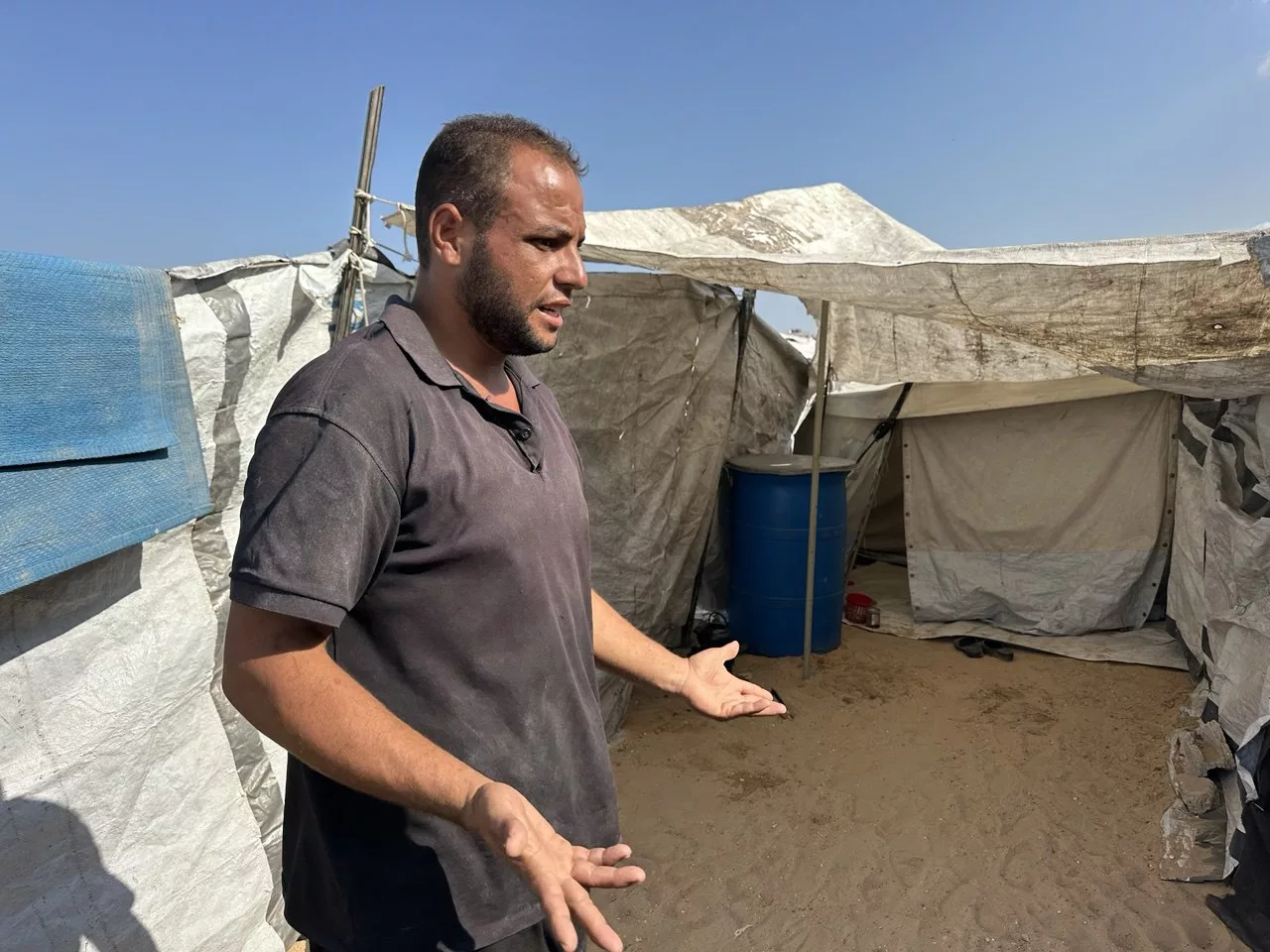
“I fled from death only to find more death,” he says, adding that he was eventually forced to pitch his family’s tent inside a cemetery.
The psychological impact on children living in such grim surroundings is profound. Bayader al-Basyouni, 43, also displaced from the north, says this is her fifteenth time being displaced — but none of the previous ones compare to this. “The first night, my children couldn’t sleep. They were terrified, asking questions about the dead: Can they feel us? Will they rise from their graves?”
At dawn, the children rejoiced upon realizing the dead hadn’t come back and no figures in white had appeared. Bayader was further shocked when her children began to play by digging mock graves in the sand and placing stones on either side, mimicking funerals for imagined martyrs.
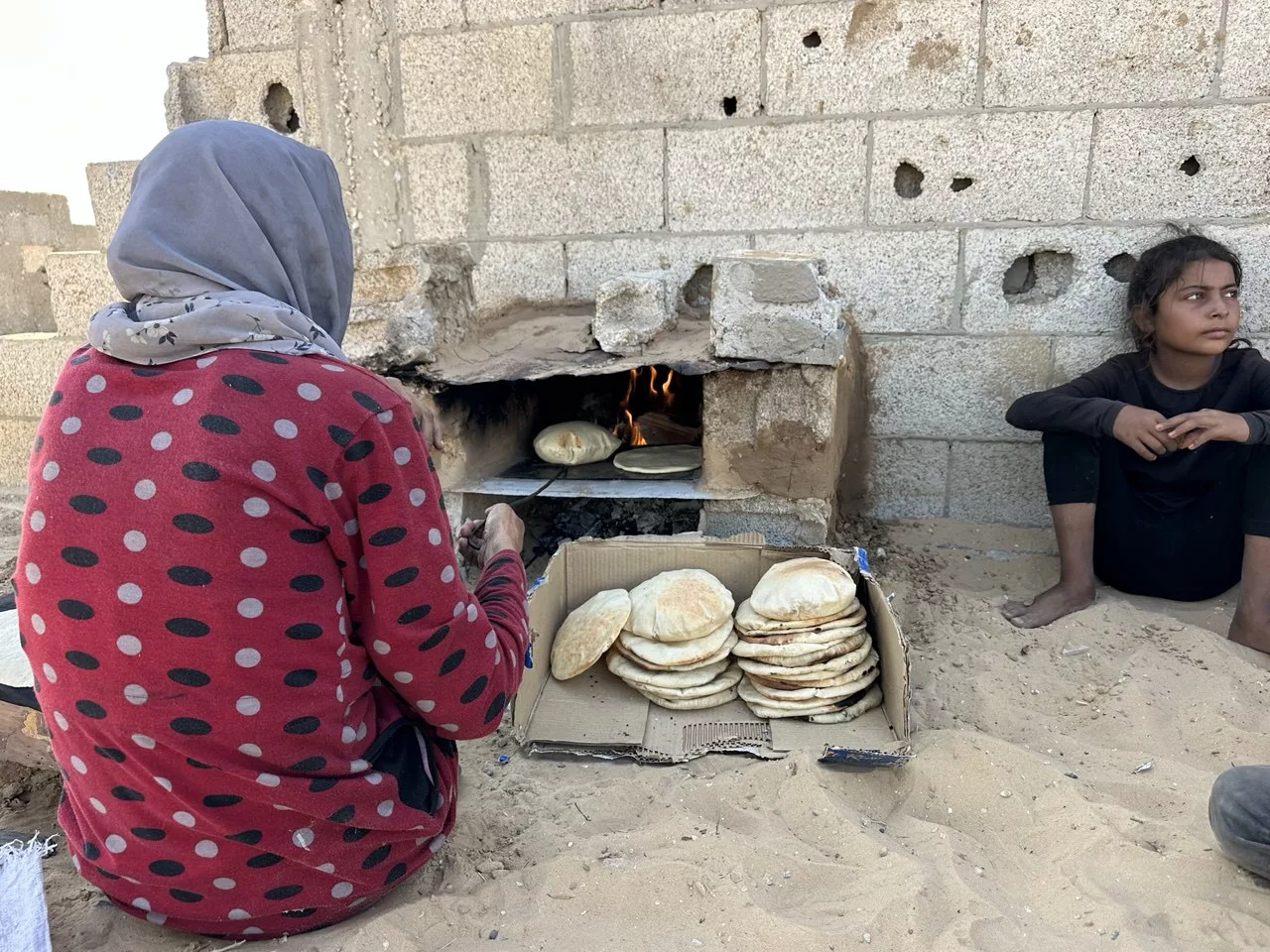
She says Gaza’s women have borne the brunt of this war and continue, with unyielding strength, to support their families. “I built a makeshift bread oven to provide for my children from nothing.” But she fears yet another evacuation order may come soon. “I just want this war to end. I want safety, even if we have to rebuild our lives atop the rubble of our homes. I want my children to go back to school.”
For Suha Sukkar and her family, deciding to flee the north for the south was agonizing. It was their first time leaving — they had endured the war in the north with all its horrors. The relentless bombardment, shelling, flares, and repeated attacks around Sheikh Radwan cemetery pushed her brother to rent a vehicle and urge the family to evacuate.
Upon hearing the decision, Suha burst into tears. “We had no money for the journey,” she says. The trip cost 6,000 shekels, so each family member had to contribute. Suha only had one item of value a gold necklace which she reluctantly gave up to help cover the costs.
She is not alone. Dozens of families have made similar sacrifices. Raed Ghorab sold off furniture and household belongings to pay for displacement. He managed to ship a few items to the south, but the family had to make the 30-kilometer journey from Beach Camp to Khan Younis on foot, dodging shellfire, and spent five nights sleeping outdoors.
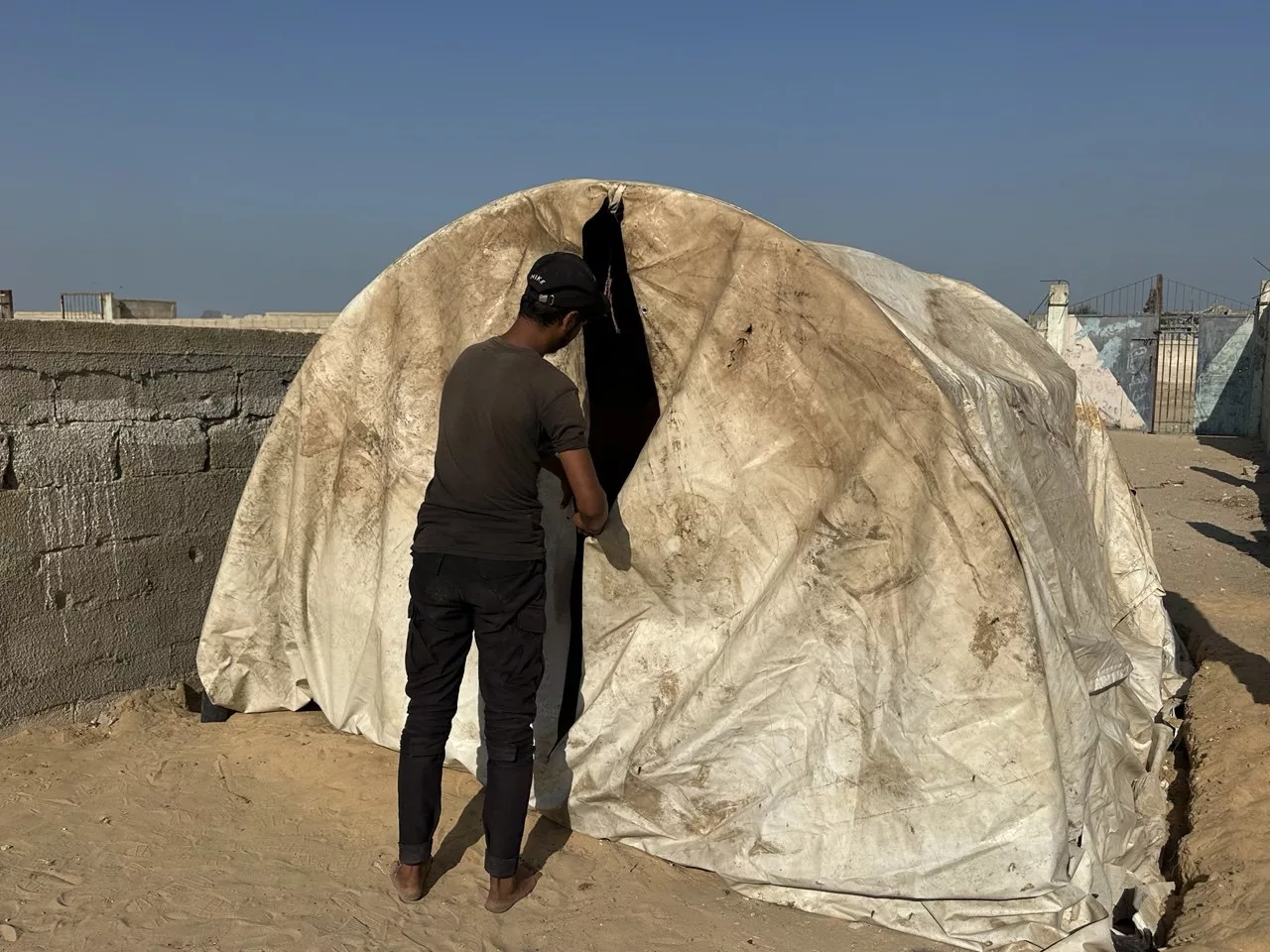
When Noon Post met him, he was pitching a tattered tent between two graves the only available space. “Israel talks about safe zones, but it’s all lies. There is not a single safe inch in Gaza,” he says, adding that he dreams of returning to the refugee camp where he was born and raised.
Hundreds of thousands remain trapped in Gaza City, surrounded by Israeli military vehicles. They simply cannot afford the cost of fleeing, placing them at severe risk as the military expands its operations, including booby-trapping entire residential blocks and using robotic devices.
According to on-the-ground reports from journalists still inside Gaza, Israeli forces now control large swathes of the city. Intensive air and artillery strikes threaten to obliterate homes and the city’s already-crumbling infrastructure.
Meanwhile, Israel continues to escalate its campaign, targeting residential buildings and high-rises while deploying explosives-laden robots to force more residents southward.


