











The cherry and almond seasons have passed, along with the harvests of wheat and barley. Olive season is now approaching, yet residents of Jubatha al-Khashab, a village in northern Quneitra, have been unable to harvest their land.
This tragedy is another face of the Israeli military operations in Quneitra incursions and the establishment of military bases were never just about security; they have cast a long shadow over the livelihood and resources of the local population.
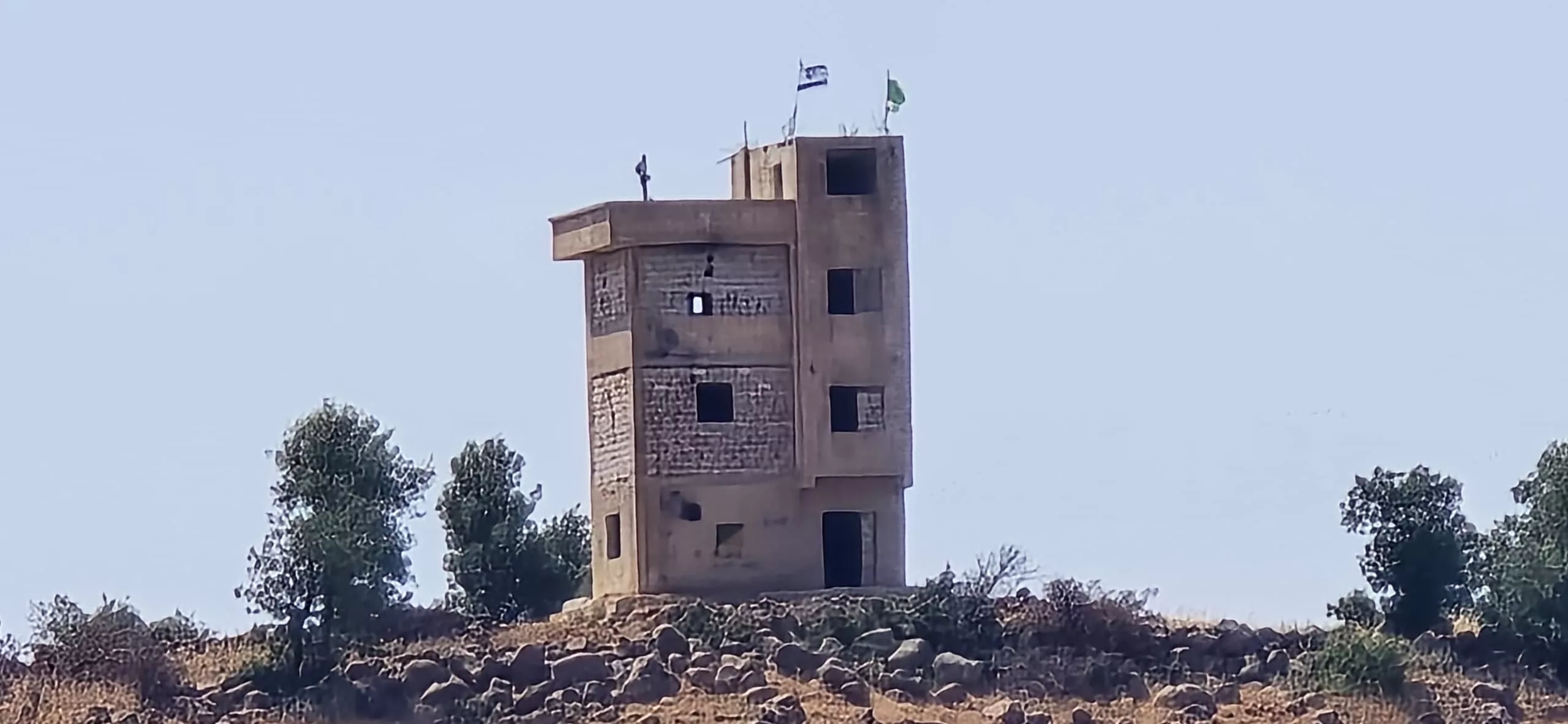
Since the fall of the Assad regime, Israel has exploited the security vacuum in southwestern Syria to establish a network of military bases stretching from the peak of Mount Hermon to the southern Yarmouk Basin.
Alongside its military entrenchment, it has imposed a new economic reality on the people of Quneitra through multiple means. The bases, the security zones around them, and the newly built “Sufa 53” road all were constructed on lands belonging to local villagers who depend primarily on agriculture and livestock to survive.
An Occupation of Military Restrictions
“These lands included residential plots, seasonally cultivated farmland, orchards, and grazing fields,” says Hassan Saad al-Din, a farmer from Jubatha al-Khashab, describing the lands seized by Israeli forces, who have barred their rightful owners from accessing them.
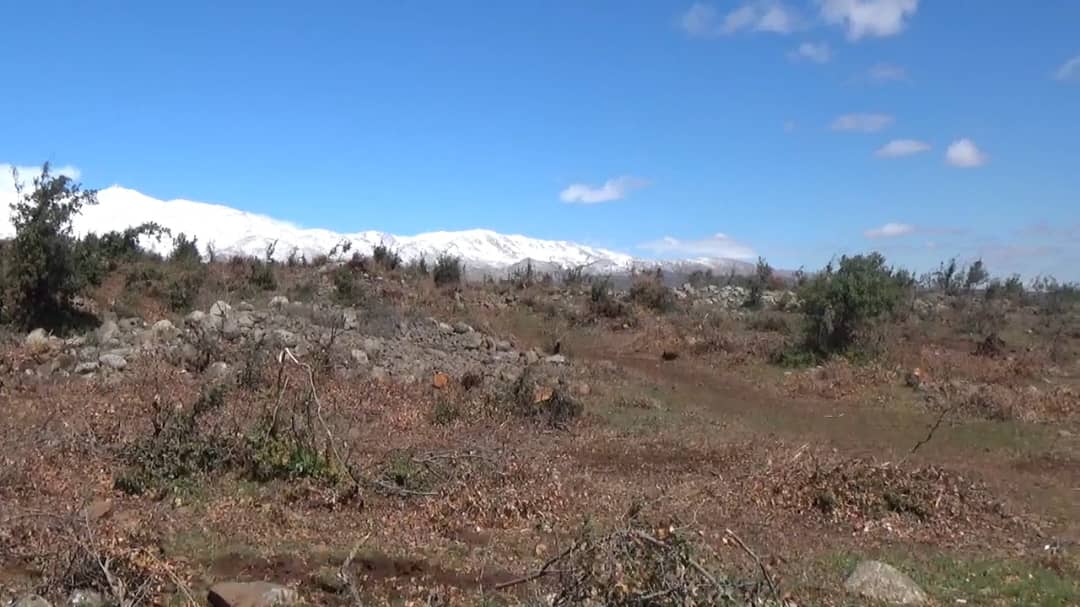
“Like many in my village, I’ve lost 16 dunams,” he adds, “part of it was olive trees, the rest grazing land for livestock. This year’s harvest was left to rot on the ground we weren’t allowed to pick it. Our situation was difficult, and now it’s worse than ever.”
According to the village mukhtar, some 7,000 dunams of land in Jubatha al-Khashab have been turned into closed military zones by the occupation. Fifty dunams of that were bulldozed and cleared of trees. In Hamidiyah, the head of the local council estimates that 4,000 dunams were confiscated.
In the southern countryside of Quneitra, residents also suffer due to Israeli control over Tel al-Ahmar al-Gharbi, where a military site was established. To facilitate incursions into its eastern counterpart, Tel al-Ahmar al-Sharqi, the occupation forces closed the road connecting central and southern villages.
Fayez al-Fawwaz, a farmer from the village of al-Asbah, is among those affected. “I lost access to 170 dunams,” he says. “They span Tel al-Sharqi and its surroundings. I have an olive grove there, which I rely on to feed my family. I also had pastureland for my livestock, which I’ve now started selling off just to afford feed for the rest.”
Shadi al-Azzam, another local resident, adds: “Things were already bad before the Israeli incursion now they’ve gotten worse. I can’t reach 100 dunams of my land, like many others in the village. We’re forced to buy expensive feed.
Some landowners were allowed access to their land on the condition they coordinate with Israeli soldiers but all of us categorically refuse any contact with the occupation under any circumstance.”
The violations haven’t stopped at land confiscation. Israeli soldiers have repeatedly seized livestock that stray near the ceasefire line, and there have been multiple instances of direct gunfire killing dozens of animals.
Between Neglect and “Humanitarian Aid”
Quneitra is Syria’s smallest province, but its strategic location and natural resources have long made it a target. Israel occupied most of it in 1967, forcibly displacing its residents.
According to retired civil servant Ibrahim al-Numairi, the suffering has continued ever since. “Since the 1974 ceasefire agreement,” he explains, “the regime has imposed tight security controls over the area it holds.
Non-residents aren’t even allowed to enter without permission from the Sa’sa’ security branch. This clampdown deterred any investment, and the state never launched development projects either.”
The province’s neglected infrastructure reveals the extent of this abandonment. With an area of 460 square kilometers, Quneitra has only one hospital located in its center, the city of al-Baath and reaching it is no easy task. The distance from southern villages can exceed 45 kilometers, and public transport is scarce except in the early morning hours.
Water access is no better. Despite the presence of seven dams and abundant groundwater, drought struck the region this year. Villages faced shortages not due to low rainfall, but because of a decaying water network, electricity rationing that hindered pumping, and deliberate sabotage. Israeli forces destroyed the main water station in southern Quneitra, which had served several towns and villages.
Shadi al-Azzam notes: “The water delivery schedule in our village doesn’t align with electricity supply. So we end up buying water from tanker trucks to meet our basic needs.”
In the face of the economic hardship caused by military policies and deteriorating conditions, the occupation attempted to win over locals through so-called “humanitarian aid.” Food and medical supplies were distributed, promises were made to improve infrastructure, and job offers were extended inside the occupied territories targeting unemployed youth in particular.
But these efforts failed. In predominantly Sunni villages, young people responded by burning the contents of aid packages, sending a clear message: no normalization, no compromise.
Divide and Rule
The Israeli strategy doesn’t stop at military dominance or economic suffocation — it also targets the social fabric. Israeli officials have openly presented themselves as protectors of minorities, and this narrative has been implemented on the ground, particularly in relation to the Druze community.
Israel has opened supply lines to Druze villages along Mount Hermon’s slopes. On May 28, the Israeli army announced the opening of a field medical facility in the village of Hader in northern Quneitra, aimed at providing medical support to Druze residents.
Meanwhile, Sunni-majority villages have faced systematic disarmament and repeated arrests. In contrast, no comparable actions were reported in Druze villages. The only known arrest was of Zidan al-Tawil, accused of ties to the Quds Force, along with two minor raids on alleged weapons smuggling networks.
There were no widespread disarmament campaigns or sweeping raids like those regularly carried out in Sunni areas, where residents face daily restrictions.
Between land confiscations, forest clearings, economic strangulation, induced dependency, and efforts to fracture communities, the layers of Israeli occupation policy come into view a mix of military, economic, and social pressures. Yet, the people of Quneitra continue to cling to their national identity an identity expressed in their unwavering refusal to normalize or surrender.


