












Overnight, thousands of Gazans found themselves homeless, scrambling to pitch tattered tents in the western and southern parts of the Gaza Strip after Israeli strikes reduced their homes to rubble. These attacks coincided with evacuation orders as Israel launched its ground offensive.
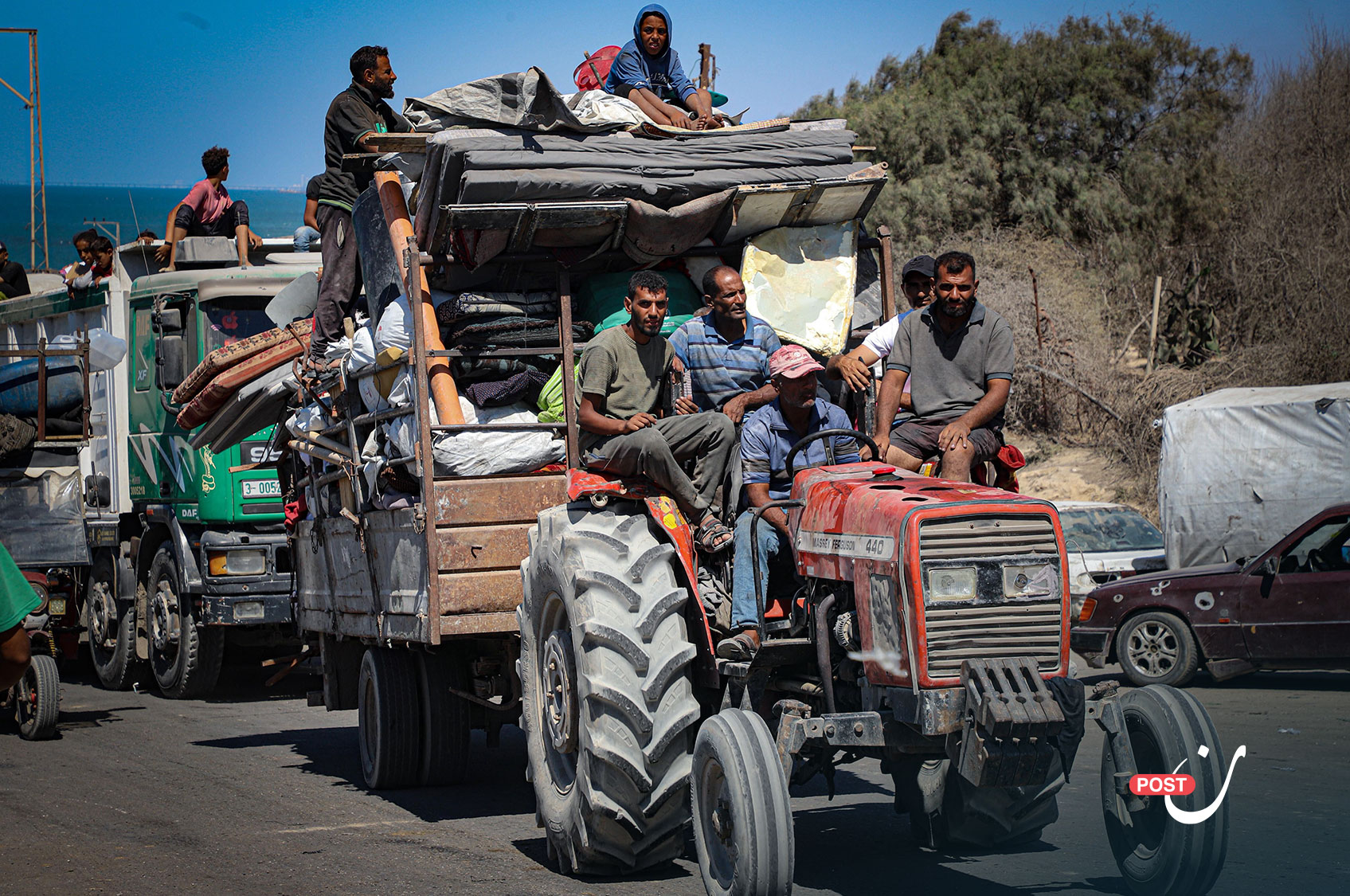
Carrying heavy belongings with pale faces and trembling hearts, many began yet another desperate journey of displacement, fleeing from central Gaza toward its western and southern edges in search of a semblance of safety for their families. The Israeli military had expanded its targeting zone, especially in the north, forcing countless families to move.
According to statistics from Gaza’s Government Media Office, approximately 35,000 Palestinians who had previously fled to the south have now returned to Gaza City due to extreme overcrowding and soaring rental prices for apartments and land. Facing dire economic hardship, many chose to confront death over displacement.
The office also confirmed that 1.2 million Palestinians remain steadfast in Gaza City, despite relentless bombing and ongoing violations by Israeli forces.
No Luxury of Choice
Ahed Abu Hassanein fled with his family of 30 from the Abu Iskandar area under heavy shelling, heading to the southern Gaza Strip in search of a spot to pitch their tents. Israel had claimed that the Al-Mawasi area in Khan Younis was a “humanitarian zone,” yet it was hit with 109 airstrikes and repeated bombardments, leaving hundreds dead.
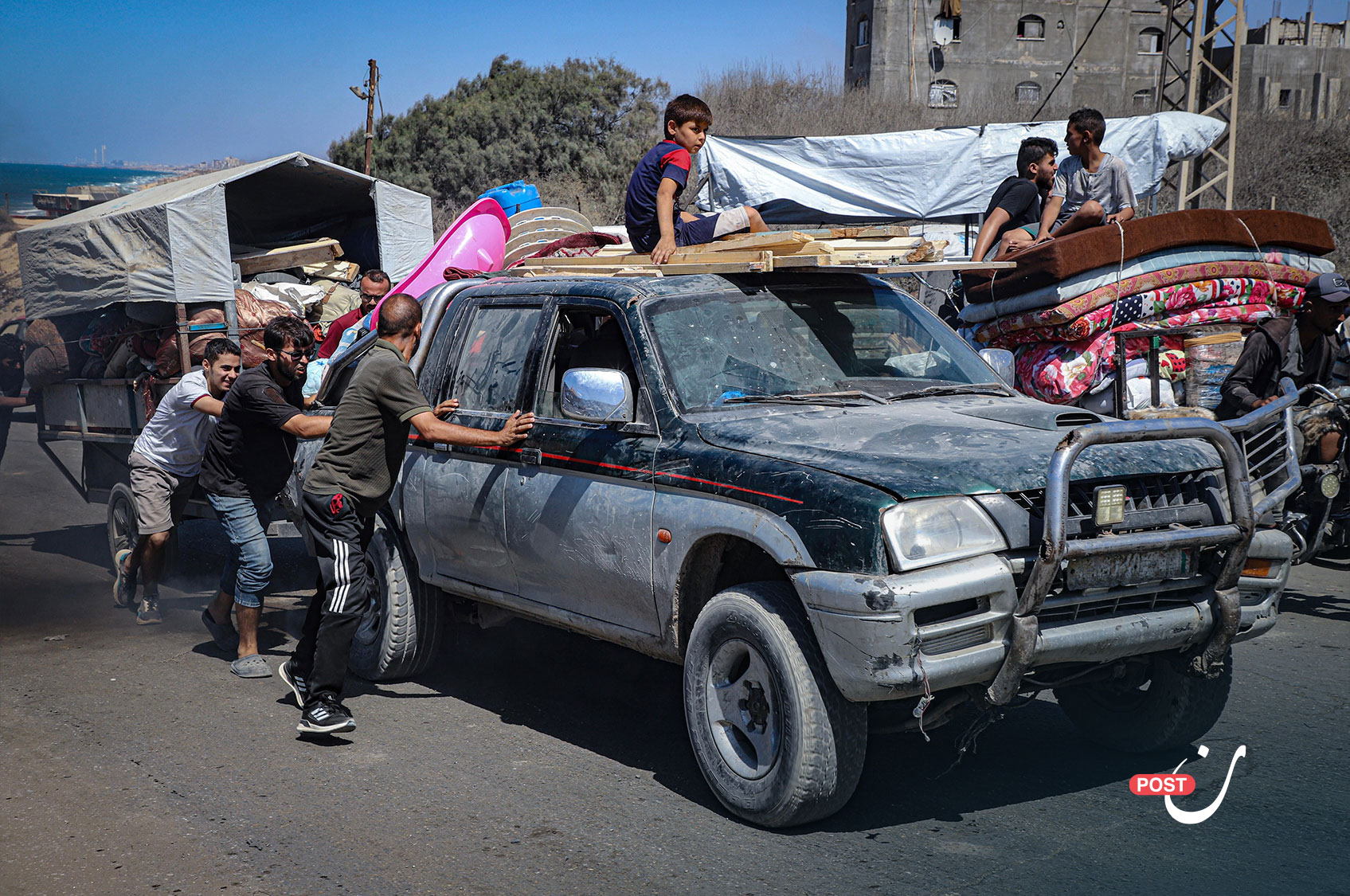
Speaking to NoonPost, Ahed said: “We had no choice but to flee again, either to the south or the center of Gaza, fearing another Israeli incursion into the city. Surviving with children is no easy task.”
He added that although he had decided not to flee again, Israeli forces resorted to new tactics to force residents out—destroying surrounding homes, opening fire, launching shells, and deploying quadcopter drones that drove dozens from their neighborhoods.
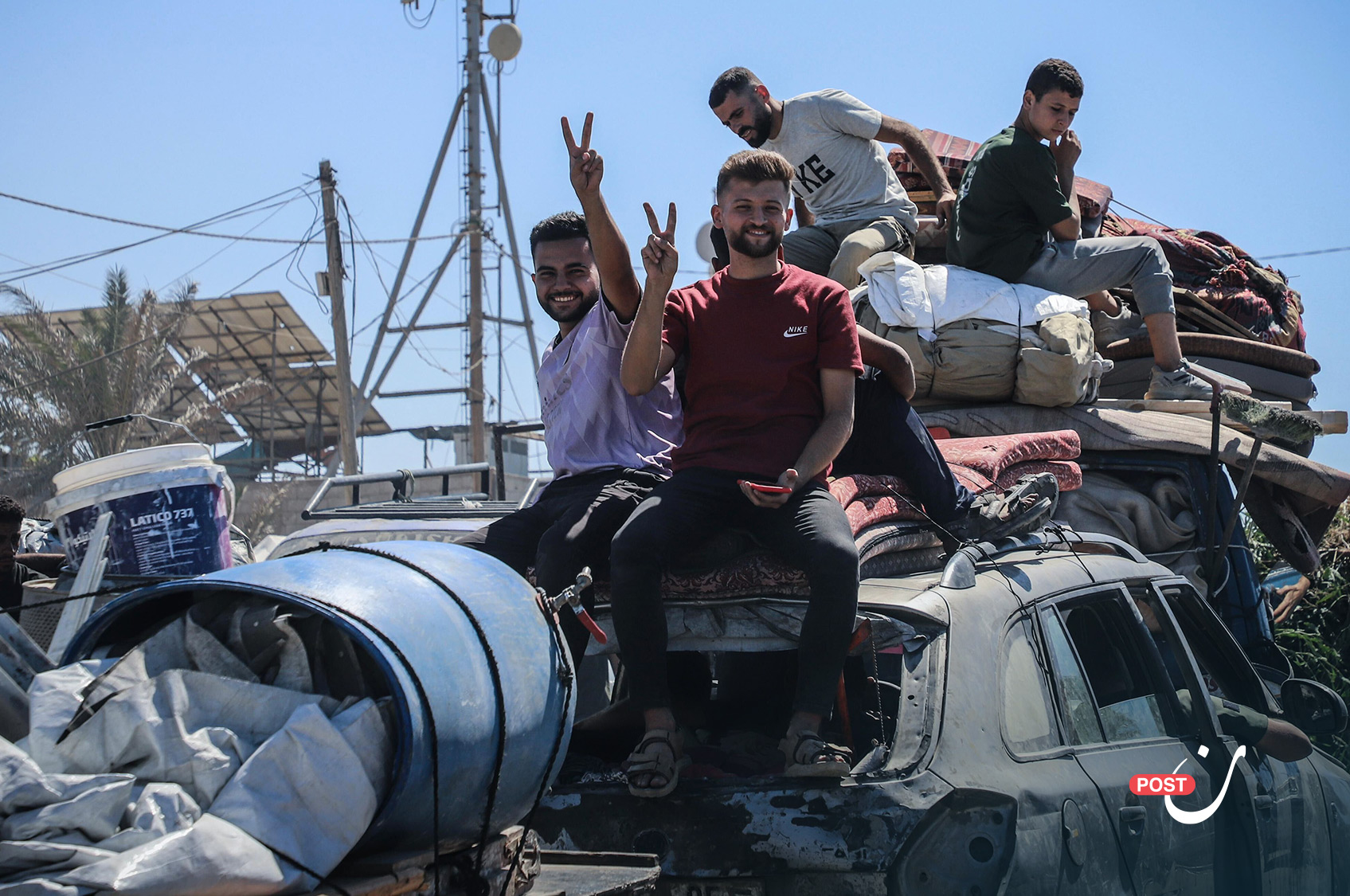
“I returned the next day to try and retrieve some essential belongings—clothes, kitchenware, tents—but the quadcopters fired at the house. Still, I insisted on salvaging whatever I could carry,” he recounted.
Ahed likened displacement to “the soul being ripped from the body,” a trauma that Gazans can no longer bear. “We don’t have the luxury of choice,” he said, expressing hope that the war ends soon so they can return home.
A Small Bag
Mohammed Abu Sula fled with his family from Jabalia al-Nazla in northern Gaza after Israel threatened to bomb the residential block where his home stood. It was his first time being displaced since the war began.
“Despite Jabalia being dangerous, I stayed for months. But this time was different,” said the 45-year-old. “The army ordered us to evacuate ahead of a planned strike on an entire neighborhood. I never thought I’d experience displacement.”
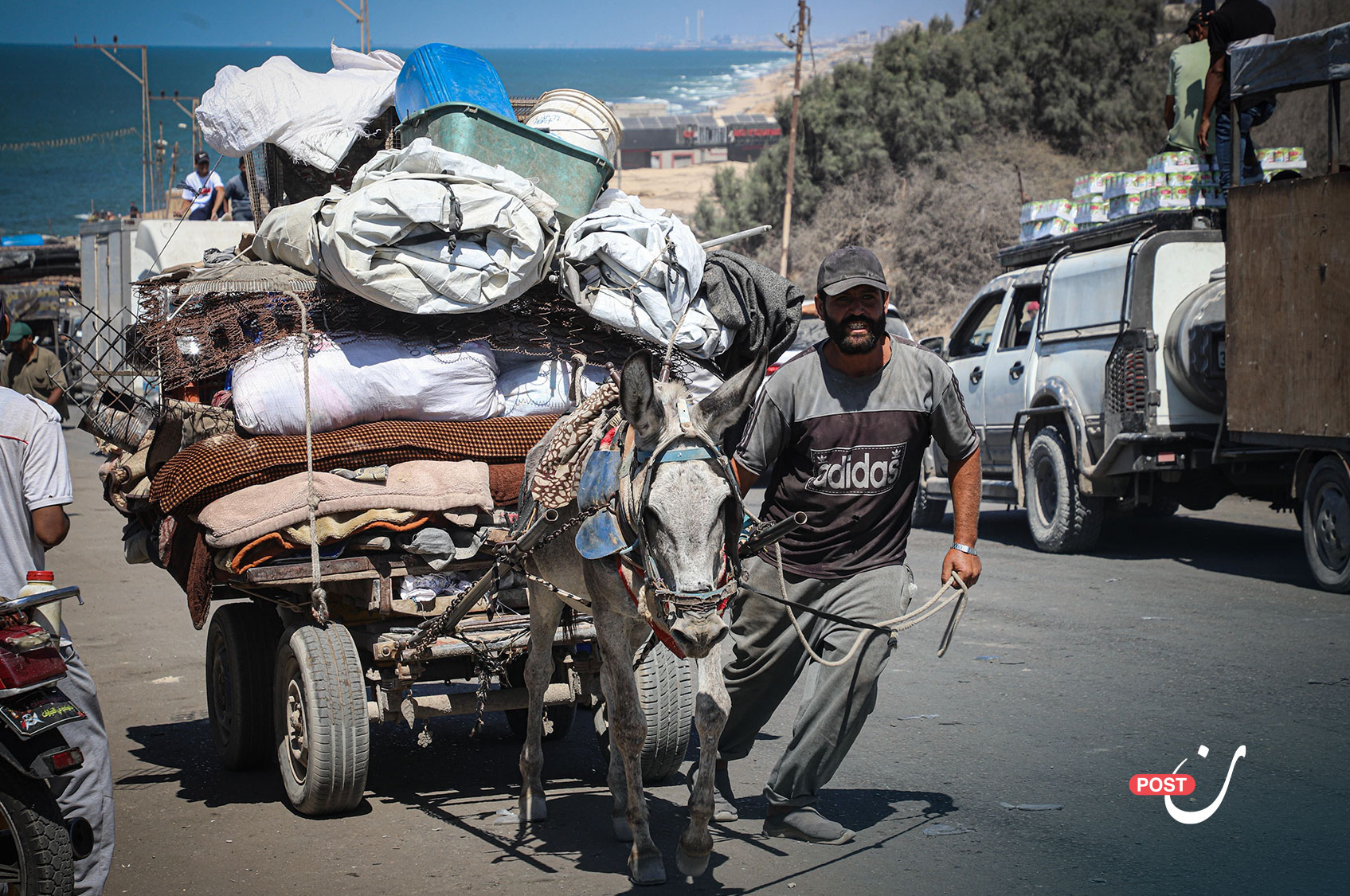
He didn’t have a tent, and with just ten minutes to evacuate, he had no idea what to take. “I wished I could carry my house in my small bag,” he said wistfully. His family watched their home collapse before their eyes and wept over the years that vanished in seconds.
“We fled first to Deir al-Balah in central Gaza after a grueling search for an empty plot of land to set up our tent,” he said, longing for the war, displacement, and suffering to end so life could return to normal.
Now, tents are overcrowding western, central, and southern Gaza, flanked by demolished homes and piles of waste. Some families have even been forced to move into so-called “red zones” in Khan Younis, despite the dangers.
Internal Displacement
According to UN estimates, more than 1.9 million people roughly 85% of Gaza’s population—have been internally displaced. Among them is Raed Abu Ghazaleh’s family, which was forced to relocate to the Al-Abraj al-Masriyya area after refusing to leave Gaza City.
Sumayya Abu Ghazaleh’s family has endured displacement multiple times since the war began. Eventually, they decided to stay put in the heart of the conflict, choosing the inferno of Gaza over the agony of repeated uprooting.
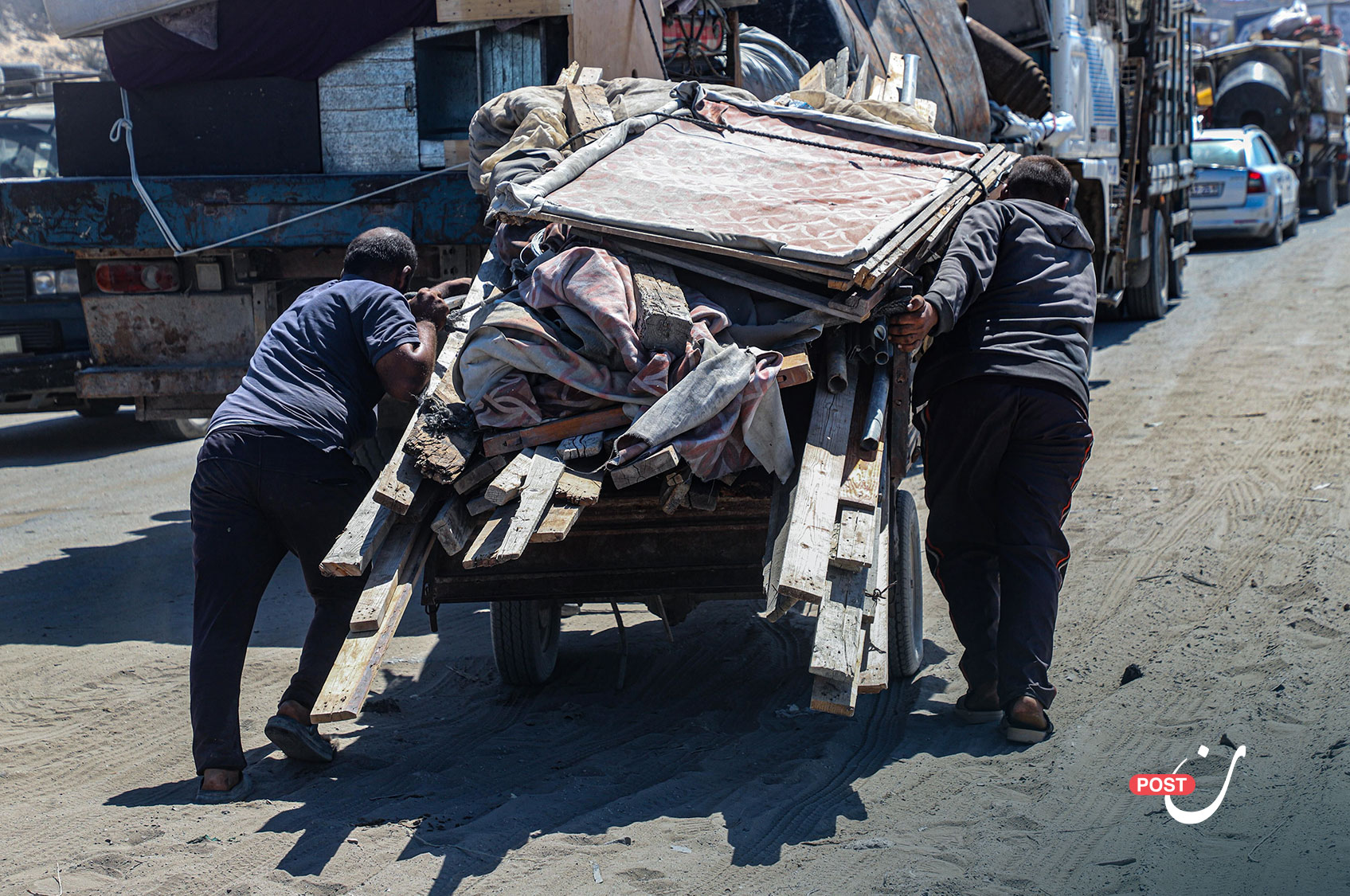
Sighing, Sumayya told Noon Post: “At the start of the war, we fled from the eastern Shujaiya neighborhood to Gaza City, hoping this war would end quickly like the previous ones. But it only expanded, and we had to flee again, first to Rafah.”
Their journey didn’t end there. It extended to Khan Younis and various areas in central Gaza before they eventually returned to the city only to find it re-invaded by Israeli forces, bringing with them a new round of unrelenting suffering.
“Displacement opens the gates of hell,” she said, describing the diseases, water shortages, lack of privacy, sky-high transportation costs, and, above all, the constant threat of Israeli airstrikes. “The occupation doesn’t care about so-called humanitarian zones or red areas.”
Sumayya concluded by noting that the Israeli army continues its campaign of destruction, with its latest strikes targeting apartment complexes and residential towers. These attacks have left hundreds more families homeless, pushing them onto the streets in what appears to be an effort to force them southward and ultimately empty Gaza of its people.


