







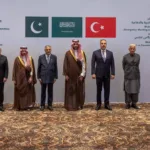



Aleppo recently concluded the SCRIPT Conference for content creators under the banner “Influencers for Syria”, held under the auspices of the Syrian Ministry of Information and attended by a notable array of officials. Official statements highlighted a large turnout, while other media estimated the number of participants at over 380, including Arab and Syrian content creators and experts.
The message was unmistakable: digital figures are no longer peripheral they are now instruments of the state. But political value is not measured by the size of the hall or the number of photographs; it lies in whether there are clear, public rules governing this presence.
The 2025 Reuters Digital News Report documents a continued decline in engagement with traditional media, alongside a rise in reliance on social networks and short-form video, with notable momentum for so-called “news influencers/creators.” This is no generational fad it’s a shift in trust from institutional brands to individual figures.
Independent research echoes similar findings: for the first time, a large segment of the public now gets its news directly from social media more than any other source.
Arab States: Regulating Influence Instead of Leaving It to Chance
The UAE has moved from promoting the influencer economy to regulating it through the advertiser license, introduced by the UAE Media Council in the summer of 2025. This license is required for anyone posting promotional content online—paid or unpaid.
It comes with a clear licensing framework, designated categories, and specified exemptions. The stated aim: to boost credibility and regulate legal responsibilities in a now-mature market.
Saudi Arabia was ahead of the curve, requiring individuals to obtain an advertising license via the General Commission for Audiovisual Media. The license, issued through the Mowthooq platform, costs 15,000 SAR for three years and includes content guidelines and clearly stated exemptions. The message is clear: a legal framework that integrates influencers into the market rather than leaving advertiser-creator relations in a legal gray area.
During the 2022 World Cup, Qatar piloted a fan leader model by inviting influencers and supporters from dozens of countries, offering travel and accommodation in exchange for adherence to a code of conduct and supportive digital activity. The initiative revealed the power of popular diplomacy through creators, while also sparking ethical debates about disclosure and neutrality.
Jordan adopted a dual strategy of financial regulation and legal tightening. The Income and Sales Tax Department called on influencers to legalize their tax status, categorizing digital income as taxable. Meanwhile, Jordan’s 2023 Cybercrime Law faced criticism for its chilling effect on the public sphere and digital media. The experience shows that market regulation should not come at the expense of open discourse.
A Global Regulatory Framework Takes Shape
In Europe, a new transparency architecture is emerging to regulate the intersection of politics and digital advertising. Regulation (EU) 2024/900 mandates clear labeling of political ads, transparency notices revealing actual sponsors, paying parties, publication timelines, costs, and funding sources with data archived for seven years in a machine-readable format.
The underlying philosophy is straightforward: citizens deserve to know who is saying what, with whose money, and why the ad reached them.
The regulation doesn’t stop at labels—it governs access tools as well. It bans targeting based on sensitive categories (religion, race, health…), requires explicit consent for targeting based on non-sensitive data, and restricts messaging to minors.
Simultaneously, a unified European repository for political ads is being created, allowing researchers and the public to track campaigns through a single portal with standardized data.
Under the Digital Services Act (DSA), the European Commission has begun assessing major platforms for compliance. TikTok, for instance, received a preliminary opinion citing gaps in its ad library—a clear sign that ad libraries are no longer optional features. In practice, this trend compels governments—including Syria—to adopt early disclosure, labeling, and public repository rules, rather than waiting for a crisis in public trust.
Opportunities and Risks in the Syrian Context
In a post-uprising environment fraught with challenges, influencers offer real potential in public service messaging: simplifying bureaucratic processes, promoting health guidelines, issuing emergency alerts, and explaining policies in accessible language. Regional influencer networks and mid-tier creators in the provinces can boost outreach and provide real-time feedback to decision-makers via questions and comments.
But there’s always a flip side: the risk of politicizing governance through fleeting trends, reducing public decision-making to the rhythm of online virality, exacerbating identity-based polarization in a fragile society, and marginalizing journalism if information privileges shift to private accounts instead of press conferences and open Q&As. Additionally, the vulnerability to foreign interference remains a serious concern.
The difference lies in the rules of engagement: mandatory labels for any sponsored political content appearing at the top of a post, a searchable public registry showing the sponsor, value, and intent, and a published fact sheet for every campaign. A strict ban on sensitive targeting and a structured process ensuring that journalists get access to documents before influencer briefings can turn speed from a threat to truth into an ally of it.
And then comes the truth standard: no politically influential content should be published without an accompanying fact sheet summarizing verifiable key points. If inaccuracies are found, there must be a rapid correction protocol requiring content to be updated or annotated within a short timeframe. Reach is not more important than accuracy—they must go hand in hand.
In terms of language and style, messaging should remain relatable without crossing red lines: no incitement to hatred or violence, and no micro-targeting based on religion, sect, ethnicity, or health status. The charter should echo the spirit of modern political advertising regulations and translate it clearly into local practice.
Conflicts of interest must be addressed through institutional transparency: disclosing relevant commercial partnerships and avoiding promotion of policies that directly impact current or former sponsors. These disclosures should be posted on a unified page within a national registry so the public doesn’t have to dig behind the scenes.
To ensure journalism isn’t swallowed by the attention economy, the charter must establish a strong editorial firewall: giving journalists priority access to documents shortly before influencer campaigns launch, and mandating a fixed portion of all government spending on influencers be directed to support independent media—through ad purchases, investigative grants, or training. This isn’t a professional luxury; it’s the immune system of democracy.
Finally, no charter is complete without an independent oversight body comprising journalists, legal experts, civil society members, and advertising professionals. This body would review campaign samples quarterly, publish public compliance reports, and recommend graduated penalties for violations. Additional digital safety protocols should protect speakers—especially women—from online abuse that often accompanies political discourse in fragile environments.
Conclusion:
Influencers are not a roaming Ministry of Information, and journalism is not a historical ornament.
A wise state redistributes roles: journalists hold power to account, influencers simplify, and government discloses.
Anything else—a toxic mix—produces a state governed by the algorithm of the trend.
And then, too late, we’ll discover that noise doesn’t build trust, likes don’t feed people, and viral moments don’t build institutions.


