







Historically, Ein Samia lies on the eastern plains of Kafr Malik, near Ramallah, stretching across four kilometers. Its history dates back more than 7,000 years, making it one of the oldest historic areas in the world.
Researchers of ancient civilizations have described it as a city rich in archeological treasures from the Early Bronze Age, the Canaanite period, the Roman era, and the Islamic period.
Ein Samia is also home to hundreds of Roman tombs. Most importantly, it contains a vast and pristine natural spring, the largest and purest in the area, which supplies Ramallah, al-Bireh, and surrounding villages with water.
Ein Samia, a land that embodies resilience and identity, has long been coveted by Israel and its settlers. Their dream of seizing its lands and spring has now become reality. Taking advantage of the October 2023 war, Israel and its settlers accelerated their plans and finally took control of what remained of the land and its history.
“Ein Samia is the soul of the village, and it is gone”
Umm Fakher, her eyes brimming with tears, spoke to Noon Post with anguish about her land, seized by settlers. Once fertile and green, it has been reduced to a wasteland used as pasture for settlers’ sheep and cattle. “I spent my entire life farming this land.
Thirty years I worked it sometimes planting vegetables, other times thyme. I never felt tired when cultivating it. But now, I feel the exhaustion and heartbreak of seeing my land stolen, my livelihood gone. I stand on the ruins, crying for my land that has been turned to rubble.”
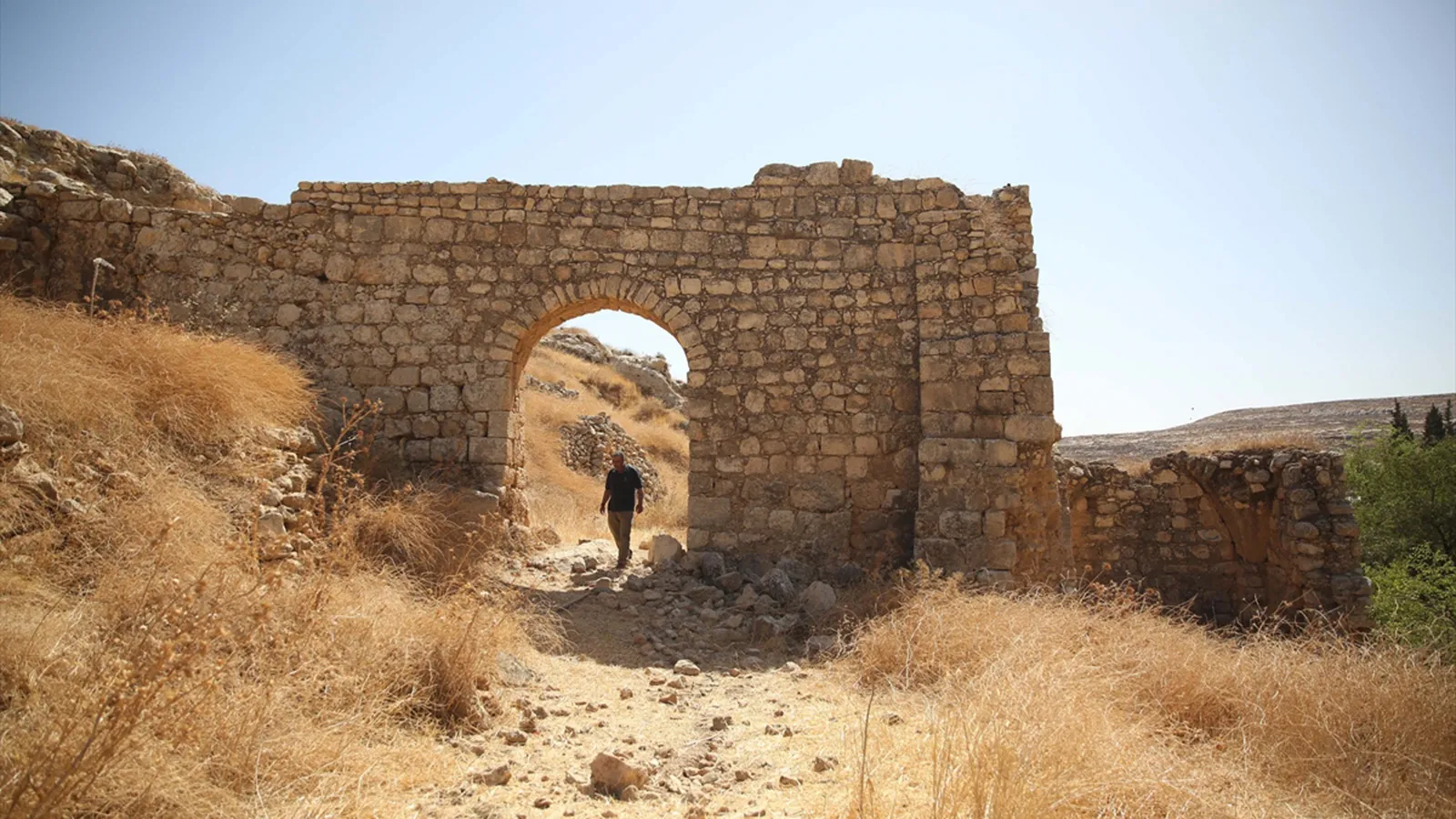
Juma’a B’airat, a farmer and retired employee of the electricity company, also told Noon Post that Ein Samia has always been a target for Israeli expansion. In the 1970s, part of its land was used for a military camp that later became the agricultural settlement “Kokhav HaShahar.” From there, the settlement spread like a cancer, consuming more land until little remained.
“Just before the October 2023 war, new outposts were built to push us out gradually,” he said. “Settlers began attacking shepherds and Bedouins to drive them from Ein Samia.
During the war, they intensified their assaults threatening us repeatedly, beating us, breaking my legs and fingers, and fracturing the ribs and arm of a fellow farmer. Yet we refused to abandon our land.
But with settler violence, backed and protected by the Israeli army, we were eventually banned from accessing our fields. Ein Samia was declared a closed military zone.”
Settler Frenzy
In an interview with Noon Post, Salah Khawaja of the Palestinian Anti-Wall and Settlement Commission stressed that targeting Ein Samia is nothing new it dates back to Israel’s 1967 occupation. The land has been subjected to attempts at militarization, training grounds, and settlement construction, all designed to displace Palestinians.
“After October 7, settler and military campaigns escalated,” Khawaja explained. “The area has now been overrun, shifting from small outposts to dense settlement clusters. It has become a safe haven for settlers and a training ground for them to commit atrocities against Palestinian villages.”
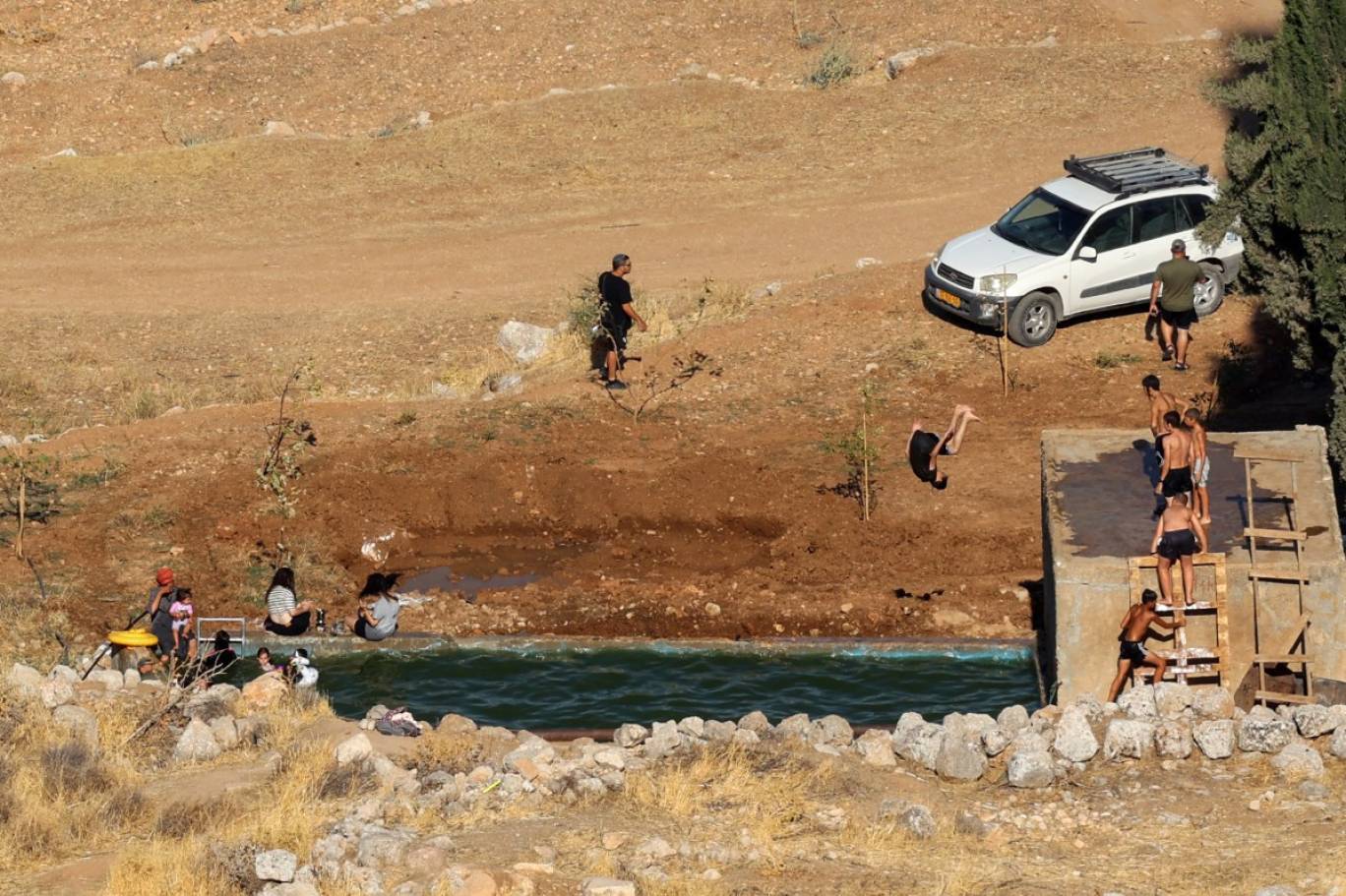
He added: “Normally, when the Israeli army declares an area a military zone, neither Palestinians nor Israelis are allowed entry. But under new emergency regulations, the land is closed only to Palestinians and their allies, while settlers roam freely, tightening control, seizing farmland, and looting crops.”
30–40 Families Lost Their Livelihoods
B’airat lost 3.5 dunams of vineyards in a violent confrontation with settlers. Ein Samia’s fertile plain, spanning between 300 and 600 dunams, is entirely owned by the residents of Kafr Malik. Of this, around 150–200 dunams are cultivated with thyme, citrus, guava, avocado, and grapes.
These fields formed the backbone of income for 30–40 families. After settlers, backed by the Israeli army, seized the land, many farmers lost their livelihoods and were reduced to unemployment.
Once considered a vital breadbasket for Palestinians, Ein Samia was one of the most important agricultural hubs for the eastern Ramallah villages, serving as the eastern gateway to the Jordan Valley.
180,000 Seedlings Destroyed
Engineer Nazeeh Fakhideh of the Ministry of Agriculture told Noon Post that the ministry is deeply concerned about the assaults on Ein Samia’s farmlands and water source. “Ein Samia is a lifeline and the primary source of income for the farmers of Kafr Malik,” he said.
The attacks not only strip farmers of their rights but also threaten Palestinian food security and rural agricultural development.
According to Fakhideh, the ministry’s Ein Samia nursery was completely destroyed by settlers. It had produced 180,000 forest seedlings annually, along with olive, guava, grape, citrus, and avocado saplings.
A private olive nursery was also demolished, greenhouses were wrecked, and at least 100 dunams of thyme and vegetables were bulldozed.
Looting Crops and Livestock
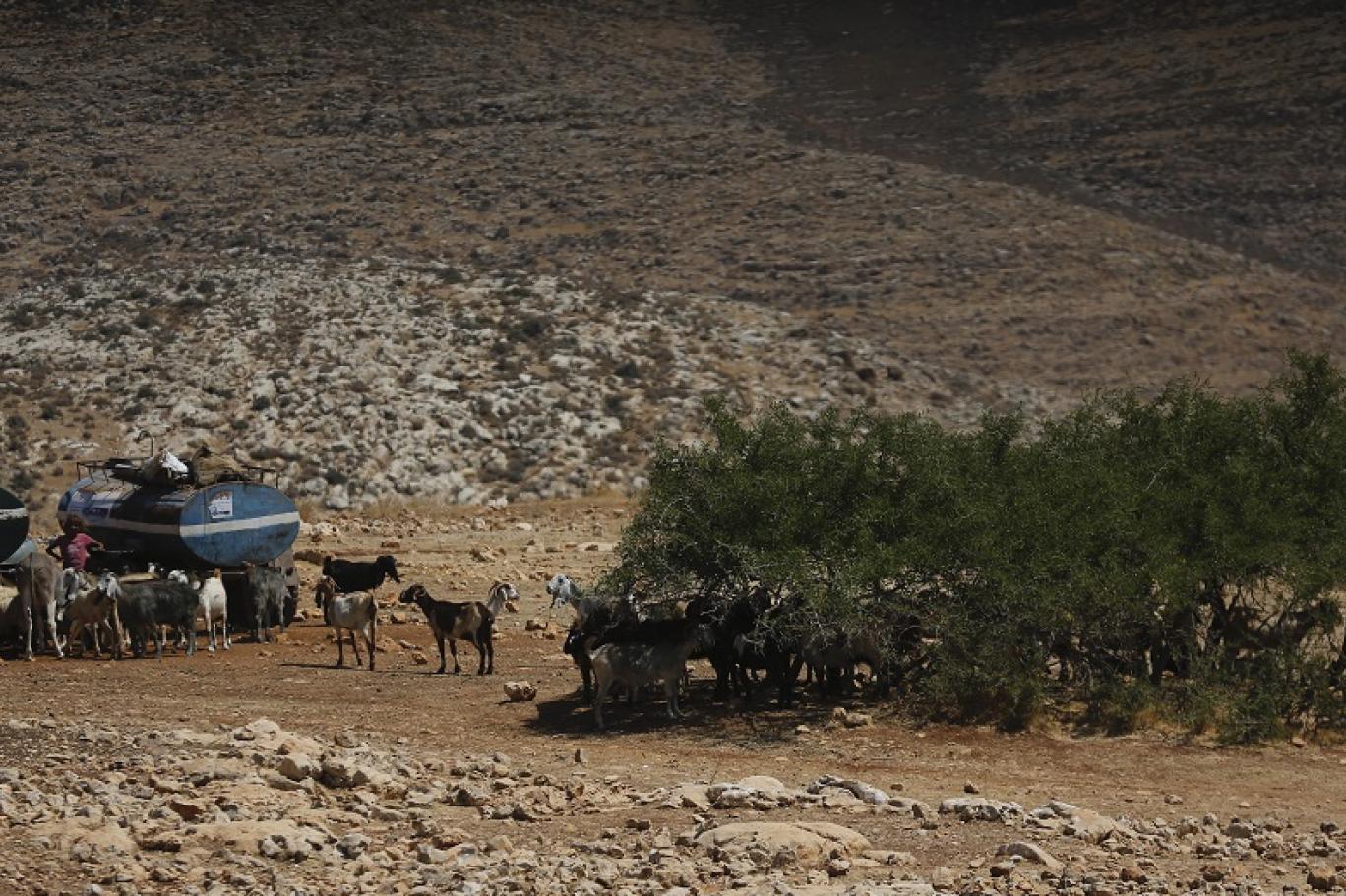
Shepherds, expelled from Ein Samia’s pastures, were forced to graze their flocks on the edges of the village. Even there, settlers pursued them, assaulted them, and stole no fewer than 200 sheep from farmers Mustafa al-Durbani and Khaled Ghara. In interviews, they recounted how they lost their families’ only source of income, despite grazing on lands legally owned by Kafr Malik, far from the settlements.
Today, five settler outposts encircle Ein Samia like a fence. Among them is one established by the “Hilltop Youth,” notorious for violent land seizures. Hebrew media previously reported on one settler who promised his fiancée that their engagement gift would be the takeover of Ein Samia’s lands—and indeed, during the October war, that “gift” was delivered.
“We Are the Original Landowners”
Despite their losses, farmers remain defiant. “This land is ours. We are its original owners, and we will never surrender,” B’airat insisted. “We will return, one day, to farm it again and restore its greenery.”
Khawaja emphasized that Palestinian resilience requires genuine partnership between official, civil, and international institutions to provide farmers with at least the minimum they need. “So far, the aid has been scraps, barely enough,” he said. “What is required is broader mobilization, greater resources, and more effective tools for those who lost land, whether in agriculture or livestock.”
For his part, Fakhideh said the ministry is documenting all violations and incorporating them into programs to support farmers’ resilience, urging the international community to assume its responsibilities and halt the attacks.
Ein Samia is the lifeblood of Kafr Malik and neighboring villages. In spring and summer, it was a green retreat, a place of leisure for families from Ramallah and surrounding areas, with its beautiful spring and trails leading into the Jordan Valley.
With the settlers’ takeover, residents have lost not only their farmland but also their only place of recreation transformed now into a playground for colonizers.
What is happening in Ein Samia is only the beginning of a broader campaign to erase Palestinian presence in eastern Ramallah. This agricultural devastation should serve as a wake-up call: it is time to act to preserve what remains of history and existence.
During the preparation of this report, settlers were observed digging in the area of Ein Samia. Their purpose remains unclear.