









هذا التقرير متاح أيضًا بـ العربية
War is no longer confined to a single front or specific military objectives in Israeli calculations. It now extends from Palestine to Lebanon, Syria and Iran, as an approach based on decisive military force and expanded control takes hold. As talk of a settlement recedes and the concept of “deciding the conflict” gains ground, questions arise about the shift in Israeli security doctrine. Is Israel moving towards making war a permanent policy for imposing its hegemony and reshaping the region? And what could halt this course when there is no political prospect of ending the confrontations?
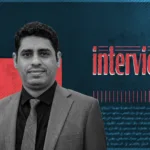
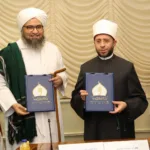
We explore these and other questions with two prominent Palestinian researchers: Antoine Shalhat, a researcher at the Palestinian Center for Israeli Studies, Madar, and Dr Ahmad Rafiq Awad, director of the Al-Mutawasit Center for Regional Studies in Ramallah.
Permanent war: A shift in Israeli security doctrine
According to Antoine Shalhat, a researcher at the Madar Center, Israeli political and security thinking is shifting towards continuous war as a policy for preserving the Jewish state. This transformation could also be reflected in Israeli security doctrine.
Shalhat links this shift to the events of 7 October 2023 and the war on multiple fronts that followed, described in the Israeli narrative as the most dangerous war Israel has fought. In his view, this has reinforced the belief that war is the means of protecting the state.
Signs of this shift are evident in statements by political and military officials, most recently Israeli Prime Minister Benjamin Netanyahu’s presentation of what he called the “new concept of Israeli national security.” Shalhat notes that this concept envisages resorting to war from now on, making it a permanent condition.
This vision extends beyond continuing the war to establishing what are called “security buffer zones.” He explains that these involve expanding Israeli control by occupying territory within hostile states, particularly along their borders.
According to Shalhat, this trend is visible in the Gaza Strip, where reports indicate that Israel may retain control of about 72 per cent of the enclave. It is also evident in southern Lebanon and extends to Syria, where Israeli actions have moved beyond the Golan Heights, occupied since 1967, into other parts of Syrian territory. More recently, this approach has extended to the northern West Bank, where Israel has begun establishing army camps.
On the Palestinian issue, he believes there is near-consensus in Israel that the issue is no longer open to a settlement. He argues that Israel stopped seriously considering a settlement, particularly after the failure of the Camp David summit and the outbreak of the second Palestinian intifada in 2000. This does not mean, however, that previous Israeli governments were necessarily moving towards one.
Shalhat recalls the 2000 Camp David summit, attended by the late Palestinian President Yasser Arafat and then-Israeli Prime Minister Ehud Barak, which ended without agreement on a final settlement of the Israeli-Palestinian conflict. On returning from the summit, Barak coined the phrase, “There is no Palestinian partner for peace,” which Shalhat sees as marking the end of the phase of pursuing a settlement associated with the Oslo Accords.
Since then, Israeli political discourse has shifted from discussing a resolution of the conflict to “managing the conflict,” and then to “shrinking the conflict,” a term advanced under the government of change that preceded the current administration. Shalhat now notes growing talk of “deciding the conflict,” rather than merely managing or reducing it.
He points out that Israeli Finance Minister Bezalel Smotrich, who also holds a second post in the Defence Ministry, has spoken of deciding the conflict since 2017. He adds that prominent political currents and parties in Israel support bringing the conflict to a decisive end rather than continuing to manage it, while other political forces remain committed to managing it.
Shalhat identifies The Democrats alliance, which includes the Labor and Meretz parties and represents what is known as the Zionist left, as the only political force still speaking of resolving the conflict. In his assessment, the rest of the political spectrum is divided between three approaches: deciding the conflict, managing it or shrinking it.
According to Shalhat, this vision is reflected in Israeli policies towards Gaza and the West Bank. Military operations and actions on the ground are based on the new concept of Israeli national security, which entrenches continued war and makes security the basis for addressing the conflict’s future.
The dominance of this approach is evident across the Israeli political scene. Opposition parties discuss the future of the conflict but remain closely aligned with Israel’s security vision. This rests on the premise that neither Gaza nor the West Bank should pose a security threat to Israel, and that it must retain the right to intervene militarily against any threat to its security.
Shalhat notes near-consensus in Israel on this security vision for Gaza, alongside differences over what is known as “the day after” the war. The current Israeli government, dominated by the far right, has no plan for this phase. Some opposition parties see the need for one, though without granting Palestinians independence or establishing a Palestinian state. Instead, they envisage intervention by international and Arab forces, with some raising the possibility of cooperation with the Palestinian Authority.
In the West Bank, meanwhile, the far right is pressing ahead with the annexation plans set out in the coalition agreements when the current government was formed. According to Shalhat, this drive extends beyond Area C to parts of Area B, alongside attempts to reach parts of Area A in the context of establishing what are called “security buffer zones.”
More broadly, Shalhat explains that prevailing Israeli positions on the Palestinian issue are now governed by security considerations, with no political expectation of a settlement in the foreseeable future. Even so, he distinguishes between the governing coalition parties and some opposition parties: the far right openly advocates displacement and annexation, while opposition parties do not endorse these calls but approach settlement expansion from a security perspective.
He acknowledges differences between the two camps. From a Palestinian perspective, however, he does not consider them fundamental to their approach to the conflict’s future, so long as the security vision continues to govern their positions towards Palestinians.
‘No peace on the horizon’: War as Israeli policy
Shalhat attributes the declining support for a political settlement in Israeli society to political and social shifts that predated the current war and pushed society further to the right, particularly since 2000. He points to growing support for right-wing parties of all kinds, from the far right to what is known as the moderate right.
He notes that Israeli politics now comprises an explicitly right-wing component alongside parties that describe themselves as centrist but adopt positions closer to the right. By contrast, what was once known as the Zionist left has declined sharply and become a marginal force.
This shift, he adds, is also evident in party positions on the future of the war and military confrontation. Even the proposals of parties once known as the Zionist left have come to focus on security, an approach reflected in their political positions. They continue to speak of a two-state solution, but, according to Shalhat, do so cautiously and without forcefully advocating it.
Shalhat stresses that the political landscape reflects changes in Israeli society, particularly since 2000, which are also evident in public support for parties across the political spectrum.
He also links the continuation of the war to Netanyahu’s political and personal calculations, arguing that, for Netanyahu and his government, remaining in power is a “sacred goal.”
Politically, Shalhat explains, the continuation of the war and the state of emergency may serve Netanyahu by postponing an investigation into the failure surrounding 7 October 2023, described in the Israeli narrative as the greatest strategic and intelligence failure in Israel’s history. An official investigation into the circumstances of the attack would raise questions about responsibility for that failure, including that of Netanyahu and his government.
He points to Netanyahu’s opposition to establishing an official commission of inquiry to determine the facts, arguing that continuing the war serves his political interests in this context.
On a personal level, Shalhat links Netanyahu’s insistence on remaining in power to his fears about the consequences of an investigation into the 7 October failure, as well as his trial, which has been running for years, on charges relating to alleged criminal offences. A conviction could lead to imprisonment, he notes. In this analysis, Netanyahu’s continued hold on power is also linked to his attempts to restructure the judiciary in ways that could affect the course and outcome of his trial.
He describes the link between the continuation of the war and Netanyahu’s political and personal interests as one of Israel’s open secrets, openly discussed in Israeli media and research centres.
Shalhat believes the political settlements discussed in relation to regional confrontations remain tied to military victory, rather than agreements that meet the other side’s demands. He cites the war on Lebanon, saying that, in his view, Israel is not seeking a political settlement before achieving its stated war aims.
Disarming Hezbollah is a central objective for Israel, despite a number of Israeli analysts acknowledging that it is impossible to achieve and estimating that it may require occupying all of Lebanon. According to this assessment, Israel is not proposing a political settlement with Lebanon that would entail abandoning this objective. This reflects its commitment to its security goals and unwillingness to compromise on them in a political agreement.
The same logic applies to Iran. Israel, which cooperated with the US and pushed it to wage war on Iran, tried to persuade Washington that the war could bring down the Iranian regime. With that goal unmet, however, it does not appear ready to propose a political settlement with Tehran.
Official Israeli statements and the positions of most opposition groups reflect this approach. They make military victory a precondition for any possible agreement, on the premise that decisive military action is the way to curb Iran’s missile programme and prevent further progress in its nuclear programme.
More broadly, Israel views the Palestinian issue and other regional issues primarily through a security lens, rather than a political one that would allow settlements to end the confrontations. This means that “military confrontation, wars, and military operations will continue to affect any political settlements that may appear on the horizon.” Shalhat sums up this situation by saying that “there is no peace on the horizon,” and that continued war will remain a political vision within Israel.
Even so, he adds, this course could change if there were an exceptional shift in the relationship between Israel and the US. Continued unconditional US support allows Tel Aviv to pursue its current approach. In his words: “As long as this unconditional support continues, Israel will continue with this entire approach that says there is no peace on the horizon.”
A change in the US position, from unconditional support to pressure on Israel to pursue political settlements, could open the way to a change of course. He concludes that “the key is also in the hands of the United States in this regard more than it is in the hands of the Israeli government.”
‘Imposing facts by force’: Israeli doctrine after 7 October
Dr Ahmad Rafiq Awad, director of the Al-Mutawasit Center, believes aggression and expansionism are no longer merely tools for achieving specific goals but have become an established approach governing how Israel deals with the region. This, he says, explains its preference for war over a settlement, with no sign of solutions in the near term.
Awad explains that Israeli doctrine now treats aggression and expansionism as the foundations of policy, rather than simply as means of pressure, blackmail, bargaining or imposing solutions. In his assessment, this approach is evident in the return to pre-emptive strikes, the establishment of buffer zones and the strategy known as “mowing the grass,” as well as a preference for dealing with a weak, fragmented region rather than strong, established regimes with defined agendas.
He links Israel’s preference for war over a settlement to the opportunities war provides to occupy territory, dismantle and weaken adversaries, stir sectarian divisions and displace people. In this sense, war is no longer simply a means of achieving specific goals but has become a choice in itself. It goes beyond temporary confrontation to an attempt to impose a regional reality that serves Israeli interests.
On this basis, Awad expects the region to enter a period of multiple wars on different fronts, with no settlements in sight in the near term. In his view, Israel is no longer seeking settlements but domination and subjugation, as aggression and expansion have become established policies rather than merely tools for managing the conflict.
He believes this course raises questions about Israeli society’s ability to endure endless war, while Israel does not appear ready to abandon an approach based on expanding its influence and subjugating its adversaries.
Awad describes this approach in the period since 7 October as the “Oct. 7 doctrine,” based on expansion, aggression, buffer zones and pre-emptive strikes rather than waiting for an adversary to act or launch an attack. He believes Israel is no longer discussing a political settlement with Palestinians or any other party, but is moving towards imposing facts by force.
‘Regional legitimacy for occupation’: Agreements at the Palestinians’ expense
Awad believes Israel is less interested in settlements than in imposing its hegemony and expanding its influence. It wants to address the Palestinian issue by reimposing occupation and securing regional legitimacy through force rather than a settlement, making the reality it imposes on the ground the basis for any future arrangements.
He views the Abraham Accords in this light, as agreements to entrench Israeli influence and impose hegemony. He argues that they work in one direction: Israel gets what it wants, while the other side receives no comparable return, particularly on a solution to the Palestinian issue. In his view, Israel wants to expand these agreements without resolving the Palestinian issue, so that they come at the Palestinians’ expense rather than enabling them to end their cause.
Awad rules out a solution to the Palestinian issue in the near term, given Israel’s commitment to separating the West Bank from Gaza and dealing with each under different arrangements. In the occupied West Bank, he sees this approach leading towards de facto or formal annexation, alongside the rejection of an agreement with the Palestinian Authority and, perhaps, efforts to dismantle it. In Gaza, the picture is one of continued occupation and the imposition of international tutelage.
According to Awad, this approach extends beyond the separate treatment of the West Bank and Gaza to seeking Arab and regional legitimacy for the reality Israel imposes on the ground. He criticises its demand that Arab states sign agreements with it, which could make its occupation of the West Bank and Gaza appear acceptable or legitimate. He links this to the possibility of using displacement to pressure Arab parties, by threatening to displace Palestinians if those parties do not commit to the Abraham Accords.
He links the possibility of a political settlement, by contrast, to the willingness of the parties to the conflict to accept it. A settlement requires all parties to believe in it and see it as serving their interests, he explains, and that willingness is currently absent. He believes the basic condition for a real settlement is for Israel to be in a position of weakness or face major economic, security or political pressure that pushes it to accept one. He argues that addressing the Palestinian issue and achieving regional stability will not be possible while Israel retains its power and continues its aggressive, expansionist approach.
He attributes the failure to reach a settlement both to Israeli intransigence and refusal to engage in a political process, and to Arab parties’ inability to impose a solution on Israel. In his assessment, no regional power is capable of compelling it to accept a settlement of the Palestinian issue. Nor does he place much hope in a decisive role for the US or the European Union: he sees some parties in both supporting the Israeli occupation, while others call for a settlement without taking practical steps to advance one.
According to Awad, this inability to act is reflected in the prospects for implementing the two-state solution. Although it continues to be proposed internationally, the conditions for implementing it on the ground are now absent. The US no longer makes it a priority, treating it instead as one possibility among several scenarios, while the EU continues to hold to it without taking sufficient steps to advance it. Arab states cannot impose it, and Israel rejects it outright. Awad therefore considers a two-state solution far from attainable in the near term and a settlement of the Palestinian issue distant for the foreseeable future.
Awad sees escalation in Israel’s regional relations too. He points to its provocation of countries including Türkiye, Egypt and Saudi Arabia, and its talk of an axis that has yet to form, comprising Saudi Arabia, Pakistan, Iran and Egypt, which it describes as a “Sunni axis” it seeks to confront. He believes Israel has begun “inventing enemies” before this axis has even taken shape. In his view, this reflects its tendency to widen the confrontation rather than pursue political settlements. He rules out a return to proposing a settlement in the near future, and perhaps for a long time.
On the US role, Awad attributes Washington’s bias towards Israel to the character of the current administration, which he describes as religiously, ideologically and politically extreme. He notes the presence within it of Anglican and conservative groups under heavy pressure from the Zionist lobby. He describes the US as Israel’s foremost ally in the region and stresses the extensive support it provides.
Although Washington can exert significant pressure on Israel, he believes the current US administration does not want to use that leverage to change Israeli policies. He describes the disagreements between the two sides as tactical differences over policies on the ground, arguing that they have not affected the substance of their deep relationship.
He rules out a war on Iran before the US midterm elections, given the lack of consensus within the US and the domestic legitimacy needed for such a step. He believes such a war would be interpreted as serving the personal interests and electoral calculations of both Donald Trump and Benjamin Netanyahu.
With US support continuing and no pressure capable of changing Israel’s position, he rules out a political settlement in the foreseeable future. He argues that war is likely to continue and become a political vision within Israel for as long as it remains committed to force and seeks to impose its hegemony and entrench facts that serve its interests.
Antoine Shalhat and Ahmad Rafiq Awad see no sign of a retreat from this approach in the near term, given Israel’s commitment to force, continued US support and the absence of pressure capable of changing its calculations. While Israel bets on decisive victory and expanding its influence, a settlement remains distant so long as it does not regard ending the conflict as an option and faces nothing that would compel it to abandon this course.
