















هذا التقرير متاح أيضًا بـ العربية
On 22 April 2025, gunmen attacked tourists in Pahalgam, in Indian-administered Kashmir, killing more than 20 people and wounding dozens. India accused Pakistan of responsibility for the attack, while Islamabad denied any involvement.
Days later, India suspended the 1960 Indus Waters Treaty, which had governed water-sharing between the two countries and withstood repeated wars and crises. New Delhi made resuming the treaty conditional on Pakistan abandoning support for terrorism, arguing that the agreement in its current form was no longer suited to changed strategic, demographic and environmental conditions.
Tensions quickly escalated into a direct military confrontation in early May 2025. Fighting lasted four days before ending in a ceasefire. In August that year, Pakistan’s army chief, Asim Munir, warned that his country would not allow India to choke off the flow of the Indus River, vowing to destroy any dam New Delhi sought to build.
Despite the ceasefire, the treaty remained suspended, and the use of water as leverage between the two countries intensified. Pakistan rejected the suspension, stressing that the treaty does not allow either side to suspend it unilaterally. It also warned that interference with water flows or the denial of its water rights would be treated as a threat to national security. Officials raised the possibility of war breaking out if pressure over water became an existential threat.
The escalation reached a new level in mid-2026, when India’s water resources minister said that “not a single drop of water will reach Pakistan in the coming years.” In response, Islamabad stepped up its diplomatic and legal efforts, hosting an international conference and holding seminars with officials and experts to discuss its water rights and ways to counter India’s moves.
This report traces the roots of the Indus water dispute from the partition of the subcontinent, through the 1960 treaty and disagreements over Indian water projects, to the current crisis. It also examines India’s ability to use water to exert political and strategic pressure on Pakistan.
The origins of the Indus water dispute
The Indus is one of the world’s longest and largest rivers, stretching about 3,180 kilometres. It rises on the Tibetan Plateau near Mount Kailash, then flows north and west through Kashmir before reaching Pakistan.
Its basin covers an area of roughly 1.14 million square kilometres across Pakistan, India, China and Afghanistan. In 2025, the basin’s population stood at about 320 million, with 61 per cent living in Pakistan and 35 per cent in India. The rest lived in Afghanistan and China.
The borders drawn after India and Pakistan gained independence in 1947 divided the river basin and broke up the interconnected irrigation network that had sustained the region. Partition left India as the upstream state controlling the headwaters, while Pakistan became the downstream state dependent on flows from India.
The crisis worsened in 1948, when India cut off water supplies to vital canals flowing into Pakistan. In his book “Indus Divided,” researcher Daniel Haines notes that the crisis went beyond a dispute over water shares and became a conflict over sovereignty. India insisted on its right as an upstream state to manage resources within its borders, while Pakistan defended its historic right to the continued flow of water on which it had depended before partition.
At the time, beyond its economic importance, water was tied to the formation of the two states and the consolidation of their central governments’ authority. According to Haines, water was a core element of internal sovereignty in both India and Pakistan. Regulating irrigation, expanding agricultural land and collecting taxes from farming were all linked to extending state authority over land and people.
The 1960 Indus Waters Treaty
The water dispute continued after the 1948 crisis, with efforts to reach a settlement stalled by questions of sovereignty and the consequences of partition. As the crisis widened, American water management expert David E. Lilienthal proposed that the World Bank sponsor negotiations between the two countries. Both governments accepted.
After nine years of World Bank-sponsored negotiations, India and Pakistan signed the Indus Waters Treaty on 19 September 1960, dividing the basin’s six main rivers into two groups. The three eastern rivers, the Ravi, Beas and Sutlej, were allocated to India, while the western rivers — the Indus, Jhelum and Chenab — were allocated to Pakistan.
The treaty granted both countries specific rights to use the rivers allocated to the other. While Pakistan enjoys free use of the western rivers’ waters, India was allowed to build hydropower projects on them, subject to technical and design restrictions. The treaty also obliges India not to alter flows or store water in ways that would harm Pakistan.
The treaty established a three-stage dispute-resolution mechanism, beginning with the Permanent Indus Commission, which includes one commissioner from each country and meets annually. If no solution is reached, the parties may turn to a neutral expert or a court of arbitration. The treaty contains no clause allowing either side to suspend or amend it unilaterally.
In his book “Indus Divided,” Haines argues that the settlement rested on mutual concessions: India accepted limits on its use of the western rivers despite their headwaters lying within its territory, while Pakistan gave up its claims to the waters of the eastern rivers.
The signing was welcomed at the time as an achievement and an opportunity to begin a new phase of cooperation and ease tensions. But it also drew domestic criticism in both countries from opponents who saw it as a surrender of water and sovereign rights.
Although the treaty survived successive wars and crises and successfully managed the water dispute, Haines notes that it did not address the roots of the conflict between the two countries. Foremost among these was Kashmir, where water is bound up with the dispute over sovereignty in the territory through which the western rivers flow.
From the “Salal approach” to the expansion of Indian power projects
According to Haines in his book “Indus Divided,” water tensions remained limited during the first decades after the treaty was signed. The two countries handled disputes and technical issues through the Permanent Indus Commission, without political escalation or early recourse to international arbitration.
Former Indian high commissioner TCA Raghavan says this quiet approach prevailed from the 1970s until the late 1990s. It became known as the “Salal approach,” named after the Salal hydropower project on the Chenab River in Jammu and Kashmir. Pakistan criticised the project before the dispute ended in a settlement under which India made modifications. The settlement became a model for keeping water disputes within a technical framework.
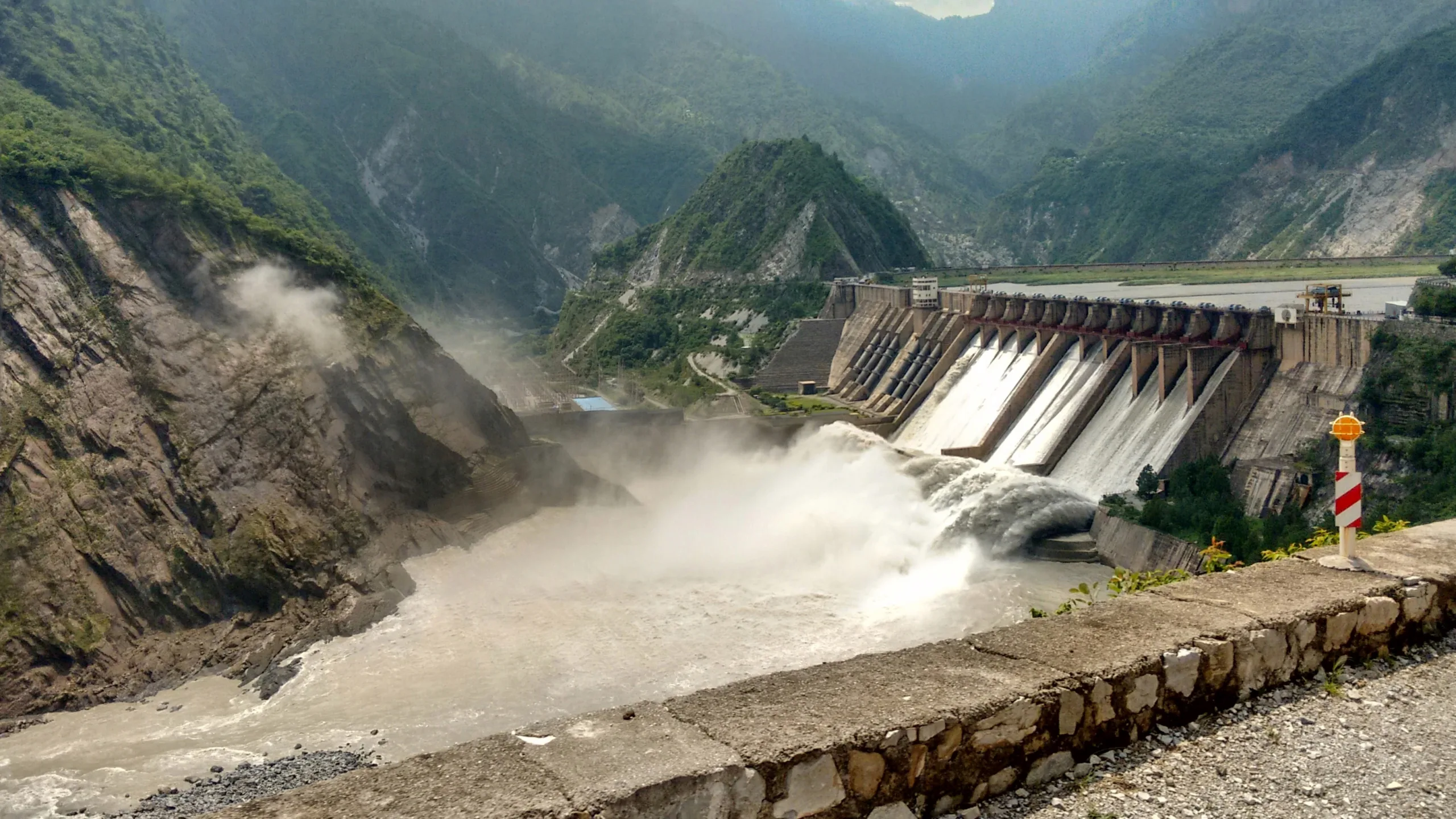
But this approach faced several tests. In the 1980s, India planned to build the Tulbul project on the Jhelum River, prompting objections from Pakistan, which believed it would give New Delhi the ability to control the river’s flows. In 1987, India agreed to suspend the project pending an amicable settlement, but negotiations failed to produce a final agreement. Under Prime Minister Narendra Modi, the project later became a symbol of the shift in India’s approach.
As India expanded its use of the hydropower potential of the western rivers allocated to Pakistan, technical and legal disputes intensified over whether its projects complied with the treaty’s restrictions. Among the most prominent was the Baglihar Dam on the Chenab River, which Pakistan challenged and referred to a “neutral expert.” In 2007, the expert allowed India to continue the project while requiring modifications to some aspects of it.
The dispute then shifted to the Kishanganga project on the Jhelum River. Pakistan objected to the diversion of part of its waters for power generation, fearing an impact on flows reaching the areas of Kashmir under its administration. The dispute reached the Court of Arbitration, which in 2013 allowed India to use the water for power generation but required it to maintain a minimum flow to Pakistan. The project opened in 2018.
Further disputes arose over other projects, including Ratle, Kiru, Kwar and Dulhasti, then extended to the dispute-resolution mechanism itself. Pakistan insisted on referring disputes to the Court of Arbitration, while India insisted they be heard by a neutral expert.
More recently, Islamabad turned to the Court of Arbitration, arguing that India’s projects on the Chenab River violated the treaty. Pakistan obtained rulings in its favour, but India refused to recognise them. Islamabad also requested technical details of Indian projects on the western rivers, especially the Chenab, but New Delhi refused to provide the information.
India’s expansion of dam and power projects on the western rivers has raised serious concerns among policymakers in Islamabad, who view these moves as part of an Indian strategy to weaponise water and pressure Pakistan.
Experts also link Modi’s rise to power to the shift in Indian foreign policy, particularly the growing connection between security, counterterrorism and water rights in its dealings with Pakistan.
David Michel of the Center for Strategic and International Studies believes escalating attacks and security tensions between the two countries accelerated India’s plans to develop water infrastructure on the Ravi River and elsewhere in the Indus basin.
India’s accelerated construction of new projects on the western rivers, alongside upgrades and improvements to the efficiency of existing projects, has also drawn growing Pakistani objections, particularly as several were carried out without consulting Islamabad. Since April 2025, Pakistan has recorded sudden changes in flows on the Chenab and Jhelum rivers.
The Pakistan Indus Waters Commission has regarded India’s expansion of hydropower construction as a clear violation of the treaty. Sources indicate that Islamabad has objected to more than 52 of 71 Indian projects and described them as tools for achieving “water hegemony.”
Controlling the Indus waters
After suspending the treaty, India began accelerating the construction and development of hydropower projects on the western rivers, especially in the Chenab basin. These include Pakal Dul, with a capacity of 1,000 megawatts; Kiru, with 624 megawatts; Kwar, with 540 megawatts; and Ratle, with 850 megawatts. All are on a river whose waters were primarily allocated to Pakistan under the treaty.
Pakistan’s concerns extend beyond these projects to the course India may take in the coming years. If India builds new projects to store water from rivers allocated to Pakistan, Pakistan could face severe consequences over the next five to 10 years.
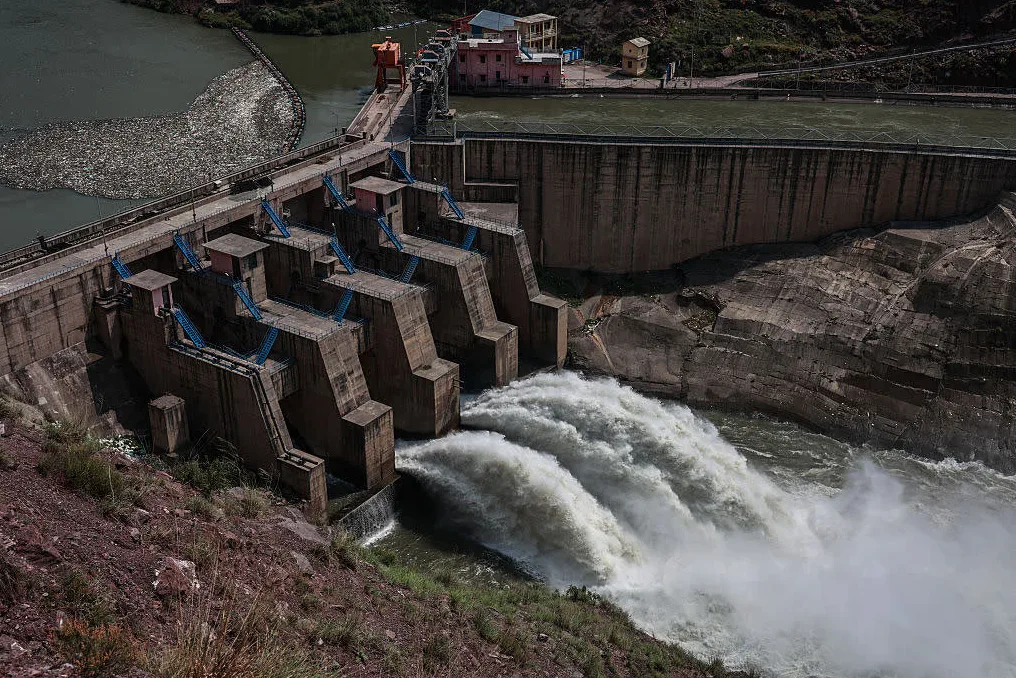
Despite India’s suspension of the treaty and its greater leverage as an upstream state, experts say its ability to stop the flow of Indus waters to Pakistan entirely remains limited for now. It currently lacks the infrastructure to hold back vast quantities of the basin’s water for long periods.
That limited capacity does not mean India cannot affect flows to its neighbour. Even without large reservoirs, India can manipulate the timing of flows, slow them for limited periods or release large quantities at specific times.
Anutama Banerji, an analyst specialising in water issues, explains that India’s control over the timing of flows is particularly sensitive for Pakistan when farmers’ water needs are high, especially in winter. Changes in when water arrives can affect agriculture and winter crops such as wheat.
This is Islamabad’s greatest concern. Practical signs of India’s ability to affect flows emerged in May 2025, when it reduced releases from the Baglihar and Salal dams on the Chenab River. These changes affected farmers’ ability to plant crops such as rice, sugarcane, maize and cotton in Pakistani Punjab. India also periodically closed the gates of some dams in Indian-administered Kashmir, reducing flows towards Pakistan during seasons when agriculture depends on them.
Pakistan receives 80 per cent of the Indus basin’s waters. Of the basin’s roughly 168 million acre-feet of water, India is allocated about 33 million acre-feet, while Pakistan receives about 135 million acre-feet. This distribution makes Pakistan highly sensitive to India’s control over the timing of releases, whether through reductions when water is needed or sudden releases of large quantities that could cause flooding. Pakistan has accused India of releasing water from its dams without notifying it, accusations India has denied.
Still, these measures should not be confused with full control over the river. Although the Baglihar and Salal dams can regulate flows, they lack the storage capacity to allow India to hold back vast amounts of water for long periods. Some reports indicate that India’s combined storage capacity allows it to retain water for between 50 and 60 days.
Mohsin Leghari, the former irrigation minister of Pakistan’s Punjab province, notes that building new dams and canals or expanding storage capacity on the western rivers would require India to invest heavily over many years. Some estimates put Indian investment in water and hydropower projects in recent years at about $15bn.
Experts also believe that India’s halt to the exchange of data and information required under the treaty may have a greater short-term impact on Pakistan than its physical ability to hold back water. The treaty requires both countries to exchange data on river flows, projects and hydrological conditions — information essential for planning irrigation, managing crops and avoiding flood disasters in Pakistan.
Pakistan’s dependence on the Indus River
According to Haines in his book “Indus Divided,” the Indus River is directly tied to Pakistan’s food security, energy, industry and the livelihoods of millions of people. Any disruption to water flows would quickly spread from agriculture to other vital sectors.
Agriculture accounts for 94 per cent of Pakistan’s water consumption and is a pillar of its economy, representing 23 per cent of GDP and employing 40 per cent of the workforce.
Pakistan also generates about one-fifth of its electricity needs from hydropower, with its main hydropower stations located in the Indus basin. As Adil Najam puts it, water is of existential importance to Pakistan because it is an arid country heavily dependent on water resources originating beyond its borders.
Pakistan’s limited water storage capacity makes its water security even more fragile. It has three major multipurpose reservoirs — Mangla, Tarbela and Chashma — as well as dams and link canals that regulate some seasonal flows. But it lacks a strategic reserve that could help it cope with a sudden interruption.
The storage capacity of these reservoirs does not exceed 14.4 million acre-feet. A document issued by the Pakistan Institute for Parliamentary Services in 2024 highlighted the imbalance, revealing a stark disparity between India’s storage capacity, equivalent to 190 days, and Pakistan’s, at just 30 days.
Experts warn that if India builds major storage projects in future — work it has already begun to accelerate — it would gain the ability to choke Pakistan’s economy, as any interruption to water supplies could reduce Pakistan’s electricity production by 30 to 50 per cent.
Pakistan’s Prime Minister Shehbaz Sharif has recently acknowledged the need to build water storage facilities. But however much storage capacity increases, it will not be enough to cope with a prolonged interruption to river flows. It may, however, help absorb the effects of short-term disruptions.
Adil Najam believes, as a professor of international relations at Boston University, that Pakistan’s repeated warnings of military confrontation with India stem from its near-total dependence on the Indus river system and its lack of an alternative water source.
By contrast, Ashok Swain, a professor of peace and conflict research at Sweden’s Uppsala University, believes much of this rhetoric is political messaging. He stresses that the prospect of a water dispute turning into war remains slim because targeting water infrastructure would have catastrophic consequences for both sides.
Amending the treaty: where is the dispute headed?
Since the start of the millennium, several factors have driven the growing politicisation of the Indus Waters Treaty. Foremost among them are population growth, rising water needs, environmental challenges and India’s growing ambitions to develop water resources and hydropower on the western rivers.
In March 2003, the Jammu and Kashmir Legislative Assembly passed a resolution calling for a review of the treaty. It argued that restrictions on the use of the western rivers had limited the state’s ability to benefit from its water resources and develop its hydropower potential. Calls for a review of the treaty’s effects continued, and in 2010 the Jammu and Kashmir government agreed to hire a consultancy to estimate the losses the region had suffered because of it.
Over time, India increasingly came to view the treaty as out of step with its position and needs. It believes the allocation of the three western rivers — the Indus, Jhelum and Chenab — to Pakistan gave its neighbour 80 per cent of the basin’s waters, leaving India with 20 per cent.
Some Indian analysts argue that distributing water according to criteria such as population and cultivated land area would have given India a larger share. They also contend that the circumstances surrounding the 1960 treaty have changed and no longer reflect today’s reality. Other Indian analysts argue that the treaty harmed India’s strategic and developmental interests and prevented it from using its resources over past decades.
For these reasons, some Indian analysts insist that the treaty is “unfair” to Indian interests and that population, technology, geography and environmental conditions have changed radically since the 1960s.
Modi expressed this view in his 2025 Independence Day speech, saying that “blood and water cannot flow together,” and linking water to security threats and relations with Pakistan. He described the treaty as unjust to Indian interests and said it had limited the ability of farmers and development sectors within India to benefit from water resources whose headwaters lie in its territory.
India formally asked Pakistan to amend the treaty in 2021, 2023 and 2024, citing demographic changes and environmental and climate challenges. Pakistan did not agree. India stopped participating in Indus Commission meetings in 2023, before announcing the treaty’s suspension in April 2025.
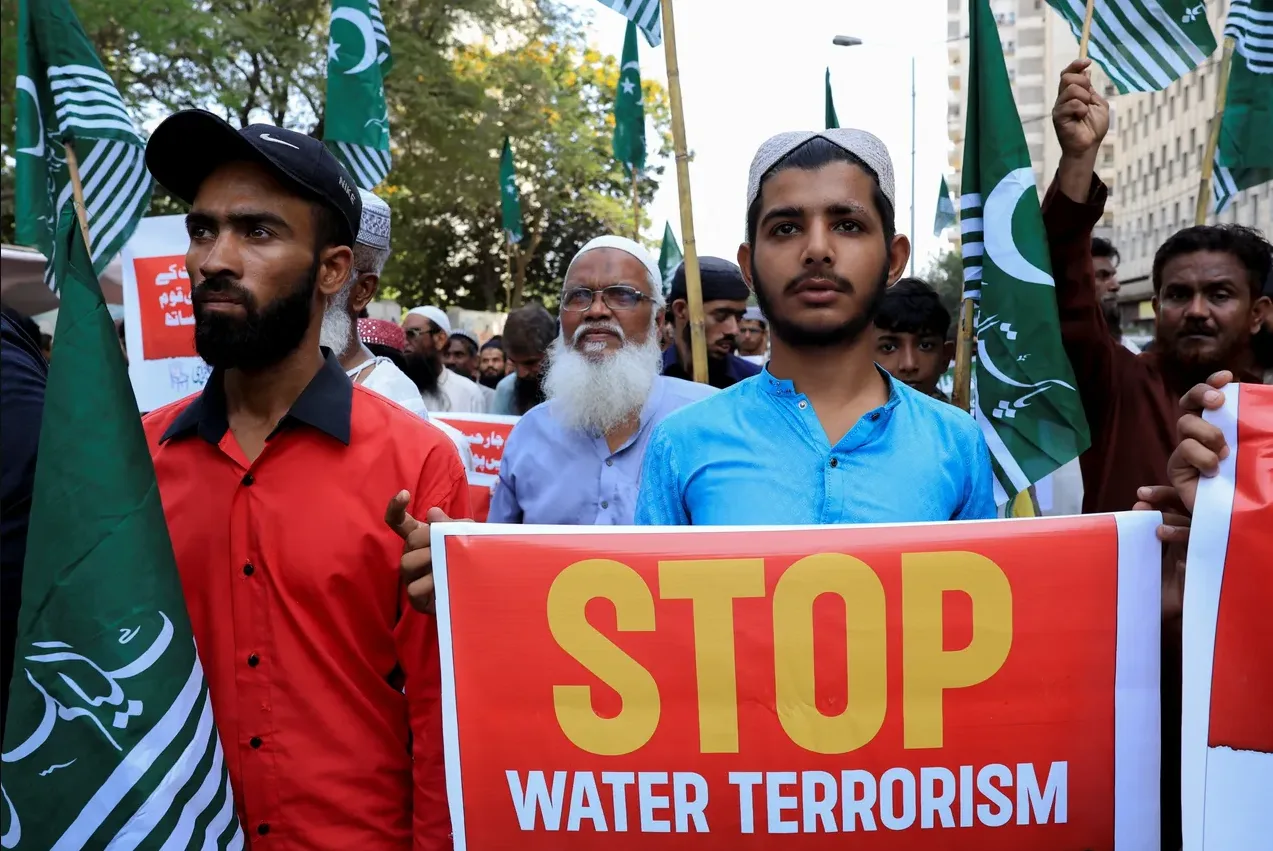
After New Delhi suspended its participation in the treaty, India’s home minister said in June 2025 that it would never be reactivated. The position sparked protests in Pakistan and accusations that India was engaging in “water terrorism.”
Experts believe India’s suspension of the agreement represents a radical shift in policy towards its neighbour, aimed at using water as a weapon to punish Pakistan. The Indian government, however, sees its position not as weaponising water but as reconsidering an agreement it regards as unbalanced and no longer reflective of the changes of the past six decades.
According to Irum Sattar, a lecturer in sustainable water management at Tufts University, this course has returned water to the political arena after decades of attempts to keep it within a technical and legal framework. Some analysts believe suspending the treaty may give India an opportunity to press ahead with its demands for greater scope to benefit from the basin’s waters.
But the consequences of politicising water extend beyond India-Pakistan relations. Some observers in India fear that using water to pressure Islamabad could set a precedent that may later work against New Delhi.
India also depends on rivers originating in China, foremost among them the Brahmaputra, one of the most important water sources in the country’s northeast. Some Indian experts therefore warn that using water as leverage against Pakistan could give Beijing a justification to adopt the same approach in its own water disputes with New Delhi.
