






هذا التقرير متاح أيضًا بـ العربية
Iraq faces one of its most sensitive tests since the fall of Saddam Hussein’s regime in 2003. As the 30 September 2026 deadline set by Prime Minister Ali al-Zaidi’s government for bringing weapons under state control approaches, the debate has moved beyond collecting arms and closing armed factions’ headquarters. It now centres on a larger question about the future of the Iraqi state itself: can Baghdad restore its legitimate monopoly on the use of force, or has the system built around weapons over more than two decades become too large for any government to dismantle?
The answer is complicated by the transformation of Iraqi militias from armed groups into an interlocking system of military wings, political parties, economic networks and influence within state institutions. Their regional ties have also taken the issue beyond Iraq’s borders, making it part of the wider region’s security calculations.
2003: The vacuum that allowed armed groups to flourish
In the first days after Baghdad fell and the Iraqi state collapsed in 2003, militias began to form and weapons spread beyond state control. Some people stockpiled the former regime’s weapons in preparation for resistance; others seized them to expand their influence. Iraq became awash with arms, sold on pavements and in dedicated markets. The occupying power failed to curb their spread and helped foment and facilitate this deliberate chaos.
The process began with the US invasion of Iraq in 2003, when the decision to dissolve the army and security services created an unprecedented security and political vacuum. In the absence of state institutions, existing armed groups, alongside others that formed later, found an opportunity to expand and fill that vacuum.
The Badr Organization, founded in Iran during the Iran-Iraq War, was among the most prominent forces to enter Iraq alongside the occupying troops. The Mahdi Army emerged that same year under Muqtada al-Sadr’s leadership. Factions such as Kataib Hezbollah, Asaib Ahl al-Haq and Harakat Hezbollah al-Nujaba formed later, alongside other groups that received Iranian support in varying forms and to varying degrees.

2014: From the jihad fatwa to legal recognition for the PMF
The year 2014 marked a turning point in the history of Iraq’s armed factions. As Iraqi forces collapsed in the face of ISIS, Grand Ayatollah Ali al-Sistani issued the “sufficient jihad” fatwa, calling on Iraqis to volunteer to defend the country.
The call gave armed militias an opportunity to reorganise and secure the government support they had lacked to join the fight against ISIS. What began as a temporary national mobilisation later became an official institution with the passage of the Popular Mobilization Commission Law in 2016.
The law gave the PMF legal legitimacy and an independent budget, while a number of its factions retained autonomy over their military and political decisions. This created an unprecedented arrangement: a legally recognised force with considerable independence from the conventional military decision-making system. When the war against ISIS ended, the debate shifted from counterterrorism to the future of these formations and their role within the state.
The factions and Iran: A network beyond weapons
The evolution of Iraq’s factions is difficult to understand in isolation from Iran’s role. Since 2003, Tehran has regarded Iraq as providing strategic depth for its national security and has worked to build an extensive network of relationships with Iraqi political and military forces.
For Iran, these factions form part of the regional deterrence system known in the media as the “Axis of Resistance.” This has led a number of them to adopt the doctrine of Wilayat al-Faqih and see themselves as part of a regional project extending beyond Iraq’s borders.
A report published by Britain’s Telegraph on 3 August 2026 indicates that Iran sees the Iraqi armed factions as the backbone of the “resistance” and part of its policy of broadening the confrontation and increasing its costs for the US.
This relationship gave the factions significant sources of strength and tied their decisions on many issues to regional calculations that sometimes take precedence over Iraq’s direct interests. This has left successive Iraqi governments facing a persistent dilemma over who actually has the power to decide matters of war and peace.
Over the past two decades, the factions have also expanded their political influence. They established parties, contested elections and joined successive governments while retaining their armed wings.
At the same time, they built extensive economic networks known in Iraq as “economic offices” and expanded into trade, contracting, border crossings, transport and services.
This overlap between weapons, politics and the economy created a complex system of interests. Weapons became a means of protecting economic influence, while economic activity provided the funding needed to sustain military influence
View this post on Instagram
The Gaza war brings the factions back into battle
The Gaza war, which broke out in October 2023, brought Iraqi factions back to the forefront of regional affairs. Armed groups announced attacks on US bases in Iraq and Syria, then expanded their operations to other targets in the region, prompting the US to strike sites belonging to some factions.
These developments exposed the scale of the problem facing the Iraqi state. Baghdad faced the task of reining in groups with independent military decision-making structures, while the state bears the consequences of any escalation launched from its territory.
The question of weapons thus shifted from an internal Iraqi matter to an issue directly connected to regional security and Iraq’s relations with the US and neighbouring countries.
Seeking to attract foreign investment and build strong relations with Gulf and other Arab countries, as well as the US, the Iraqi state once again faced a wide gap between its interests and the conditions imposed by armed groups pursuing agendas that serve Iranian interests at Iraq’s expense.
These groups carried out operations against foreign interests in Iraq and targets in neighbouring countries, announcing and documenting them on their official accounts while the government was clearly unable to control their activities.
The September deadline: Al-Zaidi between Washington and the armed factions
Against this backdrop, Prime Minister Ali al-Zaidi’s government announced that the end of September 2026 would be the final deadline for armed factions to hand over their weapons to the state, coinciding with the end of the international coalition’s mission in Iraq.
In principle, the decision is an attempt to restore the state’s monopoly on force. It also presents the government with one of its most difficult tests in years. Al-Zaidi understands that a direct military confrontation with the factions could plunge Iraq into widespread internal conflict, while backing away from enforcing the deadline would undermine state authority and entrench the division of security decision-making between the state and the factions.
Politically, the prime minister depends on alliances that include forces closely linked to some factions, making any decisive action subject to complex political calculations.
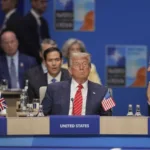
His government must now turn his pledges into action: those made during talks with Tom Barrack, the US presidential special envoy to Iraq and Syria and ambassador to Türkiye, and those announced before President Donald Trump during his visit to Washington in mid-July. Washington has linked continued support to the extent of progress in bringing weapons under state control.
View this post on Instagram
Expected US support also includes cooperation and investment. During al-Zaidi’s visit to Washington, agreements, partnerships and memorandums of understanding worth more than $60 billion were signed and announced. Washington also has powerful financial leverage: Iraqi oil revenues are deposited in a Central Bank of Iraq account at the Federal Reserve Bank of New York before being made available to Baghdad through specific financial mechanisms.
With oil exports disrupted by instability affecting navigation through the Strait of Hormuz, and Iraq’s alternatives limited, al-Zaidi’s government stands at an exceptionally difficult crossroads. The first repercussions of the crisis have already emerged in delayed salary payments to public-sector employees. Continued delays could lead to social, economic and political unrest.
Several armed factions have expressed their readiness to comply with the decision to bring weapons under state control, and some have begun taking practical steps. Saraya al-Salam, affiliated with Muqtada al-Sadr, handed over its headquarters in Samarra to the security forces.
Other factions, however, have held on to their weapons. Their position hardened further after US-Saudi strikes at dawn on Wednesday, 29 July 2026 targeted armed factions’ sites and PMF headquarters, causing deaths and injuries, including among Iranian members and advisers.
Divisions among Shiite forces complicate the battle over weapons
Iraq’s political landscape has been chronically fragmented since 2003. Divisions extend beyond those between Shiite, Sunni and Kurdish forces to splits within each of these groups. The differing responses of Shiite forces to the bombardment of faction and PMF headquarters illustrate this fragmentation.
Muqtada al-Sadr condemned the targeting of Iraqi territory while blaming what he described as “brazen militias” for dragging the country into a futile war. He also called on Iran’s Revolutionary Guard to keep Iraqi territory out of its operations and urged the government to assert state sovereignty and maintain security. Other Shiite leaders focused on condemning the bombardment and demanding a firmer government response to Washington and Riyadh.
These political differences have shaped the government’s handling of the factions and armed actors. Although the state has officially adopted the principle that weapons should be under its control, forces within the “Coordination Framework,” the leading Shiite alliance running the government, disagree over how to dismantle the factions and what their future should be.
A number of the framework’s leaders and political forces have links to armed factions. Some factions belong to the Popular Mobilization Commission, others operate outside it, and still others combine official formations within the PMF with wings operating beyond it. This overlap ties the disarmament decision directly to the balance of power within the ruling alliance.
This underlines the difficulty of al-Zaidi’s task. He faces simultaneous pressure over his stance on the factions and the campaign to pursue people accused in corruption cases that he launched weeks after taking office.
Against this complex backdrop, al-Zaidi’s mission appears almost “suicidal”. Uncertainty over the outcome of the US war on Iran makes it even more dangerous, given the war’s direct repercussions in Iraq.
It has therefore become extremely difficult to separate events in Tehran from what may follow in Baghdad. Over more than two decades, Iran has built a network of loyalties that has made unravelling its “knot” inside Iraq more complicated than dismantling its nuclear programme itself. So far, President Donald Trump’s administration appears to have only a limited understanding of this reality.
