










The West Bank is witnessing a new wave of settlement activity led by a group known as the “Hilltop Girls.” These are Israeli women who abandon formal education and urban life to live in tents and makeshift dwellings atop hilltops, in what they see as a sacrifice for the land.
This movement emerges as an extension of the “Hilltop Youth” phenomenon, which began in the late 1990s with official Israeli backing.
The “Hilltop Girls” adopt a pastoral, primitive lifestyle, deliberately isolated from modern urban life. Their media presence emphasizes mundane, domestic activities such as cooking or hanging laundry as a strategy to normalize settlement and present it as a wholesome, family-oriented existence. This stands in stark contrast to the violent imagery historically associated with settlers.
These female-led groups represent a softer form of colonization, often referred to as “soft settlement,” where the feminine image is strategically used to rebrand and sanitize the reality of a project that fundamentally involves dispossession of Palestinians and the entrenchment of Israeli control.
Far from being an isolated or exceptional case, the “Hilltop Girls” are part of a broader trajectory of colonial tactics in which women have been deployed in service of explicit colonial objectives.
This article traces similar female-led phenomena across various colonial contexts, where women have served as instruments of soft power, enabling control, penetration, and influence in ways that further overarching colonial ambitions.
Kibbutz Women and the Settler-Colonial Project
Since the early 20th century, the kibbutz has been a central pillar of the Zionist project to establish a Jewish state in Palestine. It functioned as a collective agricultural model based on shared ownership of tools and equal distribution of returns. It also served as a framework for integrating new immigrants and preparing them for life in Palestine.
In this setting, women in the kibbutzim played a vital role—not merely symbolic, but integral to consolidating this new social and economic order. The kibbutz offered a radically different model for women’s roles compared to bourgeois European norms. It promoted gender equality through women’s participation in agricultural labor and the rejection of traditional marriage and its economic dependencies.
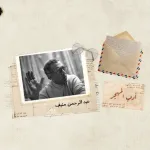
Yet, as Abdul Wahhab Al-Kayyali notes in his book Kibbutz: Collective Farms in Israel, this so-called liberation was rife with contradictions. Rather than achieving genuine freedom, women in the kibbutz often experienced new forms of constraint. The unhappiness of many women was even cited as a reason why some couples left the kibbutzim.
The kibbutz sought to portray itself as a liberating alternative to domestic drudgery communal kitchens, shared housing but this structure merely repackaged traditional burdens. Women’s presence remained conditional on their ability to serve the collective system and ensure its continuity.
Thus, the kibbutz experience can be read as an early form of “soft colonialism,” in which women’s labor and image were instrumentalized to give a progressive façade to a settler-colonial project rooted in the dispossession of Palestinians.
European Women as Tools of Colonial Power
French colonialism in Algeria did not rely solely on military and political dominance. It also mobilized European women as intermediaries to penetrate local social structures. As researchers Ali Ghenabzia and Yamina Dhellassi show in their study The Impact of European Women on Algerian Families (1830–1962), colonial authorities employed European women in education, charity, and missionary work to give a gentler face to the colonial enterprise and embed it within Algerian Muslim families.
In the realm of education, European women aimed to turn Algerian women into active agents of French culture within their households. Workshops were established to teach Algerian girls French language, sewing, and arithmetic. While these initiatives provided practical skills, they simultaneously undermined traditional family values and introduced French language and culture as tools of soft domination.
In missionary work, Christian female missionaries were deployed to reach Algerian women—an audience inaccessible to European men due to religious and social boundaries. Religious sisterhoods, such as the Sisters of St. Joseph and the White Sisters, were instrumental in this effort, focusing specifically on reaching women within their domestic spheres.
At a deeper level, these efforts supported a broader policy of cultural Westernization aimed at severing Algerian women from their Arab-Islamic identity. European women led campaigns encouraging Algerian women to remove their veils, portraying it as a symbol of backwardness and repression.
This was not merely a cultural initiative but a symbolic battle—one in which the female body and appearance became tools for exerting control over the entire society.
Colonial Marriage Policies
Just as Israeli colonialism has utilized Israeli women in Palestine, and French authorities deployed European women to infiltrate Algerian homes, the apartheid regime in South Africa, established in 1948, turned to legal frameworks to control the bodies of colonized women. Society was rigidly segregated by race, and this extended even to marital and intimate relationships.
The 1949 Prohibition of Mixed Marriages Act which banned marriages between white and Black South Africans was a stark example of soft colonial dominance. It served to suppress Black women by restricting their freedom to choose partners, turning personal life into a domain of legal and political control.
Under such systems, women become tools for controlling land, identity, and culture. Their lives and bodies are exploited to legitimize and advance colonial rule. This demonstrates that colonialism is not merely a military or territorial force, but a sophisticated strategy that co-opts gender roles to subtly but effectively consolidate power.


