











While images of famine in Gaza have become the most visible symbol of the deadly blockade imposed by Israeli authorities for years, tightened further by the ongoing genocidal war and reaching its peak with the total closure of crossings in early March after the Israeli government’s reversal of a truce path—the blockade’s consequences extend far beyond hunger. It now threatens the very ability of Gazans to survive, not merely to endure.
Official statistics may capture the death toll from direct bombings or starvation, but they fail to reflect other, slower, invisible forms of death. These are a direct extension of the blockade’s policies and tools of extermination. As a result, the real number of victims is likely far greater than those listed by the Ministry of Health or UN agencies.
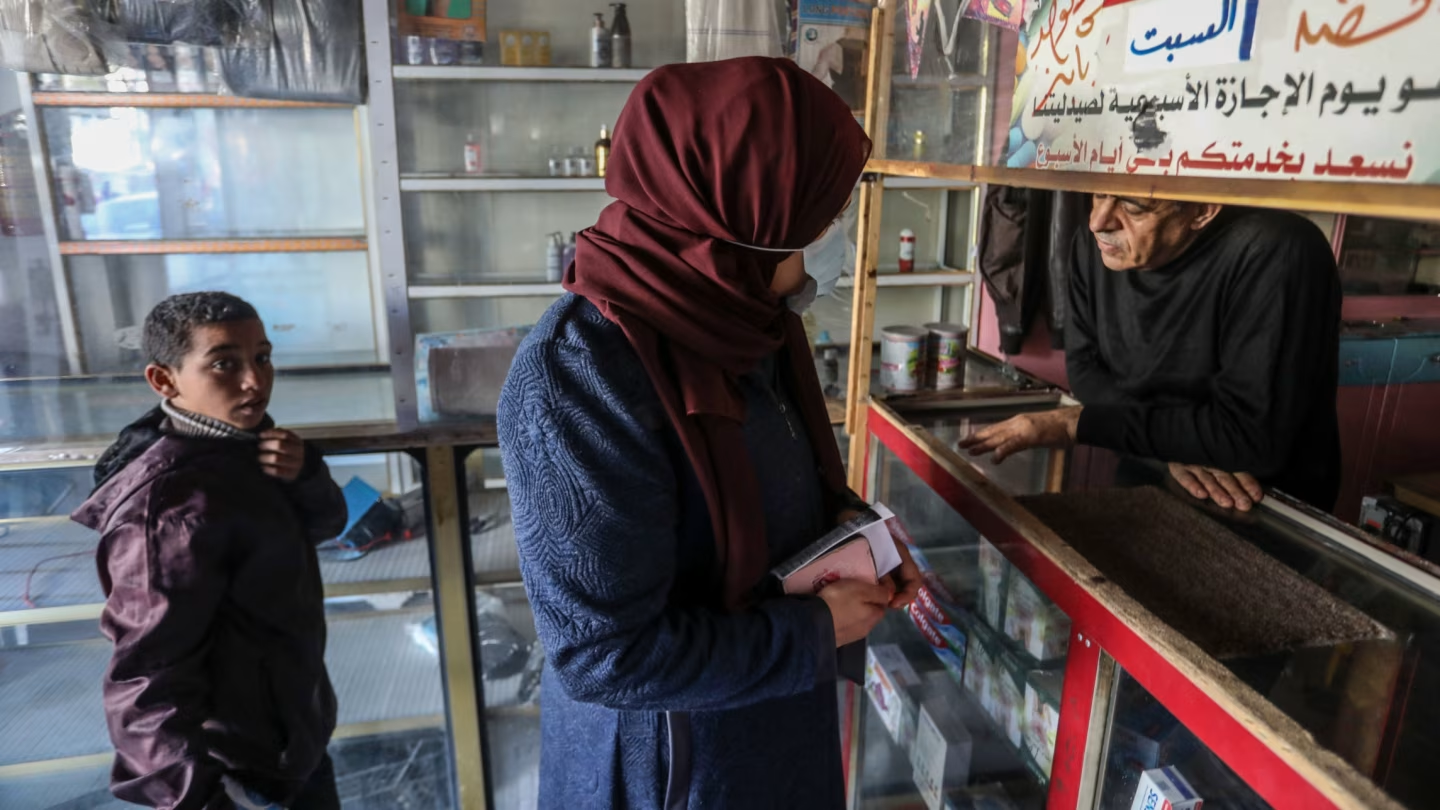
One of the most acute facets of this crisis is the pharmaceutical and medical supply sector. Israel has imposed a suffocating blockade that prohibits the entry of virtually all medical aid into the besieged territory, even as Gaza’s health system undergoes an unprecedented and relentless depletion of resources.
This depletion stems from Israel’s ongoing killing machine, the effects of starvation and malnutrition that weaken immune systems, and the ban on patient transfers for treatment abroad. These pressures overwhelm a health system already destroyed by targeted Israeli strikes, with the majority of hospitals rendered non-functional.
A Pharmaceutical Catastrophe Beyond Statistics
What’s unfolding in Gaza is no longer a temporary health crisis—it is a full-scale collapse that defies mere numbers. Under an intensifying blockade and widespread destruction of healthcare infrastructure amid a continuous war of extermination, the healthcare system can no longer deliver even the minimum life-saving care. This marks one of the harshest medical disasters of the modern era.
According to the Ministry of Health, around 47% of essential medications are completely out of stock, and 65% of medical consumables are unavailable. Supplies for emergency care, intensive care, and surgeries are nearly exhausted.
Half of maternal health medications have not entered Gaza for over three months, while more than 190 UNFPA medical aid trucks have been denied entry, worsening the crisis.
This breakdown has been lethal for the most vulnerable. Over 80,000 diabetes patients and 110,000 people with hypertension are now without primary care. Supplies for treating blood disorders and cancer have dropped by 64%.
Official figures indicate that 41% of kidney failure patients have died due to lack of access to regular dialysis. Cardiac catheterization and heart surgery services are operating at only 1% of capacity.
Children are not spared. Forty-two percent of routine childhood vaccines—such as polio—have run out, raising fears of deadly outbreaks among displaced populations lacking clean water and sanitation. The shortage of dermatological medicines has led to widespread infections in camps and households, where weak topical substitutes offer little relief.
The psychological toll has also worsened. Interruptions in psychiatric and neurological medications have led to increased seizures and mental breakdowns, while trauma from displacement, constant danger, and daily death has triggered new psychological cases.
Even international medical teams in Gaza have not escaped this collapse. Many are rationing their supplies, resorting to less effective alternatives, or halting some treatments altogether. Painkillers, antibiotics, and anesthesia drugs are nearing total depletion, according to reports from global health institutions.
In this context, the World Health Organization estimates that 11,000 to 13,000 patients—among them 4,500 children—require urgent medical evacuation. These cases cannot wait; there are no local capacities left to meet even the most basic medical needs.
What’s unfolding is silent execution: the deliberate denial of treatment and the systematic drying up of Gaza’s medical lifeline. Medicine has become a weapon, and the blockade a means of slow, methodical genocide—no less brutal than bombardment, perhaps even more so.
The Medical Blockade as a Weapon of Genocide
The collapse of Gaza’s healthcare system cannot be understood apart from the broader war Israel has waged on the enclave. The siege, in place since 2007, reached its most extreme form after October 2023. Israeli policies toward Gaza’s health sector are not incidental; they are part of a deliberate strategy that weaponizes medicine.
A position paper by the Palestinian NGO Al-Awda Health and Community Association outlines this as a three-tiered system:
1. Systematic Depletion of Medical Stocks
Israeli authorities have placed strict limits on the entry of medications and medical supplies—even during ceasefires—resulting in the gradual exhaustion of hospital and clinic inventories. UN shipments for pregnant women, infants, and mental health patients were blocked, compounding the crisis long before its current peak.
2. Targeting Health Infrastructure
Beyond restrictions, Israeli forces have directly and indirectly targeted hospitals, clinics, and medical warehouses. Hundreds of facilities have been destroyed, including most major hospitals, leaving medical staff unable to treat war-wounded or chronically ill patients.
3. Marginalizing the International Community
Though international organizations are fully aware of the health catastrophe, efforts to break the siege or deliver emergency medications have largely failed. Many agencies have had to ration their own supplies in Gaza, suspend surgeries, and resort to basic painkillers and ineffective substitutes. This marks a shift from an international role of protection to one of helpless spectatorship.
The paper concludes that the situation stems from a clear political-military decision by Israel to use the medical blockade as a strategic tool to dismantle Palestinian society and force Gaza’s population into surrender or silent death.
In Gaza today, illness and injury have become death sentences—carried out through a shattered health system, without medicine, equipment, or even a chance at survival.
Expired Medicines: A Desperate Option
Gaza’s medical crisis is not just about scarcity or absence. It has reached a dangerous new phase in which patients are forced to use expired medications amid total stockouts and no alternatives. This option, while often unavoidable, carries serious risks and could trigger new health disasters worse than the original illnesses.
Chronic patients are hit the hardest. Their conditions require strict adherence to medication regimens to avoid relapse. But with deteriorating nutrition, weakened immunity, and the spread of infections in overcrowded, unsanitary displacement zones, the need for antibiotics and skin/fungal treatments—especially for children—is acute.
Many patients now resort to expired drugs without understanding which ones may be safe under certain conditions and which are dangerous. Pharmacist Mohannad Jamal told Noon Post that self-medicating with expired drugs can be extremely hazardous. Some may lose efficacy without harm, but others can cause severe poisoning or complications. He emphasized consulting specialists before use.
Jamal warned that missed treatments can be fatal—especially for hypertensive patients at risk of strokes, or diabetics facing comas, kidney failure, or blindness. The absence of medicine is a life-threatening emergency.
Veteran pharmacist Dr. Dhul-Fiqar Suweirjo shared on social media a list of technical tips from his 40 years of experience. He noted that some expired pills may still be usable if they haven’t changed color, smell, or texture, and the packaging remains intact. However, he stressed that expired antibiotics, vitamins, and hormones should never be used due to chemical breakdowns that can cause serious harm.
Dr. Zakaria Abu Qamar, acting director of the Pharmacy Department at Gaza’s Health Ministry, explained in press comments that extending drug shelf life is a globally accepted emergency measure. The ministry had adopted it even before the current war due to the ongoing siege, and it has become more common recently. He noted that this practice is overseen by a specialized committee, which inspects medications and affixes updated expiration labels.
Abu Qamar also warned residents against using expired medicines based on personal judgment or acquiring them from unsupervised pharmacies, calling it a direct threat to life.
He added that vital services—such as primary care, cardiac surgery, dialysis, and catheterization—are now partially or entirely paralyzed due to medication shortages. If the situation continues, these services may cease completely, endangering thousands of lives.
Despite knowing the dangers, many chronic patients see no other choice. “The result is bad either way,” said Abdel Jalil Muhammad, a heart patient, in an interview with Noon Post. “But maybe the expired medicine will help… I know it’s dangerous, but I have no other option.”
In the end, Gaza’s patients face a new form of death—one that doesn’t announce itself with the roar of airstrikes, but arrives quietly: through expired pills, absent treatments, and hopeless choices. It is a layered extermination—death by bombing, starvation, poisoning, and depletion—while the world looks away.
A world that remains silent, or complicit. A world that turns its back on this ongoing massacre, practicing hypocrisy and selective outrage. The livestreamed horrors and viral images of Gaza’s suffering have yet to shake the conscience of humanity—or awaken it to a genocide unfolding in plain sight, without accountability or end.


