








During Israel’s genocidal war on the Gaza Strip, the toll has extended beyond death, destruction, and displacement. Thousands of Gazans have vanished without a trace—an added layer of tragedy for their families—who fear that stray animals may have consumed their loved ones’ bodies. This fear has been heightened by horrifying scenes of scattered corpses in the streets, languishing amid packs of starving dogs and cats, compelling relatives to tirelessly scour for any sign of the missing.
Due to Israel’s lack of transparency regarding the fate of the disappeared, families have turned to social media to seek their children. They share photos via private WhatsApp and Telegram groups, appeal to international organizations—especially the International Committee of the Red Cross—and approach former detainees released from Israeli prisons, hoping for any answers.
Arising from this dire situation and urgent humanitarian need, the Palestinian Center for the Enforcedly Disappeared was founded to give voice to families searching for their missing loved ones. It endeavors to answer their most anguished questions: Are they imprisoned in Israeli jails? Have their bodies been vaporized under bombardment? Or have they been reduced to skeletal remains after being scavenged by animals?
Noon Post interviewed Ghazi al-Majdalawi, head of the research unit at the Center, about its role in locating the disappeared, the obstacles it faces in monitoring, documenting, and searching—even as it interacts with families and relevant bodies like the Red Cross.
Q: How did the idea of founding the Palestinian Center for the Enforcedly Disappeared come about? What was the driving motive behind this humanitarian initiative?
A: The idea emerged due to the sharp rise in enforced disappearances resulting from the Israeli aggression on Gaza. In the face of this humanitarian disaster, there was an urgent need for a specialized platform to document data. Our core motivation was to highlight families’ suffering and pursue the truth behind their missing loved ones using legal and media tools.
Q: Who runs the center? Do any of you have personal experience of losing a loved one?
A: Our team comprises human rights professionals, activists, and journalists specializing in documentation and humanitarian work. Many have themselves lost relatives or friends during the aggression, which intensifies both their commitment and empathy in this work.
Q: Do you only document cases, or do you also conduct active searches? What methodology do you follow to document them?
A: Our role includes documentation, legal and media advocacy, and active search efforts. Our legal team has confirmed the status of some individuals, proving they were detained in Israeli prisons. Documentation is handled via an electronic platform where families submit their details. We then verify the information directly with them before officially registering each case in our database.
Q: How many missing persons are currently registered? How are families using the platform?
A: The number of missing and forcibly disappeared individuals ranges from 8,000 to 10,000. Since launching the platform, we have recorded many cases, with more than 200 formally verified so far. Families continue to submit reports, determined to learn the fate of their loved ones.
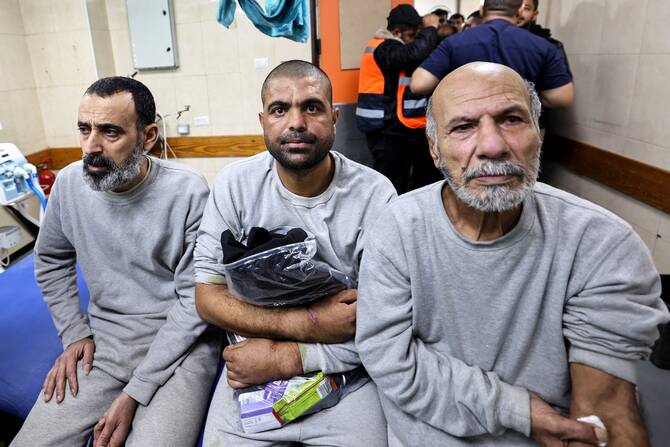
Q: Why does the occupation deliberately disappear Palestinians, and how does that affect social structure?
A: Forced disappearance is used as a repressive tool to break Palestinian morale and sow fear. It wreaks havoc on the social fabric: thousands of families live in anxiety and uncertainty toward the fate of their children, creating deep psychological scars—particularly among women and children, who bear the weight of loss and the burden of protracted waiting.
Q: Have you achieved any breakthroughs? To what extent has the center helped families discover information about their missing?
A: Despite challenges, the center’s legal team has successfully revealed the fate of several missing persons. Meanwhile, our platform has enabled many families to file previously unregistered cases, bolstering legal and media pressure to uncover what is happening to the disappeared.
Q: What are the main challenges you face in documenting these cases?
A:
-
The ongoing aggression prevents access to areas where disappearances occurred.
-
Israel refuses to disclose the fate of detainees or the disappeared.
-
There is a lack of modern equipment and technology to identify remains—especially since DNA testing cannot enter Gaza.
-
Financial and logistical shortcomings limit our operational capacity.
Q: What are your primary needs to continue this critical humanitarian work?
A: We urgently require stronger legal and international support to pressure Israel for disclosure, along with financial and technological resources—particularly search equipment and DNA testing tools—to identify unknown remains.
Q: Are you cooperating effectively with government or international bodies to support your efforts?
A: We’re striving to build partnerships with international organizations such as the Red Cross and human rights institutions. However, we have yet to see any serious action from UN bodies like the UN Working Group on Enforced or Involuntary Disappearances.
Q: How does the closure of crossings affect your work—especially regarding equipment and technical needs?
A: The blockade on crossings poses a major obstacle. It prevents the entry of vital search equipment—such as heavy machinery needed to extricate victims from rubble—and DNA testing kits essential for identifying unidentified remains. Furthermore, the Israeli siege limits field teams’ mobility and access to all affected locations, complicating search efforts.


