




هذا التقرير متاح أيضًا بـ العربية
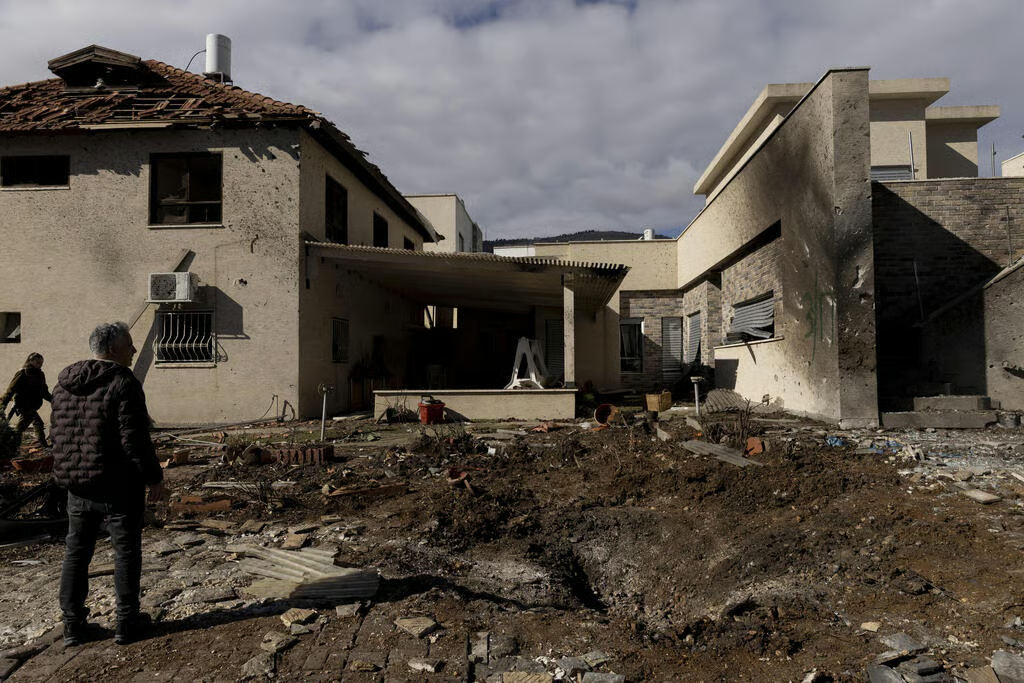
In late May 2026, Israeli media circulated images of the settlement of Kiryat Shmona nearly deserted after a rocket barrage fired by Hezbollah. One of the rockets struck a shopping center without causing casualties, but it led to schools being closed for fear the shelling would continue.
The scene was not merely another military escalation. The settlement, built on the ruins of the Palestinian village of al-Khalisa, has now become a mirror of a deeper crisis for Benjamin Netanyahu’s government and has exposed the fragility of the northern front.
Its settlers, who have traditionally leaned to the right, live under the threat of rockets and are waiting for compensation that has yet to come, while asking: How did the settlement that was created to serve as a frontline outpost turn into a political and economic burden on Netanyahu’s government?
How did the border settlement emerge?
Before the 1948 Nakba, the village of al-Khalisa in the Safad district was thriving, home to more than 2,000 Palestinians, with 403 houses and vast agricultural lands.
After Zionist Haganah militias stormed the village in May 1948 and displaced its residents, they set up a camp for new settlers on the ruins of al-Khalisa and named it “Kiryat Shmona.”
The site lies at the far northern end of the Hula Valley, less than 2 kilometers from the Lebanese border, and it was chosen to strengthen control over the north and establish a Jewish settlement belt adjacent to Lebanese villages.
The camp was initially settled by Mizrahi Jews who came from Morocco, Iraq, and Yemen, creating a community that was economically and socially marginalized. Even so, the town developed into a regional center with a hospital, a bus station, and Tel-Hai College, making it a service hub for Upper Galilee villages.
But its border function has remained ever-present: It is the first “line of contact” in any round of fighting with Lebanon, and its history bears the marks of that role.
What is its long history with the Lebanon front?
Since the late 1960s, Kiryat Shmona has been a target of Katyusha rockets fired by Palestinian factions and later by Hezbollah. A Human Rights Watch report counted more than 3,839 rockets fired at the settlement between 1968 and 1996, the highest number recorded against an occupied Palestinian city.
On April 11, 1974, three gunmen from the Popular Front for the Liberation of Palestine-General Command stormed the settlement and killed 18 settlers, leaving a deep shock in Israeli society and encouraging the occupation government to intensify its strikes on Lebanon.
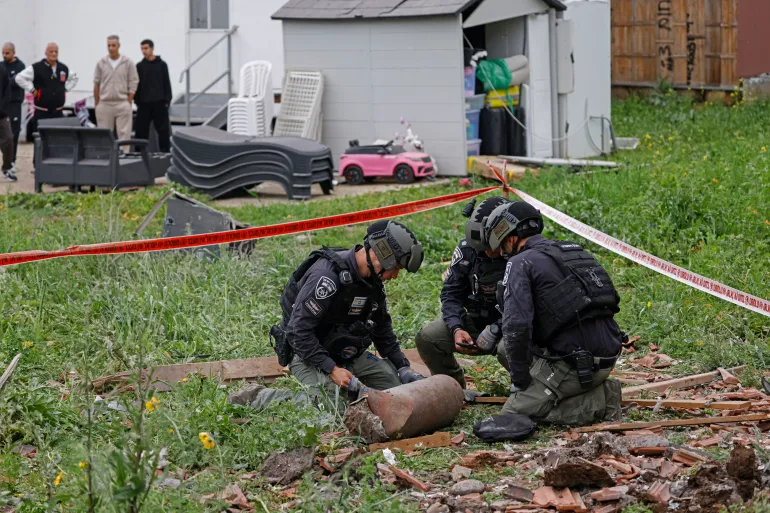
During the July 2006 war, the settlement came under 1,017 rockets, including 248 that struck its center, injuring 45 people, damaging about 2,000 buildings, and forcing the evacuation of half its then-population of 22,000 settlers.
Even so, the evacuations remained temporary, as settlers would return after a ceasefire. But after Oct. 7, 2023, the situation changed: Hezbollah opened the northern front in parallel with the assault on Gaza, and about 60,000 to 70,000 settlers from border towns, including Kiryat Shmona, were forced to leave.
Unlike previous rounds, the evacuation has now become long-term. By spring 2026, more than half of Kiryat Shmona’s settlers were still displaced, something unprecedented in its history.
What is happening now in Kiryat Shmona?
When the full evacuation was announced in October 2023, the number of Kiryat Shmona settlers ranged between 24,000 and 26,000.
But by May 2026, only about 10,000 had returned out of the 26,000 who had lived there before the war resumed, while the majority remained outside the settlement, according to the mayor.
And Israeli reports described Kiryat Shmona as a “ghost town”: empty streets, shuttered shops, and bakeries operating for limited hours.
The mayor issued a decision to close schools after a series of rockets at the end of May, deepening the sense that normal life had not returned.
Some of those who have returned are taking shelter in bunkers or temporary rooms, and one settler says that two of his four children refused to come back because of the constant fear.
Others are calling for an “economic Iron Dome” to protect their livelihoods, since the mere sounding of a siren drives away whatever customers remain, according to Yedioth Ahronoth.
What is the cost of the prolonged evacuation?
The continuing evacuation has left devastating economic effects. Testimonies from shop owners indicate revenue declines of more than 50 percent, and sometimes 70 percent, because of the settlers’ absence. The agricultural and tourism sectors have been hit hard, and economic activity and job opportunities have declined amid the lack of investment and commercial movement.
In addition, the crisis has exposed a broad failure in fortifying Kiryat Shmona. The mayor said about 4,700 apartments lack adequate protection, which explains why many settlers are afraid to return despite official calls to do so.
At the same time, an Israeli planning scheme addresses one specific part of the problem, involving about 3,500 old single-story homes built before 1992 without safe rooms, by allowing homes to be subdivided or new units added on the condition that a fortified room is built.
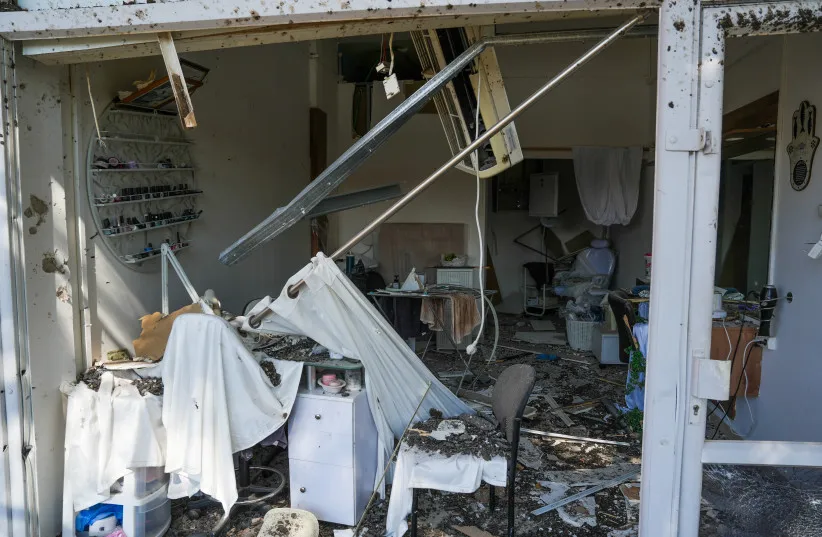
And Netanyahu’s government launched in February 2026 a plan to rebuild the north, including grants for small businesses, investments in settlement and infrastructure, and the conversion of Tel-Hai College into a university.
But many see implementation as slow. Thousands of settlers are still staying in hotels at the occupation state’s expense, while the municipality is trying to provide basic services such as garbage collection and street maintenance.
The mayor’s use of this reality as a pressure tool, by closing roads or suspending classes, reflects the extent of tension between local authorities and the occupation government.
How did a right-wing stronghold become a source of pressure?
Traditionally, Kiryat Shmona settlers have voted for right-wing parties. Likud, led by Netanyahu, won about half the votes cast there in the 2022 Knesset elections, but the prolonged evacuation and slow reconstruction have revealed discontent within this right-wing base.
In the municipal elections, which were postponed by about 15 months because of the war and the dispersal of Kiryat Shmona’s settlers, the race was not decided in the first round, sending Mayor Avichai Stern to a runoff against Likud candidate Eli Zafrani.
In that round, 9,398 voters cast ballots for a turnout of 47.9 percent of eligible voters, and Stern won with 5,214 votes against 4,092 for Zafrani.
This result does not mean a complete turn against the right, but it reveals discontent within a settlement that gave Likud about half its votes in the 2022 Knesset elections, only to find itself after the war facing a prolonged evacuation, slow compensation, and unfortified homes.
This anger points to a gap between the government’s promises of reconstruction and the settlers’ reality. The issue is not limited to Kiryat Shmona: Other northern towns such as Shlomi and Metula feel the same frustration, making the settlement a model of broader resentment that could put pressure on Netanyahu and his right-wing parties in the next elections.