










هذا التقرير متاح أيضًا بـ العربية
Before the end of May 2026, survey aircraft had not yet begun reading the Egyptian desert, but at Marsa Alam Airport signed Egypt a contract to launch its first comprehensive airborne geophysical survey in more than four decades with the Spanish company Xcalibur Smart Mapping.
This was not merely a signing ceremony, but a declaration of an attempt to redraw the map of Egypt’s wealth buried beneath the sands, especially since the last comprehensive aerial survey dates back to the early 1980s.
A study by the US Geological Survey explained that the magnetic data available at the time covered 65 percent of the country and that the Eastern Desert was almost devoid of measurements. Since then, Egypt has relied on outdated maps, even as remote sensing technologies have advanced and investors’ calculations have changed.
The move also came after a series of legislative reforms that changed the face of the mining sector. The Egyptian Mineral Resources and Mining Industries Authority was turned into an independent economic entity, production-sharing systems were abolished, the state’s share in projects was reduced to 10 percent, and a digital portal was launched to facilitate licensing.
With this shift, the government is seeking to raise the mining sector’s contribution to GDP from less than 1 percent to about 6 percent over the next few years. But success will depend not only on legal reforms, but also on the system’s ability to build a modern database accessible to investors and encouraging them to take risks.
Where will Egypt search, and what is it targeting?
The survey covers several key areas: the northern and southern Eastern Desert, Sinai, the northern and southern Western Desert, and the Bahariya Oasis and Abu Tartur area.
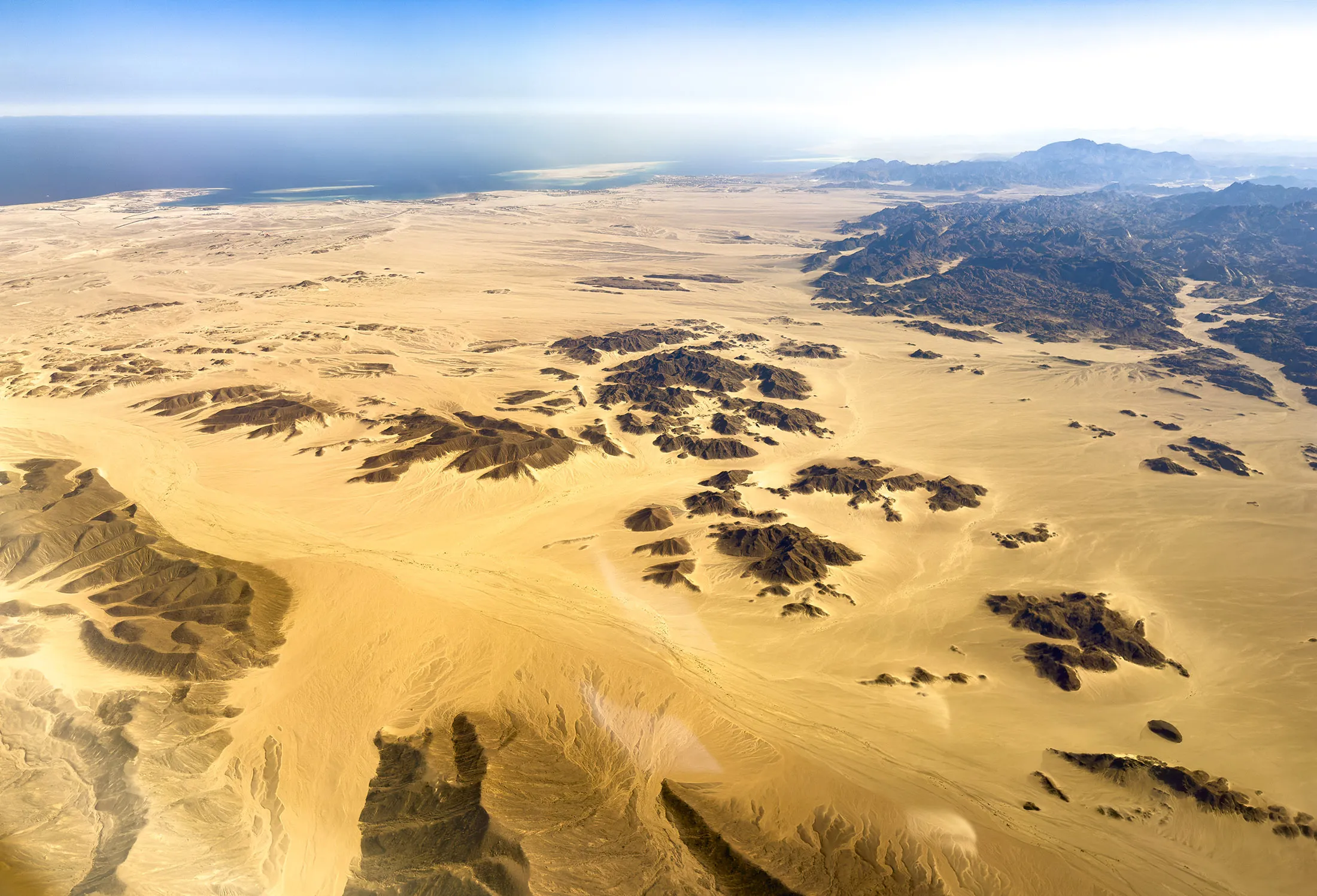
The Eastern Desert , which stretches along the Red Sea, is part of the Arabian-Nubian Shield, rich in quartz veins bearing gold, copper and zinc. It is home to the Sukari mine — almost the only successful model — which produced about 500,000 ounces of gold in 2025.
The southern part of this desert contains indications of rare minerals such as tantalum, tin and niobium in areas such as Abu Dabbab and Nuweibi.
On the other hand, the Western Desert presents a different contrast. In the north, there is the iron belt in Bahariya Oasis, with grades ranging between 45 percent and 53 percent.
Along the Mediterranean coast, outside the heart of the Western Desert but within the map of mineral wealth in the north, black sands are spread that contain heavy minerals such as ilmenite, zircon and monazite, with reserves estimated at about 1.3 billion cubic meters.
In the south, the rocks of Jabal Uweinat reveal and nearby extensions of the Western Desert geological indicators that include magnetite and hematite.
As for Sinai, it is known for manganese mines in Umm Bogma, copper in Wadi Araba, and coal in Maghara, in addition to deposits of gypsum, kaolin and rare earth elements. Data there remain fragmented and outdated, but the region’s strategic location makes its development an economic and political driver.
On the Abu Tartur Plateau in the New Valley, lie Egypt’s largest phosphate reserves, at more than 1 billion tons, at a time when the Egyptian government is planning to build a phosphoric acid production complex with an annual capacity of 250,000 tons, reflecting the importance of moving from raw exports to manufacturing.
How does the aerial survey read what lies beneath the earth?
Airborne geophysical surveying is somewhat like an X-ray of the earth’s depths, but instead of X-rays, aircraft use magnetic, radiometric and electromagnetic fields to read what the eye cannot see.
Aircraft fly at low altitudes — about 60 meters — in parallel lines separated by regular intervals of roughly 200 meters, carrying sensitive sensors such as:
- Magnetometer: Measures small changes in the magnetic field, helping identify iron-rich rocks and detect faults and igneous dikes.
- Gamma-ray spectrometer: Detects natural radiation emitted from the surface to a depth of 50 centimeters, distinguishing rocks rich in potassium, thorium or uranium — important for the search for phosphate and uranium.
There is also airborne electromagnetic surveying (AEM), in which a loop suspended beneath a helicopter emits low-frequency waves and receives the earth’s electrical response to depths exceeding 300 meters.
This technique is useful for detecting sulfide ores that may contain copper and zinc, and it is also used in groundwater studies.
After the data are collected, they are processed using advanced software to create maps and three-dimensional models that can be described as a “digital twin” of the earth’s layers.
These aircraft do not see gold or phosphate directly. Rather, they measure physical indicators pointing to changes in rocks that may be associated with certain minerals. The survey therefore represents a first step toward reducing the randomness of drilling and selecting promising sites instead of relying on guesswork.
How does data turn into investment?
Once the aircraft finish collecting the data and converting it into three-dimensional maps, the most complex phase begins: analysis and target selection.
Geologists and experts use software to process the information and identify magnetic or radiometric “anomalies” that may indicate the presence of mineral ores. These indicators do not mean a discovery, but they guide the research team to areas worthy of field exploration.
The next step is ground surveying, where geologists use portable devices to measure the same properties with greater precision and collect rock samples for analysis.
If these tests confirm the presence of minerals, the exploratory drilling stage begins to estimate the size, depth and quality of the ore. Based on these data, the relevant authorities decide to offer specific areas in international bidding rounds to attract specialized exploration companies.
When a company wins exploration rights, it is granted a period — often two years, renewable — to conduct detailed studies. If the study proves the existence of a discovery with economic viability, it is later classified as a “reserve” after verification of the quantity and quality of the ore and the mining conditions.
Licensing procedures for establishing a commercial mine then begin, including environmental impact assessment and infrastructure requirements. All these steps may take years, but the aerial survey helps reduce time and cost by ruling out unpromising areas early.
What obstacles stand in the way of turning wealth into an industry?
Despite the Egyptian government’s enthusiasm for exploration, the presence of a mineral underground is not enough to establish a profitable mine. The factors that determine viability include the size of the reserve, the depth of the ore, the concentration of the mineral, and the presence of impurities.
Even if quantities are large, extracting them may require massive investments in electricity, water, roads and ports, which raises costs.
The environment is also a decisive factor , as the oasis regions and Sinai are characterized by fragile ecosystems and local communities that depend on agriculture or herding.
Any mining project must therefore ensure alternative water sources, preserve biodiversity and provide benefits to local residents. Bureaucracy and a lack of transparency can also delay project implementation despite recent reforms.
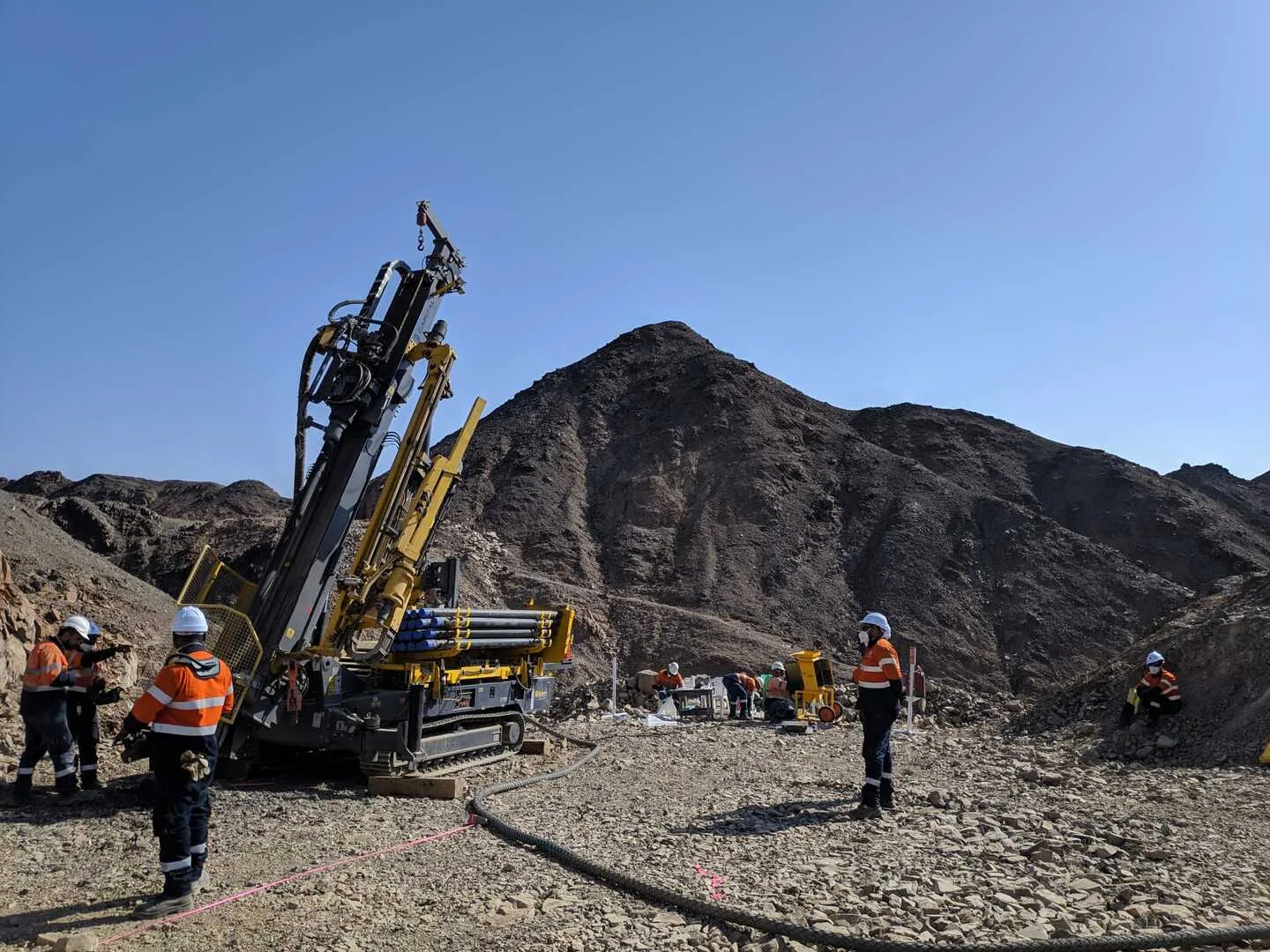
The case of the Sukari mine shows that success is neither easy nor quick, while phosphate deposits in Abu Tartur remain an example of the need to move from raw extraction to manufacturing.
The phosphoric acid production project represents an attempt to change the traditional business model. Likewise, exploiting black sands should include establishing plants to process heavy minerals rather than selling them raw.
In the end, investments may fail if infrastructure remains inadequate, if open data are not made available to investors, or if administrative complexity persists.
That is why the survey’s vision must be translated into an integrated plan that includes developing roads and ports, strengthening local capacities, and establishing downstream processing plants.